
CBC (cannabichromene) and CBG (cannabigerol) are two distinct non-intoxicating cannabinoids found in cannabis plants, each producing different effects through separate biological pathways. Understanding the CBC vs CBG distinction matters because these compounds interact with the body’s endocannabinoid system in fundamentally different ways. CBG acts on CB1 and CB2 receptors, while CBC targets TRPV1 and TRPA1 receptors tied to pain and inflammation. Neither compound causes a high, yet both show real promise in wellness and therapeutic research. Virginia residents exploring medical cannabis options will find this comparison a practical starting point.
What are the biochemical differences between CBC and CBG?
CBC and CBG differ at the molecular level in ways that directly shape what each one does in your body. CBC targets TRPV1 and TRPA1 receptors, which are closely linked to pain signaling and inflammation. It shows limited binding to the CB1 receptor, the same receptor that THC activates to produce a high. That limited CB1 activity is one reason CBC produces no intoxicating effect.
CBG works differently. It acts as a partial agonist at CB1 and CB2 receptors, meaning it binds to both but activates them only partially. CB2 receptors are heavily concentrated in immune tissue, which helps explain CBG’s strong anti-inflammatory profile. This receptor distinction is the core reason CBC and CBG produce different effects even though both are non-intoxicating.

CBG also holds a unique position in cannabis biochemistry. Its acidic form, CBGA, is the precursor to major cannabinoids including THC and CBD. This is why researchers call CBG the “mother cannabinoid.” CBC does not share this precursor role. It develops along its own biosynthetic path, independent of CBG conversion.
| Feature | CBC | CBG |
|---|---|---|
| Primary receptors | TRPV1, TRPA1 | CB1, CB2 |
| CB1 binding | Minimal | Partial agonist |
| Precursor role | None | Yes (CBGA → THC, CBD) |
| Main focus area | Pain, inflammation | Inflammation, anxiety, neuroprotection |
| Intoxicating | No | No |
Pro Tip: When reading a product label, look for “cannabichromene” to confirm CBC content and “cannabigerol” for CBG. Abbreviated labels alone can cause confusion, especially since CBC is also the acronym for a common blood test.
What does current research reveal about CBC and CBG benefits?
The research base for these two cannabinoids is growing, but it is not equal. CBG has moved further into human clinical testing, while CBC remains largely in the preclinical stage.
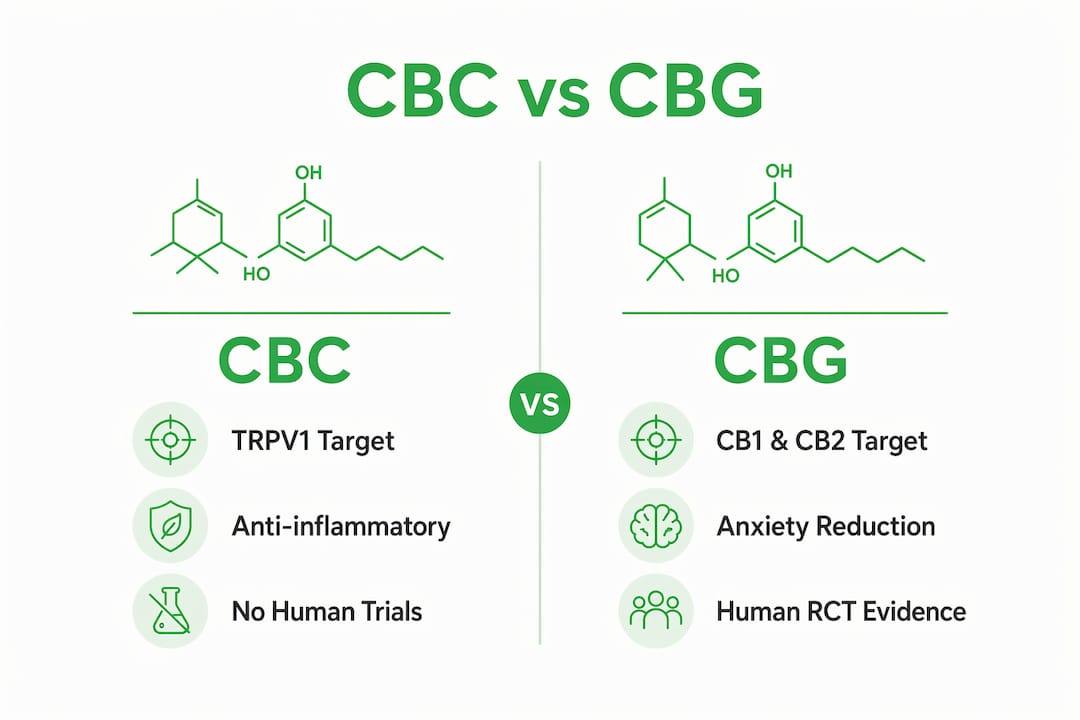
CBG’s most significant human finding involves anxiety. A human randomized controlled trial with 34 participants showed measurable anxiety reduction at 20, 45, and 60 minutes after CBG ingestion compared to placebo. That is a meaningful result because most cannabinoid research stops at animal models. A controlled human trial with time-stamped data points gives CBG’s anxiety effects real credibility.
CBG also shows strong anti-inflammatory potential in preclinical work. One study found that CBG reduced leukocyte recruitment by 48% in inflammation models. Leukocytes are white blood cells that drive immune responses. Reducing their recruitment by nearly half suggests CBG could play a meaningful role in managing inflammatory conditions. The same study showed CBG reduced neutrophil activity by 27% and monocyte activity by 49%.
CBC’s research picture looks different. No published human clinical trials for CBC exist as of 2026. Current knowledge comes entirely from animal and preclinical studies, which point to anti-inflammatory and neuroprotective properties. That is promising, but it means CBC’s benefits are not yet confirmed in people.
| Cannabinoid | Study Type | Key Finding |
|---|---|---|
| CBG | Human RCT (n=34) | Significant anxiety reduction at 20, 45, 60 min post-dose |
| CBG | Preclinical | 48% reduction in leukocyte recruitment |
| CBG | Preclinical | Neutrophil activity down 27%, monocyte activity down 49% |
| CBC | Preclinical only | Anti-inflammatory and neuroprotective signals in animal models |
| CBC | Human trials | None published as of 2026 |
Pro Tip: When evaluating any cannabinoid product’s health claims, check whether the supporting research is from human trials or animal models. The gap matters significantly for predicting real-world effects.
How do CBC and CBG work together with other cannabinoids?
CBC and CBG do not operate in isolation. The entourage effect describes how cannabinoids amplify or modulate each other’s effects when used together. This synergy means a product containing CBC, CBG, CBD, and trace THC may outperform any single cannabinoid used alone.
CBC and CBG complement each other because they act on different receptor systems. CBG’s CB2 activity addresses immune-driven inflammation. CBC’s TRPV1 and TRPA1 activity targets pain signals directly. Together, they cover more biological ground than either does separately. Adding CBD to the mix can further modulate anxiety and mood, while trace THC can enhance analgesic effects without causing significant intoxication.
Isolated cannabinoid products are widely available, but combined cannabinoid formulas tend to produce more balanced outcomes for most people. This is not a marketing claim. It reflects the biological reality that the endocannabinoid system responds to multiple inputs at once. Choosing a broad-spectrum or full-spectrum product preserves those interactions.
Practical tips for using combined cannabinoid products:
- Choose broad-spectrum or full-spectrum products over isolates when targeting multiple symptoms.
- Look for products with a certificate of analysis (COA) showing CBC, CBG, CBD, and cannabinoid ratios.
- Start with a low dose of any combined formula and track your response over one to two weeks.
- Pair CBG-dominant products with CBC-containing formulas if you want to address both inflammation and pain simultaneously.
- Consult a licensed clinician before combining cannabinoid products with prescription medications.
What practical things should you know before using CBC or CBG?
Both cannabinoids come in several product forms. Oils and tinctures allow flexible dosing. Gummies offer consistent serving sizes. Topicals deliver localized effects without entering the bloodstream, which suits joint or muscle discomfort. Knowing which form fits your goal helps you choose more effectively.
CBG’s safety profile is generally favorable, but side effects do occur. Potential CBG side effects include dry mouth, light-headedness, and digestive upset, particularly at higher doses or when combined with other substances. These effects are mild for most people, but they are real. Starting with a low dose and increasing gradually reduces the risk of an uncomfortable first experience.
One terminology issue causes real confusion. CBC stands for both cannabichromene and complete blood count, a standard medical blood test. These two things share an acronym and nothing else. If you search “CBC” in a medical context, you will get blood test results. When researching the cannabinoid, always use the full name “cannabichromene” to avoid misinformation.
Key practical tips for sourcing and using CBC and CBG products:
- Buy only from brands that provide third-party COAs verifying cannabinoid content and purity.
- Check that the COA is recent, ideally within six months of purchase.
- Avoid products that list only “hemp extract” without specifying cannabinoid concentrations.
- Note that nearly all current benefits attributed to CBC and CBG come from preclinical models, so maintain realistic expectations.
- If you are in Virginia, a medical cannabis certification gives you legal access to regulated products with verified cannabinoid profiles.
Key Takeaways
CBG holds stronger clinical evidence than CBC, but both cannabinoids show distinct and complementary therapeutic potential that is best realized through combined cannabinoid products rather than isolated compounds.
| Point | Details |
|---|---|
| Different receptor targets | CBC acts on TRPV1 and TRPA1; CBG acts on CB1 and CB2 receptors. |
| CBG has human trial data | A 34-person RCT confirmed CBG reduces anxiety at multiple time points post-dose. |
| CBC research is preclinical only | No human trials for CBC exist as of 2026; benefits come from animal studies. |
| Entourage effect matters | CBC and CBG work better alongside CBD and THC than as isolated compounds. |
| Terminology confusion is real | CBC the cannabinoid and CBC the blood test share an acronym but are completely unrelated. |
My honest read on where CBC and CBG actually stand
I have followed cannabinoid research closely for years, and the honest picture is this: CBG is the more developed story right now. A human RCT showing anxiety reduction is not nothing. It is a real signal in a field full of animal data dressed up as clinical proof. That distinction matters if you are making decisions about your health.
CBC is genuinely interesting, but it is earlier in the research cycle. The preclinical signals on inflammation and neuroprotection are worth watching. They are not worth treating as confirmed benefits yet. I see too many wellness products making strong CBC claims that the science simply does not support at the human level.
What I find most underappreciated is the entourage effect argument. People chase single cannabinoids because it feels more scientific and targeted. But the endocannabinoid system is not a single-input machine. The best outcomes I have seen reported come from broad-spectrum products where CBC, CBG, CBD, and minor cannabinoids work together. That is where the real potential sits.
My practical advice: treat CBG as the better-evidenced option for anxiety and inflammation right now. Treat CBC as a promising addition to a combined formula rather than a standalone solution. And always verify that any product you buy has a current third-party COA. The cannabinoid market still has quality gaps that documentation alone can close.
— Jonathan
Medical cannabis certification in Virginia
Virginia residents interested in cannabinoid wellness have a clear legal path to access regulated products. Virginiacard offers medical cannabis certifications for $50, completed entirely online in about 10 minutes. The process covers qualifying conditions including chronic pain, anxiety, and PTSD, which are the same conditions where CBG and CBC show the most research interest.
The certification comes with a full refund guarantee if you do not qualify. That removes the financial risk from taking the first step. Virginiacard’s same-day consultations mean you do not wait weeks for access. If you want to use regulated, lab-tested cannabinoid products legally in Virginia, getting certified is the straightforward next step.
FAQ
What is the main difference between CBC and CBG?
CBC targets TRPV1 and TRPA1 pain receptors, while CBG acts as a partial agonist at CB1 and CB2 receptors. This receptor difference explains why they produce distinct effects despite both being non-intoxicating.
Does CBG have proven health benefits?
CBG has human clinical trial support for anxiety reduction, with a 34-person RCT showing measurable effects at 20, 45, and 60 minutes post-dose. Preclinical studies also show strong anti-inflammatory activity, including a 48% reduction in leukocyte recruitment.
Is CBC the same as a complete blood count test?
No. CBC stands for both cannabichromene (the cannabinoid) and complete blood count (a medical blood test). They share an acronym but are entirely unrelated. Always use the full term “cannabichromene” when researching the cannabinoid.
Can you take CBC and CBG together?
Yes, and combining them is generally more effective than using either alone. The entourage effect means CBC, CBG, CBD, and other cannabinoids work synergistically, covering more receptor pathways and producing more balanced outcomes.
What are the side effects of CBG?
CBG can cause dry mouth, light-headedness, and digestive upset, especially at higher doses or when combined with other substances. Starting with a low dose and increasing gradually reduces the likelihood of these effects.
Recommended
- Virginia Medical Cannabis Certification Made Easy: Online Steps, Approval Criteria, and Our $50 Refund Guarantee – Virginia Medical Cannabis Certifications
- Blog Posts – Virginia Medical Cannabis Certifications
- The Benefits of Medical Marijuana in Virginia — and How to Get Certified in Minutes – Virginia Medical Cannabis Certifications