

Cannabis is defined as a plant-based medicine containing THC and CBD, two compounds that directly target the pain, inflammation, and muscle tension driving temporomandibular joint (TMJ) disorder. If you have lived with jaw pain, clicking, headaches, or limited mouth opening, you already know how little conventional treatments can offer. Weed for TMJ works by engaging your body’s endocannabinoid system, which regulates pain signals and muscle tone throughout the jaw and face. A 2026 clinical trial found that a balanced 1:1 THC/CBD sublingual extract reduced average TMJ pain scores from 7.35 to 3.50 over 90 days. That result is not a minor improvement. It represents a near-halving of pain intensity in patients who had already exhausted standard care options.
How does weed for TMJ relieve pain and improve jaw function?
Cannabis relieves TMJ symptoms by acting on the endocannabinoid system, a network of receptors found throughout the brain, muscles, and peripheral nerves. CB1 receptors sit primarily in the central nervous system and influence how strongly you perceive pain. CB2 receptors concentrate in immune tissue and regulate inflammation. When THC and CBD bind to these receptors, they reduce orofacial pain signals at both the peripheral and central levels.
THC for jaw tension works through a specific pathway. Cannabis compounds lower motor neuron excitability, which reduces the involuntary muscle clenching that worsens TMJ symptoms. Patients who grind their teeth or clench under stress, a condition called bruxism, tend to see the most benefit. That is because their TMJ pain has a strong neuromuscular and stress-related component, which cannabis addresses directly.
CBD for TMJ discomfort adds another layer of relief. CBD does not produce a high, but it does carry meaningful anti-inflammatory and anxiolytic properties. Anxiety and chronic stress are well-documented triggers for TMJ flare-ups. By calming the stress response, CBD helps break the cycle where tension feeds pain and pain feeds tension.
Cannabis also improves sleep quality in TMJ patients. Poor sleep amplifies pain sensitivity, so better rest directly supports functional recovery. Patients in clinical case reports described more restorative sleep within weeks of starting cannabis treatment.
Key mechanisms at work:
- Pain modulation: THC and CBD bind CB1 and CB2 receptors to dampen pain signals from the jaw joint and surrounding muscles.
- Muscle relaxation: Cannabis reduces motor neuron excitability, easing involuntary clenching and bruxism-related tension.
- Anti-inflammatory action: CBD suppresses pro-inflammatory cytokines that contribute to joint swelling and soreness.
- Anxiety reduction: CBD’s anxiolytic effect addresses the stress component that triggers and worsens TMJ episodes.
- Sleep improvement: Cannabis promotes deeper, more restorative sleep, which lowers overall pain sensitivity.
Pro Tip: If your TMJ pain worsens under stress or you also grind your teeth at night, you are likely a strong candidate for cannabis therapy. Stress-related TMJ responds better to cannabinoids than structural joint damage does.
What does current research say about THC/CBD effectiveness for TMJ?
The clinical evidence for cannabis in TMJ is still emerging, but the most recent data is genuinely encouraging. A prospective crossover study published in 2026 tested a 1:1 THC/CBD sublingual extract over 90 days. Patients started with 2 mg per day and titrated up gradually. The results were clear.
| Outcome Measure | Baseline | After 90 Days |
|---|---|---|
| Average pain score (VAS) | 7.35 | 3.50 |
| Mouth opening (mm) | 45.9 mm | 49.9 mm |
| Functional pain | High | Reduced ~90% |
| Allodynia/hyperalgesia | Present | Nearly eliminated |
The mouth opening improvement from 45.9 mm to 49.9 mm is clinically significant. Restricted jaw opening is one of the most disabling features of TMJ disorder, and a 4 mm gain translates directly into easier eating, speaking, and daily function.
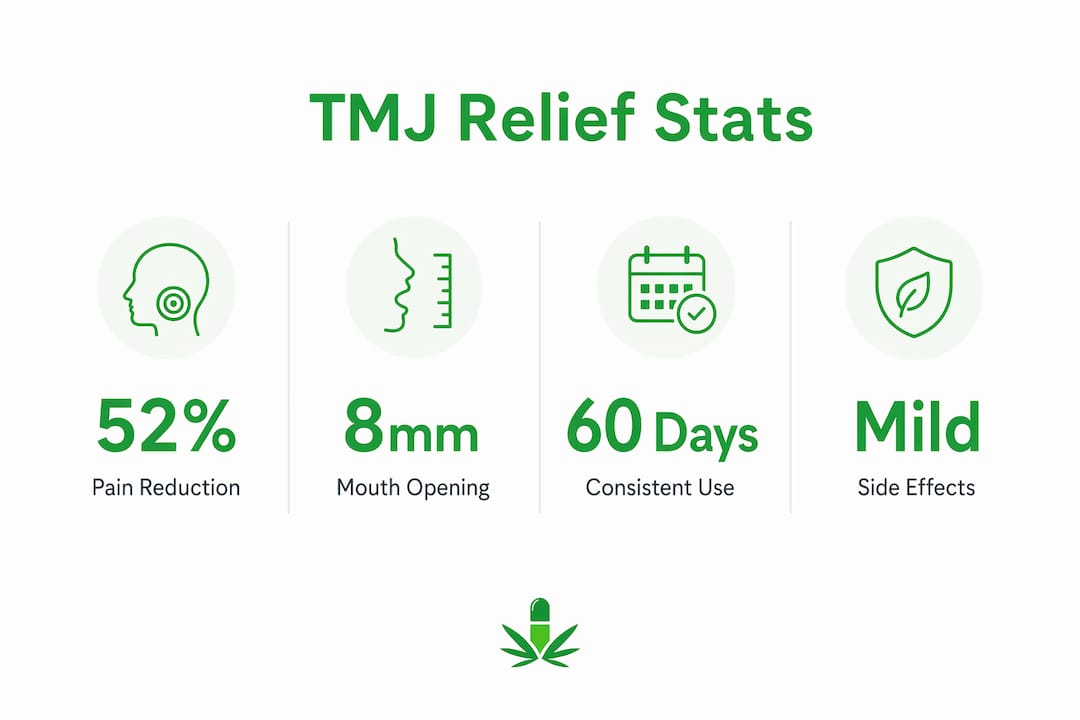
A separate case report tracked a patient with chronic myofascial TMJ pain over 60 days using full-spectrum cannabis oil at a 1:1 THC to CBD ratio. Pain scores dropped from 7 to 3 on the Numeric Rating Scale. Sleep quality improved measurably. Blood tests confirmed no organ-level safety concerns, and mild side effects were managed by adjusting the dose.
A broader systematic review and meta-analysis examined cannabis across chronic orofacial pain conditions. The odds ratio for TMJ pain relief was 0.68, which did not reach statistical significance. That finding does not mean cannabis fails. It means the existing trials are too small and too varied to produce a definitive pooled result. The individual study outcomes remain promising.
Safety data from clinical trials shows that mild side effects such as drowsiness and gastrointestinal discomfort occur in roughly 10% of patients using CBD. These effects are manageable with dose adjustments and rarely lead to discontinuation. No serious adverse events have been reported in TMJ-specific cannabis trials to date.
What are the best practices when using cannabis for TMJ relief?
Starting cannabis for jaw pain without a plan leads to inconsistent results and unnecessary side effects. The most effective approach follows a structured titration protocol.
- Start at the lowest effective dose. Clinical protocols begin at 2 mg per day of combined THC and CBD. This minimizes the risk of drowsiness and gastrointestinal discomfort while your body adjusts.
- Increase gradually over five weeks. The titration schedule used in the 2026 trial raised the dose incrementally, reaching up to 10 mg per day. Weekly increases give you time to assess tolerance.
- Choose sublingual oils over other delivery methods. Sublingual administration delivers cannabinoids directly into the bloodstream through the tissue under your tongue. This produces faster, more consistent absorption than edibles, which pass through the digestive system and vary widely in onset time.
- Track your symptoms. Use a simple daily log to record pain scores, jaw mobility, sleep quality, and any side effects. This data helps you and your clinician make informed adjustments.
- Work with a licensed clinician. Self-dosing without oversight increases the risk of taking too much too fast. A medical professional familiar with cannabis therapy can adjust your protocol based on your response.
- Integrate cannabis with other TMJ treatments. Cannabis for jaw pain works best alongside physical therapy, stress management techniques, and, where appropriate, a dental night guard. It is a complement to these approaches, not a replacement.
Pro Tip: Take your sublingual dose at night if drowsiness is a concern. Evening dosing lets the sedating effects of THC work in your favor by improving sleep, while you avoid any daytime impairment.
How does cannabis compare to other TMJ pain management options?
Cannabis sits alongside a range of established TMJ treatments, each with its own strengths and limits. Understanding where it fits helps you build a plan that actually works.
Standard TMJ treatments include NSAIDs like ibuprofen and naproxen for short-term inflammation, muscle relaxants for acute clenching episodes, physical therapy to restore jaw mobility, and cognitive behavioral therapy to address stress-related triggers. These options are well-studied and often effective for mild to moderate cases. They also carry limitations: long-term NSAID use raises gastrointestinal and cardiovascular risk, muscle relaxants can cause significant sedation, and behavioral therapy requires sustained commitment.
Cannabis offers several practical advantages over these options:
- Addresses multiple symptoms at once. A single cannabis formulation can reduce pain, ease muscle tension, lower anxiety, and improve sleep simultaneously.
- Fewer systemic side effects than NSAIDs. Long-term cannabis use at therapeutic doses does not carry the same gastrointestinal or cardiovascular risks associated with chronic NSAID use.
- Non-addictive at therapeutic doses. When used under clinical supervision with proper titration, cannabis does not produce the dependency risk associated with opioid-based pain management.
- Supports sleep without heavy sedation. Unlike prescription sleep aids, cannabis at low doses improves sleep quality without leaving patients groggy the next morning.
The limitation is honest: cannabis is not curative for TMJ. It does not repair damaged cartilage, correct jaw alignment, or resolve structural joint problems. Patients with primarily structural TMJ damage may see less benefit than those whose symptoms are driven by muscle tension, bruxism, or stress. The evidence base, while promising, still lacks the large randomized controlled trials needed to establish definitive treatment guidelines.
Cannabis works best as part of a broader plan. Pair it with physical therapy to rebuild jaw mobility, stress management to reduce clenching triggers, and regular clinical monitoring to keep your dosing on track.
Key Takeaways
Cannabis relieves TMJ symptoms most effectively when used as a complementary therapy with structured dosing, sublingual delivery, and clinical oversight.
| Point | Details |
|---|---|
| Clinical pain reduction | A 1:1 THC/CBD sublingual extract cut average TMJ pain scores from 7.35 to 3.50 over 90 days. |
| Jaw mobility improvement | Mouth opening increased from 45.9 mm to 49.9 mm in the same trial, improving daily function. |
| Best delivery method | Sublingual oils provide faster, more consistent absorption than edibles or other formats. |
| Start low, titrate slowly | Begin at 2 mg per day and increase gradually to minimize drowsiness and gastrointestinal discomfort. |
| Complementary role | Cannabis addresses pain, muscle tension, and sleep but does not repair structural joint damage. |
What I have learned about cannabis and TMJ after years of watching patients struggle
Chronic TMJ pain is one of the most undertreated conditions I encounter. Patients cycle through ibuprofen, night guards, and physical therapy for years without meaningful relief. When they ask about cannabis, the conversation is usually the first time anyone has taken their frustration seriously.
What I have seen consistently is this: patients whose TMJ is driven by stress, anxiety, and bruxism respond far better to cannabis therapy than those with primarily structural joint damage. The anxiolytic and muscle-relaxing effects of cannabinoids hit the actual root of the problem for that group. For them, cannabis is not a last resort. It is a logical first addition to their treatment plan.
The mistake I see most often is patients treating cannabis like an on-demand painkiller rather than a consistent therapy. Sporadic use does not build the steady cannabinoid levels needed to modulate the endocannabinoid system effectively. The clinical evidence supports daily, titrated dosing, not occasional use when pain spikes.
I also want to be direct about the evidence gap. The 2026 trial results are genuinely exciting, but one well-designed crossover study does not close the case. Larger, longer trials are needed. That said, the safety profile is favorable, the mechanism is sound, and the patient outcomes in existing research are hard to dismiss. Waiting for perfect evidence while living in daily pain is not a reasonable ask.
If you are in Virginia and considering this path, getting your medical cannabis certification is the practical first step. It gives you legal access to consistent, lab-tested products and connects you with clinicians who can guide your dosing properly.
— Jonathan
Getting your Virginia medical cannabis certification for TMJ relief
TMJ disorder qualifies as a chronic pain condition under Virginia’s medical cannabis program, which means you may be eligible for certification today.
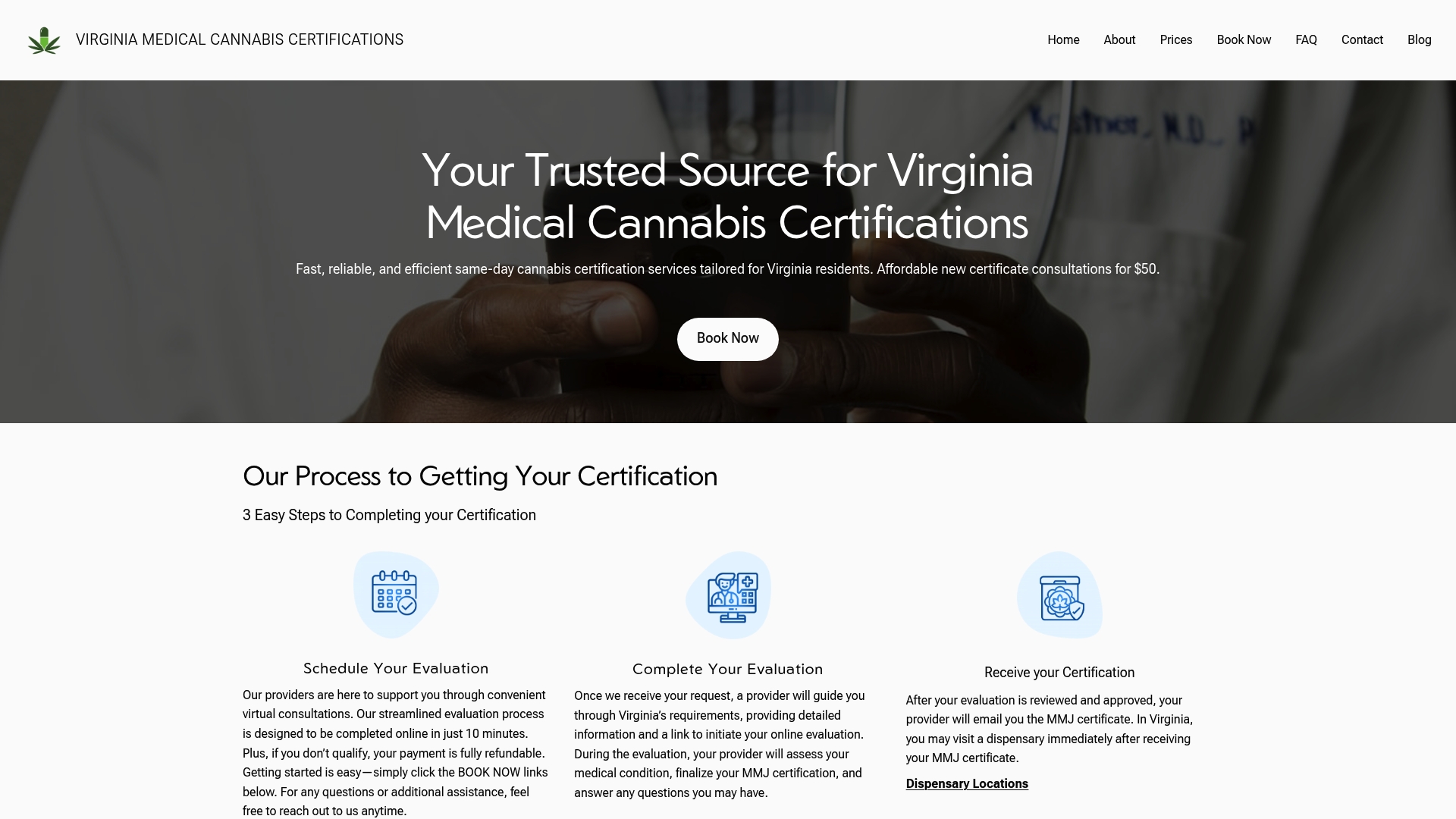
Virginia Medical Cannabis Certifications makes the process straightforward. You complete a 10-minute online evaluation for $50, and if you do not qualify, the fee is fully refunded. There is no guesswork about eligibility and no lengthy in-person appointments. Same-day certification is available, so you can move from consultation to legal cannabis access quickly. If you want to understand the full certification steps before you start, the complete certification guide walks you through every requirement. Chronic pain patients in Virginia have a clear, affordable path to legal cannabis products that can support their TMJ treatment plan.
FAQ
Does weed actually help TMJ pain?
Yes. A 2026 clinical trial showed a 1:1 THC/CBD sublingual extract reduced average TMJ pain scores from 7.35 to 3.50 over 90 days. Cannabis modulates pain through the endocannabinoid system’s CB1 and CB2 receptors.
What is the best form of cannabis for TMJ relief?
Sublingual oils with a balanced 1:1 THC to CBD ratio produce the most consistent results in clinical studies. They absorb faster than edibles and allow for precise, gradual dose adjustments.
How long does it take for cannabis to reduce TMJ symptoms?
Clinical case reports show measurable pain reduction within 60 days of consistent daily use. The 2026 crossover trial used a 90-day protocol with gradual titration starting at 2 mg per day.
Is cannabis safe to use for TMJ long-term?
The current safety profile is favorable. Mild side effects like drowsiness and gastrointestinal discomfort occur in roughly 10% of patients and resolve with dose adjustments. No serious adverse events have been reported in TMJ-specific trials.
Can Virginia residents get a medical cannabis card for TMJ pain?
Yes. Chronic pain conditions, including TMJ disorder, qualify under Virginia’s medical cannabis program. Virginia Medical Cannabis Certifications offers a $50 online evaluation with a full refund if you do not qualify.