

In Virginia? Get your medical cannabis card online today.
$50 new certification ($40 renewal), same-day telehealth visit with a licensed provider. No office visit needed.
Book your visitCan edibles cause gastritis or worsen existing symptoms?
Edibles do not cause gastritis in the clinical sense, which is defined as inflammation of the stomach lining typically caused by H. pylori infection, NSAID overuse, or chronic alcohol use. What edibles can do is aggravate gastritis symptoms in people who are already predisposed. The distinction matters because blaming cannabis alone often leads patients to miss the real culprit. THC is the primary cannabinoid responsible for most digestive side effects. THC relaxes the LES for 1 to 3 hours after consumption due to slower gastrointestinal absorption compared to inhaled cannabis. That relaxation allows stomach acid to travel upward, producing heartburn and reflux that feel identical to a gastritis flare. For someone with an already inflamed stomach lining, that acid exposure makes everything worse. CBD behaves differently. CBD shows anti-inflammatory activity in the gastrointestinal system, whereas THC can trigger nausea through CB1 receptor interaction. Patients with gastritis who want to use cannabis often tolerate CBD-dominant products better than high-THC edibles. That does not mean CBD is risk-free, but the pharmacological profile is more favorable for gut health. The gut-brain axis also plays a role. Cannabinoid effects on the gut vary widely between individuals, with intestinal responses ranging from constipation to diarrhea depending on dose, frequency, and personal biology. This variability is why two people can eat the same edible and have completely different digestive experiences.
How do edible ingredients worsen digestive issues?
The cannabinoids in edibles get most of the attention, but the food vehicle itself is often the real problem. Many users overlook ingredient lists, not recognizing that sweeteners, fats, and emulsifiers cause digestive symptoms in sensitive individuals independently of THC content.Sugar alcohols and osmotic irritation
Sugar alcohols are the most common hidden trigger in cannabis edibles. Sorbitol and maltitol cause osmotic diarrhea and gastrointestinal irritation, pulling water into the intestines and producing cramping, bloating, and loose stools. These symptoms closely mimic gastritis, which leads many patients to blame the cannabis rather than the sweetener. Gummies and chocolates are the edible formats most likely to contain sugar alcohols. If you experience cramping within 30 to 90 minutes of eating an edible, check the ingredient label for sorbitol, maltitol, xylitol, or erythritol before assuming the THC caused the problem.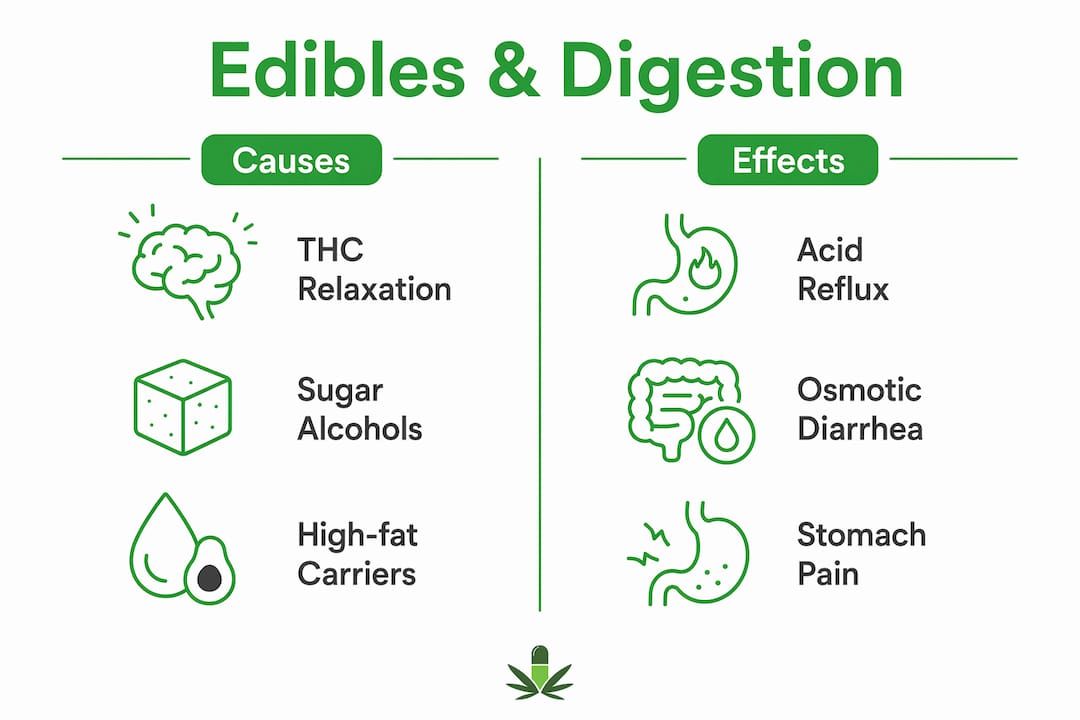
High-fat carriers and emulsifiers
High-fat edible ingredients such as butter or coconut oil are harder to digest and can irritate individuals with gallbladder issues or fat absorption problems. Bloating and abdominal pain after eating a brownie or cookie edible may have more to do with the fat content than the cannabinoid dose. Emulsifiers like lecithin, used to bind cannabis oil into food products, also cause bloating and loose stools in sensitive patients. The list of potential irritants in a single edible product can be surprisingly long:- Sugar alcohols (sorbitol, maltitol, xylitol)
- High-fat bases (butter, coconut oil, palm oil)
- Emulsifiers (soy lecithin, sunflower lecithin)
- Artificial flavors and colorings
- Gluten-containing flour in baked goods
How does dosing affect stomach irritation from edibles?
Dosing errors are one of the most preventable causes of edible-related stomach distress. Dose stacking from delayed THC onset leads to overwhelming nausea and cramping, increasing gastrointestinal distress significantly. The delayed onset of edibles, typically 45 minutes to 2 hours, causes many patients to take a second or third dose before the first one takes effect. The result is an accidental overdose that produces acute nausea, anxiety, and gut cramping. These symptoms are not gastritis, but they feel severe enough that patients often end up in urgent care. Understanding onset timing is the single most effective way to prevent this. Here are four practical steps to reduce dosing-related stomach problems:- Start with a low dose. Begin with 2.5 to 5 mg of THC and wait at least two hours before considering a second dose.
- Eat a light meal first. Taking edibles on an empty stomach accelerates absorption and intensifies side effects, including nausea and cramping.
- Track your timing. Write down when you took the edible and the dose so you do not lose track during the onset window.
- Use limonene for nausea relief. Sucking on a lemon can ease mild edible-induced nausea because limonene, a terpene found in lemon peel, has antiemetic properties.
What serious cannabis-related digestive conditions should you know about?
Gastritis symptoms from cannabis use are usually mild and manageable. A small group of heavy, long-term cannabis users develop a more serious condition called Cannabinoid Hyperemesis Syndrome (CHS). CHS is a rare but serious condition characterized by severe cyclic vomiting and abdominal pain, and it requires cessation of cannabis for relief. CHS is frequently misdiagnosed as severe gastritis or cyclic vomiting syndrome. The key distinguishing feature is that symptoms recur in cycles and are temporarily relieved by hot showers or baths. Standard antiemetic medications do not resolve CHS the way they resolve ordinary nausea. Watch for these red flags that signal you need medical evaluation rather than home management:- Persistent vomiting lasting more than 24 hours
- Blood in vomit or stool
- Signs of dehydration (extreme thirst, dark urine, dizziness)
- Severe abdominal pain that does not ease within a few hours
- Cyclic episodes of vomiting that return every few weeks
Key Takeaways
Edibles do not cause gastritis directly, but THC-driven acid reflux, sugar alcohol additives, high-fat carriers, and dose stacking all worsen gastritis symptoms in sensitive patients.| Point | Details |
|---|---|
| THC relaxes the LES | THC causes acid reflux for 1 to 3 hours post-consumption, worsening existing gastritis symptoms. |
| Additives are often the culprit | Sugar alcohols like sorbitol and maltitol cause cramping and diarrhea independent of cannabinoid content. |
| CBD is better tolerated | CBD’s anti-inflammatory profile makes it a safer option for patients with existing gut inflammation. |
| Dose stacking causes acute distress | Taking multiple doses before onset leads to severe nausea and cramping unrelated to gastritis itself. |
| CHS requires medical attention | Cyclic vomiting with hot-shower relief is a CHS warning sign and needs clinical evaluation, not home remedies. |
What I’ve learned about edibles and gut health after years of patient conversations
The most common mistake I see is patients blaming THC for every stomach problem they experience with edibles. In reality, separating cannabinoid effects from food vehicle ingredients is the key to troubleshooting digestive issues. A patient who switches from a sugar-alcohol-sweetened gummy to a plain oil capsule often finds their cramping disappears entirely, even at the same THC dose. The second mistake is assuming that because cannabis has anti-inflammatory properties, it cannot possibly irritate the gut. CBD does show anti-inflammatory activity in the GI tract, but THC at high doses does the opposite for many people. The dose and the cannabinoid ratio both matter enormously. My honest recommendation for anyone with gastritis or a sensitive stomach is to treat edibles like a new medication. Read the full ingredient list, start at the lowest possible dose, and give yourself a full two hours before drawing any conclusions. If symptoms persist after you have ruled out additives and corrected your dosing, that is the point to involve a healthcare provider. Cannabis can absolutely be part of a thoughtful health plan for Virginia patients, but it works best when used with real medical guidance rather than trial and error alone.— Jonathan
Medical cannabis certification for Virginia patients with digestive concerns
Patients managing digestive conditions deserve professional guidance on how cannabis fits into their care, not just general internet advice. Virginia Medical Cannabis Certifications offers same-day online certifications for $50, completed in about 10 minutes from home. The process is fully refundable if you do not qualify, so there is no financial risk in finding out whether you are eligible. A certified provider can help you identify which cannabis products and doses are appropriate for your specific health needs, including digestive conditions like chronic nausea or pain. If you are ready to get started, the certification process is straightforward and built for Virginia residents who want fast, affordable access to medical cannabis.
FAQ
Can edibles cause gastritis in healthy people?
Edibles do not cause gastritis in otherwise healthy people. They can trigger acid reflux and stomach irritation, but true gastritis requires inflammation of the stomach lining from causes like H. pylori or NSAID overuse.What edible ingredients are most likely to irritate the stomach?
Sugar alcohols like sorbitol and maltitol are the most common culprits, followed by high-fat carriers like butter and coconut oil. These ingredients cause cramping and diarrhea independently of the THC content.How long does THC-related acid reflux last after eating an edible?
THC-induced relaxation of the lower esophageal sphincter lasts approximately 1 to 3 hours after consuming an edible, which is longer than with inhaled cannabis due to slower gastrointestinal absorption.What is Cannabinoid Hyperemesis Syndrome and how is it different from gastritis?
CHS is a rare condition caused by long-term heavy cannabis use, producing severe cyclic vomiting and abdominal pain that is temporarily relieved by hot showers. Gastritis does not follow this cyclic pattern and is not relieved by heat.Are CBD edibles safer than THC edibles for people with gastritis?
CBD is generally better tolerated by patients with gut inflammation because it shows anti-inflammatory activity in the GI system, whereas THC can trigger nausea and acid reflux through CB1 receptor interaction.Recommended
- Virginia Medical Cannabis Certification Made Easy: Online Steps, Approval Criteria, and Our $50 Refund Guarantee – Virginia Medical Cannabis Certifications
- Home – Virginia Medical Cannabis Certifications for $50
- The Benefits of Medical Marijuana in Virginia — and How to Get Certified in Minutes – Virginia Medical Cannabis Certifications
- Liability Waiver and Release – Virginia Medical Cannabis Certifications
In Virginia? Get your medical cannabis card online today.
$50 new certification ($40 renewal), same-day telehealth visit with a licensed provider. No office visit needed.
Book your visit