
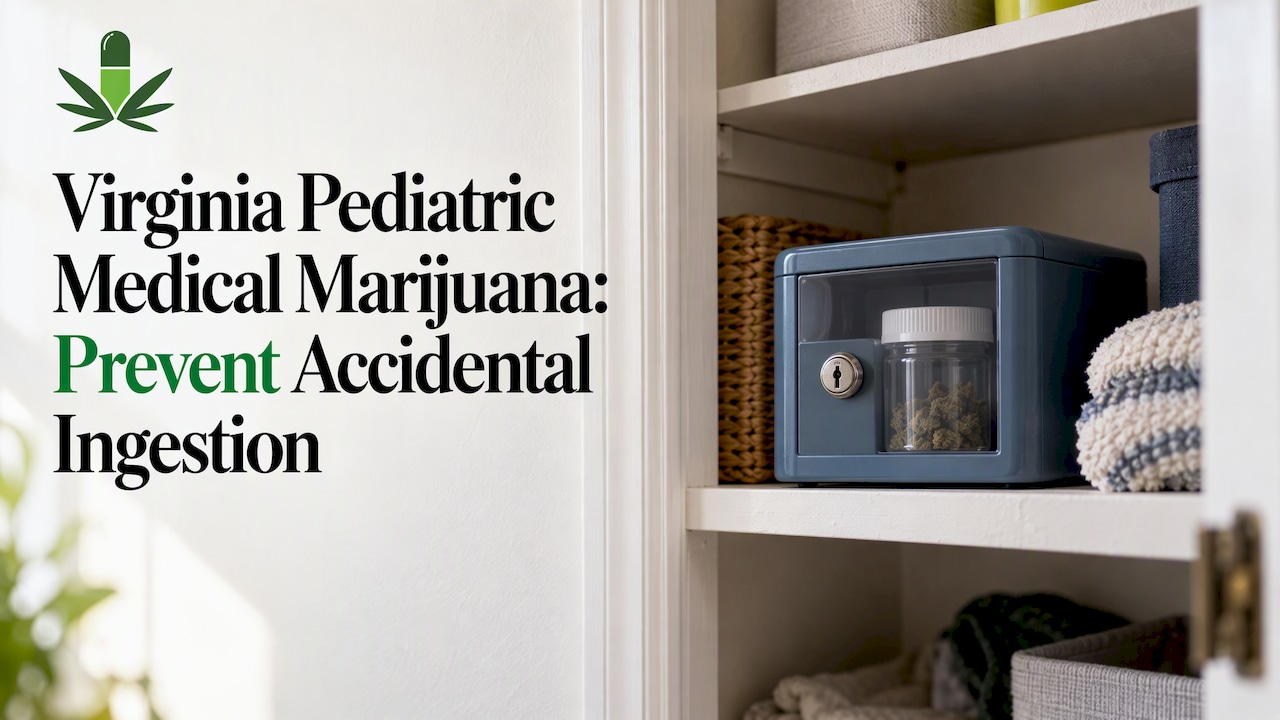
Yes, children in Virginia can access medical cannabis when a qualified practitioner issues a written certification that names a parent or legal guardian to pick up products. That said, evidence for most pediatric uses remains limited, and one FDA-approved option, EPIDIOLEX, exists specifically for certain seizure syndromes. Accidental ingestion is a real risk, so safe storage matters as much as the certification itself.
Table of Contents
- Eligibility and How to Get a Written Certification for a Minor in Virginia
- Which Pediatric Conditions Clinicians May Consider and What the Evidence Shows
- Safety, Dosing Considerations, and Preventing Accidental Poisoning
- Practical Access: Dispensary Pick-Up, Pharmacist Checks, and Documentation
- How to Talk With Your Child’s Clinician: Checklist of Questions and Documents to Bring
- Legal Protections and Rights for Pediatric Patients and Caregivers Under Virginia Law
- Insurance Coverage and Potential Costs for Pediatric Medical Marijuana Certifications and Products
- Process and Criteria for Renewing Pediatric Medical Marijuana Certifications Specific to Virginia
- Overview of Research Status and Ongoing Studies About Medical Marijuana Use in Pediatrics Relevant to Virginia
- Guidance on Communicating With Schools and Third Parties About a Child’s Medical Marijuana Certification in Virginia
- Balancing Access and Safety in Virginia
- How We Help Parents Get a Written Certification Quickly
- FAQ
- Sources
Eligibility and How to Get a Written Certification for a Minor in Virginia
A written certification is the document that makes medical cannabis legally available to your child in Virginia, and only specific practitioners can issue one. Physicians, physician assistants, and nurse practitioners licensed in Virginia can evaluate a minor and determine whether cannabis treatment is appropriate for their condition. The Virginia Cannabis Control Authority confirms that these practitioners assess benefit on a case-by-case basis rather than following a fixed list of approved diagnoses.
For a minor, the certification has to include more than the child’s information. Virginia law requires the practitioner to list a parent or legal guardian directly on the certification, which is what authorizes that adult to pick up products at a licensed dispensary on the child’s behalf.
Before your visit, gather these items:
- Proof of Virginia residency for both the patient and the parent or guardian, such as a utility bill or lease.
- A valid photo ID for the parent or legal guardian who will appear on the certification.
- Any prior diagnosis records or treatment history relevant to your child’s condition.
Certifications are typically valid for up to one year, though your practitioner decides the exact duration based on your child’s situation. If you want someone besides yourself to pick up products, Virginia allows a registered agent to be added, though each agent can only serve a limited number of patients at a time.
Which Pediatric Conditions Clinicians May Consider and What the Evidence Shows
Most Virginia practitioners who certify minors are working with a narrow set of conditions where cannabis-based treatment has shown some measurable benefit. These commonly include:
- Refractory epilepsy, including Dravet syndrome and Lennox-Gastaut syndrome.
- Certain cases of spasticity tied to neurological conditions.
- Select symptom management for autism spectrum disorder, though evidence here is thinner.
- Other severe, treatment-resistant conditions where standard therapies have not worked.
A PMC review of pediatric cannabis evidence found that cannabidiol has stronger, better-documented support for certain seizure disorders, while evidence for neurodevelopmental conditions like autism remains limited or inconclusive. That distinction matters when you’re weighing options with your child’s clinician.
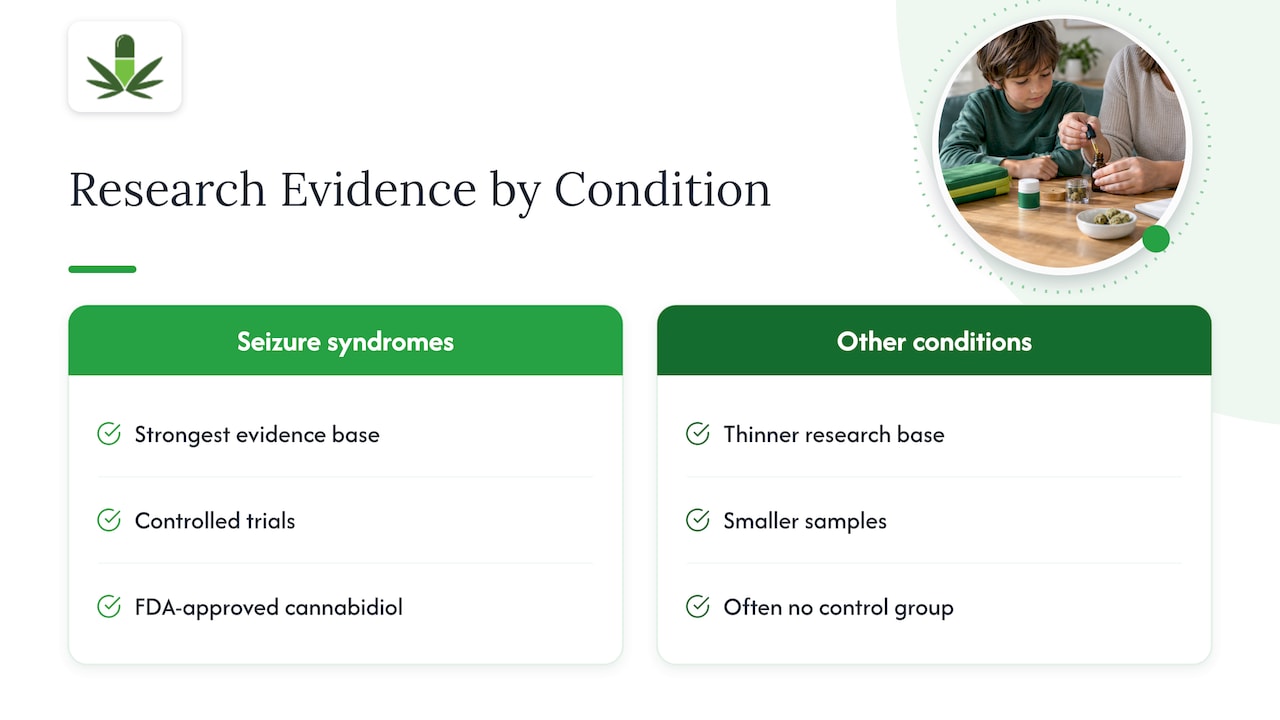
The clearest example of high-quality evidence is cannabidiol itself. The FDA has approved EPIDIOLEX for seizures associated with Lennox-Gastaut syndrome, Dravet syndrome, and tuberous sclerosis complex in patients one year of age and older. This approval rests on controlled trials with defined dosing and manufacturing standards, which is a different evidence bar than most botanical cannabis products sold through dispensaries.
For conditions outside those seizure syndromes, the research picture looks different. Many pediatric cannabis studies rely on small samples, open-label designs without a control group, or case series rather than randomized trials. Outcomes researchers typically track include seizure frequency, behavioral changes, and anxiety symptoms, but the sample sizes and study designs behind many of these findings mean conclusions stay tentative rather than definitive.
This is also where the distinction between EPIDIOLEX and dispensary products becomes practical rather than academic. EPIDIOLEX is manufactured to a consistent standard with known cannabidiol concentration in every dose. Botanical products available through Virginia dispensaries vary more in composition, which is one reason practitioner guidance and dosing caution matter so much for pediatric patients.
Safety, Dosing Considerations, and Preventing Accidental Poisoning
Keeping your child safe starts with understanding where the real risk comes from, and the data points squarely at edibles. Pediatric research tracking emergency cases found a very large increase in edible cannabis ingestion among young children between 2017 and 2021, largely because gummies and other edible products are easily mistaken for ordinary snacks.
Knowing the warning signs helps you act fast if an accidental ingestion happens:
- Severe drowsiness or unusual difficulty waking your child.
- Breathing that seems slow, shallow, or labored.
- Unresponsiveness or extreme lethargy that doesn’t improve.
If you notice any of these signs, call Poison Control at 1-800-222-1222 immediately, or call 911 if your child is unresponsive or struggling to breathe.
Pro Tip: Store all cannabis products in a locked container, out of sight and out of reach, the same way you’d store prescription medication, and avoid products packaged to look like candy whenever you have a choice.
If your child is prescribed EPIDIOLEX specifically, your clinician should order baseline liver function tests before starting treatment and monitor periodically afterward, since the prescribing information flags liver enzyme changes as something to watch. This is also the point to discuss any other medications your child takes, since interactions can affect dosing.
Pharmacists at dispensaries play a safety role too. They’re required to verify your certification and ID at pickup, and they have professional discretion to refuse dispensing if something about the request raises a safety concern. That extra check is built into the system for a reason.
Practical Access: Dispensary Pick-Up, Pharmacist Checks, and Documentation
Once your child has a written certification, picking up products at a Virginia dispensary follows a predictable pattern. Here’s what to expect:
- Bring the written certification (often as a QR code on the CCA portal) along with a valid photo ID for the parent or legal guardian listed on it.
- Expect the dispensary pharmacist to verify both documents before the first dispensing, and to keep dispensing records on file for future visits.
- Know that dispensing limits apply: a 90-day supply window and a cap on botanical ounces allowed within a 30-day period.
- If you want a second parent, guardian, or caregiver able to pick up products, ask your practitioner to add them as a registered agent on the certification before your dispensary visit.
Pharmacists aren’t just checking boxes here. They have the authority to pause dispensing if they believe doing so protects your child’s safety, which is part of why the process can feel more thorough than a typical pharmacy pickup.
How to Talk With Your Child’s Clinician: Checklist of Questions and Documents to Bring
A productive evaluation, whether in person or via telehealth, starts with being prepared. Before your appointment, bring:
- A seizure log or behavior tracking notes if relevant to your child’s condition.
- A current list of medications and prior treatments that have been tried.
- Proof of Virginia residency and photo ID for the parent or guardian who will appear on the certification.
During the visit, it helps to ask directly what benefit your clinician expects, what evidence supports that expectation for your child’s specific condition, how follow-up and monitoring will work, and whether any current medications could interact with cannabis treatment.
Pro Tip: If you anticipate needing a registered agent for pickups, mention it at the start of the appointment so your practitioner can include that information on the written certification the first time around.
Legal Protections and Rights for Pediatric Patients and Caregivers Under Virginia Law
Virginia law builds specific protections into the medical cannabis program for families with a certified minor. Once a practitioner issues a valid written certification naming a parent or legal guardian, that adult has legal standing to purchase and possess cannabis products on the child’s behalf within the limits the state sets.
This protection extends to registered agents as well. A parent can designate a trusted adult, often a grandparent, co-guardian, or caregiver, to pick up products when the primary guardian cannot. The administrative rules governing registration require that agent to go through identity and residency verification before being added, which protects the integrity of the certification system.
Possessing or administering cannabis under a valid written certification does not expose a parent or guardian to the criminal liability that applies to unauthorized possession. That said, these protections are specific to compliance with the written certification’s terms, the dispensing limits, and registration requirements. Operating outside those boundaries, such as obtaining products without a valid certification or exceeding dispensing limits, falls outside the law’s protections.
If questions come up about your specific situation, a documented conversation with your child’s certifying practitioner or a review of the current statute is the most reliable way to confirm your rights before you act.
Insurance Coverage and Potential Costs for Pediatric Medical Marijuana Certifications and Products
Health insurance in Virginia, including Medicaid, does not cover the cost of obtaining a medical cannabis written certification or the botanical products dispensed under it. This is consistent with how insurers nationwide treat state-authorized cannabis programs, since cannabis remains a Schedule I substance federally and falls outside what most plans will reimburse.
The clearest exception is EPIDIOLEX. Because it’s an FDA-approved prescription medication, it can be billed through standard pharmacy insurance channels the way any other prescription drug would, and your insurance plan’s formulary determines your specific coverage and copay.
For the certification process itself, costs are paid out of pocket directly to the practitioner or certification service. Dispensary product costs vary by product type and quantity, and families should plan for ongoing out-of-pocket spending as part of managing a child’s treatment this way.
Process and Criteria for Renewing Pediatric Medical Marijuana Certifications Specific to Virginia
Written certifications for minors don’t last indefinitely. Virginia practitioners set a validity period of up to one year, and once that period ends, your child needs a new evaluation to continue accessing dispensary products.
Renewal generally means another assessment of whether cannabis treatment is still benefiting your child, not just a rubber stamp. Your practitioner will want to know how your child has responded since the last certification, whether symptoms have changed, and whether the dosing or product type needs adjustment. Bringing updated seizure logs, behavior notes, or other tracking documents makes this conversation faster and more useful.
Plan ahead rather than waiting until the certification expires. A gap between an expired certification and a renewed one means a gap in legal dispensary access, which can disrupt treatment for a child who depends on consistent dosing. Scheduling the renewal evaluation a few weeks before expiration gives enough buffer for any follow-up requests from the practitioner.
Overview of Research Status and Ongoing Studies About Medical Marijuana Use in Pediatrics Relevant to Virginia
Pediatric cannabis research has grown substantially over the past decade, but it remains uneven across conditions. The strongest body of evidence centers on treatment-resistant epilepsy syndromes, where controlled trials supported FDA approval of cannabidiol for Dravet syndrome, Lennox-Gastaut syndrome, and tuberous sclerosis complex.
Outside of seizure disorders, the research base is thinner. Studies examining autism spectrum disorder symptoms, spasticity, and other neurodevelopmental conditions tend to rely on smaller samples and designs without a control group, which limits how confidently clinicians can predict outcomes for an individual child.
Families dealing with severe pediatric conditions sometimes look beyond cannabis entirely toward clinical trials for other emerging treatments. Organizations like the Robert H. Lurie Comprehensive Cancer Center maintain information on pediatric clinical trial access for families navigating serious diagnoses, which can be a useful parallel resource depending on your child’s specific situation.
Virginia’s program itself doesn’t fund or conduct its own pediatric cannabis research. Its role is regulatory: the Cannabis Control Authority oversees practitioner certification, dispensary licensing, and patient registration, while the clinical evidence informing practitioner decisions comes from national research. That means the research landscape will likely keep shifting as more controlled studies are published, and today’s guidance may look different in a few years.
Guidance on Communicating With Schools and Third Parties About a Child’s Medical Marijuana Certification in Virginia
If your child’s school needs to administer medication during the day, or if you want staff aware of a medical cannabis certification for safety reasons, a written plan helps everyone stay on the same page. Virginia schools don’t have a standardized statewide form for this, so start the conversation directly with your child’s school nurse or administrator.
Bring a copy of the written certification and be clear about what, if anything, you’re asking the school to do. Many pediatric cannabis treatment plans involve dosing at home rather than during school hours, which can simplify the conversation considerably. If medication needs to be administered on-site, ask what documentation the school’s policy requires and whether a note from the certifying practitioner would satisfy it.
The same approach applies to other third parties, such as childcare providers or extended family who help with caregiving. Share only what’s necessary for them to respond appropriately in an emergency, and keep a copy of the certification accessible in case a situation arises when you’re not present. Clear, proactive communication tends to prevent misunderstandings before they start.
Balancing Access and Safety in Virginia
Virginia’s program makes lawful access genuinely possible for families who need it, but the certification itself is only the starting point. The real work happens in the clinician’s judgment about whether cannabis treatment fits a specific child’s condition, and in the safety habits parents build at home afterward. Families don’t have to navigate that alone, and a straightforward path to a qualified evaluation matters just as much as the legal framework behind it.
— Jonathan
How We Help Parents Get a Written Certification Quickly
We built our certification process around what Virginia families actually need: a fast, clear path to a qualified practitioner evaluation without weeks of waiting. Our same-day telehealth evaluations are available statewide, so whether you’re in Richmond, Hampton Roads, or Northern Virginia, you can complete a clinical evaluation from home.
- New patient certifications cost $50, and renewals are $40, both paid only after your online evaluation is complete.
- If you don’t qualify, the fee is refundable.
- Our evaluations take about 10 minutes and are reviewed by a qualified clinician who determines whether your child’s condition supports a written certification.

When a certification is approved, it includes the parent or legal guardian information needed for dispensary pickup as required by law. Book your evaluation today and get the process moving for your family.
This article is general information, not a substitute for advice from a qualified doctor. Consult a qualified healthcare professional about your own circumstances before acting on anything here.
FAQ
Can medical marijuana be prescribed to children?
Medical marijuana isn’t “prescribed” the way a traditional drug is, but a licensed Virginia practitioner can issue a written certification for a minor when they determine the child would benefit. The one exception is EPIDIOLEX, an FDA-approved cannabidiol medication that is formally prescribed for specific pediatric seizure syndromes.
What are the new marijuana laws in Virginia for 2026?
Virginia’s written certification system, overseen by the Cannabis Control Authority, continues to govern how patients, including minors with a listed parent or guardian, access medical cannabis through licensed dispensaries. For the most current rule changes, check the Cannabis Control Authority’s official guidance directly, since program details can be updated throughout the year.
Can a 17 year old get a medical marijuana card?
Yes, a minor can be certified for medical cannabis in Virginia, but the written certification must include a parent or legal guardian’s information, since that adult is the one authorized to pick up products at a dispensary. The minor cannot complete the certification or dispensary pickup independently.
Is medical marijuana legal in Virginia now?
Yes, medical cannabis is legal in Virginia for patients, including minors, who have a valid written certification from a licensed practitioner. Possession and purchase outside the terms of that certification and the state’s dispensing limits is not protected under the program.
Sources
- Patients & caregivers — Virginia Cannabis Control Authority
- Virginia Code — Medical Cannabis (written certification rules)
- Study on pediatric edible cannabis exposures and risks (PubMed)
- Medical Cannabis in Children — PMC (NIH review)
- EPIDIOLEX prescribing information (FDA)