
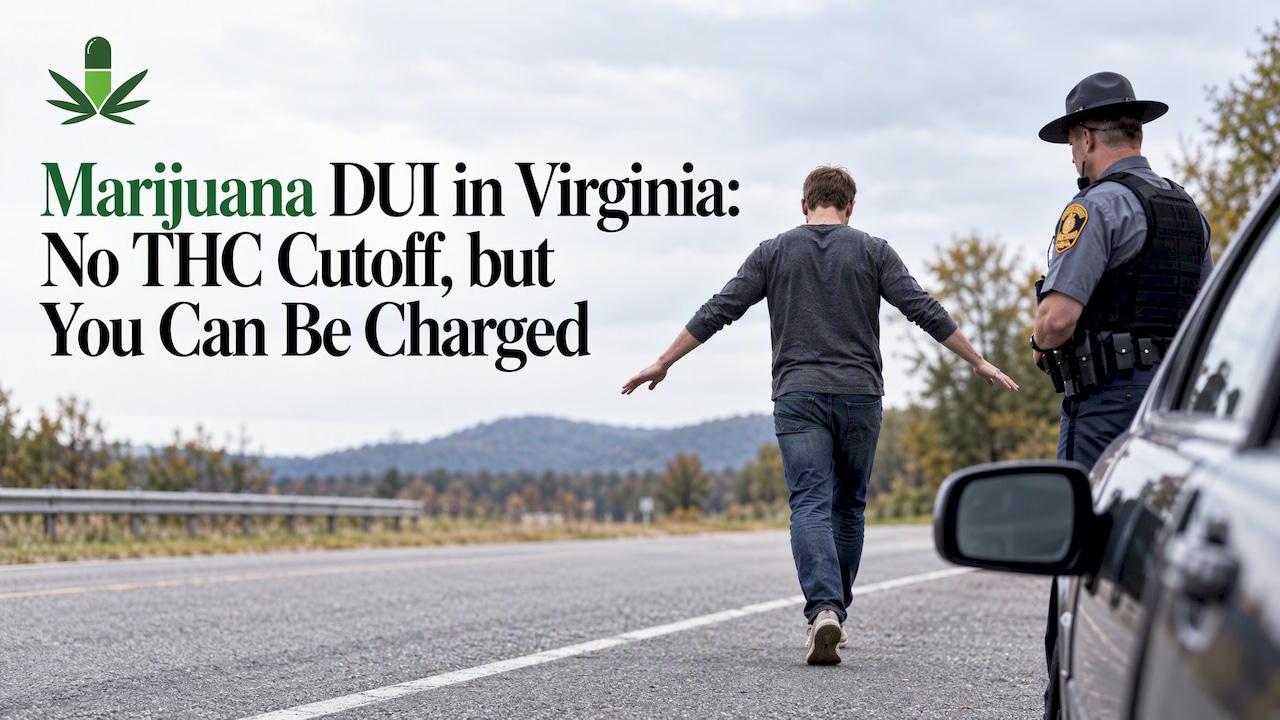
Yes, driving while impaired by marijuana is illegal in Virginia, even though state law sets no fixed THC limit the way it does for alcohol. A marijuana DUI charge can bring criminal penalties, an immediate administrative license suspension, and real trouble if you’re on probation and facing a drug test, all governed by Va. Code §18.2-266 and Virginia DMV rules.
Table of Contents
- Virginia’s legal standard for marijuana-impaired driving
- How police identify and test for marijuana impairment
- Penalties, jail time, and license consequences for marijuana DUI
- Probation drug tests and the collateral consequences of a positive result
- What to do if you’re stopped, arrested, or facing a probation test
- Verified Virginia telehealth medical-cannabis certification providers
- What drivers consistently get wrong about marijuana and driving
- How we help eligible Virginia residents get certified
- FAQ
- Sources
Virginia’s legal standard for marijuana-impaired driving
Virginia law doesn’t set a per se THC limit the way it sets a 0.08% blood alcohol threshold. Instead, §18.2-266 makes it unlawful to drive while under the influence of any drug to a degree that impairs your ability to drive safely, and that standard applies whether the drug is marijuana, a prescription medication, or something else entirely. Prosecutors cannot point to a number and call it proof. They have to show impairment itself.
That’s where §18.2-268.10 comes in. Blood test results showing THC are admissible in court, but for drugs other than alcohol, the law requires other evidence connecting the drug’s presence to actual impaired driving. A blood test alone rarely wins or loses a case.
A few things shape how these cases unfold:
- Virginia’s implied consent law means that by driving on state roads, you’ve already agreed to chemical testing if you’re lawfully arrested for suspected impaired driving.
- Refusing a blood test after arrest triggers its own administrative penalties, separate from the DUI charge itself.
- Because there’s no numeric threshold, your case often turns on officer observations, field test performance, and expert testimony about how THC behaves in the body.
How police identify and test for marijuana impairment
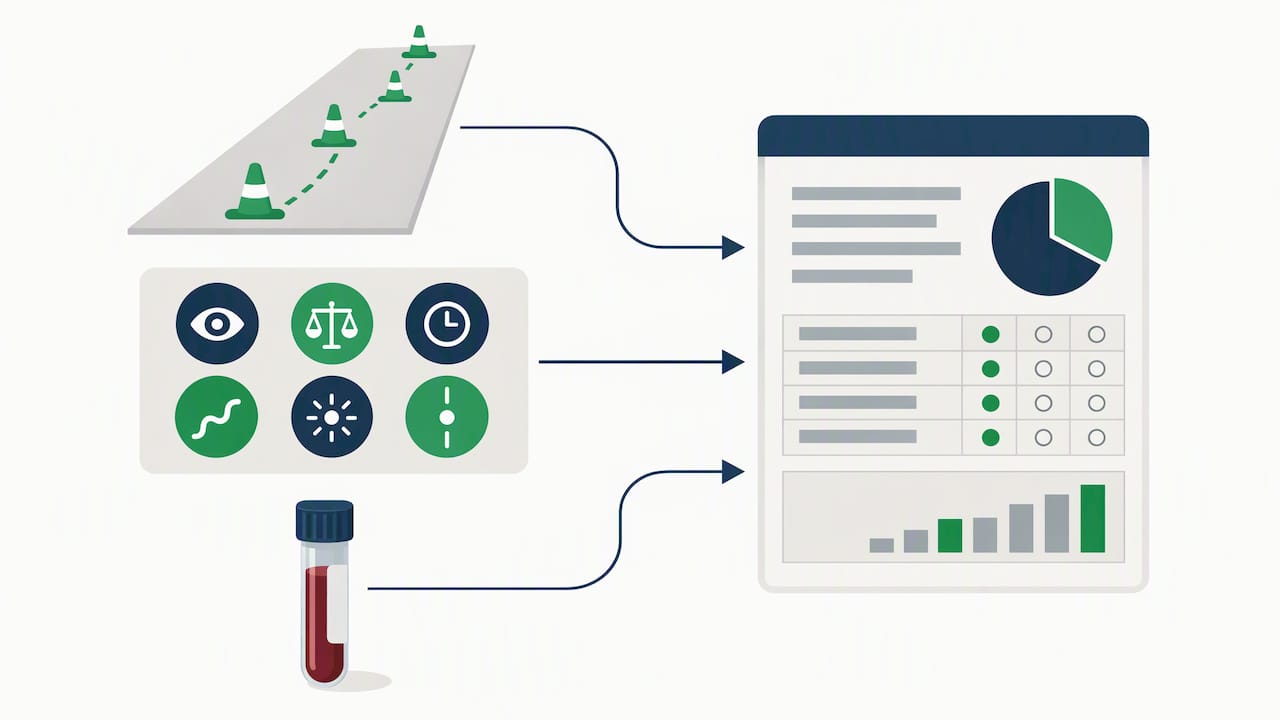
Officers build a drugged-driving case step by step, and most of it happens before anyone draws blood. Here’s the typical sequence:
- Initial observation: an officer notices erratic driving, weaving, delayed reactions, or a traffic violation that prompts a stop.
- Roadside indicators: the odor of marijuana, red or glassy eyes, slowed speech, or admissions during conversation can establish reasonable suspicion.
- Standardized Field Sobriety Tests (SFSTs): these validated tests, originally designed for alcohol, are still used to document coordination and attention deficits.
- Drug Recognition Expert (DRE) evaluation: specially trained officers run a structured 12-step evaluation looking at vital signs, pupil size, and muscle tone to identify which drug category may be involved.
- Chemical testing: once arrested, you’re typically asked to submit a blood sample, since breath tests only measure alcohol and can’t detect THC.
Blood samples go to the Department of Forensic Science, which runs a tiered process, screening first and then confirmatory testing, before results reach the prosecutor, a protocol described in local police general orders like Richmond’s DUI/DUID procedure.
Pro Tip: If you’re arrested, ask whether a DRE evaluation was conducted and request the specific SFST scoring sheet later, since these details often matter more to your defense than the blood test number itself.
Penalties, jail time, and license consequences for marijuana DUI
A first marijuana DUI conviction in Virginia is a Class 1 misdemeanor, carrying up to 12 months in jail and a fine, though many first offenders avoid jail time absent aggravating factors. Penalties escalate quickly after that:
- A second offense within ten years adds mandatory minimum jail time and a longer license revocation.
- A third offense within ten years becomes a felony, with mandatory minimum incarceration and an extended license suspension.
- Causing injury or death while driving impaired, or racking up multiple prior convictions, can push charges into felony territory even on what would otherwise be a lower-level offense.
Separate from the criminal case, Virginia’s administrative license suspension (ALS) kicks in immediately at arrest, a civil penalty that runs whether or not you’re ultimately convicted, according to DMV guidance on drinking and driving. A first offense brings a 7-day suspension, a second brings 60 days, and a third holds your license suspended until trial. Restricted licenses and ignition interlock requirements often follow, depending on the offense and whether the court grants a restricted license.
Probation drug tests and the collateral consequences of a positive result
If you’re already on probation, whether from a prior DUI or an unrelated offense, a positive marijuana test can trigger a violation hearing independent of any new criminal charge. Judges have discretion, but consequences can include added conditions, extended supervision, or in serious cases, revocation of a suspended sentence.
A few things to keep in mind if you’re facing supervision or a pending DUI conviction:
- Virginia DUI convictions typically require an ASAP/VASAP screening and treatment program before license reinstatement, and skipping it delays getting your license back.
- Probation officers generally have authority to order random drug screens, and refusing a test is often treated the same as a positive result.
- Beyond the courtroom, a conviction or probation violation can affect employment background checks and, for commercial drivers, your CDL status specifically.
If you’re facing a probation-related test or hearing, talking to a defense attorney before the test, not after a violation is filed, gives you far more options.
What to do if you’re stopped, arrested, or facing a probation test
What you do in the first hour after a stop or notice of testing matters as much as anything that happens later. A few steps to follow:
- At the scene, stay calm and cooperative, but avoid volunteering details about your consumption or timeline, since those statements often become evidence.
- If arrested, state clearly that you want an attorney before answering further questions.
- On chemical testing, understand that Virginia’s implied consent law means refusal carries its own administrative penalty separate from the DUI charge.
- After release, request copies of the police report, the SFST scoring, and any lab paperwork, and photograph your vehicle and the stop location if you can.
- For probation testing, ask directly whether you can request GC/MS confirmatory testing on a positive screen, since initial screens produce false positives more often than confirmatory methods, guidance echoed in resources on probation drug testing and requesting lab confirmation.
Pro Tip: Contact a Virginia DUI attorney before your first court date, not after, since early involvement can affect how evidence is challenged.
Verified Virginia telehealth medical-cannabis certification providers
If you’re a Virginia resident with a qualifying medical condition, a medical cannabis certification is a separate legal track from DUI law, but it’s worth knowing your options for legitimate, verified telehealth providers operating in the state.
- We offer a flat fee for new certifications and a lower fee for renewals, with pricing details available on our website.
- Our evaluations run about 10 minutes online, with rapid turnaround for most applicants.
- The fee is refundable if you’re not approved, which removes some financial risk of applying.
- Larger providers on this list carry bigger review volumes, reflecting longer time in the market, but that scale doesn’t change what the certification itself covers.
What drivers consistently get wrong about marijuana and driving
The biggest misconception we see is treating THC like alcohol, as if a certain level automatically means impairment. Virginia’s law doesn’t work that way, and neither does the science: THC lingers in blood long after any high has worn off, which is part of why prosecutors lean on field observations, not just lab numbers. A medical cannabis certification, including a valid Virginia one, never changes what counts as impaired driving. If you’re facing charges or a probation test, getting legal advice fast, and understanding your actual test results, matters more than guessing about THC thresholds.
— Jonathan
How we help eligible Virginia residents get certified
If you qualify for medical cannabis under Virginia law and want a straightforward path to certification, we handle new certifications and renewals through a same-day telehealth evaluation that takes about 10 minutes. A quick summary of what we offer:

- $50 for a new certification, $40 for a renewal, both one-time fees.
- Fully refundable if you don’t qualify, so there’s no financial risk in checking your eligibility.
- Appointments with a practicing Virginia clinician, often available quickly without long waits for an in-person visit.
A medical cannabis certification doesn’t change DUI law or give you any legal protection against an impaired driving charge; it simply confirms your eligibility to use cannabis for a qualifying medical condition under Virginia’s medical program. If you’re ready to check your eligibility, visit our services page to book a same-day evaluation.
This article is general information, not a substitute for advice from a qualified lawyer. Consult a qualified legal professional about your own circumstances before acting on anything here.
FAQ
Is it safe to drive under the influence of marijuana?
No, driving under the influence of marijuana is not safe and it’s illegal under Virginia law, which prohibits driving while impaired by any drug. Impairment can affect reaction time and judgment, and a public survey found a notable share of Virginians mistakenly believe cannabis makes them better drivers, a belief state officials specifically warn against.
Does Virginia have recreational marijuana laws?
Virginia allows adults to possess limited amounts of marijuana for personal use, but retail sales and broader recreational rules continue to evolve. Regardless of possession laws, driving while impaired by marijuana remains illegal under the same statute that governs alcohol-impaired driving.
Is a DUI a felony in Virginia in 2026?
A first or second marijuana DUI is typically charged as a Class 1 misdemeanor, but a third offense within ten years becomes a felony with mandatory minimum jail time. Aggravating factors like causing injury or death, or multiple prior convictions, can also elevate charges to felony level.
How do police determine marijuana DUI?
Officers typically rely on driving behavior, roadside indicators like odor or appearance, and standardized field sobriety tests to establish probable cause for arrest. After arrest, a blood test, not a breath test, is used to detect THC, with samples analyzed by the Department of Forensic Science using screening and confirmatory testing.
Does a medical marijuana certification protect me from a DUI charge?
No, a Virginia medical cannabis certification does not provide any legal defense against a DUI or DUID charge. The impairment standard under §18.2-266 applies equally to certified medical patients and recreational users alike.
Sources
- § 18.2-266. Driving motor vehicle, engine, etc., while intoxicated, etc.
- Drinking and driving | Virginia Department of Motor Vehicles
- General Order 06-08 – DUI/DUID (Richmond Police Department)