

Cannabinoids can ease some kinds of nausea, and the evidence is strongest for FDA-approved synthetic cannabinoids used when chemotherapy-related nausea does not respond to standard medicines. Under Virginia law, a practitioner may certify cannabis when it would relieve symptoms of a diagnosed condition, which can include persistent nausea. Talk with your treating clinician before you start.
Table of Contents
- What does the evidence say about cannabis for nausea?
- Can nausea qualify you for a Virginia medical cannabis certification?
- How do you get certified, step by step?
- What safety issues should you discuss with your clinician?
- Which products and routes do patients commonly use for nausea?
- What happens when you visit a Virginia dispensary?
- Why I favor access with caution
- How we help Virginians pursue certification for nausea
- FAQ
- Sources
What does the evidence say about cannabis for nausea?
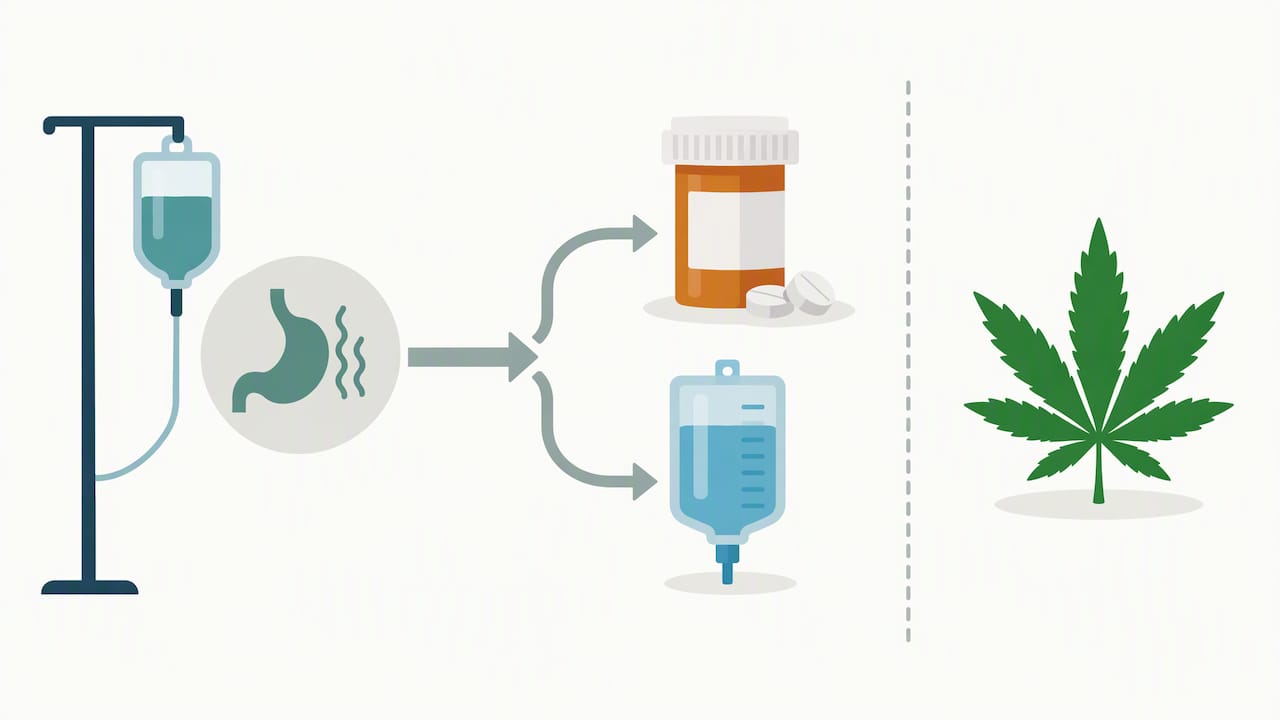
The clearest evidence comes from cancer care. The National Cancer Institute notes that dronabinol and nabilone are FDA-approved for chemotherapy-related nausea and vomiting in patients who have not responded to standard antiemetic therapy. Oncology guidelines treat cannabinoids as a breakthrough option when standard multi-drug regimens fall short.
Here is where the picture gets less clear:
- Evidence for inhaled or whole-plant cannabis is thinner than evidence for the approved synthetic drugs.
- A large survey of cancer patients found many reported symptom relief, including for nausea, but they also reported side effects and rarely told their oncology team.
- Many patients use cannabis for nausea and appetite loss, yet oncologists often feel insufficiently informed to answer questions about it.
- Patient reports are useful, but they are not the same as rigorous trial results.
Nausea itself is a complex symptom. A review of its pathophysiology explains that acute and chronic nausea often need different approaches. That is one more reason to bring your clinician into the conversation.
Can nausea qualify you for a Virginia medical cannabis certification?
It can. Virginia’s certification statute lets a practitioner issue a written certification when they determine cannabis would benefit treatment or relieve symptoms of a diagnosed condition or disease. That is a clinical judgment, so the practitioner decides whether it fits your situation.
Plan to have these items ready:
- Be ready to discuss your nausea, including how long it has lasted, what triggers it and what you have already tried.
- Be prepared to discuss your diagnosed condition or symptoms with the practitioner.
A certification is valid for up to one year, though a practitioner may set an earlier expiration date. If you want to see how conditions are reviewed, our guide to Virginia qualifying conditions walks through it.
How do you get certified, step by step?
The process involves a practitioner evaluation and steps in the Virginia Cannabis Control Authority portal. Follow these steps:
- Gather your photo ID and proof of Virginia residency.
- Book a visit with a licensed practitioner.
- Explain your symptoms and history. If the practitioner decides cannabis is appropriate, they issue a written certification.
- Watch for a portal email, then claim your electronic certification and create your account in the Virginia Cannabis Control Authority’s portal. The Getting Started Guide shows both the practitioner and patient flows.
- Download your digital certification card, as laid out in the patient help guide.
Many patients receive a digital certification immediately after an evaluation, which can allow dispensary access once it is processed, according to the Virginia statute.
Pro Tip: Check your email, including spam, right after your visit so you can claim your certification without delay.
What safety issues should you discuss with your clinician?
Cannabis is not risk-free, and nausea is a symptom where safety questions matter. The CDC’s public health guidance points to several concerns worth raising with your clinician:
- Impaired thinking and judgment, which affects driving and daily tasks.
- Cardiovascular effects.
- Interactions with other medications, so review your full list with your clinician.
- Overconsumption, especially with edibles, where effects arrive slowly and people take more than intended.
There is also a paradox. The CDC notes that excessive cannabis use can cause severe nausea and vomiting. Discuss worsening symptoms with your clinician. If your vomiting gets worse with regular use, tell your clinician.
The CDC’s cannabis FAQ says the FDA has approved dronabinol and nabilone for chemotherapy-associated nausea and vomiting. That approval does not extend to natural cannabis, so cannabis should never replace conventional care you need.
Which products and routes do patients commonly use for nausea?
We can’t tell you what to take, but we can explain the trade-offs so you can have a better conversation with your practitioner and the dispensary pharmacist.
- Product type and ingredients: Effects and risks can vary, so discuss the options with your clinician and dispensary pharmacist.
- Caution: Cannabis can impair thinking and judgment, affect cardiovascular health, and interact with other medicines. Discuss potential risks and product choice with your clinician before use.
If your nausea ties to a stomach condition, our article on CBD and gastritis covers what Virginia patients should know.
What happens when you visit a Virginia dispensary?
Expect a check, not a hurdle. Staff verify your written certification, often by scanning a QR code or barcode, and confirm your identity. Under § 4.1-1603, a copy of your certification stays on file for two years.
- Bring your digital certification and a printed backup, plus your photo ID.
- A pharmacist or technician can counsel you on product selection.
- Ask dispensary staff about the requirements and any limits that apply to your purchase.
- You may also opt into the state’s voluntary registration card as formal proof.
Not sure where to shop? Our list of Virginia dispensaries is a good starting point.
Why I favor access with caution
Nausea can wear a person down, and I think lawful access to a clinician who listens is a good thing. Streamlined certification removes barriers while keeping a professional in the loop. But the evidence for cannabis is uneven, so I would treat it as one option to discuss, not a shortcut. Keep a simple symptom log, follow up with your clinician after starting any product, and use the official state process.
— Jonathan
How we help Virginians pursue certification for nausea
We offer online certification appointments for Virginia residents. A new certification costs $50 and a renewal costs $40. Contact us to ask about our refund policy. Our short online evaluation fits right into the state portal steps above, so eligible patients can move toward the dispensary quickly.

- Book a new certification or renewal on our services page.
- Want to check first? Read about our risk-free refundable consult.
This article is general information, not a substitute for advice from a qualified doctor. Consult a qualified healthcare professional about your own circumstances before acting on anything here.
FAQ
Does Virginia have medical marijuana?
Yes. Virginia runs a Medical Cannabis Program through its Cannabis Control Authority. Patients with a valid written certification can use licensed dispensaries.
Does marijuana control nausea?
It may help some people, but results vary. The strongest evidence supports FDA-approved synthetic cannabinoids for chemotherapy-related nausea, while evidence for inhaled cannabis is limited. Ask your clinician whether it fits your case.
Can marijuana make you nauseous in the morning?
It can, in some frequent users. Heavy or frequent use is linked to severe nausea and vomiting. If this sounds familiar, speak with your clinician.
Are there any marijuana gummies that can help with nausea?
Some patients use edibles because they last longer, but they act slowly and are easy to overdo. The CDC warns edibles carry a heightened risk of unintentional overconsumption. Ask your practitioner and dispensary pharmacist about product choice.
Sources
- § 4.1-1601. Certification for use of cannabis for treatment
- CCA Portal Getting Started Guide ALL — Virginia Cannabis Control Authority
- Cannabis and Cannabinoids – NCI
- Cdc