Cannabis edibles affect urinary retention by interacting with cannabinoid receptors that regulate bladder muscle control and nervous system signaling. Urinary retention is the inability to fully empty the bladder, and it ranges from mild discomfort to a medical emergency requiring catheterization. The relationship between edibles and bladder function is genuinely complex. Edibles can relieve bladder pain and reduce urgency at low doses, yet heavy, prolonged use can cause the bladder muscle to stop contracting altogether. Understanding both sides of this equation helps you make a safer, more informed choice.
In Virginia? Get your medical cannabis card online today.
$50 new certification ($40 renewal), same-day telehealth visit with a licensed provider. No office visit needed.
Book your visitHow do edibles affect urinary retention and bladder function?
Cannabis edibles interact with the bladder through CB1 and CB2 cannabinoid receptors found throughout the urinary tract. CB1 receptors sit on the detrusor muscle, the smooth muscle that contracts to push urine out. When cannabinoids bind to these receptors, they can reduce involuntary contractions and ease bladder pain. At therapeutic doses, this is the effect patients with overactive bladder or interstitial cystitis are seeking.
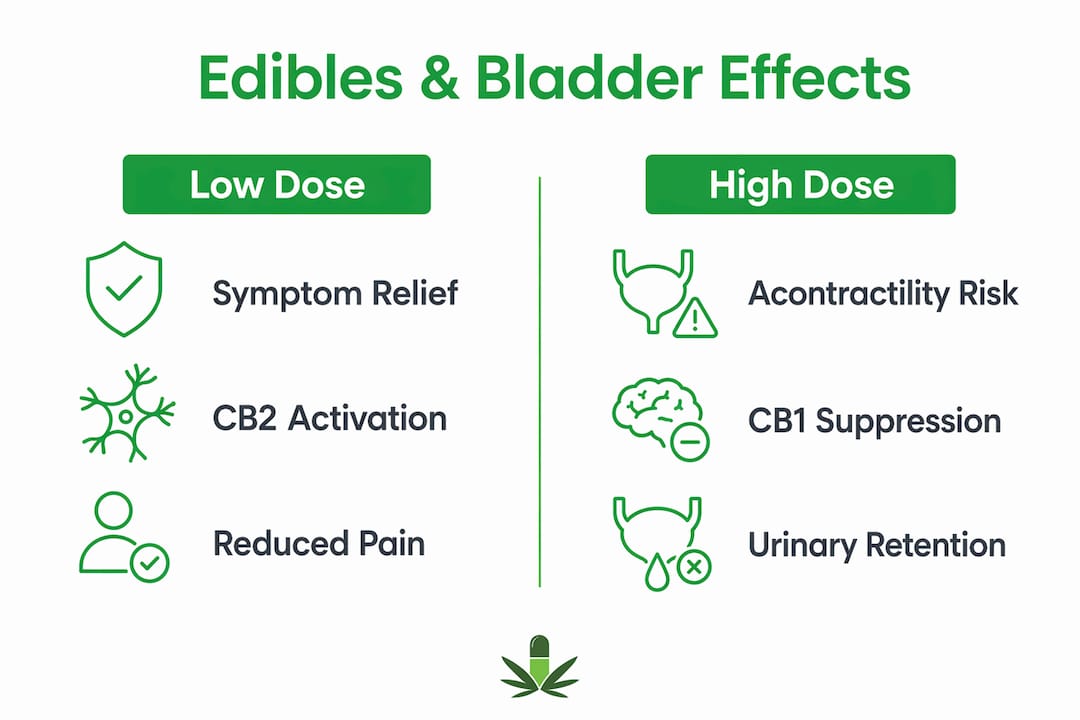
The risk appears at the other end of the dosing spectrum. Heavy cannabis use can cause reversible detrusor acontractility, a condition where the bladder muscle loses its ability to contract at all. One documented case involved a 22-year-old male who developed acute urinary retention from heavy use and recovered normal bladder function only after four months of complete abstinence. That recovery timeline matters: this is not a quick fix.
A large nationwide claims database study found a statistically significant association between Cannabis Use Disorder and lower urinary tract symptoms across age groups, including young adults. This tells you that the bladder effects of cannabis are not limited to older patients or those with pre-existing conditions. Dose, frequency, and individual baseline health all shape the outcome.
The practical takeaway is this: cannabis edibles occupy a narrow therapeutic window for bladder health. Below that window, you may get meaningful symptom relief. Above it, you risk making retention worse.
- CB1 receptors on the detrusor muscle respond to cannabinoids by reducing involuntary contractions.
- Low to moderate doses may relieve bladder pain and urgency.
- Heavy, chronic use can cause detrusor acontractility and acute urinary retention.
- Symptom reversal after heavy use requires sustained abstinence, often measured in months.
- Individual factors like age, baseline urinary health, and concurrent medications change the risk profile.
Pro Tip: If you are already experiencing urinary retention symptoms, start with the lowest possible dose and track your symptoms for at least two weeks before adjusting.
Why do edibles affect the bladder differently than smoking?
The way your body processes edibles is fundamentally different from inhaled cannabis, and that difference matters for bladder symptoms. When you eat an edible, your liver converts THC into 11-hydroxy-THC, a metabolite that crosses the blood-brain barrier more readily and produces stronger, longer-lasting effects than inhaled THC.
Here is the specific sequence that makes edibles unique for urinary function:
- Delayed onset. Standard edibles peak 1–3 hours after ingestion, compared to minutes for smoked cannabis. Many patients misread this delay as the edible “not working” and take a second dose, which dramatically increases the risk of over-sedation and bladder muscle suppression.
- Longer duration. Effects from edibles last 6–10 hours. That extended window means bladder muscle suppression can persist through the night, which is relevant if you are already managing retention.
- Dual-peak effect. THC from edibles undergoes enterohepatic circulation, meaning it gets reabsorbed through bile hours after the first peak. This creates a secondary plasma spike that can catch patients off guard and intensify bladder effects unexpectedly.
- Delayed withdrawal. Edible users often experience withdrawal symptoms 36–48 hours after their last dose, longer than smokers, because THC accumulates in fat tissue and clears slowly. Gastrointestinal and urinary symptoms during this window are sometimes mistaken for unrelated conditions.
The clinical implication is clear: edibles require more patience and more precision than any other consumption method. Misreading the delayed onset is one of the most common reasons patients accidentally dose too high and worsen their urinary symptoms.
What dosages and formulations work best for bladder symptoms?
Choosing the right cannabinoid ratio and dose is the most practical decision you can make for bladder health. CBD-dominant formulations and low-dose THC edibles are the starting point for most patients managing urinary pain or urgency.
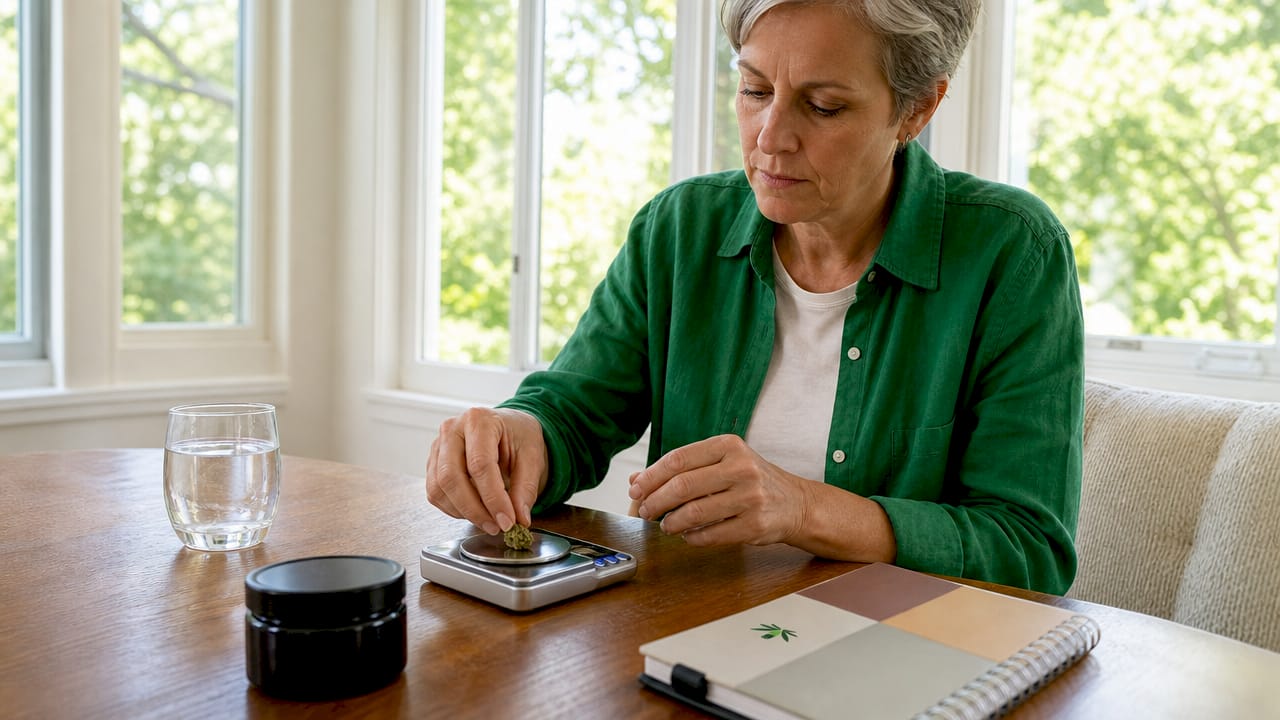
Evidence-based dosage guidance points to 15–25mg CBD with 1–3mg THC for daytime use, where you need functional clarity alongside symptom relief. For nighttime use, 5–10mg THC edibles taken 90 minutes before sleep allow the delayed onset to align with bedtime, reducing the risk of mid-night retention episodes. These figures come from protocols designed for interstitial cystitis, a condition that shares significant overlap with urinary retention symptoms.
CBD-dominant options carry a lower risk of bladder muscle suppression because CBD does not bind strongly to CB1 receptors the way THC does. For patients with bladder-related pain who want anti-inflammatory effects without strong psychoactive impact, a high-CBD, low-THC edible is the safer starting point.
Pro Tip: Patients taking GLP-1 medications like semaglutide should be especially cautious. GLP-1 drugs delay gastric emptying, which pushes the edible’s peak THC concentration well beyond the typical 1–3 hour window and raises the risk of accidental overdose and prolonged bladder suppression.
| Formulation | Best use case | Key consideration |
|---|---|---|
| High-CBD, low-THC (15–25mg CBD / 1–3mg THC) | Daytime bladder pain and urgency | Minimal psychoactive effect; lower retention risk |
| Moderate THC (5–10mg THC) | Nighttime symptom relief | Take 90 minutes before sleep; monitor retention |
| THC-dominant (above 10mg THC) | Not recommended for retention patients | High risk of detrusor suppression with regular use |
Tolerance builds with regular edible use, and withdrawal symptoms can mimic or worsen urinary symptoms. Cycling off periodically and keeping a symptom log helps you separate cannabis effects from underlying bladder changes.
Natural remedies and lifestyle approaches that support edible use
Cannabis edibles work best as part of a broader approach to managing urinary retention, not as a standalone fix. Treating underlying causes of retention, whether that is an enlarged prostate, a medication side effect, or a nerve issue, is the clinical priority before adding any supplement or cannabis product.
Several lifestyle changes directly support bladder health and make edible therapy more effective:
- Avoid bladder irritants. Alcohol and caffeine worsen urinary symptoms and counteract the anti-inflammatory benefits of CBD. Cutting both gives your bladder a cleaner baseline.
- Practice timed voiding. Scheduling bathroom visits every 2–3 hours trains the bladder and reduces the urgency that often accompanies retention.
- Do pelvic floor exercises. Kegel exercises strengthen the muscles that support bladder control. They are particularly useful for patients with stress-related retention or post-surgical weakness.
- Stay hydrated with water. Concentrated urine irritates the bladder lining. Drinking adequate water throughout the day reduces that irritation without overloading the bladder.
- Review your medications. Anticholinergic drugs, antihistamines, and certain antidepressants can cause or worsen urinary retention. A physician review of your current medications often reveals a fixable cause before cannabis is even considered.
The cannabinoid profile you choose also interacts with these lifestyle factors. CBG, for example, shows early evidence of anti-inflammatory effects on the urinary tract, which may complement CBD-dominant edibles for patients with bladder inflammation as a root cause.
Key Takeaways
Cannabis edibles can relieve bladder symptoms at low doses, but heavy use causes reversible detrusor acontractility that worsens urinary retention and requires months of abstinence to reverse.
| Point | Details |
|---|---|
| Dose determines outcome | Low-dose edibles may ease bladder pain; heavy use causes detrusor muscle failure. |
| Edibles act slower and longer | The 1–3 hour onset and 6–10 hour duration require careful timing to avoid over-suppression. |
| CBD-dominant is safer to start | 15–25mg CBD with 1–3mg THC suits daytime use with lower retention risk. |
| Lifestyle changes amplify results | Avoiding caffeine, alcohol, and bladder irritants improves edible therapy outcomes. |
| Underlying causes come first | Identify and treat the root cause of retention before adding cannabis to your regimen. |
My honest read on cannabis edibles and bladder health
I have reviewed a lot of clinical material on this topic, and the pattern that stands out most is the paradox problem. Patients reach for cannabis edibles specifically because they want relief from bladder pain or urgency. Then, because edibles are slow to kick in, they take more. Over weeks or months of heavy daily use, the very symptom they were treating gets worse. The detrusor muscle essentially goes quiet.
What makes this frustrating is that the reversal is real and well-documented. A patient who stops heavy use can recover normal bladder function, but it takes months, not days. That is a long time to be managing worsening retention while waiting for your body to recalibrate.
The patients who do well with edibles for bladder health share a few traits. They start low, they track their symptoms honestly, and they treat edibles as one tool among several rather than a primary treatment. They also work with a physician who knows they are using cannabis, which changes the entire risk calculation.
Virginia residents have a real advantage here. Getting a medical cannabis certification in Virginia is straightforward, and having that certification means you can access dispensary products with accurate cannabinoid labeling, rather than guessing at the dose in an unlabeled product. That labeling accuracy is not a minor detail when you are trying to stay within a narrow therapeutic window for bladder function.
The uncomfortable truth is that cannabis edibles are not a natural remedy in the passive sense. They are a pharmacologically active intervention with a dose-response curve that can go in either direction. Treat them accordingly.
— Jonathan
Getting certified to access edibles safely in Virginia
Patients in Virginia who want to use edibles for bladder health need a medical cannabis certification to access dispensary products with verified cannabinoid content.
Virginia Medical Cannabis Certifications offers same-day online consultations for $50, completed in about 10 minutes. If you do not qualify, the fee is fully refunded. Urinary retention and related bladder conditions are among the qualifying conditions reviewed during the evaluation. Certified patients gain access to dispensary products with accurate CBD and THC labeling, which is the only reliable way to stay within the low-dose therapeutic range that supports bladder health. You can start your certification today and get a same-day decision. For a full walkthrough of the process, the certification guide with refund details covers every step clearly.
FAQ
Can edibles cause urinary retention?
Yes. Heavy, chronic cannabis use can cause detrusor acontractility, a condition where the bladder muscle stops contracting, leading to urinary retention. This effect is reversible with sustained abstinence but may take several months to resolve.
What edible dose is safe for bladder symptoms?
Daytime use of 15–25mg CBD with 1–3mg THC is the evidence-based starting point for bladder pain management. Nighttime relief typically uses 5–10mg THC taken 90 minutes before sleep.
Why do edibles feel stronger than smoked cannabis for bladder effects?
Edibles produce 11-hydroxy-THC through first-pass liver metabolism and create a dual-peak effect from enterohepatic circulation, making effects stronger and longer-lasting than inhaled cannabis. This extended duration increases the risk of prolonged bladder muscle suppression.
How do I relieve urinary retention naturally alongside edible use?
Avoiding caffeine and alcohol, practicing timed voiding every 2–3 hours, and doing pelvic floor exercises all support bladder function. A physician should also review your medications since anticholinergic drugs are a common and treatable cause of retention.
Do I need a medical card to buy edibles for bladder health in Virginia?
Yes. A medical cannabis certification is required to purchase dispensary products in Virginia. Virginia Medical Cannabis Certifications provides same-day online evaluations for $50, with a full refund if you do not qualify.
In Virginia? Get your medical cannabis card online today.
$50 new certification ($40 renewal), same-day telehealth visit with a licensed provider. No office visit needed.
Book your visit