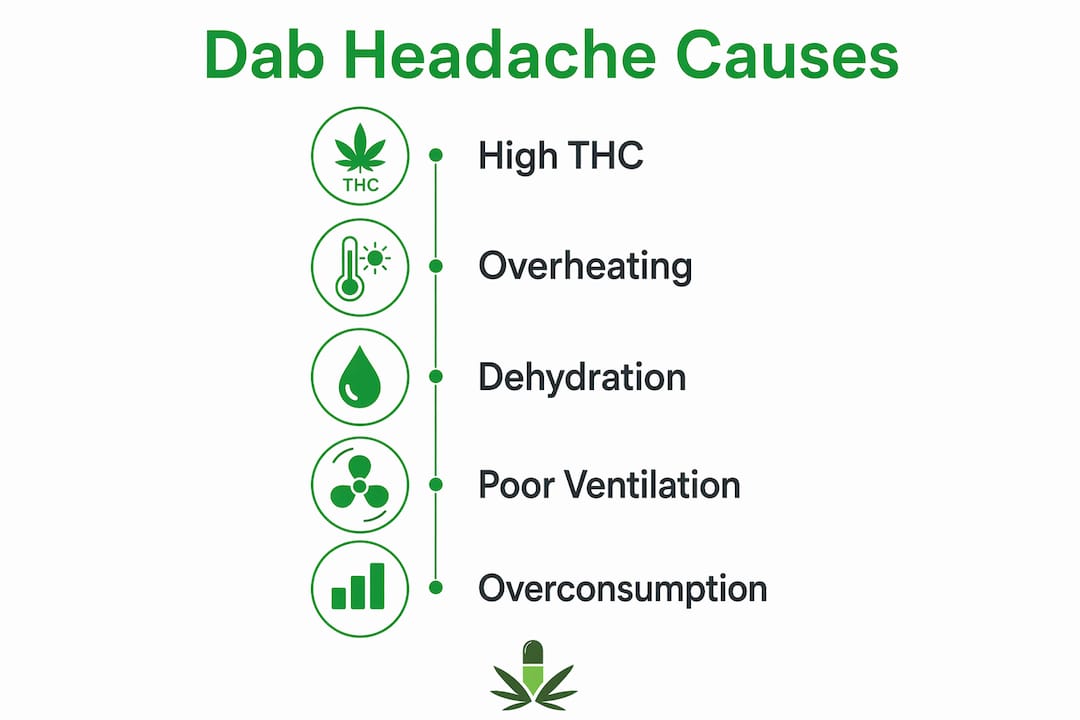
Dabs cause headaches primarily because their high THC concentration overwhelms the endocannabinoid system, triggering a cascade of physiological responses that include vascular changes, dehydration, and airway irritation. If you’ve asked yourself why do dabs give me headaches after a session, the answer almost always traces back to one or more of four factors: excessive THC potency, temperatures above 600°F producing toxic byproducts, THC’s diuretic effect depleting fluids, and carbon monoxide buildup from butane torches in poorly ventilated rooms. Understanding each factor gives you a clear path to fixing the problem. This article covers the science behind dab headache causes and gives you practical steps to reduce them.
Why do dabs give me headaches? The THC potency problem
Cannabis concentrates deliver THC at a far higher concentration than flower, and the lungs absorb it almost instantly. That rapid delivery can overwhelm the endocannabinoid system, producing what clinicians call “dabbing sickness”, a cluster of symptoms that includes headache, anxiety, nausea, and dizziness. Patients often underestimate dab potency, which makes accidental overconsumption the single most common cause of headaches after a session.
Repeated heavy use adds another layer of risk. About 30% of daily cannabis users experience withdrawal symptoms, including headaches, when they stop suddenly. That pattern mirrors medication overuse headache, where frequent consumption lowers the pain threshold over time and makes rebound headaches more likely on days you skip.
Terpene profiles in concentrates also matter. Terpene and cannabinoid interactions vary widely across products, meaning two concentrates with identical THC percentages can produce very different physiological responses. A product high in myrcene may feel sedating, while one rich in limonene may amplify anxiety and, with it, headache risk.
Practical steps to manage potency:
- Start with a rice grain sized amount and wait 10 minutes before taking more.
- Limit sessions to 2–3 per week to keep your headache threshold stable.
- Choose concentrates with known terpene profiles from a licensed dispensary.
- Track your dose and symptoms in a simple notes app to spot patterns.
Pro Tip: If you notice headaches only on days after heavy sessions, you are likely experiencing rebound headaches. Cutting frequency is more effective than cutting dose on any single day.
How does dabbing temperature affect headaches?
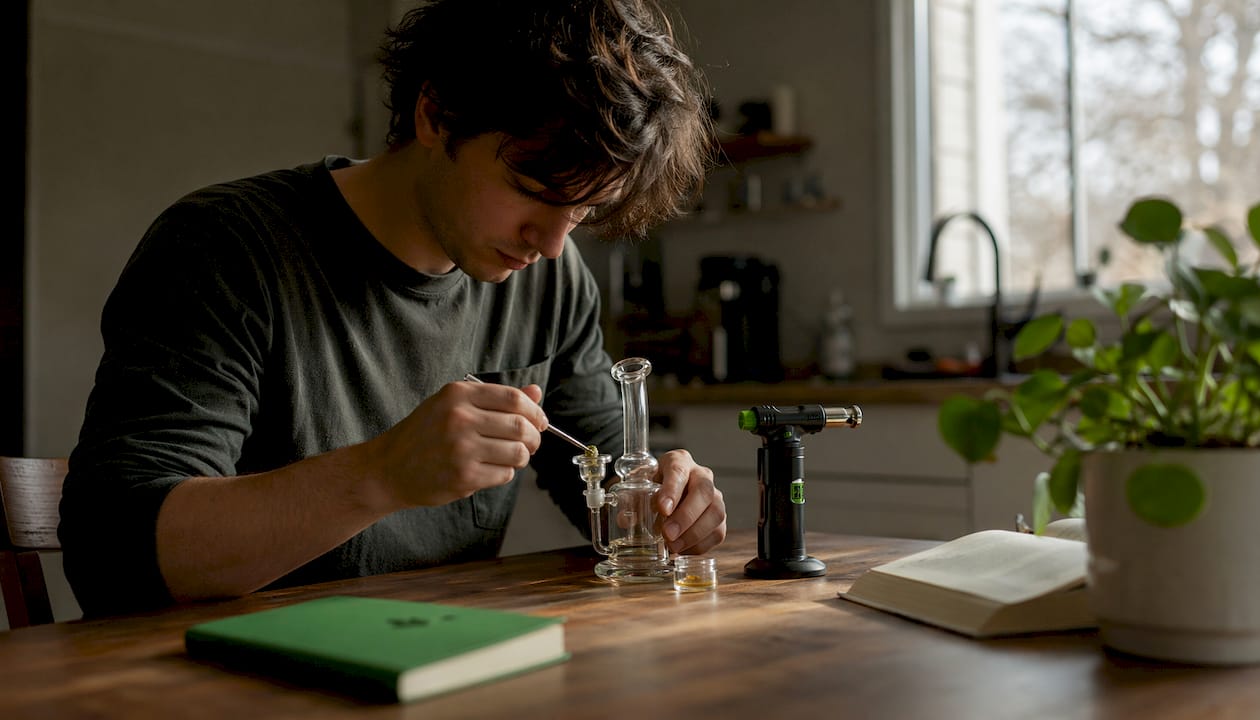
Temperature is the most underappreciated dab headache cause. The optimal dabbing range is 480°F–545°F. At those temperatures, terpenes vaporize cleanly and THC absorbs efficiently without producing significant irritants.
Push the nail above 600°F and the chemistry changes completely. Temperatures above 600°F cause combustion of terpenes, generating compounds like methacrolein and benzene. You can see the result as black residue on the nail. Those combustion byproducts irritate the airways and trigger inflammatory responses that radiate into headache pain.
Hot vapor also damages sensitive airway tissue directly. Rapid inhalation of superheated vapor inflames the mucous membranes lining the throat and sinuses. That inflammation alone can produce a tension headache within minutes of a session.
Temperature control methods
| Method | Temperature range | Key benefit |
|---|---|---|
| Infrared thermometer | Reads surface temp in real time | Prevents overheating before you dab |
| Electronic nail (e-nail) | Holds a fixed set temperature | Eliminates guesswork entirely |
| Cold start (reverse dab) | Starts below 400°F, rises slowly | Preserves terpenes, reduces irritants |
| Timer method (butane torch) | Heat 30 sec, cool 45–60 sec | Low cost, reasonably consistent |
Pro Tip: An e-nail is the single best investment for headache prevention. Consistent temperature control removes the two biggest variables: overheating and underheating.
Does dehydration from dabbing cause headaches?
Dehydration is a significant yet overlooked cause of cannabis headaches. THC interferes with thirst signals and increases urination, meaning you lose fluids faster than normal while simultaneously feeling less thirsty. Dry mouth compounds the problem by reducing saliva, which your body uses as an early dehydration signal.
The vascular effects of THC add complexity. THC can cause both vasodilation and vasoconstriction in cerebral blood vessels, and which response you experience depends on your individual physiology, dose, and tolerance. Vasodilation produces a throbbing, pressure headache similar to a migraine. Vasoconstriction produces a tighter, tension style headache. This is why two people can dab the same product and describe completely different headache types. You can read more about THC and blood sugar effects to understand the broader metabolic picture.
Hydration checklist for dabbing sessions:
- Drink at least 16 oz of water in the hour before your session.
- Keep a full glass of water within reach during every session.
- Avoid alcohol and caffeine on the same day, as both accelerate fluid loss.
- Replenish with an electrolyte drink if your session runs longer than 30 minutes.
- Monitor urine color: pale yellow means you are adequately hydrated.
High-THC dabs may also worsen migraines in people who are already prone to them. The combination of vascular disruption and sensory overload from anxiety creates conditions that can trigger a full migraine cycle. If you experience migraines regularly, lower doses and slower onset methods reduce that risk considerably.
What environmental factors cause headaches when dabbing?
The room you dab in matters as much as what you dab. Butane torches in sealed rooms generate carbon monoxide, a colorless, odorless gas that accumulates silently. CO symptoms, including dizziness, nausea, and headache, are frequently mistaken for an intense high. That misread leads people to sit through CO exposure rather than step outside for fresh air.
Concentrate quality is the second environmental variable. Low quality products may contain residual solvents, pesticides, or lipids from poor extraction processes. Inhaling those contaminants irritates lung tissue and triggers inflammatory headaches that feel different from a THC overconsumption headache. They tend to linger longer and resist hydration as a fix.
Here is how to set up a safe dabbing environment:
- Open a window or run a fan before lighting the torch. Cross ventilation clears CO faster than a single open window.
- Clean your rig after every 3–5 sessions. Reclaim buildup produces harsh, acrid vapor that concentrates irritants with each hit.
- Buy lab-tested concentrates only. A certificate of analysis (COA) from a third-party lab confirms the absence of residual solvents and pesticides.
- Never dab in a car or closet. Small sealed spaces reach dangerous CO levels within minutes of torch use.
- Install a CO detector in any room where you regularly use a butane torch.
Poor ventilation is the environmental factor most likely to send you to bed with a splitting headache. A $20 CO detector and an open window eliminate that risk entirely.
Practical harm reduction strategies to prevent dab headaches
Preventing headaches from dabbing comes down to controlling the four variables covered above: dose, temperature, hydration, and air quality. Combining all four consistently produces the biggest reduction in symptoms.
- Dose conservatively. A small, clean dab at the right temperature delivers more usable THC than a large, scorched one.
- Use a temperature tool. An infrared thermometer or e-nail keeps you in the 480°F–545°F range every time.
- Hydrate before, during, and after. Water is the cheapest headache prevention tool available.
- Ventilate the room. Open windows and run a fan whenever a butane torch is in use.
- Source lab-tested products. A COA is non-negotiable if you want to rule out contaminant-driven headaches.
- Take breaks. If headaches persist despite all adjustments, pause use for 48–72 hours to reset your tolerance and rule out rebound headaches.
If headaches continue after addressing all six factors, the issue may be an underlying sensitivity to high-THC products. Exploring THCA headache causes can help you understand whether the cannabinoid itself, rather than the delivery method, is the root problem.
Pro Tip: Keep a simple log: date, product, dose, temperature, hydration level, and whether you got a headache. Three weeks of data will reveal your personal trigger pattern faster than any general advice.
Key Takeaways
Dab headaches are caused by identifiable, controllable factors, and addressing temperature, dose, hydration, and ventilation together eliminates the problem for most people.
| Point | Details |
|---|---|
| THC potency drives overconsumption | Start with a rice grain dose and limit sessions to 2–3 per week to prevent rebound headaches. |
| Temperature above 600°F creates toxins | Keep your nail in the 480°F–545°F range using an e-nail or infrared thermometer. |
| Dehydration is a hidden trigger | Drink 16 oz of water before each session and keep water nearby throughout. |
| Carbon monoxide mimics a strong high | Always ventilate the room and use a CO detector when dabbing with a butane torch. |
| Concentrate quality changes outcomes | Buy only lab-tested products with a third-party COA to avoid solvent and pesticide exposure. |
What I’ve learned from watching people dab wrong for years
Most people who ask why they get headaches from dabs are looking for a single answer. The honest truth is that it is almost always a combination of factors hitting at once. You overheat the nail, you forget to drink water, and you are in a small room with a butane torch. Any one of those alone might not cause a headache. All three together will.
The thing that surprises people most is the carbon monoxide angle. I have seen patients describe what they thought was an overwhelming high, complete with headache, nausea, and confusion, that was almost certainly mild CO poisoning from a torch in a bathroom with no ventilation. That is not a cannabis problem. That is a safety problem with a simple fix.
Temperature control is the other factor that gets dismissed as overkill. People assume eyeballing the nail color is good enough. It is not. The difference between 540°F and 650°F is invisible to the naked eye, but the difference in what you inhale is significant. An e-nail costs less than a decent rig and pays for itself in fewer headaches and better sessions.
My broader observation is that dabs reward patience and precision. Slow down, use less, control the temperature, drink water, and open a window. Those four habits solve the headache problem for the vast majority of people. If they do not, the issue is likely individual sensitivity to high-THC products, and that is worth discussing with a medical professional who understands cannabis.
— Jonathan
Getting certified support for safer cannabis use in Virginia
Headaches from dabbing are a sign that something in your consumption approach needs adjusting. For Virginia residents who want professional guidance on dosing, product selection, and safe use, a medical cannabis certification gives you access to a clinician who can help you make those adjustments.
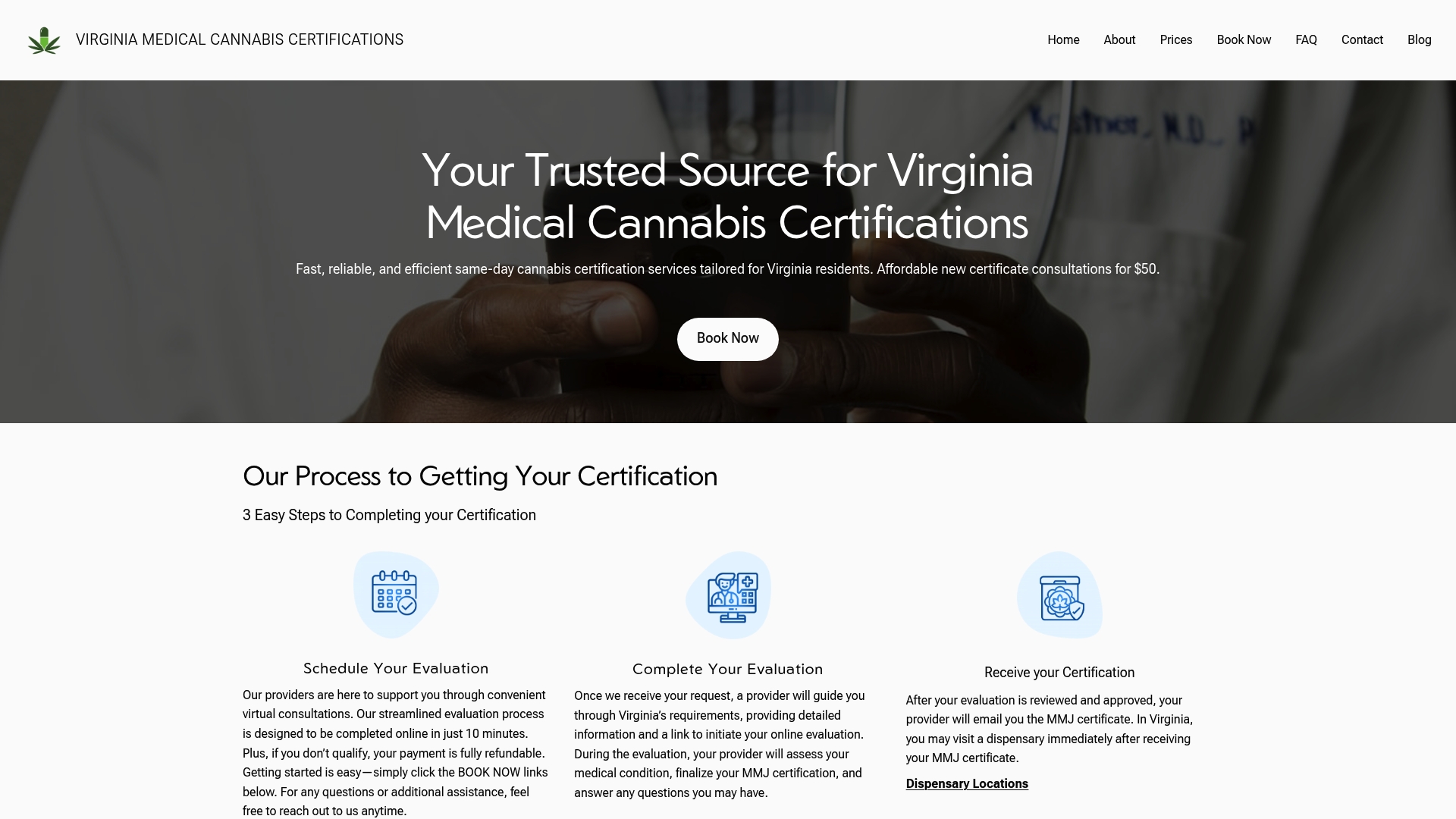
Virginia Medical Cannabis Certifications offers same-day online consultations for $50, completed in about 10 minutes. The process is fully refundable if you do not qualify, so there is no financial risk in finding out whether medical cannabis is right for you. Certified patients receive education on dosing and product selection as part of the process. If you are ready to use cannabis with professional support behind you, start your certification today or review the full certification process and eligibility criteria before you apply.
FAQ
Why do I get a headache every time I dab?
Headaches after every session typically point to overconsumption of high-THC concentrate, overheated vapor above 600°F, or dehydration caused by THC’s diuretic effect. Reducing your dose, lowering the nail temperature, and drinking water before and during your session resolves most cases.
Can dabs trigger migraines?
Yes. High-THC dabs can worsen migraines by combining vascular disruption with anxiety-driven sensory overload, particularly in people already prone to migraines. Lower doses and slower onset methods reduce that risk.
Does dabbing temperature really affect headaches?
Directly, yes. Dabbing above 600°F produces combustion byproducts like methacrolein and benzene that irritate the airways and trigger inflammatory headaches. Staying in the 480°F–545°F range eliminates that specific cause.
Can carbon monoxide from a butane torch cause headaches when dabbing?
Yes. CO from butane torches accumulates quickly in sealed rooms and produces headache, dizziness, and nausea that closely mimic an intense high. Always dab in a ventilated space and consider installing a CO detector.
How do I stop getting headaches from dabs without quitting entirely?
Control four variables: keep your dose small, maintain nail temperature between 480°F and 545°F, drink water before and during your session, and always ventilate the room. If headaches persist after addressing all four, take a 48–72 hour break to rule out rebound headaches from daily cannabis use.
Recommended
- Sativa Headache Relief: What You Need to Know – Virginia Medical Cannabis Certifications
- THCA Headaches: Causes, Relief, and Safe Use – Virginia Medical Cannabis Certifications
- Can Edibles Cause Migraines? What You Need to Know – Virginia Medical Cannabis Certifications
- Can Edibles Cause Gastritis? What You Need to Know – Virginia Medical Cannabis Certifications