Most people feel edible effects for about 4 to 8 hours, though a strong dose can leave you noticeably high for up to 12 hours with grogginess lingering into the next day. Onset takes longer than smoking, often 30 to 90 minutes. The rule that matters most: start low, go slow, because your dose, metabolism, and stomach contents all change the timeline.
TL;DR:
- Edible effects typically last 4 to 8 hours, with higher doses possibly prolonging the high up to 12 hours and effects lingering even longer.
- Peak effects occur around 1.5 to 3 hours after ingestion, with onset usually taking 30 to 90 minutes, especially if a large meal is involved.
- Factors such as dose, tolerance, body fat, stomach contents, and formulation significantly influence how long and how intense the high lasts.
- Starting with a low dose of 2.5 to 5 mg of THC and waiting at least two hours before redosing reduces the risk of overconsumption.
- Proper storage, planning, and consulting a clinician help prevent adverse effects and ensure safe, predictable experiences.
Table of Contents
- How Long Do Edibles Take to Kick In and Peak?
- How Long Does the High From Edibles Actually Last?
- What Changes How Long an Edible High Lasts?
- How Should You Dose Edibles to Avoid a Bad Experience?
- What Are the Risks of Taking Too Much?
- How Should You Store Edibles and Plan Around a High?
- Why Clinical Guidance Makes Edible Dosing Safer
- The Real Problem With Most Edible Advice
- Sources
How Long Do Edibles Take to Kick In and Peak?
Edibles work on a completely different clock than smoking or vaping. When you inhale THC, it hits your bloodstream in minutes. When you swallow it, the THC has to survive your stomach acid and pass through your liver before it reaches your bloodstream at all, a process that delays and softens the effect.
That’s why oral bioavailability, the percentage of THC that actually makes it into circulation, runs remarkably low and inconsistent, commonly between 4% and 25%. Two people can eat identical gummies and absorb wildly different amounts.
Here’s roughly what to expect after eating an edible:
- Onset: 30 to 90 minutes, sometimes longer if you ate a big meal beforehand
- Peak (Tmax): commonly 1.5 to 3 hours after ingestion, though some formulations peak closer to the 4-hour mark
- Example timeline: take an edible at 6:00 p.m., and expect the strongest effects between roughly 7:30 and 10:00 p.m.
Compare that to smoking, where peak effects arrive within 10 to 30 minutes. The slower curve is exactly why so many first-timers make the mistake covered in the next section.
How Long Does the High From Edibles Actually Last?
For most adults, the felt high runs 4 to 8 hours from a moderate dose. That’s the range clinicians and product labels reference most often, and it lines up with how long THC and its metabolites stay active enough to affect mood, coordination, and appetite.
Higher doses tell a different story. Public-health guidance in British Columbia’s edible cannabis factsheet warns that effects can last up to 12 hours, with residual grogginess, brain fog, or low motivation persisting up to 24 hours afterward.
Pharmacokinetic snapshot: Clinical reviews show oral THC can take 6 to 20 hours to clear back to baseline levels in the bloodstream, well beyond how long you’d say you “felt high.”
That gap matters. Feeling sober and testing negative are two different things. THC is lipophilic, meaning it dissolves into fat rather than water, so traces can sit in fatty tissue and show up on a drug test long after any subjective effect has worn off.
What Changes How Long an Edible High Lasts?
No two people process the same gummy the same way. Some factors you can control. Others are just biology.
What drives duration and intensity:
- Dose and potency. More milligrams of THC means a longer, more intense experience. Trials found 10 mg produced clear but manageable effects, while 25 to 50 mg caused pronounced impairment in most participants.
- Tolerance. Frequent users often feel effects fade faster and less intensely than occasional users taking the same dose.
- Body composition. Because THC stores in fat, people with more body fat may metabolize and eliminate it more slowly, stretching out residual effects.
- Stomach contents. Eating a fatty meal alongside your edible can slow onset but increase total absorption, since cannabinoids bind well to fat.
- Formulation. Oil-based capsules, baked goods, and gummies all metabolize differently. Sublingual tinctures held under the tongue skip some of the digestive delay, working faster than a swallowed gummy. Our tincture dosing guide breaks down that difference in detail.
- Other substances. Alcohol and certain medications can intensify or unpredictably extend effects, and some prescriptions interact with cannabis in ways worth discussing with a clinician, especially for conditions like diabetes where THC’s effect on blood sugar is relevant.
Pro Tip: If you want a more predictable timeline, eat the same size meal every time before dosing. Consistency in what’s in your stomach removes one of the biggest variables in how fast and how hard an edible hits.
How Should You Dose Edibles to Avoid a Bad Experience?
Nearly every emergency room visit tied to edibles traces back to the same mistake: taking too much before the first dose even kicks in. Here’s how to avoid that.
- Start with 2.5 to 5 mg of THC if you’re new to edibles or haven’t used cannabis in a while. This is a genuine microdose, not a placebo.
- Wait at least 2 hours before considering more. Public-health guidance specifically warns that effects may not be felt for up to 2 hours, and some clinicians recommend waiting closer to 3 hours before redosing.
- Increase gradually, only in small increments, over multiple sessions rather than multiple hours. A simple dosing log (date, mg, time to onset, how you felt) makes this far easier to track.
- Read labels carefully. Many packages list total milligrams for the whole product, not per piece. A 100 mg chocolate bar scored into ten pieces means 10 mg per square, not 100.
- Loop in a clinician if you’re managing another condition or taking other medications. This is especially true for anyone with comorbidities, since cannabis can interact with common prescriptions in ways that aren’t obvious from a product label.
Our Edible Dosing Guide for Beginners walks through this titration process step by step, and our roundup of low-dose edibles is a useful starting point if you’re not sure what a true 2.5 mg product looks like on shelf.
What Are the Risks of Taking Too Much?
Common side effects include drowsiness, nausea, anxiety, poor coordination, and short-term memory lapses. Most resolve on their own with time, water, and rest.
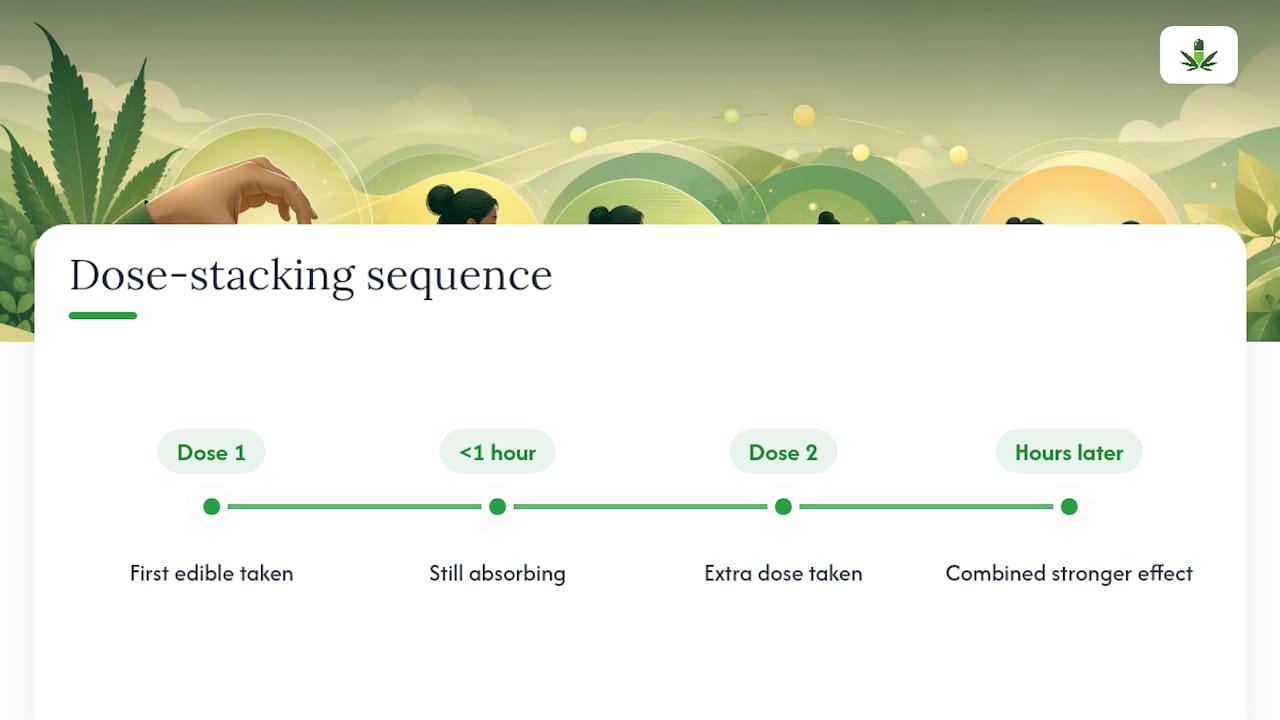
The bigger danger is dose stacking, taking a second or third dose because the first “didn’t seem to work” within the first hour. Since onset is delayed, that first dose is often still absorbing when the second one hits, and the combined effect arrives all at once, hours later than expected. This pattern is a well-documented driver of emergency department visits linked to edibles.
If someone is severely disoriented, vomiting repeatedly, or unresponsive, stay with them, keep them safe and seated or lying on their side, and contact poison control or emergency services. Cannabis overconsumption is rarely fatal on its own, but it can cause dangerous falls, panic, or complications with other substances.
How Should You Store Edibles and Plan Around a High?
Treat edibles like any other medication, not candy. A few habits go a long way:
- Store them in child-resistant, clearly labeled containers away from food that might tempt kids or guests.
- Give yourself 6 to 12 hours before driving or operating machinery, longer if you took a higher dose or feel any lingering fog.
- Skip mixing edibles with alcohol or sedatives, since the combination amplifies impairment unpredictably.
- Keep edibles in a cool, dry place, and discard anything past the expiration or “best by” date printed on the package, since potency degrades over time.
Why Clinical Guidance Makes Edible Dosing Safer
Most of the risk with edibles comes down to one thing: not knowing your own timeline. A clinician who understands your health history can help you titrate a starting dose, flag interactions with medications you’re already taking, and account for conditions that change how you metabolize THC.
That’s the gap Virginia Medical Cannabis Certifications is built to close. Getting certified connects you to a process where dosing questions have real answers instead of guesswork, backed by resources like our Edible Dosing Guide for Beginners for anyone starting from zero. The certification itself is a same-day, 10-minute online evaluation for $50, fully refundable if you don’t qualify, so getting proper guidance doesn’t mean weeks of waiting.
The Real Problem With Most Edible Advice
Most consumer advice on edibles fixates on milligrams and ignores timing, and that’s backwards. The pharmacokinetic data is clear: Tmax commonly lands 1.5 to 3 hours after ingestion, which means the single biggest cause of bad edible experiences isn’t dose size. It’s impatience.
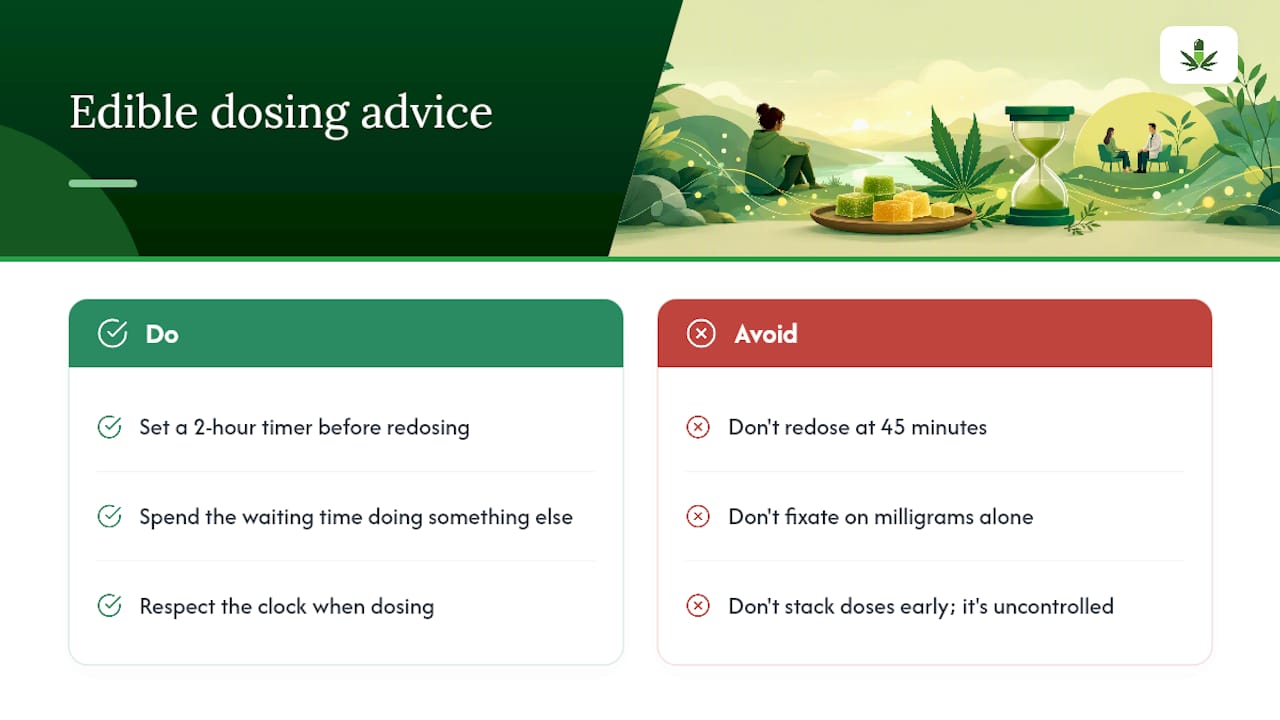
People redose at the 45-minute mark because nothing has happened yet, not realizing their first dose hasn’t even started working. A 5 mg gummy and a 5 mg gummy taken an hour later behave nothing like a single 10 mg dose taken at once, yet that’s functionally what dose stacking creates, minus the control.
If I had to prioritize one piece of advice over every other in this article, it’s this: set a timer for two hours before you even consider a second dose, and spend that time doing something else entirely. The dosing math only works if you respect the clock. Bioavailability, tolerance, and body fat all matter, but none of them override the fact that edibles are slow by design, and rushing them is where nearly every bad story starts.
— Jonathan
This article is general information, not a substitute for advice from a qualified doctor. Consult a qualified healthcare professional about your own circumstances before acting on anything here.
Sources
- Pharmacokinetics of cannabinoids (review) — PMC6922062
- Review of oral cannabinoid administration and effects — PMC5260817
- Pharmacodynamic dose effects of oral cannabis ingestion in healthy adults (clinical study)
- Edible Cannabis Affects People Differently — Government factsheet (BC)