
Start with a low dose of THC. That single number is the most important thing you can take from this page. The best low dose edibles make that starting point easy, predictable, and repeatable — and the picks below are chosen specifically because they deliver on all three.
Top picks at a glance:
- Kiva Petra Mints — 2.5 mg per mint, precise and portable; suitable for beginners at the upper end of microdose
- Microdose 1 mg gummies — stackable 1 mg servings with nano-emulsified fast onset; best for precise microdosing
- FOCL THC+ Micro 1mg Gummies — 1 mg THC with CBD buffering; travel-friendly and beginner-safe
- BATCH Micro Mints — 1 mg THC + 1 mg CBD per mint in a pocket tin; great for discreet, incremental dosing
- CANN low-dose tonics — 2–4 mg per beverage serving; smooth, even absorption for those who prefer drinking over chewing
- Wyld gummies — clear mg-per-piece labeling and wide retail availability; solid options include 2 mg and 5 mg per piece; pick 2 mg for true low-dose
Starter-dose rule: Take 1–2.5 mg, then wait. Canadian public-health guidance recommends waiting at least 2 hours before considering any additional amount, because peak effects can take up to 4 hours to arrive. Redosing before that window closes is the most common reason beginners overconsume.
Table of Contents
- What are the best low dose edibles you can buy right now?
- What do “low dose” and “microdose” actually mean on an edible label?
- How do edibles work, and why does timing matter so much?
- How should you microdose edibles safely and effectively?
- How do you pick the right low-dose edible for your situation?
- What happens if you take too much, and what should you do?
- How were these picks chosen?
- How should you store low-dose edibles to keep them potent and safe?
- What are the legal rules around buying and consuming low-dose edibles in the U.S.?
- Key Takeaways
- Why the conventional wisdom on microdosing edibles misses the point
- Virginia Medical Cannabis Certifications can help you access dispensary-grade products
- Sources and further reading
What are the best low dose edibles you can buy right now?
The table below covers the primary products worth considering for microdosing and low-dose use in the U.S. market. Products are compared on the dimensions that matter most for safe, controlled dosing.

| Product | THC per serving | CBD:THC ratio | Onset | Formulation | Stackable? | Best use case |
|---|---|---|---|---|---|---|
| Kiva Petra Mints | 2.5 mg | None listed | — | Standard | Yes | Beginners, daytime |
| Microdose 1 mg Gummies | 1 mg | None listed | — | Nano-emulsified | Yes | Fine-grain microdosing |
| FOCL THC+ Micro 1mg | 1 mg | Includes CBD | — | Standard | Yes | Travel, anxiety relief |
| BATCH Micro Mints | 1 mg | 1:1 THC:CBD | — | Faster-onset mint | Yes | On-the-go, discreet |
| Sunday Scaries 5mg Delta-9 | 5 mg | CBD added | 45–90 min | Standard gummy | Limited | Users ready for 5 mg |
| CANN Tonics | 2 mg or 4 mg | Varies | 20–45 min | Beverage | Yes | Social, relaxation |
| Wyld Gummies | 2 mg or 5 mg | CBD options | 45–90 min | Standard gummy | Yes | Beginners, retail access |
| Olli Gummies | 2–5 mg | Varies | 45–90 min | Standard gummy | Yes | Daily mild support |
| Soul Out of Office Gummies | Mid-range | Not listed | 45–90 min | Standard gummy | Limited | Social, mood |
| Mood Sexual Euphoria 5mg | 5 mg | Not listed | 45–90 min | Standard gummy | Limited | Targeted mood support |
| Koi Blue Razz Delta-9 | Higher dose | Not listed | 45–90 min | Standard gummy | No | Experienced users only |
| Vena CBD No Worries | CBD-forward | High CBD:THC ratio | 45–90 min | Standard gummy | Yes | CBD-buffered dosing |
| Five Fast-Acting Pineapple Express | Varies | Not listed | — | Fast-acting | Limited | Quick onset preference |
| Canna River Sleep Gummies | Low dose | Varies | 45–90 min | Standard gummy | Limited | Nighttime (check melatonin) |
| BATCH Uplift Recreation | Low dose | Not listed | 45–90 min | Standard gummy | Yes | Recreational microdosing |
| Kiva Camino Sours Watermelon Spritz | Higher dose | Not listed | 45–90 min | Standard gummy | No | Experienced users only |

A few notes on specific picks:
Kiva’s Petra Mints have built a strong reputation for dosing consistency. Each mint delivers exactly 2.5 mg, and the format makes it easy to stop at one. Kiva also produces the Camino Sours Watermelon Spritz at a higher dose — that product is included here for range context, but it is not a microdose choice.
Microdose’s nano-emulsified gummies stand out for one reason: you can genuinely stack them one at a time and feel each increment. The faster onset from nano-emulsification means you are not waiting 90 minutes to know whether 1 mg was enough.
FOCL’s micro gummies include CBD alongside the THC, which gives beginners a natural buffer against anxiety. The multi-strength lineup also means you can step up gradually without switching brands.
BATCH Micro Mints pair low-dose THC with low-dose CBD in a pocketable tin. That 1:1 ratio tends to soften the psychoactive edge while still delivering a noticeable effect. The BATCH Uplift Recreation Gummies from the same brand offer a slightly different format for those who prefer chewing over dissolving a mint.
Sunday Scaries 5 mg Delta-9 gummies appear frequently in low-dose edible reviews because 5 mg is a legitimate low dose for someone who has already tried 2.5 mg and wants to step up. It is not a starting point for a true beginner.
Canna River Sleep Gummies are worth a look for nighttime use, but check the label carefully for melatonin content. Sleep-targeted formulas that skip melatonin often produce less morning grogginess while still supporting rest.
Koi Blue Razz Extra Strength Delta-9 gummies are included here because they appear on many SERP lists alongside microdose products. They are not a low-dose pick. They serve as a useful contrast: if you are comparing products and see a “Delta-9 Extra Strength” label, that is a signal to check the mg-per-piece before assuming it fits a microdosing routine.
On U.S. availability: Products containing hemp-derived Delta-9 THC at or below 0.3% by dry weight are federally legal under the 2018 Farm Bill, which means many of these products ship nationally. State laws vary significantly, however. Colorado’s cannabis safety guidance notes that a standard serving in regulated dispensary products is 10 mg THC — which underscores why choosing a product specifically labeled at 1–5 mg matters. Always verify your state’s rules before purchasing, and buy from retailers who provide batch-level COAs.
What do “low dose” and “microdose” actually mean on an edible label?
The cannabis industry does not use a single universal standard for these terms, but there are widely accepted ranges. A microdose is generally 1–2.5 mg THC per serving. A low dose covers up to 5 mg. Anything above 5 mg starts moving into moderate territory, even if a brand’s marketing calls it “light.”
Common formats that make true low dosing practical:
- 1 mg gummies — the most granular option; brands like Microdose and FOCL build their entire line around this
- Micro mints — dissolve sublingually or in the mouth, often with faster absorption than swallowed gummies
- Low-dose beverages — CANN’s tonics offer options at 2 mg per can for true low-dose, with some varieties at 4 mg for those with more experience
- Tinctures and drops — allow precise measurement by the drop, though onset varies based on whether you hold them under the tongue or swallow
CBD:THC ratios matter more than most beginners realize. A 1:1 ratio (equal CBD and THC) tends to reduce anxiety and blunt psychoactivity without eliminating the therapeutic effect. Higher CBD ratios, like 10:1 or 20:1, push the product closer to a CBD-dominant experience with only a trace of THC influence. For someone new to edibles, starting with a product that includes some CBD is a reasonable safety net.
Pro Tip: When reading a label, find three numbers before you buy: mg of THC per piece, total mg per package, and the batch COA link or QR code. If any of those three are missing, put the product back.
How do edibles work, and why does timing matter so much?
Edibles take longer to work than any other cannabis format. That is not a flaw — it is just how oral ingestion works. When you eat a gummy, the THC travels through your digestive system, gets metabolized by your liver, and then enters your bloodstream as 11-hydroxy-THC, a compound that is more potent and longer-lasting than inhaled THC.
The practical timeline looks like this: onset typically begins within an hour and a half after eating, peak effects arrive within a few hours, and the total experience can last several hours. Canadian public-health guidance notes that some residual effects can persist up to 24 hours, particularly with higher doses or slower metabolisms.
Several factors shift that timeline:
- Food in your stomach slows absorption; an empty stomach speeds it up
- Metabolism and body composition affect how quickly THC is processed
- Biological sex influences how THC is metabolized, with some research suggesting women may be more sensitive to THC’s effects
- Formulation is the biggest variable of all — nano-emulsified products break THC into smaller particles that absorb faster through the gut lining
Nano-emulsified edibles and mint formats that dissolve in the mouth can shorten onset considerably compared to standard oil-based gummies. Microdose’s nano-emulsified gummies and BATCH Micro Mints both market faster onset, which makes them more predictable for stackable dosing — you know sooner whether the first serving was enough.
New York State’s cannabis consumer guidance makes the point plainly: many beginners treat edibles like inhalation methods and redose when they feel nothing after 20 minutes. That is the most reliable path to overconsumption. The delay is not a sign that the edible isn’t working.
How should you microdose edibles safely and effectively?
A consistent routine beats a one-time experiment. Here is a practical plan:
- Choose a low-dose product. Start with a format that lets you take a single, measured serving — a low-dose gummy, a mint, or a low-dose beverage.
- Take your dose after a light meal. An empty stomach speeds onset unpredictably; a full meal slows it too much. A light snack hits the middle ground.
- Set a timer and do not touch the product again until it goes off. Public-health guidance recommends waiting for a couple of hours before considering any additional amount, because peak effects may not arrive for several hours.
- Evaluate honestly at the 2-hour mark. If you feel nothing, you can consider adding another 1–2.5 mg. If you feel mild effects, wait longer. If you feel more than you wanted, you have your ceiling.
- Keep a simple log. Note the product, dose, time taken, what you ate beforehand, and how you felt at 1 hour, 2 hours, and 4 hours. Three or four sessions of data will tell you more about your personal response than any general guideline.
- Repeat the same dose for 3–5 days before increasing. A consistent 1–2.5 mg routine over several days gives a much clearer picture of therapeutic outcomes than jumping doses session to session.
The most common microdosing mistake is redosing too early. If you take 2.5 mg, feel nothing at 45 minutes, and take another 2.5 mg, you may end up experiencing 5 mg all at once when both doses peak together — which is a very different experience than a controlled 2.5 mg session.
Pro Tip: Use a notes app or a simple paper log. Write down: product name, mg taken, time, food eaten, and a 1–10 comfort rating at the 2-hour mark. After a week, patterns become obvious.
The low-dose range can relieve anxiety and improve mood for some people, while higher doses can produce the opposite effect. Staying on the low side of that curve is the entire point of microdosing.
How do you pick the right low-dose edible for your situation?
Format, trust signals, and use case all factor into the right choice. This table gives you a quick decision framework.
| Your priority | Best format | What to check |
|---|---|---|
| Maximum dose control | 1 mg gummies or micro mints | Stackable; batch COA available |
| Fast onset | Nano-emulsified gummies or mints | “Nano” or “fast-acting” on label; realistic onset claim |
| Anxiety relief | CBD:THC ratio product (1:1 or higher CBD) | CBD mg listed per piece; third-party tested |
| Sleep support | Low-dose sleep gummies | Check for melatonin; verify mg THC per piece |
| Discreet, on-the-go | Pocket-tin mints | Tin format; no refrigeration needed |
| Beverage preference | Low-dose tonics | Serving size clearly labeled; refrigerate after opening |
| Beginner, wide retail access | Wyld or Olli gummies | Available at licensed dispensaries; COA on website |
Format trade-offs worth knowing:
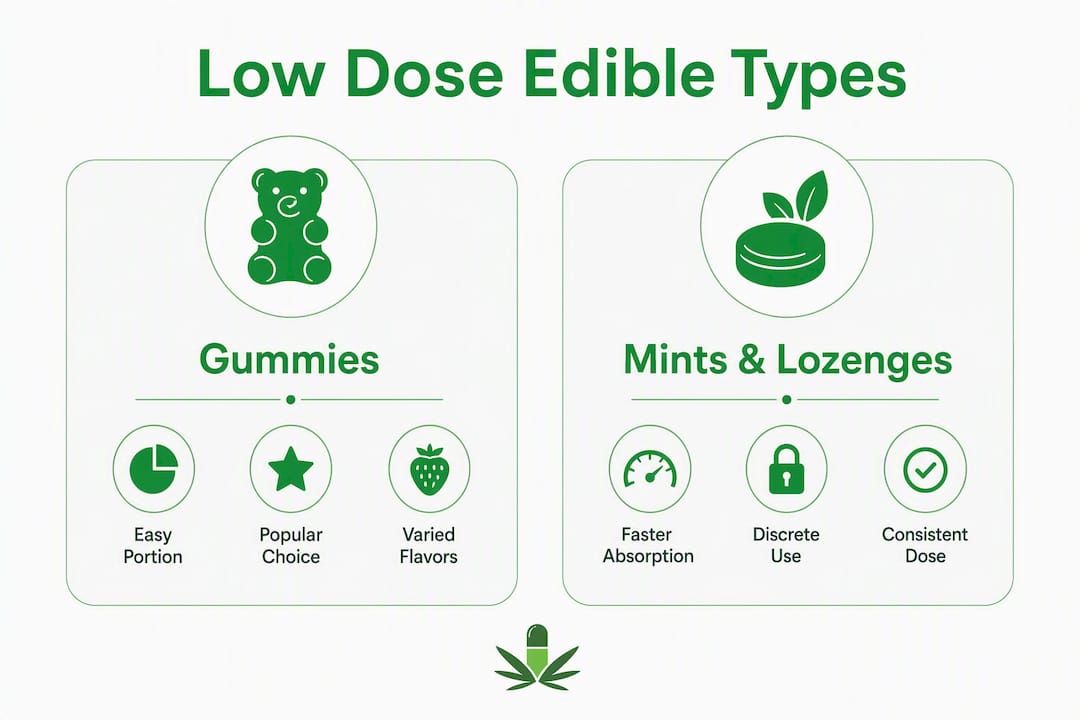
Gummies are familiar and easy to portion, but the dosing consistency in older or lower-quality products can vary piece to piece. Modern microdose-specific gummies from brands like Microdose and FOCL are manufactured to tighter tolerances, which is why they appear at the top of this list.
Mints and lozenges dissolve in the mouth, which can speed absorption compared to swallowed gummies. BATCH Micro Mints and Kiva Petra Mints both use this to their advantage.
Beverages like CANN tonics offer a social-friendly format with a gentler, more gradual onset than most gummies. The trade-off is that you cannot easily split a can to adjust your dose mid-session.
Red flags to avoid:
- No mg-per-piece listed (only total mg per package)
- No batch COA link or QR code on the packaging
- Sleep products that do not disclose melatonin content
- Prices so low they suggest no third-party testing budget
If you have gastrointestinal sensitivities, it is worth reading about edibles and gastritis risks before choosing a format, since some formulations are gentler on the stomach than others.
What happens if you take too much, and what should you do?
Low-dose edibles are designed to minimize this risk, but overconsumption still happens — usually because someone redosed too early. Knowing what to expect and what to do keeps a bad experience from becoming a scary one.
Common low-dose side effects (normal and temporary):
- Mild drowsiness or relaxation
- Slight dry mouth
- Heightened sensory awareness
- Minor change in time perception
Signs of overconsumption:
- Significant anxiety or paranoia
- Rapid heart rate (tachycardia)
- Nausea or dizziness
- Severe sedation or confusion
- In rare cases at very high doses: hallucinations or extreme disorientation
What to do if you’ve taken too much:
- Stay calm. THC overconsumption is not medically fatal on its own. The discomfort is real, but it will pass.
- Find a safe, comfortable place to sit or lie down. Reduce stimulation — dim the lights, lower the volume.
- Drink water. Staying hydrated helps. Avoid alcohol entirely.
- Tell someone you trust what happened. Having a calm person nearby makes a significant difference.
- Call Poison Control (1-800-222-1222) if symptoms are severe. They can advise without judgment.
- Call 911 if someone is unconscious, has difficulty breathing, or cannot be roused. When describing the situation to medical professionals, say “cannabis edible overconsumption” and give the approximate mg consumed and the time it was taken.
New York State’s cannabis guidance specifically warns that edibles are slower and longer-acting than inhalation, and that people who redose too quickly are the most likely to overconsume. If you have concerns about how cannabis interacts with blood sugar, the article on THC and low blood sugar covers that intersection in detail.
How were these picks chosen?
Every product on this list was evaluated against the same set of criteria. The goal was not to find the most popular edibles — it was to find the ones that give beginners and microdosers the most predictable, verifiable experience.
Selection criteria:
- Dose precision: mg per piece is clearly labeled and consistent across batches
- Third-party COA availability: batch-level certificates of analysis are publicly accessible
- Formulation transparency: ingredients are fully disclosed, including any melatonin in sleep products
- Stackability: the format supports incremental dosing without requiring you to cut or estimate
- Price-per-mg transparency: cost is reasonable relative to the dose delivered
Editorial and industry reviewers consistently flag stackable formats and visible batch-level COAs as the two most important trust signals for low-dose products. That framing shaped this list.
A COA is only useful if it is batch-specific. A single lab test posted to a brand’s website and never updated tells you nothing about the product in your hand today. Look for a QR code on the packaging that links to the COA for that specific production run — potency, residual solvents, heavy metals, and microbial contamination should all be listed.
What a COA should show:
| COA element | What it tells you |
|---|---|
| Potency (THC/CBD mg per serving) | Confirms the label claim is accurate |
| Residual solvents | Checks for leftover extraction chemicals |
| Heavy metals | Screens for lead, arsenic, cadmium, mercury |
| Microbial contamination | Confirms no harmful bacteria or mold |
| Pesticides | Verifies clean agricultural sourcing |
Products that could not be verified against a current batch COA were not included as primary recommendations, even if they appear in the comparison table for context.
How should you store low-dose edibles to keep them potent and safe?
Storage affects both potency and safety more than most people expect. THC degrades when exposed to heat, light, and air — and an edible that has been sitting in a hot car for a week may deliver a fraction of its labeled dose.
Keep edibles in a cool, dark place. A drawer or cabinet away from the stove works well. Refrigeration is fine for most gummies and beverages, but avoid freezing, which can change the texture and sometimes the consistency of the infusion.
Airtight containers matter. Once you open a package, the original resealable pouch is usually sufficient, but a small glass jar with a lid is better for anything you plan to keep for more than a few days. Oxygen exposure speeds degradation.
Keep edibles away from children and pets. This is not just a storage tip — it is a legal requirement in most states with regulated cannabis markets. Child-resistant packaging is standard for dispensary products, but once you transfer a product to a different container, that protection disappears. Store them somewhere inaccessible, not just out of sight.
Check expiration dates. Most gummies and mints carry a best-by date. Past that date, potency may have declined even if the product looks and tastes fine.
What are the legal rules around buying and consuming low-dose edibles in the U.S.?
The legal picture for edibles in the U.S. splits into two tracks: hemp-derived products and state-licensed cannabis products.
Hemp-derived Delta-9 THC (at or below 0.3% by dry weight under the 2018 Farm Bill) can be sold online and shipped to most states. Many of the products on this list — including several from FOCL, BATCH, and Microdose — fall into this category. That said, some states have passed laws restricting or banning hemp-derived THC products regardless of federal status. Always check your state’s current rules before ordering online.
State-licensed cannabis edibles are sold through regulated dispensaries in states where adult-use or medical cannabis is legal. These products go through mandatory testing and labeling requirements, which generally makes them more reliably dosed than unregulated alternatives. Colorado, for example, sets a standard serving at 10 mg THC per piece in regulated products — which is why finding products specifically labeled at 1–5 mg requires looking at specialty microdose lines rather than standard dispensary gummies.
Virginia operates a medical cannabis program. Patients with qualifying conditions can access cannabis products, including edibles, through licensed dispensaries after obtaining a medical cannabis certification. Recreational adult-use cannabis possession became legal in Virginia in 2021, but retail sales through licensed stores are the legal purchase channel. Purchasing from unlicensed sources carries legal risk regardless of the product’s THC content.
If you are in Virginia and want to access dispensary-grade, lab-tested low-dose edibles through the medical program, the first step is getting certified. Medical patients often have access to a wider product selection and may benefit from lower tax rates depending on the dispensary.
This article provides general information about cannabis products and dosing. It is not medical or legal advice. Confirm current laws in your state and consult a qualified healthcare provider before using cannabis for any medical condition.
Key Takeaways
The safest and most predictable approach to low-dose edibles is to start at low doses, choose a product with a batch-level COA, and wait sufficiently before considering any additional amount.
| Point | Details |
|---|---|
| Starter dose | Begin with 1–2.5 mg THC per serving; wait 2 hours before any additional amount. |
| Top formats | Nano-emulsified gummies and micro mints offer the most precise, stackable dosing. |
| COA verification | Always confirm a batch-specific COA covers potency, solvents, heavy metals, and microbials. |
| Redosing risk | Peak effects can take up to 4 hours; redosing before that window closes causes most overconsumption. |
| Virginia certification | Virginia Medical Cannabis Certifications offers same-day online certifications for $50, giving Virginia residents access to dispensary-grade low-dose edibles through the medical program. |
Why the conventional wisdom on microdosing edibles misses the point
Most microdosing guides spend their energy ranking products. This one tries to do something more useful: explain why the dose matters more than the brand.
Here is what gets underplayed in almost every low-dose edible review: the format and the formulation are not just marketing categories. They determine whether your experience is predictable. A 5 mg gummy from a brand with no batch COA is a fundamentally different product than a 1 mg nano-emulsified gummy from a brand that publishes its lab results by lot number. The number on the label is only as reliable as the testing behind it.
The other thing most guides skip is the biphasic nature of THC. Low doses — roughly 2.5 mg or less — tend to reduce anxiety and improve mood for many people. Higher doses can flip that effect entirely, producing the anxiety and paranoia that make people swear off edibles. Microdosing is not just about being cautious. It is about staying on the right side of that curve consistently.
What I find most interesting about the current low-dose market is how much it has matured. Products like Microdose’s 1 mg nano gummies and BATCH’s 1:1 micro mints exist because enough people demanded genuine dose control. That is a real shift from the early days of cannabis edibles, when a “low-dose” brownie might contain anywhere from 5 mg to 50 mg depending on who made it and how carefully they measured.
If you are new to edibles, the most valuable thing you can do is slow down. Pick one product, start at 1–2.5 mg, keep a log, and give it a week before drawing any conclusions. The brands that make that process easy — clear labels, batch COAs, stackable formats — are the ones worth your money.
Virginia Medical Cannabis Certifications can help you access dispensary-grade products
If you are a Virginia resident, the fastest path to dispensary-grade, lab-tested low-dose edibles runs through a medical cannabis certification. Dispensary products go through mandatory state-level testing, which means the COA verification this article recommends is already built into the system.
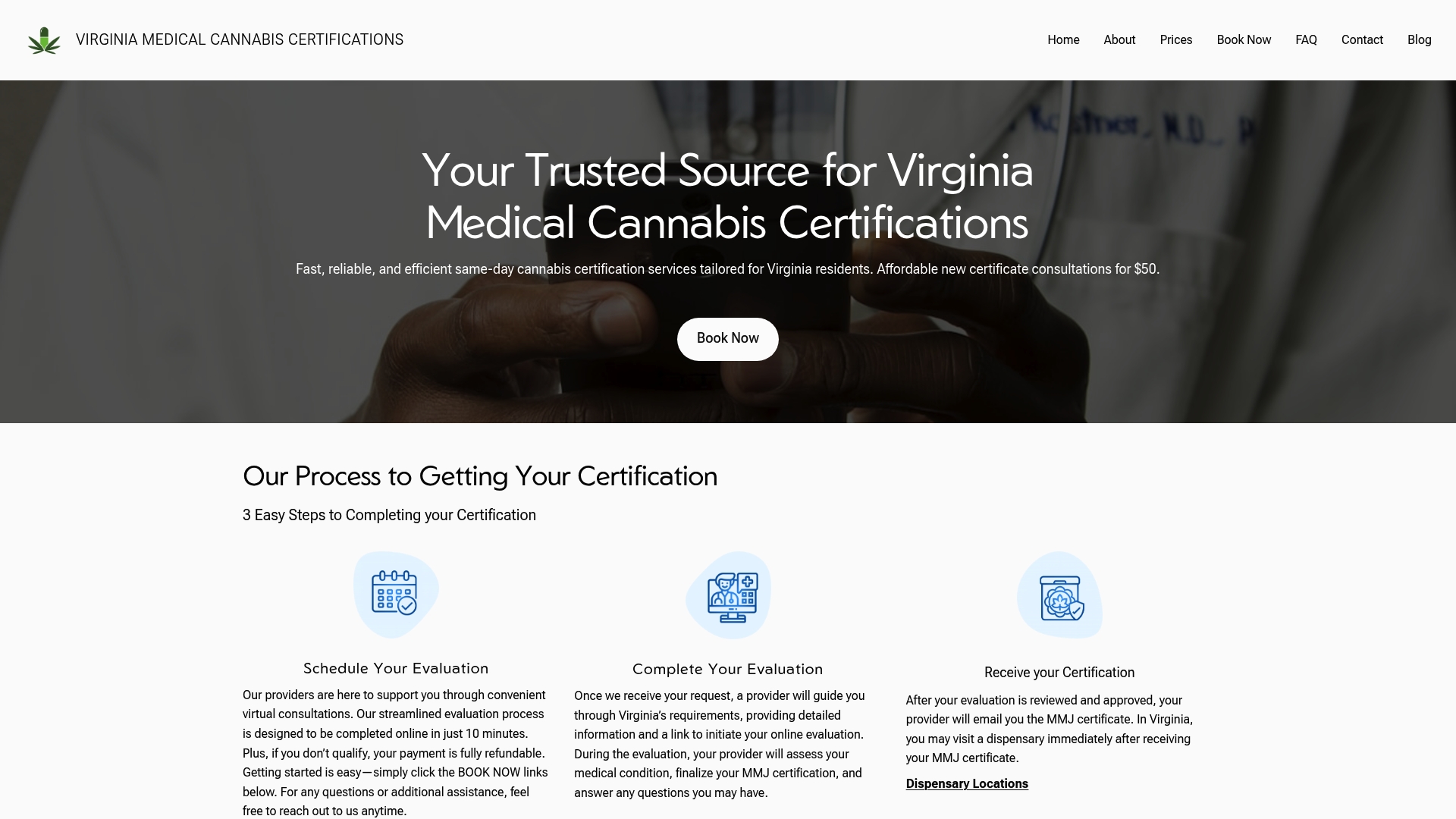
Virginia Medical Cannabis Certifications makes that certification process straightforward. The evaluation is completed online in about 10 minutes, costs $50 for new patients ($40 for renewals), and comes with a full refund if you do not qualify. Same-day certificate delivery means you can visit a dispensary the same day you complete your evaluation.
If you have a qualifying condition — chronic pain, anxiety, PTSD, or others — book your same-day certification and get access to the full range of low-dose products available through Virginia’s licensed dispensaries.
Sources and further reading
- Responsible use and safety with edibles — Colorado Cannabis
- Cannabis consumer information — New York State
- CDC: About cannabis
- Virginia Medical Cannabis Certifications — same-day online certification
Recommended
- Can Edibles Cause Migraines? What You Need to Know – Virginia Medical Cannabis Certifications
- Edibles and Urinary Retention: What You Need to Know – Virginia Medical Cannabis Certifications
- Can Edibles Cause Gastritis? What You Need to Know – Virginia Medical Cannabis Certifications
- Can You Eat Edibles With an Ulcer? Safe Use Guide – Virginia Medical Cannabis Certifications