Which cannabis strains work best for chronic pancreatitis?
CBD-dominant strains are the strongest starting point for managing chronic pancreatitis symptoms. Varieties with high cannabidiol content and low THC reduce inflammation and pain without the intense psychoactive effects that can worsen anxiety or digestive discomfort. A 2025 case report documented substantial pain reduction, cessation of acute episodes, and improved appetite in a patient using CBD-rich cannabis for refractory chronic pancreatitis. Here are the top strains worth discussing with your certifying physician.
- Harlequin: One of the strains often recommended for inflammatory conditions like pancreatitis, known for clear-headed relief with minimal psychoactivity.
- ACDC: Known for strong anti-inflammatory effects with very low THC, making it well-suited for daytime use.
- Cannatonic: Offers gentle muscle relaxation alongside pain relief; suitable for patients who tolerate small amounts of THC.
- Charlotte’s Web (high CBD, hemp-derived): Widely available as a tincture or oil, which suits patients who prefer non-inhalation methods.
- Ringo’s Gift (high CBD): Named for cannabis activist Lawrence Ringo, this strain targets pain and inflammation with a calm, grounded effect.
- Pennywise: A balanced option for patients dealing with both pain and nausea, two hallmark symptoms of chronic pancreatitis.
- Critical Mass: Provides heavier body relaxation; better suited for evening use when sedation is acceptable.
Pro Tip: Ask your dispensary for lab-tested products showing the exact cannabinoid percentages. The strain name alone tells you less than the actual CBD and THC numbers on the certificate of analysis.

What is chronic pancreatitis and why does it hurt so much?
Chronic pancreatitis is ongoing inflammation of the pancreas that causes permanent damage over time. The pancreas sits behind the stomach, so pain typically strikes in the upper abdomen and often radiates straight through to the back. That location makes it one of the more debilitating forms of abdominal pain a person can experience.
The condition disrupts digestion because the pancreas produces enzymes your body needs to break down food. Patients frequently deal with nausea, weight loss, fatty stools, and blood sugar problems alongside the pain. Flare-ups can be severe enough to require hospitalization, and conventional treatments like enzyme supplements and endoscopic procedures often provide only partial relief. That gap is exactly why many patients with chronic pancreatitis are turning to medical cannabis.
How medical marijuana relieves pancreatitis symptoms
The human body’s endocannabinoid system plays a direct role in regulating pain and inflammation, and the pancreas contains cannabinoid receptors. CBD and THC both interact with these receptors, which is why cannabis can reduce the intensity of pancreatitis pain rather than just masking it.
A large-scale analysis of over 2.8 million hospitalizations from 2003 to 2013 found that cannabis-exposed patients with acute pancreatitis had significantly lower in-hospital mortality, with an odds ratio of 0.17 compared to non-users. They also had shorter hospital stays and lower rates of acute kidney injury and shock.
A Dartmouth-Hitchcock Medical Center study found that patients using medical marijuana for pancreatitis reported improved symptom relief including less nausea, pain, and anxiety, and better appetite. CBD specifically reduces pro-inflammatory signaling, which addresses one of the root drivers of pancreatic damage. THC adds analgesic effects and can ease nausea, though high doses tend to increase anxiety in sensitive patients.
How to get a medical marijuana card for pancreatitis in Virginia
Chronic pancreatitis qualifies as a medical condition for cannabis certification in Virginia. The state allows any licensed practitioner to certify patients for any condition they believe cannabis may help, which gives you real flexibility.
- Gather your medical records. Documentation of your pancreatitis diagnosis, treatment history, and current medications strengthens your evaluation.
- Schedule a virtual evaluation. Telemedicine services let you complete the entire process from home. Virginia Medical Cannabis Certifications offers same-day online evaluations for $50, with a full refund if you do not qualify.
- Receive your written certification. Once approved, you get a certificate you can use at any Virginia dispensary immediately.
- Register with the Virginia Board of Pharmacy. You submit your certification through the state’s online portal to receive your official patient registration.
- Renew annually. Virginia certifications require yearly renewal. Virginia Medical Cannabis Certifications charges $40 for renewals, and the process stays fully virtual.
Virginia’s medical cannabis certification process can be completed quickly online. Veterans receive a discount with a coupon code at checkout.
Which consumption methods are safest for pancreatitis patients?
Smoking is the one method you want to avoid. Pancreatitis patients often have gastrointestinal sensitivities, and inhaling combusted plant material adds respiratory stress without any therapeutic advantage over gentler options. Non-inhalation delivery methods are consistently recommended for this population.
- Tinctures: Fast absorption under the tongue, easy to dose precisely, and no lung involvement. The preferred starting format for most pancreatitis patients.
- Edibles: Longer onset (45–90 minutes) but sustained relief, which suits chronic pain better than short-acting options. Quality cannabis edibles offer consistent dosing that makes titration straightforward.
- Topicals: Applied directly to the upper abdomen, topical cannabis products can provide localized relief without any systemic psychoactive effects.
- Vaporizers: A lower-risk alternative to smoking if inhalation is preferred for breakthrough pain, though patients with any lung sensitivity should still use caution. An indica vape can work for evening flare-ups when faster onset matters.
For patients new to cannabis, tinctures and edibles offer the most control. You can find guidance on edibles and digestive health before committing to a format.
Risks and side effects you should know about
Cannabis is not risk-free, and pancreatitis patients face a few specific concerns worth taking seriously. High-THC products can trigger anxiety, dizziness, and increased heart rate, which are particularly unwelcome when you are already managing abdominal pain. Dry mouth is common and can complicate eating if your appetite is already poor.
- Drug interactions: Cannabis affects the cytochrome P450 enzyme system, which processes many common medications. If you take opioids, NSAIDs, or blood thinners for pancreatitis management, discuss cannabis use with your doctor before starting.
- High-THC risks: Elevated THC can worsen anxiety and discomfort in patients with gastrointestinal sensitivities. Stick to CBD-dominant products until you know how your body responds.
- Cannabinoid hyperemesis syndrome: Heavy, long-term cannabis use can paradoxically cause cyclical vomiting in some patients. This is rare but worth monitoring.
- Smoking and vaping: Beyond lung irritation, inhaled cannabis can trigger nausea in some patients, the opposite of what you want.
Medical supervision matters here. Your certifying physician can review your medication list and flag any interactions before you start.
Virginia certification services for pancreatitis patients
Virginia Medical Cannabis Certifications makes the certification process straightforward for patients managing chronic conditions like pancreatitis. The evaluation is fully online, takes about 10 minutes, and costs $50 for new patients.
| Feature | Virginia Medical Cannabis Certifications |
|---|---|
| Evaluation format | fully online, same-day |
| New patient fee | $50 |
| Renewal fee | $40 |
| Refund policy | Full refund if not approved |
| Certificate delivery | Expedited for immediate dispensary access |
| Veteran discount | Yes, via coupon code |
The refund guarantee removes the financial risk of finding out you do not qualify. Once certified, you can visit any licensed Virginia dispensary to access the CBD-dominant strains and tinctures most effective for pancreatitis relief. Learn more about getting certified in Virginia and what to expect at your first dispensary visit.
Dosage guidelines for pancreatitis patients
Start low and go slow. Pharmacists who work with pancreatitis patients recommend beginning with a low-dose CBD tincture and increasing gradually every three days until you reach satisfactory symptom control. A common starting point is a low dose of CBD per dose, taken twice daily, with gradual increases every few days advised.
THC, if included at all, should stay at a low ratio relative to CBD, particularly in the first few weeks. Once you find a dose that manages pain without side effects, keep it consistent. Chasing stronger effects by escalating too quickly is the most common mistake new patients make. Your certifying physician can help you set a titration schedule based on your current medications and symptom severity.
How to choose a strain based on cannabinoid and terpene profiles
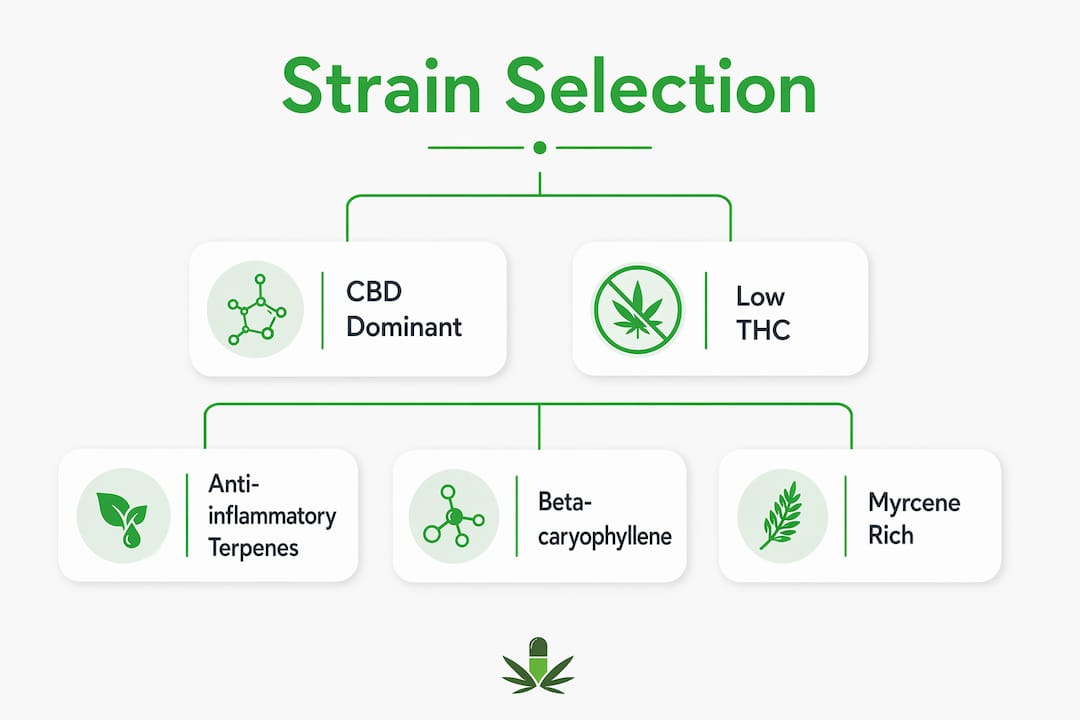
The strain name is less useful than the actual cannabinoid and terpene breakdown on the product label. Two products sold under the same strain name can have very different effects depending on how they were grown and processed. Focus on cannabinoid ratio and terpene profile rather than the marketing name.
For pancreatitis, prioritize strains with high CBD, low THC (under 5%), and terpenes known for anti-inflammatory or analgesic properties. Beta-caryophyllene, found in strains like Cannatonic and Critical Mass, binds directly to CB2 receptors and reduces inflammation. Myrcene adds muscle-relaxing and sedative effects, useful for nighttime pain. Linalool, more common in indica-leaning varieties, contributes calming effects that can ease the anxiety that often accompanies a flare-up. When you shop at a Virginia dispensary, ask to see the full terpene panel alongside the cannabinoid percentages.
Key Takeaways
CBD-dominant strains with anti-inflammatory terpenes like beta-caryophyllene offer the most targeted relief for chronic pancreatitis, and Virginia patients can access them legally after a $50 same-day online certification.
| Point | Details |
|---|---|
| Best strain type | High-CBD, low-THC varieties like Harlequin and ACDC reduce inflammation with minimal psychoactive effects. |
| Safest delivery method | Tinctures and edibles give you precise dosing and avoid the lung irritation that smoking causes. |
| Mortality data | A study of over 2.8 million hospitalizations found cannabis users had an odds ratio of 0.17 for in-hospital mortality versus non-users. |
| Dosage approach | Begin with a low-dose CBD tincture twice daily, and increase gradually every few days until symptoms improve. |
| Virginia certification | Virginia Medical Cannabis Certifications offers same-day virtual evaluations for $50, with a full refund if you do not qualify. |
Recommended
- Can Edibles Cause Gastritis? What You Need to Know – Virginia Medical Cannabis Certifications
- Can Edibles Cause Gout? What You Need to Know – Virginia Medical Cannabis Certifications
- Can You Eat Edibles With an Ulcer? Safe Use Guide – Virginia Medical Cannabis Certifications
- Sativa Headache Relief: What You Need to Know – Virginia Medical Cannabis Certifications