For migraine relief, CBD-forward strains like ACDC, Harlequin, Remedy, and Cannatonic are the most consistent starting points for prevention and daytime use. Balanced 1:1–2:1 CBD:THC options such as Blue Dream, White Widow, and Sour G work well for many patients across attack phases. For severe acute episodes where sleep is the goal, high-THC/myrcene-dominant strains like Northern Lights, Granddaddy Purple, Purple Kush, and Blackwater are most commonly reported to help.
Before you buy anything, the single most important step is checking the batch Certificate of Analysis (COA) for three things: the THC:CBD ratio, and whether myrcene, beta-caryophyllene, or linalool appear as dominant terpenes. Strain names vary by dispensary and batch; the COA numbers don’t.
Quick reference:
- Acute rescue (fast relief): Sour Diesel, OG Kush, Real OG, Northern Lights, Purple Kush, Blackwater. Use inhalation for onset within 5–15 minutes.
- Prevention and daytime use: ACDC, Harlequin, Remedy, Cannatonic, Canna-Tsu. High-CBD, low intoxication.
- Postdrome recovery: Chocolope, Pineapple Express, Pineapple Kush, Blue Dream. Mood lift, reduced cognitive fog.
- Safety caveat: Start with a single puff or 1–2.5 mg THC for edibles. High THC can worsen anxiety and, with repeated use, trigger rebound headaches.
Table of Contents
- What are the best cannabis strains for migraines?
- Does clinical evidence support cannabis for migraines?
- How do you choose the right strain for your migraine type?
- Which delivery method works best for migraine relief?
- Which cannabinoids and terpenes should you look for?
- What are the safety risks and legal considerations?
- Key Takeaways
- Virginia residents: how to get medical cannabis access
What are the best cannabis strains for migraines?
The 24 strains below represent the options most frequently cited across patient reports, dispensary pharmacist recommendations, and clinical literature. No single strain has randomized controlled trial evidence behind it specifically. What you’re working with is a combination of cannabinoid and terpene profiles, observational data, and patient-reported outcomes.
| Strain | Best For | Typical THC:CBD | Primary Terpenes | Onset (Inhalation) | Anxiety Risk | U.S. Availability |
|---|---|---|---|---|---|---|
| ACDC | Prevention, daytime | ~1:20 (high CBD) | Myrcene, caryophyllene | 5–15 min | Very low | Moderate |
| Harlequin | Mild attacks, stress-triggered | ~2:5 (CBD-forward) | Myrcene, caryophyllene | 5–15 min | Low | Moderate |
| Remedy | Postdrome, THC-sensitive | High CBD, trace THC | Myrcene | 5–15 min | Very low | Limited |
| Blue Dream | Daytime, moderate attacks | Balanced | Myrcene, caryophyllene, pinene | 5–15 min | Low–moderate | Wide |
| Northern Lights | Nighttime, sleep-through | High THC | Myrcene | 5–15 min | Moderate | Wide |
| OG Kush | Moderate–severe, rest possible | High THC | Myrcene, limonene, caryophyllene | 5–15 min | Moderate–high | Wide |
| White Widow | Versatile, mild–recovery | Moderate THC | Multi-terpene, CBG reported | 5–15 min | Moderate | Wide |
| Sour Diesel | Early prodrome, rapid onset | High THC | Caryophyllene, myrcene | 5–10 min | Moderate–high | Wide |
| Pineapple Express | Tension headache, postdrome | Moderate THC | Limonene, myrcene | 5–15 min | Low–moderate | Moderate |
| Purple Kush | Severe nighttime episodes | High THC | Myrcene | 5–15 min | Moderate | Moderate |
| Critical Mass | Overnight, muscle-tension | High THC | Myrcene, caryophyllene | 5–15 min | Moderate | Moderate |
| Cannatonic | Anxiety-associated, prevention | 1:1–3:1 CBD:THC | Myrcene, caryophyllene | 5–15 min | Low | Moderate |
| Granddaddy Purple | Severe attacks, sleep goal | High THC | Myrcene | 5–15 min | Moderate | Wide |
| Sour G | Moderate daytime, mood lift | Balanced | Mixed | 5–15 min | Low–moderate | Limited |
| Cherry Blossom | Calming, analgesic profile | CBD-forward | Mixed, anxiety-reducing | 5–15 min | Low | Limited |
| Pineapple Kush | Evening, anti-nausea | Moderate THC | Limonene, myrcene | 5–15 min | Low–moderate | Limited |
| Canna-Tsu | Low intoxication, balanced | CBD-forward | Myrcene, caryophyllene | 5–15 min | Very low | Limited |
| Chocolope | Postdrome fog, mild tension | Moderate–high THC | Terpinolene, pinene | 5–15 min | Moderate | Limited |
| Orangutan | Day or night (phenotype-dependent) | Varies | Varied — check COA | 5–15 min | Varies | Limited |
| Platinum Zkittlez | Afternoon, no heavy sedation | Moderate THC | Caryophyllene, limonene | 5–15 min | Low–moderate | Moderate |
| Cactus Cooler | Mild–moderate, functional | Moderate THC | Varies | 5–15 min | Low–moderate | Limited |
| Blackwater | Severe nighttime episodes | High THC | Myrcene | 5–15 min | High — start very low | Limited |
| Platinum Lemon Cherry Gelato | Mild attacks, mood improvement | Moderate THC | Limonene, myrcene | 5–15 min | Low–moderate | Limited |
| Real OG | Moderate attacks, nausea present | High THC | Myrcene, limonene, caryophyllene | 5–10 min | Moderate | Moderate |
Per-strain notes worth knowing
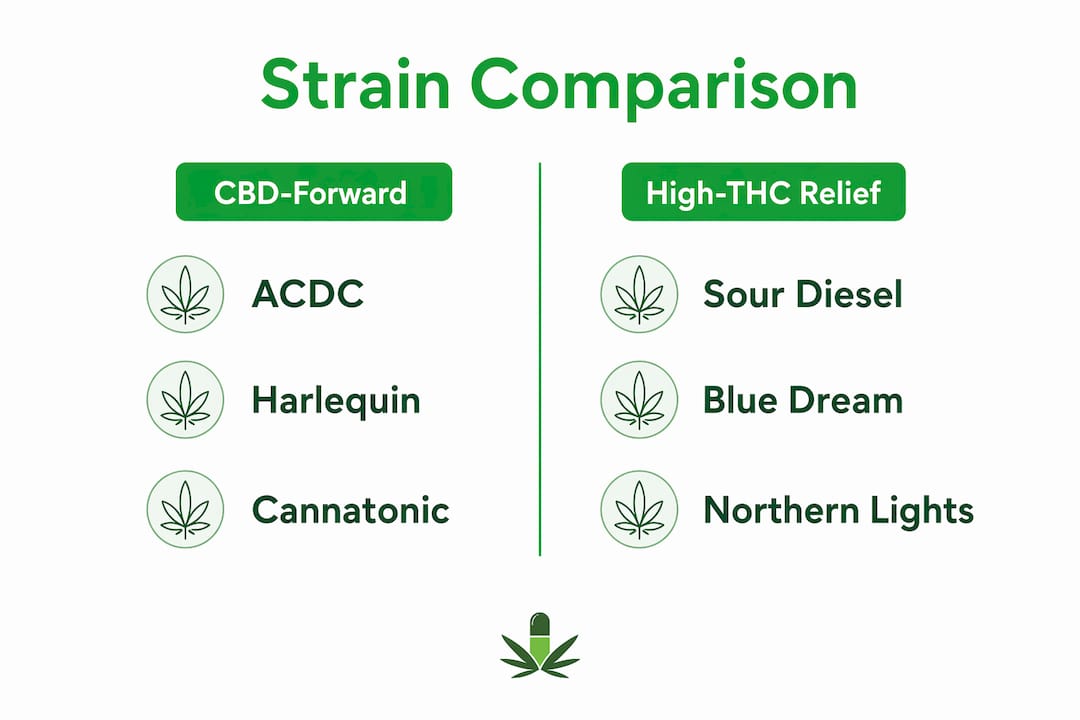
ACDC and Harlequin are the two most consistently recommended options for patients new to cannabis or sensitive to THC. ACDC’s roughly 20:1 CBD:THC ratio means you get analgesic and anti-inflammatory effects with almost no psychoactivity. Harlequin’s 5:2 CBD:THC ratio adds a mild mood component that can help when stress is driving the attack.
Remedy and Canna-Tsu are the go-to options for postdrome recovery and for patients who simply cannot tolerate any THC. Both are high-CBD with minimal intoxication. Canna-Tsu tends to be gentler still and is worth asking about specifically if anxiety is a comorbidity.
Blue Dream has earned its reputation in patient communities for a reason: the myrcene/caryophyllene/pinene terpene mix covers both the pain and the mood dimensions of a migraine without putting you on the couch. It’s one of the most widely available strains in U.S. dispensaries, which matters when you’re mid-attack and need something reliable.
Northern Lights, Granddaddy Purple, Purple Kush, and Blackwater are all high-THC, myrcene-heavy indicas. They’re best reserved for severe nighttime episodes where sleep is the primary goal. Blackwater in particular has a potent sedative profile; start very low on THC with this one.
Sour Diesel and Real OG stand out for rapid onset. Sour Diesel’s cerebral effect can intercept an attack early in the prodrome phase. Real OG brings the classic OG terpene backbone with a reputation for analgesic properties and nausea control.
Chocolope and Pineapple Express are the postdrome picks. The cognitive fog that follows a severe migraine responds better to terpinolene/pinene-forward sativa-leaning strains than to heavy indicas. Pineapple Express adds limonene-driven mood lift, which helps when the attack leaves you depleted.
Orangutan and Cactus Cooler have thinner public profiles. If your dispensary carries them, ask for the COA before purchasing. The terpene expression varies significantly by phenotype and batch.
If a named strain isn’t available, don’t chase the brand name. Find a product with the target CBD:THC ratio and the dominant terpene you want, and you’ll get a functionally similar result.
Does clinical evidence support cannabis for migraines?
The short answer is yes, with meaningful caveats. A 2022 systematic review published in Frontiers in Neurology found a systematic review that medical cannabis was notably more effective than non-cannabis comparators across the studies reviewed, with one observational study reporting a substantial reduction in migraine days per month with medical cannabis use.
A separate clinical study found that a combination of 6% THC and 11% CBD, inhaled via vaporization, was superior to placebo for pain relief, pain freedom, and most bothersome symptoms at two hours post-vaporization, with sustained benefits at 24 and 48 hours. Notably, CBD alone was not superior to placebo in that study, and THC alone was roughly equivalent to the combination only for pain relief. The combination outperformed either cannabinoid individually.
“One trial phase found that a dose of 200 mg of THC+CBD effectively reduced the intensity of migraine pain and showed improvement over amitriptyline in a prophylactic comparison over three months in chronic migraine patients.” — PMC, Medical Cannabis, Headaches, and Migraines
What those numbers mean in practice: These are promising signals, not guarantees. Most studies are observational, involve small samples, and rely on self-reported outcomes. Placebo effects in pain research are substantial. The PMC literature review notes that medical providers remain hesitant to recommend cannabis partly because of the absence of large, controlled trials.
Key finding: Medical cannabis reduced migraine frequency by 51% vs non-cannabis options in a 2022 Frontiers in Neurology systematic review, with migraine days dropping from 10.4 to 4.6 per month in one observational cohort.
The two most important limitations to keep in mind: first, medication-overuse headache (MOH) is a real risk with frequent cannabis use, just as it is with triptans and OTC analgesics. Second, the research base is still catching up because cannabis remains a Schedule I substance federally, which restricts U.S. clinical trial design. Cannabis is best positioned as a complementary or alternative tool when first-line treatments like triptans or gepants are ineffective or poorly tolerated.
How do you choose the right strain for your migraine type?
Start with your clinical goal, not the strain name. The goal determines the ratio and terpene targets; the strain is just a vehicle for getting there.
Define your phase. Are you treating an acute attack in progress, trying to prevent attacks from occurring, or recovering from postdrome? Acute rescue calls for fast-acting inhalation and higher THC. Prevention calls for high-CBD, low-THC options taken consistently. Postdrome recovery benefits from balanced or CBD-forward strains with mood-lifting terpenes.
Set your THC:CBD target. New to cannabis or THC-sensitive? Start with high-CBD options (ACDC, Harlequin, Remedy, Cannatonic). Comfortable with some THC? A 1:1 to 2:1 CBD:THC ratio is a reasonable middle ground. Severe acute pain with sleep as the goal? A higher-THC option is appropriate, but start low regardless.
Check the COA for dominant terpenes. Look for myrcene (analgesic, muscle relaxant), beta-caryophyllene (anti-inflammatory via CB2 receptors), and linalool (anxiolytic). These three terpenes appear most consistently in dispensary pharmacist recommendations for migraine patients. Ignore the indica/sativa label; it tells you almost nothing about the actual effect.
Choose your delivery method based on onset need. Inhalation for acute abortive relief (5–15 minutes). Sublingual tincture for moderate speed with longer duration. Edibles for overnight prevention coverage, but never for acute attacks.
Start low and wait. One inhalation, then wait 10 minutes before taking another. For edibles, start at 1–2.5 mg THC and wait at least 90 minutes before considering more.
Note your comorbidities and current medications. If you take triptans, ditans, gepants, anticoagulants, or stimulants for ADHD, bring that list to your dispensary pharmacist or prescribing clinician before starting. Cannabis can interact with all of these.
Red flags that warrant medical review before starting: cardiovascular disease or arrhythmia history, pregnancy or breastfeeding, personal or family history of psychosis, and current use of blood thinners or seizure medications.
Which delivery method works best for migraine relief?
Matching your delivery method to your migraine phase makes a bigger difference than most patients expect.
| Method | Onset | Duration | Best Phase | Key Consideration |
|---|---|---|---|---|
| Vaping/smoking | 5–15 min | 1–3 hours | Acute abortive | Fastest relief; lung irritation risk with smoking |
| Sublingual tincture | 15 min | 3–6 hours | Moderate acute, early prevention | More consistent dosing than inhalation |
| Edibles/capsules | 30–120+ min | 6–10 hours | Prevention, overnight coverage | Delayed onset creates overdose risk |
| Topicals | 15–30 min (local) | 2–4 hours | Localized tension/neck component | No systemic effect; no psychoactivity |
Inhalation is the most common method among migraine patients for a reason: the 5–15 minute onset window is the only realistic option for abortive relief during an active attack. Vaping is preferable to smoking for most patients because it avoids combustion byproducts that can themselves act as headache triggers. If smoking weed causes pressure in your head, switching to a vaporizer or tincture is worth trying before abandoning inhalation entirely.
Sublingual tinctures hit a useful middle ground: faster than edibles, more predictable than inhalation, and easier to dose precisely. A CBD-dominant tincture taken at the first sign of a prodrome can sometimes blunt an attack before it fully develops.
Edibles and capsules are best suited to prevention protocols, not acute rescue. The 30–120+ minute onset means you’ll be deep into an attack before relief arrives if you use them reactively. They do offer the longest duration, which makes them useful for overnight coverage or consistent daily prevention.
Pro Tip: If you’re using edibles for prevention, be aware that edibles can sometimes trigger or worsen migraines in some patients, particularly those sensitive to sugar alcohols or certain food additives in gummies. Capsules or oil-based tinctures are a cleaner option when GI tolerance is a concern.
Topicals are the most overlooked option. They won’t address the neurological core of a migraine, but for patients whose attacks include significant neck tension or scalp sensitivity, a caryophyllene-rich topical applied to the neck and temples can reduce the muscular component without any systemic effect.
Which cannabinoids and terpenes should you look for?
CBD-forward profiles with beta-caryophyllene and myrcene as dominant terpenes are the most consistently associated with migraine benefit across patient reports and clinical literature. Here’s what each compound actually does and why it matters for your selection.
Terpenes to prioritize:
- Myrcene: The most common terpene in cannabis and the one most associated with analgesic and muscle-relaxant effects. It also increases cell membrane permeability, which may enhance cannabinoid uptake. High myrcene strains include Northern Lights, Granddaddy Purple, ACDC, Remedy, and Critical Mass.
- Beta-caryophyllene: Acts as a CB2 receptor agonist, meaning it produces anti-inflammatory effects through the endocannabinoid system without psychoactivity. It’s the terpene most directly tied to the anti-inflammatory pathway relevant to migraine. OG Kush, Sour Diesel, Blue Dream, and Cannatonic all tend to carry it.
- Linalool: The anxiolytic terpene. Migraines and anxiety are closely linked, and linalool’s calming effect can reduce the stress component that often prolongs or worsens an attack. Cherry Blossom and some phenotypes of Harlequin carry notable linalool.
- Limonene: Mood-elevating and useful in postdrome. Pineapple Express, Pineapple Kush, and Platinum Lemon Cherry Gelato are limonene-forward options worth considering when low mood follows an attack.
- Terpinolene and pinene: Less common but relevant for postdrome cognitive fog. Chocolope’s terpinolene/pinene profile is specifically why it appears on postdrome lists.
Cannabinoid guidance:
- High-CBD (ACDC, Remedy, Canna-Tsu): Best for prevention, daily use, and THC-sensitive patients. CBD’s interaction with the endocannabinoid system reduces neuroinflammation without intoxication.
- Balanced CBD:THC (Harlequin, Cannatonic, Sour G, White Widow): The 1:1 to 3:1 CBD:THC range is where most patients find the best combination of pain relief and functional clarity. The THC adds analgesic potency; the CBD moderates the psychoactive edge.
- THC-dominant (Northern Lights, OG Kush, Granddaddy Purple): Most effective for severe acute pain when sleep is the goal. The risk of anxiety and rebound headache increases with THC dominance, so consistent low dosing matters more here than anywhere else.
- CBG: An emerging option. White Widow is one of the strains with reported CBG presence. CBG has shown anti-inflammatory properties in preclinical research, but clinical data specific to migraine is limited. Worth noting on a COA but not yet a primary selection criterion.
To read a COA for terpene content: look for a terpene panel section (not all dispensaries provide this, but most licensed ones do). Myrcene above 0.3% and beta-caryophyllene above 0.1% are meaningful thresholds. The indica/sativa label on the package tells you nothing reliable about terpene content; the COA does.
What are the safety risks and legal considerations?
Cannabis can genuinely help with migraines, but it carries real side effects and interaction risks that are worth understanding before you start.
Key safety points:
The Frontiers review found adverse events were mostly mild, including somnolence, dry mouth, dizziness, and nausea. More concerning for migraine patients specifically is medication-overuse headache (MOH): using cannabis too frequently as an abortive agent can create the same rebound cycle seen with triptans and OTC pain relievers. If you’re using cannabis for acute relief more than 10–15 days per month, discuss this with your clinician.
“Despite mixed findings regarding the effectiveness of medical cannabis on both headaches and migraines, there is a consensus for the indication of medical marijuana therapy when first and second-line treatment fails.” — PMC, Medical Cannabis, Headaches, and Migraines
Drug interactions to flag with your prescriber:
- Triptans, ditans, and gepants: Cannabis and serotonergic migraine medications haven’t been studied together in controlled trials. Use caution and inform your neurologist.
- Anticoagulants (warfarin, apixaban): CBD inhibits CYP450 enzymes and can raise anticoagulant blood levels. This is a clinically significant interaction.
- ADHD medications (amphetamines, methylphenidate): Combining stimulants with high-THC cannabis can increase cardiovascular strain and anxiety.
- Benzodiazepines and sedatives: Additive CNS depression, especially with high-myrcene, high-THC strains.
Red flags: Avoid cannabis if you have a history of psychosis or schizophrenia, are pregnant or breastfeeding, or have significant cardiovascular disease. High-THC products specifically carry elevated cardiovascular risk.
U.S. legal context: Cannabis remains a Schedule I controlled substance federally. State law governs access. As of 2026, 38 states have medical cannabis programs and 24 have adult-use programs, though state-level rules vary significantly on qualifying conditions, possession limits, and dispensary access. In Virginia, medical cannabis is legal for certified patients, and a medical certification provides both dispensary access and legal protections that recreational purchasing does not.
Pro Tip: Before starting cannabis for migraines, bring your full medication list to a dispensary pharmacist or your neurologist. A pharmacist trained in cannabis therapeutics can flag interactions your prescriber may not be aware of, and most licensed dispensaries in Virginia have staff trained to help.
How we selected these strains
These 24 strains were selected through a consistent process, not personal preference or marketing. Here’s what drove the list:
- Clinical and observational evidence weight: Strains whose cannabinoid profiles (CBD:THC ratio, dominant terpenes) align with the compounds studied in clinical reviews received priority. No strain has RCT-level evidence for migraine specifically; all selections are informed by the best available evidence.
- Terpene and cannabinoid COA signals: Strains with documented myrcene, beta-caryophyllene, or linalool dominance were prioritized based on their mechanistic relevance to migraine pathways.
- Frequency in patient reports and dispensary recommendations: Strains that appear repeatedly across patient-reported outcome surveys and curated dispensary lists received higher weight. Rare or anecdotal-only mentions were included with appropriate caveats.
- U.S. dispensary availability: Strains with limited or regional availability are noted. A strain that’s theoretically ideal but unavailable in most states is less useful than a widely available alternative with a similar profile.
- Safety profile: Strains with high THC and elevated anxiety risk are included but flagged clearly. The list is not filtered to only “safe” options; it’s filtered to options where the risk profile is transparent.
One important limitation: batch-to-batch variation means the same strain name can have meaningfully different terpene and cannabinoid content depending on the grower and harvest. Always prioritize the COA over the strain name when making a final selection.
Key Takeaways
High-CBD strains like ACDC, Harlequin, and Cannatonic are the most consistent starting points for migraine prevention, while myrcene-dominant high-THC options like Northern Lights and Granddaddy Purple are best reserved for severe acute episodes where sleep is the goal.
| Point | Details |
|---|---|
| CBD-forward for prevention | ACDC (~20:1 CBD:THC), Harlequin, Remedy, and Cannatonic are the safest starting points for daily prevention and THC-sensitive patients. |
| COA over strain name | Always check the batch COA for myrcene, beta-caryophyllene, and linalool content; indica/sativa labels are unreliable guides for migraine effects. |
| Inhalation for acute relief | Vaping or smoking delivers onset in 5–15 minutes, making it the only realistic abortive method; edibles take 30–120+ minutes and are not suited for acute attacks. |
| Start low on THC | Begin with one puff or 1–2.5 mg THC in edibles; high THC increases anxiety risk and can trigger rebound headaches with frequent use. |
| Virginia Medical Cannabis Certifications | Virginia residents can access COA-backed dispensary products legally through a same-day online medical certification at Virginia Medical Cannabis Certifications for $50. |
A practical perspective on cannabis and migraines
The clinical evidence for cannabis in migraine management is genuinely encouraging, but there’s a gap between what the studies show and how most patients actually use it. The research that gets cited most often involves specific cannabinoid ratios, controlled doses, and monitored protocols. What happens in practice is that patients grab whatever’s available, use it reactively at high doses, and then wonder why results are inconsistent or why their headaches seem to be getting more frequent.
The most underappreciated insight from the clinical literature is this: consistent low-dose use tends to outperform sporadic high-dose use for prevention. A single puff of a high-CBD strain taken daily at a consistent time is more likely to reduce migraine frequency than reaching for a high-THC product only when an attack is already severe. The endocannabinoid system responds to regularity.
One practical tip that doesn’t appear in most guides: combining a low-dose inhalation of a balanced strain with a CBD tincture taken sublingually can smooth out the effect profile. The inhalation provides fast onset; the tincture extends duration and moderates the THC peak. This approach is particularly useful for patients who find that inhalation alone wears off too quickly but edibles are too slow and unpredictable. It’s worth discussing with a cannabis-knowledgeable clinician before trying, especially if you’re on other medications.
Virginia residents: how to get medical cannabis access
If you’re in Virginia and want consistent, legal access to the dispensary products and COA-backed strains covered in this article, a medical cannabis certification is the most practical next step. Virginia Medical Cannabis Certifications offers a same-day online evaluation that takes about 10 minutes, costs $50 for new patients ($40 for renewals), and comes with a full refund if you don’t qualify.
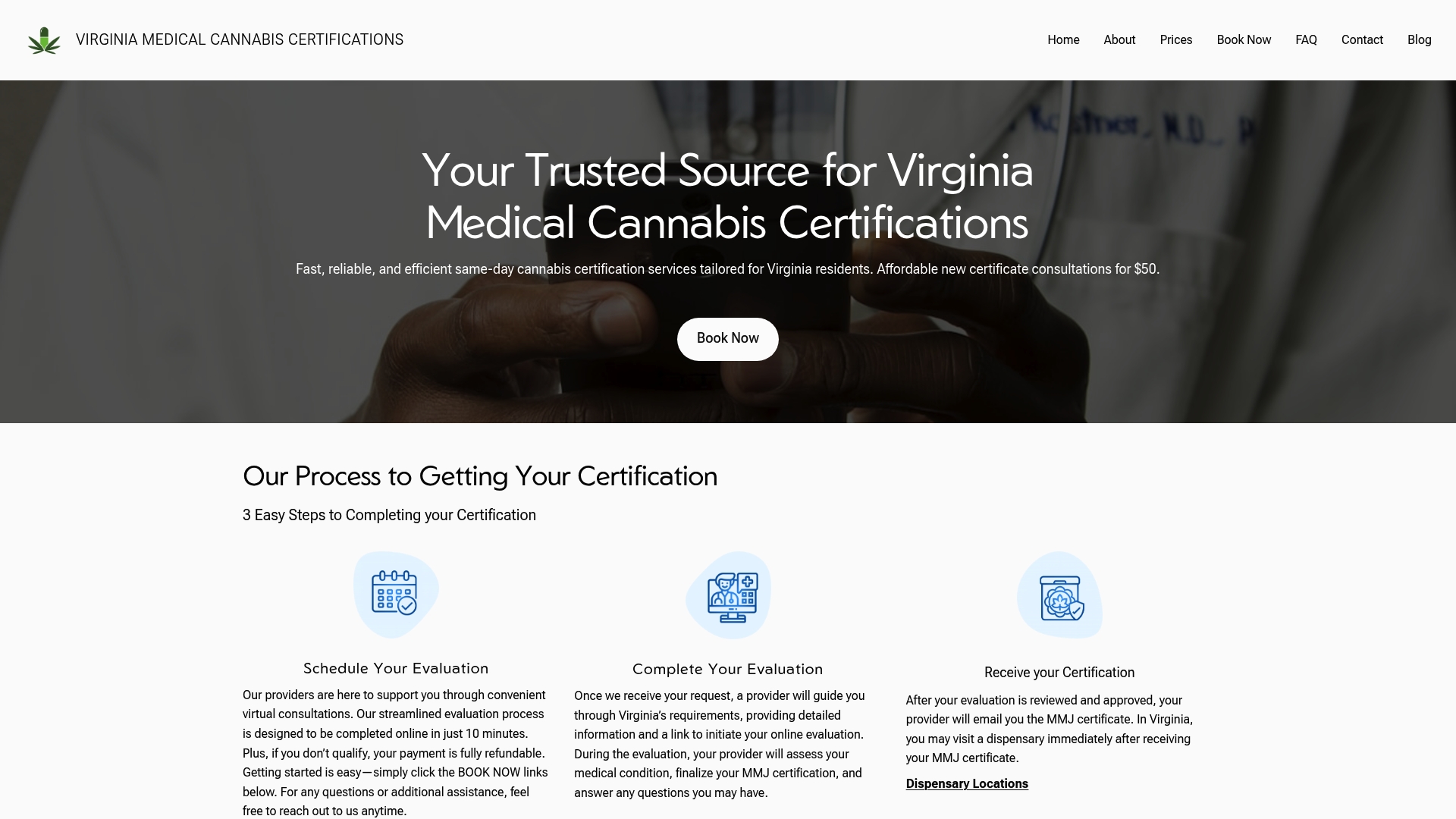
Migraines are a recognized qualifying condition under Virginia’s medical cannabis program. Certification gives you dispensary access, legal protections, and the ability to work directly with dispensary pharmacists who can pull COAs and help you match a product to your specific migraine profile. That’s a meaningfully different experience than adult-use purchasing, where staff guidance on medical applications is limited.
To get started, visit Virginia Medical Cannabis Certifications and book your online evaluation. If you want to review the full process, approval criteria, and refund policy before booking, the certification process page walks through every step. As always, discuss any new cannabis regimen with your neurologist or prescribing clinician, particularly if you’re currently on triptans, anticoagulants, or other daily medications.
This article is general information, not medical advice. Consult a qualified healthcare provider for guidance specific to your condition and current medications.
Useful sources and further reading
| Source | What it covers | Why it’s useful |
|---|---|---|
| Medical Cannabis, Headaches, and Migraines — PMC | literature review on cannabis for headache and migraine | Primary clinical evidence base; covers dosing, routes, and outcomes |
| Phytocannabinoids and Migraine — PMC | Preclinical and clinical studies on cannabinoid mechanisms in migraine | Covers endocannabinoid system involvement and specific cannabinoid combinations |
| Frontiers in Neurology Review | Systematic review; 51% effectiveness vs non-cannabis comparators | Best available summary of clinical effect sizes and adverse events |
| WebMD: Marijuana, CBD, and Migraine | Clinical positioning of cannabis vs first-line migraine therapies | Useful for understanding where cannabis fits in a treatment hierarchy |
| Indica or Sativa for Migraines — PA Medical Marijuana Guide | Dispensary-level guidance on COA-first selection over indica/sativa labels | Practical terpene panel guidance for dispensary visits |
A note on COAs: When you visit a dispensary, ask the pharmacist for the Certificate of Analysis for any product you’re considering. A reputable dispensary will have it available. Look for the terpene panel (myrcene, beta-caryophyllene, linalool) and the cannabinoid panel (CBD:THC ratio). These two data points will tell you more about whether a product suits your migraine profile than any strain name or marketing description.
Recommended
- Sativa Headache Relief: What You Need to Know – Virginia Medical Cannabis Certifications
- Can Edibles Cause Migraines? What You Need to Know – Virginia Medical Cannabis Certifications
- Can the Smell of Weed Give Me a Headache? – Virginia Medical Cannabis Certifications
- THCA Headaches: Causes, Relief, and Safe Use – Virginia Medical Cannabis Certifications