If you need a quick answer, these five strains cover most insomnia scenarios: Granddaddy Purple for fast sleep onset and full-body relaxation, Bubba Kush for staying asleep through pain, Purple Punch for anxiety-driven wakefulness, Northern Lights for dependable nightly maintenance sleep, and Hindu Kush if you’re new to cannabis and want a gentler start. About 1 in 4 U.S. adults sleep less than the recommended 7 hours per night, so you’re far from alone in looking for something that actually works.
Here’s a one-line reason each of those five earns its spot:
- Granddaddy Purple: myrcene-heavy profile drives fast body sedation, ideal when you can’t fall asleep
- Bubba Kush: caryophyllene plus myrcene combination creates a heavy body lock that keeps you down through pain
- Purple Punch: linalool-forward terpene profile quiets racing thoughts before they keep you awake
- Northern Lights: even, reliable sedation without surprises, best for maintenance sleep night after night
- Hindu Kush: modest THC range with steady body-focused calm, the safest starting point for novices
To test one safely tonight, start with a single small inhalation (roughly 2.5 mg THC equivalent) and wait 15 minutes before deciding whether you need more. That one rule prevents most bad first experiences.
Table of Contents
- The best strains for sleep: annotated profiles
- Which strains hit hardest, and when should you avoid them?
- How to choose the right strain for your specific sleep problem
- Side effects, risks, and when to see a clinician
- U.S. legal context and how a Virginia medical certification changes your options
- Key Takeaways
- What I’ve learned about recommending sleep strains
- Getting certified in Virginia to access more sleep-focused options
- Sources and further reading
The best strains for sleep: annotated profiles
The table below covers the core dimensions you need to pick a strain. Profiles after it add context for the strains that warrant it.
| Strain | THC % Range | CBD % | Dominant Terpenes | Best For | User Level |
|---|---|---|---|---|---|
| Granddaddy Purple | 17–25% | <1% | Myrcene, caryophyllene, pinene | Fast sleep onset, full-body relaxation | Novice–intermediate |
| Northern Lights | 17–21% | <1% | Myrcene, caryophyllene | Maintenance sleep, physical relaxation | Novice–intermediate |
| Bubba Kush | 17–25% | <1% | Caryophyllene, myrcene, limonene | Staying asleep, pain-related insomnia | Intermediate |
| Purple Punch | 17–20% | <1% | Linalool, caryophyllene, myrcene | Anxiety-driven insomnia | Novice–intermediate |
| Hindu Kush | 15–20% | <1% | Myrcene, caryophyllene, pinene | Novice users, THC-sensitive patients | Novice |
| Purple Kush | 17–25% | <1% | Myrcene, caryophyllene | Severe tension, rapid onset | Intermediate |
| Grape Ape | 15–21% | <1% | Myrcene, caryophyllene, ocimene | Evening wind-down, transition to sleep | Novice–intermediate |
| Wedding Cake | 20–25% | <1% | Caryophyllene, limonene, myrcene | Stress-before-bed, mental decompression | Intermediate–experienced |
| Ice Cream Cake | 20–25% | <1% | Caryophyllene, linalool, myrcene | Pain relief plus sleep support | Intermediate |
| Slurricane | 20–25% | <1% | Myrcene, caryophyllene | Deep sedation, staying asleep | Experienced |
| Gorilla Glue #4 (GG4) | 25–30% | <1% | Caryophyllene, myrcene, limonene | Strong sedation, experienced users | Experienced |
| Blueberry | 15–20% | <1% | Myrcene, pinene, caryophyllene | Gentle sedation, mood-lifting before bed | Novice |
| OG Kush / Tahoe OG Kush | 19–25% | <1% | Myrcene, limonene, caryophyllene | Stress-related onset, clear-headed start | Intermediate |
| Mendo Breath | 17–20% | <1% | Caryophyllene, myrcene | Relaxation-first, gentle body effect | Novice–intermediate |
| 9 Pound Hammer | 17–25% | <1% | Myrcene, caryophyllene, pinene | Severe or treatment-resistant insomnia | Experienced |
| Blue HeadBand | 17–25% | <1% | Caryophyllene, myrcene, linalool | Anxiety-driven bedtime wakefulness | Intermediate |
| Cherry Pie | 17–25% | <1% | Myrcene, caryophyllene, pinene | Relaxation and mood support before bed | Novice–intermediate |
| Bubba Platinum | 17–25% | <1% | Caryophyllene, myrcene | Heavy body relaxation, pain-related sleep | Intermediate |
| Afghan Kush | 15–20% | <1% | Myrcene, caryophyllene | Classic sedation, body-focused calm | Novice–intermediate |
| Northern Lights #10 | 17–25% | <1% | Myrcene, caryophyllene | Reliable nighttime sedation | Intermediate |
| Northern Critical | 15–20% | <1% | Myrcene, caryophyllene | Balanced relaxation, moderate potency | Novice–intermediate |
| Glue Gelato Auto | 20–25% | <1% | Caryophyllene, myrcene, linalool | Auto-flower convenience, strong sedation | Intermediate–experienced |
| RS11 x Apple Fritter | 25%+ | <1% | Caryophyllene, myrcene | High-potency sedation, experienced users | Experienced |
| Moby x Do-Si-Dos | 20–25% | <1% | Caryophyllene, linalool, myrcene | Deep body relaxation, anxiety relief | Intermediate–experienced |
| MAC1 Regular | 17–25% | <1% | Caryophyllene, limonene, myrcene | Balanced onset, stress and sleep | Intermediate |
| Amnesia Auto | 15–20% | <1% | Myrcene, terpinolene | Evening relaxation, tolerant users | Experienced |
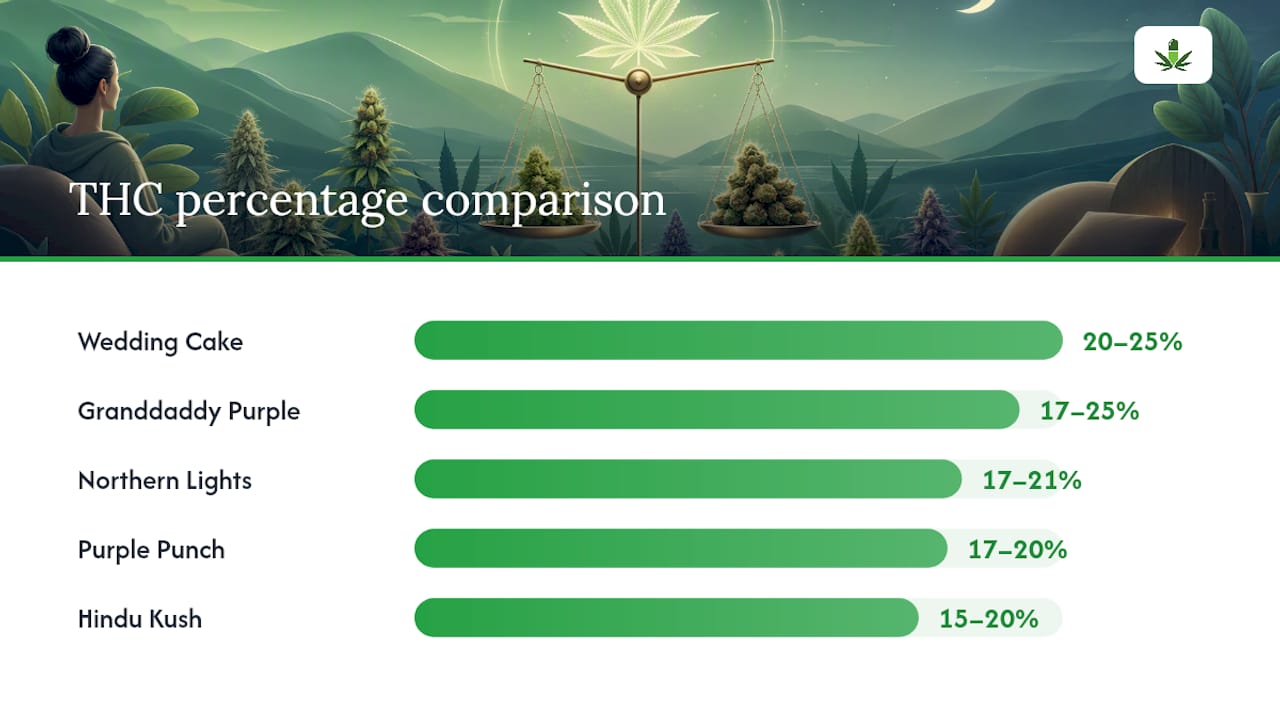
Granddaddy Purple is the most commonly recommended starting point for sleep, and the terpene data backs that up. Its myrcene-plus-caryophyllene combination produces the kind of full-body heaviness that makes lying down feel like the only reasonable option. Start with one small inhalation and give it 10 minutes.
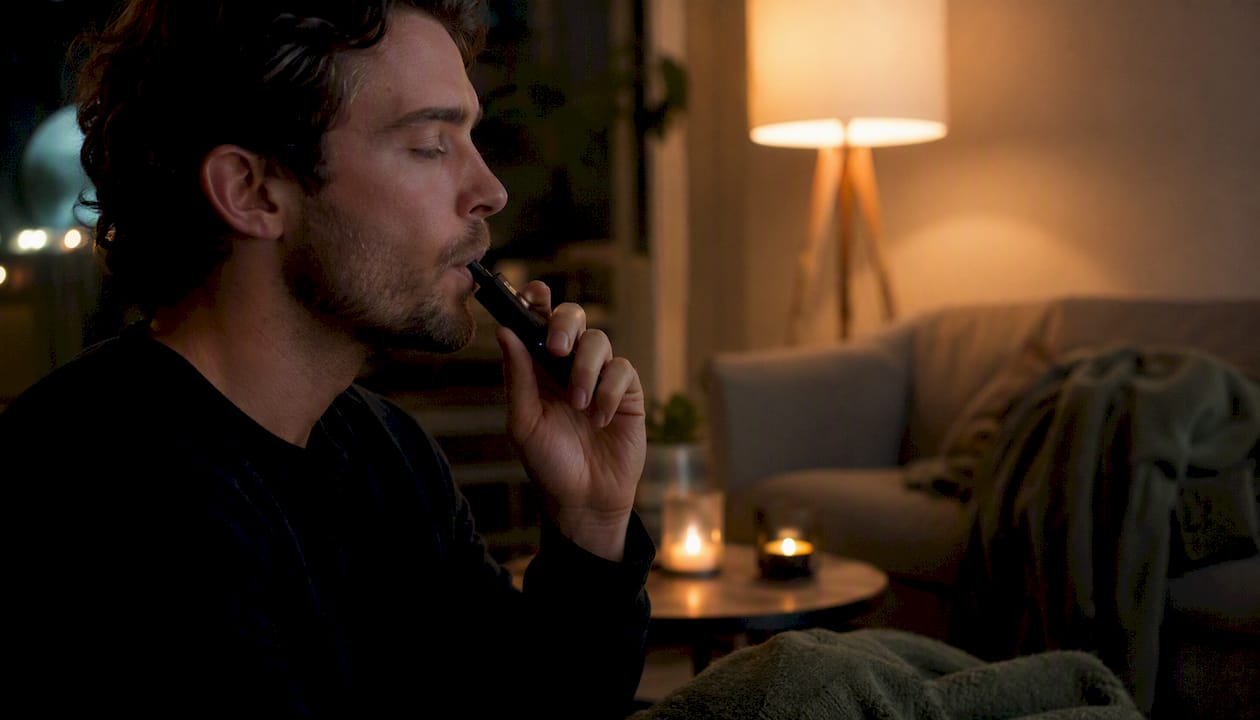
Bubba Kush works differently. Where Granddaddy Purple hits fast and broadly, Bubba Kush settles in deep and stays. The caryophyllene content makes it particularly useful when physical pain is what’s keeping you awake. Expect a chocolate-and-coffee flavor and a body lock that discourages getting back up.
Purple Punch is the right call when your problem is a busy mind rather than a tired body. Linalool is the key terpene here, and it functions more like a mental off-switch than a sedative. Users who find that THC sometimes amplifies anxiety tend to do better with linalool-dominant strains.

9 Pound Hammer deserves a specific note: this is not a beginner strain. It’s fast-acting and long-lasting, which makes it genuinely useful for treatment-resistant insomnia, but overconsumption is easy and the sedation can feel overwhelming if your tolerance is low.
Afghan Kush and Northern Critical are worth mentioning for readers who want a classic landrace profile. Both sit in a moderate THC range with straightforward myrcene-forward sedation and very little cerebral activity, which suits people who find high-THC hybrids overstimulating.
Which strains hit hardest, and when should you avoid them?
The strongest sedating options on this list are GG4, Slurricane, RS11 x Apple Fritter, and 9 Pound Hammer. All four combine high THC (often 25% and above) with dense myrcene and caryophyllene profiles. That combination produces rapid, heavy sedation, but it also raises the risk of next-day grogginess, anxiety during the session, and REM suppression with regular use.
Skip the heavy hitters if you:
- Have little or no prior cannabis experience
- Have a personal or family history of anxiety, panic attacks, or psychosis
- Take other sedative medications (benzodiazepines, sleep aids, opioids)
- Need to be fully alert within 8 hours of consumption
- Are pregnant or breastfeeding
For everyone else, the practical rule is simple: start low and go slow. A single small dose of a high-THC strain is far safer than a moderate dose of a moderate-THC strain, because you can always take more but you can’t take less once it’s in your system.
Pro Tip: If you’re trying a new high-THC strain for the first time, do it on a night when you have no obligations the next morning. Next-day cognitive effects are real, especially with edibles or high-dose inhalation, and they’re harder to predict until you know how your body responds.
Tolerance builds faster than most people expect. Using a heavy sedating strain every night for two weeks often means it stops working as well by week three. Rotating strains or taking occasional breaks helps preserve the sleep benefit.
How to choose the right strain for your specific sleep problem
Start by identifying which part of sleep is broken. The strain that helps you fall asleep faster is often not the same one that keeps you asleep.
Step 1: Diagnose your sleep problem
- Can’t fall asleep (onset insomnia): prioritize fast-acting delivery, myrcene-heavy strains, moderate THC
- Wake up repeatedly (maintenance insomnia): edibles or tinctures for longer duration; Bubba Kush, Slurricane, or Ice Cream Cake
- Pain keeps you awake: caryophyllene-dominant strains with anti-inflammatory effect; Bubba Kush, Ice Cream Cake, Bubba Platinum
- Anxiety or racing thoughts: linalool-forward strains; Purple Punch, Blue HeadBand, Moby x Do-Si-Dos
Step 2: Match your tolerance to the THC range
- Novice (no or minimal prior use): stay at or below 20% THC; Hindu Kush, Blueberry, Afghan Kush, Northern Critical
- Intermediate: 17–24% THC range works well; most strains on this list
- Experienced: 25%+ is appropriate; GG4, RS11 x Apple Fritter, Slurricane
Step 3: Ask the right questions at the dispensary
- What is the myrcene percentage in this batch? (Lab-tested flower will have this on the label)
- Does this strain lean toward body sedation or cerebral effects?
- What’s the recommended starting dose for a sleep-focused use?
- Are there any tincture or capsule formats with the same terpene profile?
Red flags that mean you should talk to a clinician first, not a budtender:
- Personal or family history of psychosis or schizophrenia
- Current use of benzodiazepines, opioids, or other CNS depressants
- Pregnancy or breastfeeding
- Undiagnosed sleep disorder (possible sleep apnea, restless legs, or narcolepsy)
If you’re concerned about sleep apnea specifically, the cannabis and sleep apnea overview covers what the current evidence does and doesn’t support.
Side effects, risks, and when to see a clinician
Cannabis for sleep carries real risks that are worth knowing before you start. Federal guidance emphasizes caution, particularly for new users and anyone in a vulnerable group.
Common side effects:
- Dry mouth and dry eyes
- Short-term memory impairment during the session
- Next-day grogginess, especially with edibles or high-THC strains
- Increased heart rate, particularly at higher doses
- Mild anxiety or paranoia, more common with high-THC strains in novice users
Less common but clinically significant risks:
- Psychosis or psychotic episodes in people with a predisposition (family history matters here)
- Dependency: regular use can lead to cannabis use disorder, with sleep disruption as a common withdrawal symptom
- Cardiovascular effects at high doses, relevant for people with existing heart conditions
- Interactions with sedative medications, including benzodiazepines and opioids
On sleep architecture: THC reliably reduces REM sleep, which is the stage associated with dreaming and emotional memory consolidation. Short-term, this may feel like deeper sleep. Long-term, REM suppression can affect mood, cognition, and emotional regulation. Some users also report vivid or disturbing dreams when they stop using cannabis after a period of regular use, because REM rebounds. The cannabis and nightmares connection explains this rebound effect in more detail.
See a clinician if:
- Insomnia persists beyond 3–4 weeks despite trying cannabis
- You’re taking any prescription sleep medication or CNS depressant
- You experience anxiety, paranoia, or chest discomfort after use
- You’re pregnant, planning to become pregnant, or breastfeeding
- You have a history of psychosis, bipolar disorder, or substance use disorder
Pro Tip: Cannabis interacts with CYP450 liver enzymes, which means it can affect how your body processes certain medications, including blood thinners and some antidepressants. If you take any prescription medication regularly, check with your prescribing physician before adding cannabis to your routine.
This article is general information, not medical advice. Confirm current rules and suitability with a qualified clinician or your state’s primary health authority.
U.S. legal context and how a Virginia medical certification changes your options
Cannabis remains a Schedule I controlled substance under federal law, but 38 states have legalized medical cannabis as of 2026, and Virginia has an active medical cannabis program. State law governs what you can legally purchase, possess, and consume.
Why a medical card matters for sleep-focused cannabis use:
- Access to medical dispensaries, which carry a broader product range than recreational stores in many states
- Higher possession limits in some states
- Access to higher-potency products and specific formulations (tinctures, capsules, full-spectrum oils) that may not be available recreationally
- Potential cost savings through tax exemptions on medical purchases in certain states
- Legal protection for qualifying patients under state law
In Virginia, a medical cannabis certification opens access to the full range of licensed dispensary products, including the terpene-specific formulations and higher-potency options that are most relevant for serious insomnia. Qualifying conditions include chronic pain, anxiety, PTSD, and other conditions that commonly disrupt sleep.
Virginia Medical Cannabis Certifications offers same-day online certifications for $50 (new patients) and $40 (renewals), completed in about 10 minutes. If you don’t qualify, the fee is fully refunded.
Key Takeaways
Indica and indica-dominant strains with myrcene and linalool terpene profiles are the most consistently effective cannabis options for sleep, but matching the strain to your specific sleep problem, tolerance, and delivery method is what determines whether it actually works.
| Point | Details |
|---|---|
| Match strain to sleep problem | Onset insomnia needs fast-acting myrcene strains; maintenance insomnia needs longer-duration edibles or tinctures. |
| Terpenes predict sedation | Myrcene drives body sedation; linalool quiets anxiety; caryophyllene adds anti-inflammatory body relaxation. |
| Start low, go slow | Begin at 2.5–5 mg THC regardless of format; edibles carry the highest re-dose risk due to delayed onset. |
| REM suppression is real | THC reduces REM sleep; long-term nightly use can affect mood and cognition over time. |
| Virginia Medical Cannabis Certifications | Virginia residents can get a same-day medical certification online for $50, with a full refund if not approved. |
What I’ve learned about recommending sleep strains
The conventional wisdom says “just pick an indica.” That’s not wrong, but it misses the more useful question: which part of sleep is actually broken? Two people can both describe themselves as insomniacs and need completely different strains. The person who can’t quiet their mind at 11 PM needs linalool. The person who falls asleep fine but wakes at 3 AM in pain needs caryophyllene and a longer-duration delivery method. Treating those two cases the same way is why so many people try cannabis for sleep, get mediocre results, and give up.
The other thing most articles skip: tolerance management. The strains on this list work best when they’re not used every single night. Rotating between two or three strains, or taking one or two nights off per week, preserves the sedative effect far longer than daily use of the same product.
For Virginia residents who want legal access to the full range of dispensary products, including terpene-specific formulations and higher-potency options, a medical certification is the practical next step. Virginia Medical Cannabis Certifications makes that process straightforward.
Getting certified in Virginia to access more sleep-focused options
Virginia’s medical dispensaries carry products you simply can’t find at a recreational retailer: terpene-profiled tinctures, precise-dose capsules, and full-spectrum formulations that combine CBD, CBN, and specific terpene blends for sleep. Those options matter when you’re trying to match a product to a specific sleep problem rather than just grabbing whatever’s on the shelf.
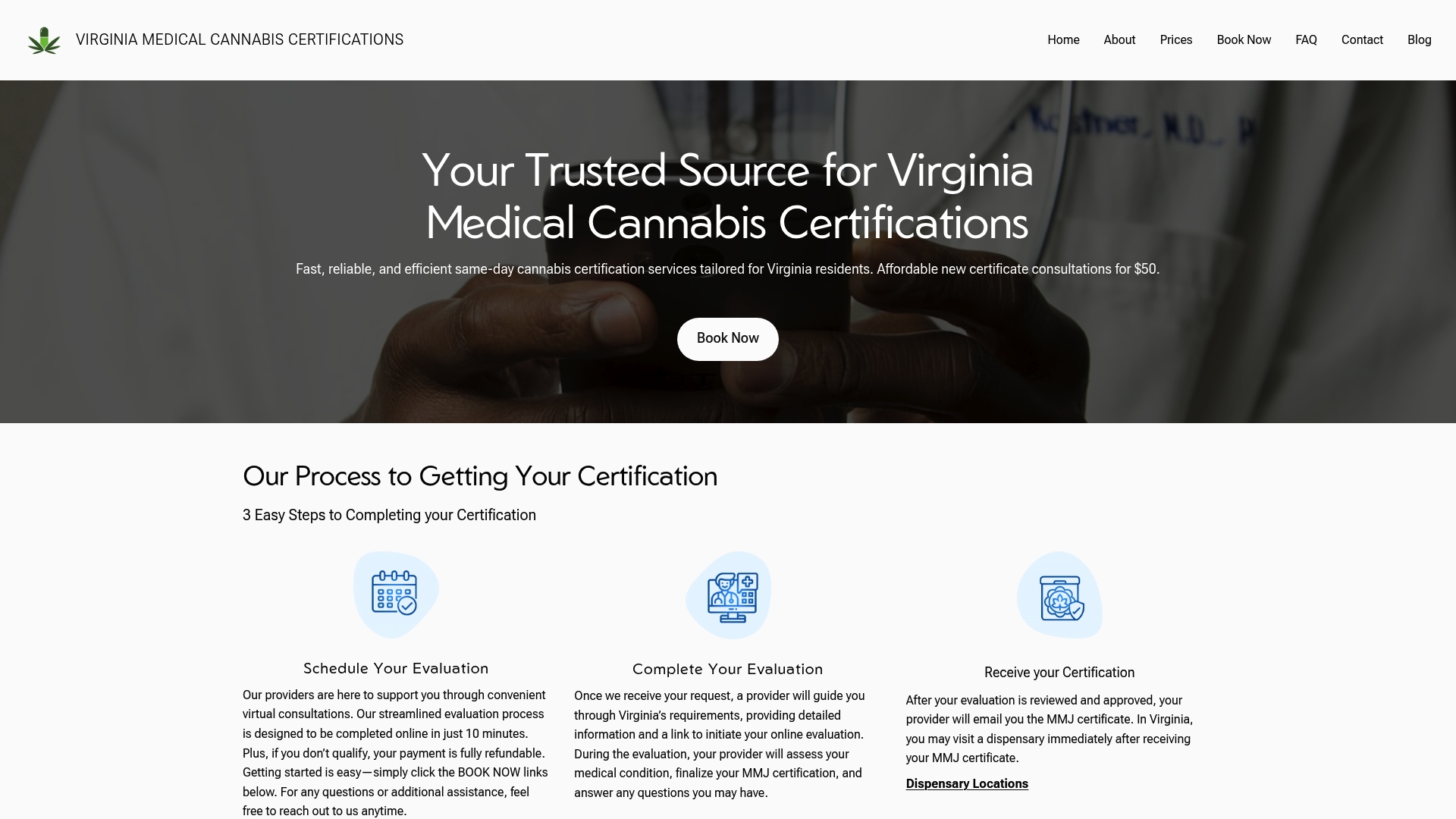
Virginia Medical Cannabis Certifications gives you a direct path to those products. The online evaluation takes about 10 minutes, costs $50 for new patients ($40 for renewals), and delivers your certificate the same day. If you don’t qualify, you get a full refund. There’s no long wait, no in-person appointment, and no guesswork about eligibility. Start your certification today or review the full process and refund guarantee before you book.
Sources and further reading
The following sources informed this article. Each one is worth bookmarking if you want to go deeper on the evidence.
- CDC — Short sleep duration among U.S. adults (Data Brief 436)
- PMC — Review: Cannabis and sleep outcomes (systematic review)
- PMC — Clinical study: CBD + terpenes and sleep in insomnia
- SAMHSA — Learn about marijuana: risks
- Leafly — Best weed strains for insomnia and sleep
- StrongStrains — Best indica strains for sleep (2026)
- StrainGuide — Best cannabis strains for sleep (2026 guide)
- Healthline — Best strain for sleep (evidence and tips)
Recommended
- Best Strains for Migraines: Acute Relief and Prevention Picks – Virginia Medical Cannabis Certifications
- Can Weed Cause Nightmares? What You Need to Know – Virginia Medical Cannabis Certifications
- Can Weed Help Sleep Apnea? What You Need to Know – Virginia Medical Cannabis Certifications
- Sativa Headache Relief: What You Need to Know – Virginia Medical Cannabis Certifications