Cannabis edibles can cause migraines through THC-induced blood vessel dilation, dehydration, and the liver’s conversion of THC into a more potent compound called 11-hydroxy-THC. These effects are real, measurable, and often misunderstood by people who assume edibles are a safe, headache-free alternative to smoking. If you already deal with migraines, the slow onset and unpredictable potency of edibles create a specific set of risks that are worth understanding before you dose. This article breaks down the science, the dosing traps, and the practical steps you can take to reduce your risk.
In Virginia? Get your medical cannabis card online today.
$50 new certification ($40 renewal), same-day telehealth visit with a licensed provider. No office visit needed.
Book your visitCan edibles cause migraines through THC’s effects on the body?
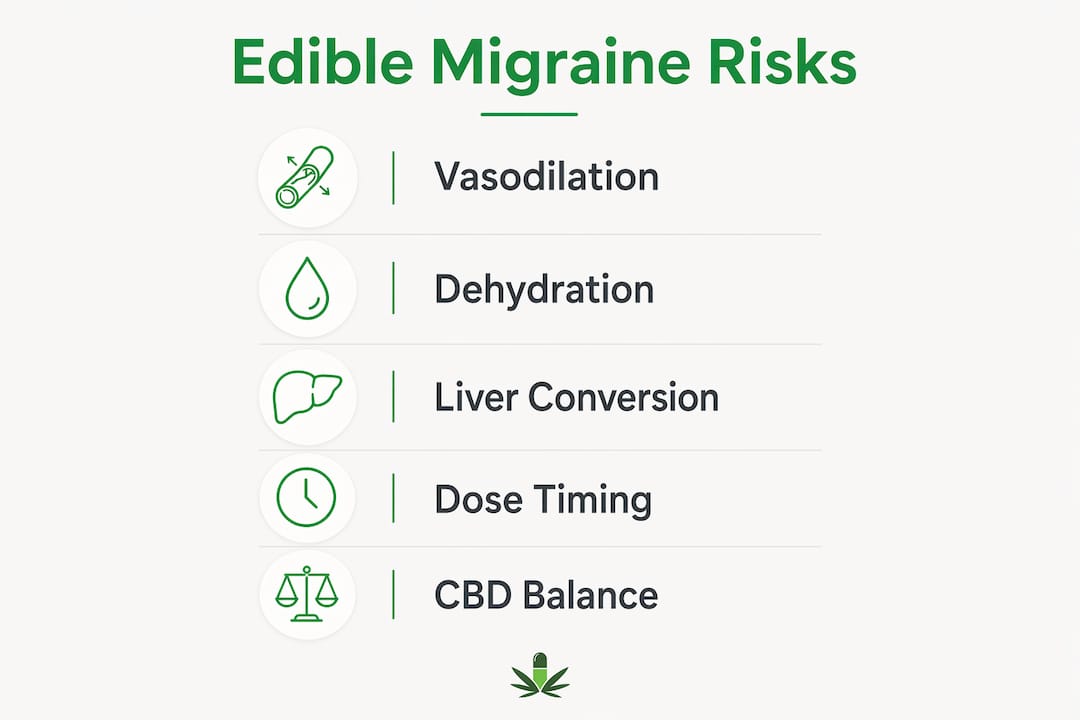
THC directly affects blood vessels by causing vasodilation, which means your blood vessels widen and blood pressure shifts. For migraine-prone people, this vascular change can trigger or worsen a headache, especially at higher doses. The blood vessel dilation caused by THC is one of the most clinically recognized reasons edibles lead to headaches.
The liver adds another layer of complexity. When you eat an edible, your liver converts THC into 11-hydroxy-THC, a compound that crosses the blood-brain barrier more efficiently than THC from inhaled cannabis. The result is a stronger, longer-lasting effect that is harder to predict and harder to control. That unpredictability is exactly what makes edibles risky for migraine sufferers.

Edibles also have a delayed onset of 60–90 minutes, sometimes longer. Many people assume the edible did not work and take a second dose. By the time both doses hit, THC levels spike well beyond a comfortable range, and the resulting anxiety, elevated heart rate, and vascular stress can trigger a full migraine episode.
Pro Tip: Wait a full 90 minutes before considering a second dose. Set a timer if you need to. Redosing too early is the single most common mistake with edibles.
- THC causes vasodilation, shifting blood pressure in ways that trigger migraines
- Liver metabolism converts THC to 11-hydroxy-THC, making edibles significantly more potent than inhaled cannabis
- Delayed onset leads to accidental overdosing, which spikes THC and worsens symptoms
- Individual sensitivity varies widely, meaning a dose that works for one person can cause a migraine in another
What side effects of edibles can trigger or mimic migraines?
Dehydration is the most overlooked migraine trigger connected to edibles. THC causes dry mouth, which signals that your body is losing moisture. If you are not actively drinking water before and after consuming an edible, you are setting up a dehydration-driven headache that can escalate into a full migraine. Dehydration and dry mouth from THC are direct physiological triggers, not coincidences.
Anxiety is another significant factor. High doses of THC produce a biphasic dose-response, meaning low doses calm and relieve pain, while high doses trigger anxiety and paranoia. Anxiety raises your heart rate and tightens muscles, both of which are well-known migraine precursors. The gummy that was supposed to help can become the reason your head is pounding by midnight.
Common mistakes that amplify these risks include:
- Consuming edibles on an empty stomach, which speeds up THC absorption and increases the chance of a blood pressure drop
- Mixing edibles with alcohol, which compounds dehydration and vascular stress
- Combining edibles with caffeine, which adds stimulant pressure on blood vessels already affected by THC
- Ignoring the “weed hangover,” which includes next-day fatigue, brain fog, and low-grade headaches that can escalate in migraine-prone people
Pro Tip: Eat a light meal 30 minutes before taking an edible. Food slows THC absorption and reduces the intensity of side effects, including headaches.
The “weed hangover” deserves specific attention. Heavy edible use the night before can leave residual 11-hydroxy-THC in your system, and the comedown often includes dehydration and disrupted sleep. Both are classic migraine triggers. Treating the morning after as part of your edible experience, not separate from it, changes how you plan your use.
How do dosage and timing affect your migraine risk?
Starting dose matters more with edibles than with any other cannabis format. Clinically recommended starting doses sit at 2.5–5mg THC for new or sensitive users. That range is not arbitrary. It reflects the threshold below which most people experience calm and pain relief rather than anxiety and vascular stress.
Timing is equally critical. Standard edibles take 60–90 minutes to reach peak effect, which is far too slow to abort a migraine that is already building. By the time the THC reaches your bloodstream through the digestive tract, the migraine may be at full intensity. Nano-emulsified cannabis products offer a faster onset of 15–20 minutes, which gives you a realistic window to intercept a migraine in its early phase before peak pain sets in.
Edible onset and dosing at a glance
| Factor | Standard edibles | Nano-emulsified edibles |
|---|---|---|
| Onset time | 60–90 minutes | 15–20 minutes |
| Potency relative to inhaled THC | Higher (11-hydroxy-THC) | Similar to standard edibles |
| Redosing risk | High | Lower due to faster feedback |
| Best use case | Chronic pain, sleep | Acute migraine interception |
Key dosing principles for migraine-prone people:
- Start at 2.5mg THC and assess your response before increasing
- Never redose within 90 minutes of your first dose
- Choose nano-emulsified products if you need faster onset for acute migraine relief
- Track your doses in a simple log so you can identify patterns between dose size and headache frequency
How do edibles compare to other cannabis methods for migraine relief?
Inhaled cannabis has a faster and more controllable effect profile than edibles. A 2026 UC San Diego study found that a THC/CBD combination delivered via vaporization provided 67.2% pain relief at two hours, compared to 46.6% for placebo. That is a meaningful clinical result, and it was achieved through inhalation, not edibles. The faster onset of vaporized cannabis gives you real-time control over your dose, which is exactly what migraine management requires.
Edibles, by contrast, are better suited for preventive use or managing chronic pain over longer periods. They are not well-designed for aborting an active migraine because the onset is too slow. If you are using edibles hoping to stop a migraine that started an hour ago, you are likely to overshoot your dose before you feel any relief.
CBD-to-THC ratios also matter. Higher CBD content can moderate the anxiety-inducing effects of THC, which reduces one of the key migraine triggers. Products with a 1:1 CBD-to-THC ratio are worth considering for migraine-prone patients who want the benefits of cannabis without the vascular and anxiety risks of high-THC edibles. You can explore how different cannabinoids interact by reviewing CBC vs CBG differences and their potential roles in pain management.
What steps reduce the risk of edibles triggering headaches?
Migraine sufferers can use edibles safely, but it requires discipline around a few non-negotiable habits. The most important is hydration. Drink at least 16 ounces of water before consuming an edible and continue drinking throughout the experience. THC-induced dry mouth is not just uncomfortable. It is a direct path to a dehydration headache.
Frequency of use is equally important. Clinical guidance recommends limiting acute cannabis use to 2–3 days per week. Using edibles more frequently than that creates a risk of Medication Overuse Headache (MOH), the same rebound pattern seen with triptans and NSAIDs. MOH is often under-recognized in cannabis users because people assume natural substances cannot cause rebound effects. They can.
Practical steps to reduce your risk:
- Keep your starting dose at 2.5–5mg THC and increase only after multiple sessions confirm your tolerance
- Eat before you dose to slow absorption and reduce blood pressure fluctuations
- Avoid alcohol and caffeine on the same day you use edibles
- Limit use to 2–3 days per week to prevent rebound headaches
- Track headache frequency alongside your cannabis use to spot patterns early
- Consult a medical professional if your migraines worsen or become more frequent after starting edibles
Pro Tip: Keep a simple notes app log with your dose, time, what you ate, and how you felt the next morning. Two weeks of data will tell you more than any general guideline.
If you are experiencing edible-related gastric issues alongside headaches, those symptoms may share the same root causes and are worth addressing together with a healthcare provider.
Key Takeaways
Edibles cause migraines most often through high THC doses, dehydration, and the potent 11-hydroxy-THC produced by liver metabolism, all of which are preventable with the right approach.
| Point | Details |
|---|---|
| THC triggers vasodilation | Blood vessel changes from THC directly raise migraine risk, especially at high doses. |
| Start at 2.5–5mg THC | Clinically recommended starting doses reduce the risk of anxiety and headache. |
| Edibles onset is slow | The 60–90 minute delay leads to redosing mistakes that spike THC and cause migraines. |
| Limit use to 2–3 days per week | More frequent use risks Medication Overuse Headache, a rebound pattern similar to triptans. |
| Hydration is non-negotiable | Drinking water before and after dosing prevents dehydration-driven headaches. |
What I have learned watching people dose edibles wrong
The most consistent mistake I see is people treating edibles like a faster version of smoking. They are not. The liver metabolism, the delayed onset, and the 11-hydroxy-THC conversion make edibles a fundamentally different experience, and migraine sufferers pay the price when they do not account for that difference.
The rebound headache problem is the one that concerns me most. People who use edibles daily for pain relief often do not realize their headaches are getting worse because of the cannabis, not despite it. The pattern mirrors what happens with daily ibuprofen use. The medication that was supposed to help becomes the cause of the problem. Recognizing that pattern early is the difference between managing migraines and making them worse.
My honest recommendation is to treat edibles as a tool with a specific use case, not a general solution. For chronic background pain or sleep, a low-dose edible used a few times a week can be genuinely helpful. For acute migraine relief, inhalation or nano-emulsified products are better choices because you can control the dose in real time. Combining both approaches within a broader migraine management plan, including hydration, sleep, and stress management, gives you the best chance of real relief without the rebound risk.
— Jonathan
Medical cannabis certification for Virginia residents
If you are a Virginia resident managing migraines and considering medical cannabis as part of your treatment plan, getting certified is the right first step.

Virginia Medical Cannabis Certifications offers same-day online consultations for $50, completed in about 10 minutes. The process is straightforward, and the fee is fully refundable if you do not qualify. A certified evaluation gives you legal access to cannabis products and the guidance to use them responsibly, including the dosing strategies that matter most for migraine management. Start your medical cannabis certification today, or review the liability waiver and certification process to understand what to expect before your appointment.
FAQ
Can edibles cause migraines even at low doses?
Low doses of 2.5–5mg THC rarely trigger migraines and are clinically recommended as a starting point. Higher doses increase the risk significantly through vasodilation and anxiety.
How long after eating an edible can a migraine start?
Migraines from edibles typically appear 1–3 hours after consumption, coinciding with peak 11-hydroxy-THC levels from liver metabolism.
Do edibles cause more headaches than smoking cannabis?
Edibles carry a higher risk of headaches for most people because the liver converts THC into a more potent compound and the delayed onset leads to accidental overdosing.
Can gummies cause migraines if I am already a migraine sufferer?
Yes. Migraine-prone people are more sensitive to THC-induced vasodilation and dehydration, both of which gummies can trigger, especially at higher doses.
How often can I use edibles without risking rebound headaches?
Clinical guidelines recommend limiting acute cannabis use to 2–3 days per week. Daily use raises the risk of Medication Overuse Headache, which worsens migraines over time.
Recommended
- Can Edibles Cause Gastritis? What You Need to Know – Virginia Medical Cannabis Certifications
- Weed for TMJ: Relief, Research, and Real Results – Virginia Medical Cannabis Certifications
- CBC vs CBG: Key Differences and Benefits Explained – Virginia Medical Cannabis Certifications
- Top 6 Providers for Best Strains for Emphysema 2026 – Virginia Medical Cannabis Certifications
In Virginia? Get your medical cannabis card online today.
$50 new certification ($40 renewal), same-day telehealth visit with a licensed provider. No office visit needed.
Book your visit