
Cannabis causes nightmares primarily through REM rebound, a neurological overcorrection that occurs when you stop using it. THC suppresses REM sleep, the stage where dreaming happens, so your brain compensates aggressively once cannabis leaves your system. The result is longer, more vivid, and emotionally intense dreams that can weed cause nightmares in ways many people do not expect. Understanding this mechanism is the first step toward managing it without panic or confusion.
Can weed cause nightmares through REM sleep suppression?
THC suppresses REM sleep by binding to CB1 receptors in the brain, which directly alters your natural sleep architecture. REM sleep is the stage responsible for most dreaming, emotional processing, and memory consolidation. When THC occupies CB1 receptors, REM time decreases, meaning you dream less and less vividly during active cannabis use.
This sounds like a benefit if you struggle with nightmares. For people with PTSD or anxiety, fewer dreams can feel like relief. The problem is that the brain does not simply forget the REM sleep it missed. It keeps a running deficit, and the moment cannabis use stops, it demands repayment.

Pro Tip: If you use cannabis regularly for sleep and plan to stop, taper your dose gradually over one to two weeks rather than quitting abruptly. A slower reduction gives your brain more time to adjust and can reduce the intensity of REM rebound.
THC’s impact on REM sleep is also dose-dependent. Low doses may produce mild sedation, while high doses stimulate endocannabinoid pathways in ways that increase sleep disruption over time. Chronic, heavy use creates a deeper REM deficit, which means a more dramatic rebound when use ends.
The key takeaway here is that cannabis does not eliminate your brain’s need for REM sleep. It only delays it. That delay is what sets the stage for intense dreams and nightmares later.
- REM sleep is suppressed during active cannabis use via CB1 receptor binding
- Fewer dreams occur during use, which can feel like a short-term benefit
- The brain accumulates a REM deficit that must be resolved upon cessation
- Higher doses and longer use periods create a larger deficit and stronger rebound
What causes nightmares during cannabis withdrawal?
REM rebound is the brain’s way of catching up on lost dream sleep after a period of suppression. When you quit cannabis, your brain does not return to baseline gradually. It overshoots it. REM sleep phases during withdrawal increase 15–20% above baseline, producing dreams that are longer, more emotionally charged, and far more vivid than anything you experienced before using cannabis.
The timeline follows a predictable pattern. Vivid dreams and nightmares typically begin on nights 2–3 after quitting. They peak during weeks 1–3 and then gradually subside by around day 45. Knowing this timeline matters because many people interpret the intensity of these dreams as a sign something is wrong, when in fact it is a sign the brain is working correctly.
“Withdrawal nightmares are not a sign of psychological dysfunction. They are the brain processing an emotional backlog that built up during months or years of REM suppression. The amygdala, which governs emotional memory, becomes especially active during this rebound period, which is why the dream content often feels so raw and distressing.”
The emotional content of these dreams is not random. During REM suppression, your brain cannot fully process emotional experiences. Those unprocessed emotions accumulate. When REM rebounds, the amygdala works overtime to catch up, which is why withdrawal nightmares often feel deeply personal and unsettling.
Here is the typical withdrawal nightmare progression:
- Nights 2–3: First vivid dreams appear, often disorienting but not yet severe
- Week 1: Dream intensity increases; nightmares become more frequent and emotionally loaded
- Weeks 2–3: Peak nightmare period; amygdala activity is highest; sleep may feel fragmented
- Weeks 4–6: Gradual reduction in nightmare frequency and emotional intensity
- Day 45 and beyond: Most people return to normal dream patterns
One specific type of withdrawal dream deserves attention. Using dreams, where you dream about relapsing, are common and alarming to many people. They are not predictive. They reflect the brain processing cessation, not a signal that relapse is inevitable.
How do different cannabis products affect nightmare risk?
Not all cannabis products carry the same risk for sleep disturbances and nightmares. The type of product you use and how heavily you use it both influence the severity of REM suppression and the resulting rebound.
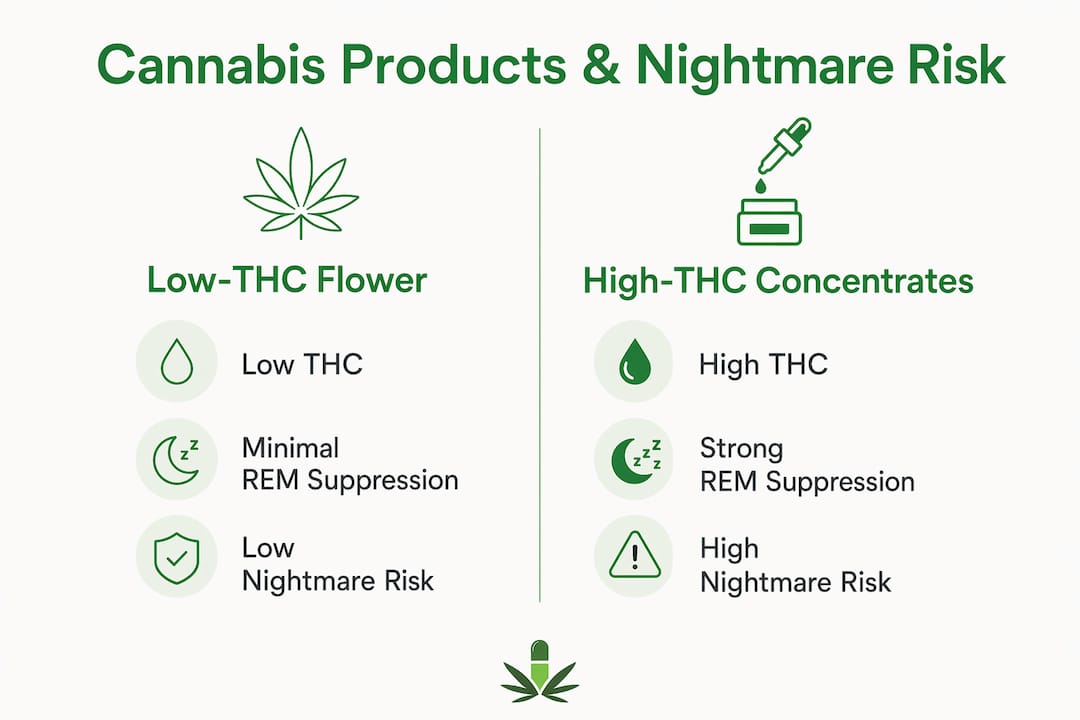
Research shows that hash users report worse sleep quality compared to people who use flower only. High-THC concentrates and hash deliver more THC per session, which means deeper CB1 receptor suppression and a larger REM deficit to repay. The relationship between cannabis use severity and sleep disruption is measurable, with a documented association between heavier use and greater sleep quality problems.
| Product type | THC concentration | REM suppression risk | Nightmare rebound severity |
|---|---|---|---|
| Low-THC flower | Low to moderate | Mild | Low |
| Standard flower | Moderate | Moderate | Moderate |
| Hash | High | High | High |
| Concentrates/dabs | Very high | Very high | Very high |
| Edibles | Variable | Moderate to high | Moderate to high |
Edibles present a unique case. Because they are metabolized through the liver, they produce a delayed and prolonged THC effect. This extended duration means longer periods of REM suppression per session. People who use edibles regularly for sleep may experience more pronounced rebound effects than those who smoke the same amount of THC.
Frequency of use also matters. Daily use creates a continuous REM deficit with no opportunity for natural recovery. Occasional use, by contrast, allows the brain to partially restore REM sleep between sessions, reducing the overall deficit and the severity of any rebound.
What practical steps reduce nightmares from cannabis withdrawal?
Managing withdrawal nightmares is possible, and most people see significant improvement within four to six weeks without any medical intervention. The strategies below address both the neurological and behavioral sides of the problem.
- Maintain a consistent sleep schedule. Going to bed and waking at the same time every day stabilizes your circadian rhythm and reduces sleep fragmentation, which can make nightmares feel less severe.
- Avoid alcohol and sedatives. Alcohol disrupts REM rebound and prolongs the nightmare period. Using alcohol to cope with withdrawal sleep problems is one of the most common and counterproductive mistakes people make.
- Try dream journaling. Brief morning journaling is associated with decreased subjective nightmare severity. Writing down a dream externalizes it, which reduces its emotional grip.
- Consider Imagery Rehearsal Therapy (IRT). IRT is a structured technique where you rewrite the ending of a recurring nightmare while awake, then rehearse the new version. IRT and CBT-I are both effective for managing persistent, distressing nightmares without medication.
- Limit screen time before bed. Blue light and stimulating content increase cortisol, which amplifies emotional dream content during REM sleep.
Pro Tip: If nightmares persist beyond six weeks or are severe enough to cause daytime anxiety, consult a sleep specialist. Persistent nightmares after cannabis withdrawal can sometimes indicate an underlying condition like PTSD that was previously masked by cannabis use.
Cognitive Behavioral Therapy for Insomnia, known as CBT-I, addresses the thought patterns and behaviors that worsen sleep problems. It is the first-line treatment recommended by sleep medicine specialists for insomnia and nightmare disorders, and it works without pharmacological intervention.
How do withdrawal nightmares differ from other nightmare causes?
Cannabis withdrawal nightmares are neurologically driven and temporary. That distinction separates them from nightmares caused by trauma, anxiety disorders, or PTSD, which are psychologically rooted and require different treatment approaches.
Withdrawal nightmares follow a predictable timeline and resolve on their own as the brain restores its natural REM balance. They do not indicate a mental health disorder. They are a physiological side effect of cessation, similar to how muscles ache after stopping a physical activity the body has adapted to.
| Feature | Withdrawal nightmares | Trauma or PTSD nightmares |
|---|---|---|
| Cause | REM rebound after THC cessation | Amygdala hyperactivation from trauma |
| Timeline | Resolves within 45 days | Persistent without treatment |
| Content | Emotionally intense but varied | Often replays specific traumatic events |
| Treatment | Sleep hygiene, IRT, time | Trauma-focused therapy, medication |
| Pathological? | No | Yes, if untreated |
The overlap becomes complicated for people with PTSD or anxiety. THC suppresses trauma-related REM processing during use. When cannabis stops, withdrawal reveals latent trauma in dreams that had been chemically suppressed. For these individuals, withdrawal nightmares can be more severe and may require professional support rather than watchful waiting.
Accurate interpretation of your nightmares matters. Assuming withdrawal nightmares signal a deeper psychological problem can create unnecessary anxiety, which itself worsens sleep quality. Recognizing them as a temporary, neurological recovery process reduces the fear response and makes them easier to tolerate.
Key Takeaways
Cannabis suppresses REM sleep during use and triggers intense nightmares during withdrawal through REM rebound, a process that peaks in weeks 1–3 and resolves by day 45 for most people.
| Point | Details |
|---|---|
| REM suppression during use | THC binds to CB1 receptors and reduces REM sleep, causing fewer dreams while using cannabis. |
| Withdrawal triggers rebound | REM sleep increases 15–20% above baseline after quitting, producing vivid and intense nightmares. |
| Product type affects severity | High-THC products like hash and concentrates create deeper REM deficits and stronger rebound nightmares. |
| Nightmares are temporary | Most withdrawal nightmares peak in weeks 1–3 and subside by day 45 without treatment. |
| Avoid alcohol as a coping tool | Alcohol disrupts REM rebound and prolongs the nightmare period rather than relieving it. |
What I’ve learned about cannabis nightmares that most articles get wrong
Most coverage of cannabis and nightmares treats the nightmares as a problem to eliminate. I think that framing is backwards. After spending years looking at how cannabis interacts with sleep neuroscience, I’ve come to see withdrawal nightmares as one of the clearest signs that the brain is doing exactly what it should.
The brain is not malfunctioning when it produces intense dreams after cannabis cessation. It is catching up. Every emotionally significant experience that went unprocessed during months of REM suppression gets a chance to surface. That is not dysfunction. That is recovery.
What I find most people get wrong is reaching for alcohol or sleep aids to quiet the dreams. That move delays the process and extends the discomfort. The brain will get its REM sleep eventually. Blocking it again just pushes the timeline further out.
The other misconception I see constantly is that “using dreams,” where you dream about relapsing, mean something predictive about your recovery. They do not. They are the brain processing a major behavioral change, nothing more. Treating them as omens creates anxiety that makes the whole withdrawal period harder than it needs to be.
My honest advice: let the dreams happen, write them down in the morning, and trust the timeline. Six weeks is not forever. The intensity fades, and most people come out the other side with better, more natural sleep than they had while using cannabis regularly.
— Jonathan
Medical cannabis in Virginia: a clearer path forward
If you are a Virginia resident managing conditions like anxiety, PTSD, or chronic pain, and you are weighing how cannabis fits into your care plan, getting certified through a trusted provider makes the process straightforward.

Virginia Medical Cannabis Certifications offers same-day online consultations for $50, completed in about 10 minutes. If you do not qualify, the fee is fully refunded. The process covers a wide range of qualifying conditions, and the certification steps are clearly outlined so you know exactly what to expect before you start. For Virginia residents who want safe, legal access to cannabis therapy without the guesswork, Virginia Medical Cannabis Certifications is a practical first step.
FAQ
Can weed cause nightmares while you are still using it?
Active cannabis use typically reduces nightmares by suppressing REM sleep. Nightmares are far more common during withdrawal, when REM rebound causes intense and vivid dreaming.
How long do nightmares last after quitting cannabis?
Vivid dreams and nightmares typically begin on nights 2–3 after quitting, peak during weeks 1–3, and subside by around day 45 for most people.
Does THC potency affect how bad withdrawal nightmares are?
Yes. High-THC products like hash and concentrates create deeper REM suppression during use, which leads to a stronger rebound and more intense nightmares after cessation.
Are cannabis withdrawal nightmares a sign of a mental health problem?
No. Withdrawal nightmares are neurologically driven and temporary. They reflect REM rebound, not psychological dysfunction, though people with PTSD may experience more severe versions that warrant professional support.
What is the most effective way to reduce nightmare intensity during withdrawal?
Imagery Rehearsal Therapy and CBT-I are the most evidence-supported approaches. Avoiding alcohol, maintaining a consistent sleep schedule, and keeping a morning dream journal also reduce nightmare severity.
Recommended
- Can Edibles Cause Gastritis? What You Need to Know – Virginia Medical Cannabis Certifications
- Weed for TMJ: Relief, Research, and Real Results – Virginia Medical Cannabis Certifications
- Can You Eat Edibles With an Ulcer? Safe Use Guide – Virginia Medical Cannabis Certifications
- Home – Virginia Medical Cannabis Certifications for $50