Cannabis is a complementary medicine that can reduce shingles nerve pain and inflammation by interacting with the body’s endocannabinoid system, though it does not cure the underlying varicella-zoster virus. Shingles, clinically known as herpes zoster, causes intense burning and stabbing nerve pain that standard treatments often fail to fully control. The nerve damage it leaves behind, called postherpetic neuralgia (PHN), can persist for months or years. Cannabis for shingles is gaining attention precisely because traditional treatments fail approximately 50% of patients with chronic neuropathic pain, making plant-based options worth understanding.
What is shingles and why does it cause such severe nerve pain?
Shingles is a reactivation of the varicella-zoster virus, the same virus that causes chickenpox. After the initial chickenpox infection, the virus lies dormant in nerve tissue. Decades later, it can reactivate, traveling along nerve fibers to the skin and causing a painful, blistering rash. The nerve inflammation this triggers is the root of the pain.
PHN is defined as focal nerve pain persisting beyond 90 days after the rash heals. It involves abnormal nerve signaling that produces chronic burning, stabbing, and hypersensitivity to touch. Even a light breeze or clothing contact can feel unbearable to someone with PHN. This is not ordinary pain. It is a sign of lasting nerve damage.
Conventional treatments for PHN include:
- Antiviral medications (acyclovir, valacyclovir): effective during the acute phase but do not prevent PHN in all patients
- Gabapentin and pregabalin: reduce nerve signal misfiring but cause sedation and cognitive fog in many patients
- Tricyclic antidepressants (amitriptyline): modulate pain pathways but carry cardiac and anticholinergic risks
- Lidocaine patches: provide localized relief but do not address deep nerve pain
- Opioids: sometimes prescribed but carry significant dependency and side effect risks
The gap between what these treatments offer and what patients actually need is real. That gap is why so many people with shingles are asking whether cannabis oil or hemp extract might help.
How can cannabis compounds affect shingles nerve pain?
Cannabinoids work by binding to receptors in the body’s endocannabinoid system. THC and CBD bind to CB1 and CB2 receptors located throughout the nervous and immune systems. CB1 receptors are concentrated in the brain and spinal cord, where they modulate pain perception. CB2 receptors are found in immune cells, where they regulate inflammation.
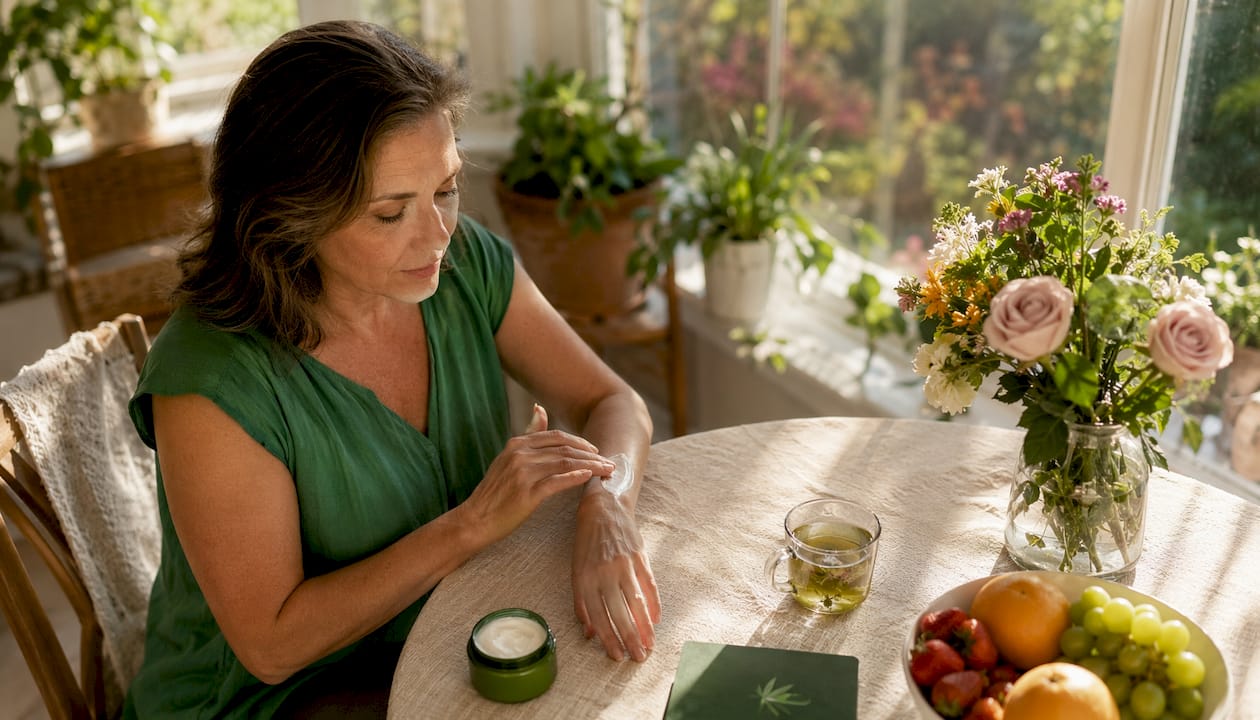
CBD offers anti-inflammatory, analgesic, and neuroprotective effects without causing intoxication. THC alters pain signal perception directly but does produce psychoactive effects. For shingles patients, both compounds serve different roles. CBD may calm the immune-driven inflammation around damaged nerves, while THC can blunt the intensity of pain signals reaching the brain.
Balanced THC:CBD formulations often outperform CBD alone in modulating severe nerve pain. This matters for PHN patients, where the nerve damage is complex and multidimensional. A product with both compounds may address more of the pain pathways simultaneously.
The delivery method also changes what you get:
- Topical cannabis creams and salves: target surface-level burning and itch at the rash site
- Cannabis oils and tinctures: absorbed sublingually for faster onset than edibles
- Edibles and capsules: provide longer-lasting systemic effects, useful for overnight pain
- Inhalation: fastest onset but carries respiratory risks and is harder to dose precisely
Pro Tip: Topical cannabis products work well for the localized burning sensation at the rash site, but they do not penetrate deeply enough to address the underlying nerve pain. If your pain feels deep or radiating, a systemic form like an oil or edible is a better starting point.
What does the current research say about cannabis for nerve pain?
The evidence is promising but not yet definitive. The 2026 Cochrane review on cannabis-based medicines for neuropathic pain found no high-quality evidence that cannabis reliably outperforms placebo. However, it did find that 21% of patients using cannabis achieved 50% pain relief, compared to 17% with placebo. That 4-percentage-point difference is modest but real for patients who have run out of other options.
A separate 2026 randomized controlled trial showed CBD reduced chronic neuropathic pain by approximately 14% versus 6.5% for placebo over six weeks. CBD doses in the trial increased from 200mg to 800mg daily. Some participants reported reductions greater than 30%, suggesting that individual response varies widely.
“Evidence for cannabis efficacy in shingles and PHN specifically remains sparse. Initial findings suggest potential for pain and inflammation modulation, but more targeted research is needed before cannabis can be recommended as a standard treatment for postherpetic neuralgia.”
| Research finding | What it means for shingles patients |
|---|---|
| 21% vs 17% achieved 50% pain relief | Cannabis offers a modest but real advantage over placebo for nerve pain |
| CBD reduced pain ~14% vs 6.5% placebo | CBD produces measurable pain reduction, though not dramatic for all patients |
| High variability in patient response | Dosing must be individualized; no single dose works for everyone |
| Higher adverse event withdrawal rates with cannabis | Side effects are real and require monitoring, especially with THC |
| Sparse PHN-specific data | Shingles patients are extrapolating from general neuropathic pain research |
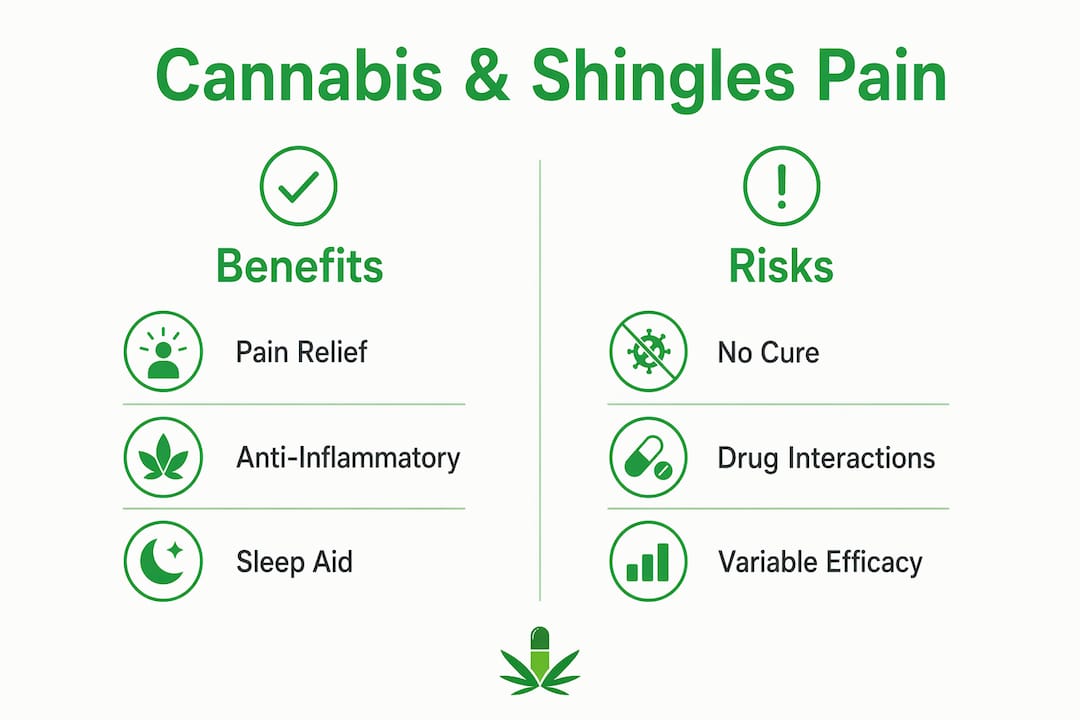
The honest takeaway: cannabis is not a guaranteed fix. But for patients who have not found adequate relief through gabapentin or lidocaine patches, it represents a legitimate option worth discussing with a physician.
How to safely use cannabis products for shingles pain relief
Safe use starts with one principle: start low and go slow. Low-dose CBD starting at 0.4 to 19mg is the recommended entry point, with gradual titration based on your response. Jumping to high doses immediately increases the risk of side effects without guaranteeing better pain control.
Follow this approach when starting cannabis for nerve pain:
- Choose your delivery method based on your symptoms. Topical creams work for surface burning at the rash site. Oils or edibles are better for deep, radiating nerve pain.
- Start with CBD-only products if you are new to cannabis or concerned about psychoactive effects. Add THC only if CBD alone provides insufficient relief.
- Track your pain daily. Use a simple 1–10 scale to measure pain before and after each dose. This tells you whether the product and dose are working.
- Check for drug interactions before you start. CBD interacts with cytochrome P450 enzymes, which metabolize many prescription medications including gabapentin and amitriptyline. Your doctor needs to know you are adding cannabis to your regimen.
- Monitor for side effects. Sedation, dizziness, dry mouth, and changes in appetite are common. These often resolve with dose adjustment.
- Set realistic expectations. Cannabis manages symptoms. It does not shorten the duration of shingles or repair nerve damage.
Pro Tip: If you are already taking gabapentin or a tricyclic antidepressant for PHN, tell your prescribing physician before adding any cannabis product. CBD can raise blood levels of these medications, which may require a dose reduction to avoid over-sedation.
For Virginia residents, accessing cannabis legally for conditions like shingles-related nerve pain requires a medical cannabis certification. Virginia Medical Cannabis Certifications offers a straightforward path to getting that certification, which we cover in the promo section below. You can also read more about cannabis for nerve-related conditions to see how similar pain types are approached.
What are the alternatives and complements to cannabis for shingles pain?
Cannabis works best as part of a broader treatment plan, not as a standalone solution. Expert commentary confirms that traditional antivirals and neuropathic pain medications remain the standard of care for both acute shingles and PHN.
The established treatment hierarchy looks like this:
- Antivirals first: Acyclovir, valacyclovir, or famciclovir started within 72 hours of rash onset reduce viral replication and may lower PHN risk
- First-line PHN medications: Gabapentin, pregabalin, and tricyclic antidepressants are the most evidence-backed options for nerve pain
- Topical agents: Lidocaine patches and capsaicin cream provide localized relief with minimal systemic effects
- Cannabis as adjunct: Added when first-line treatments provide insufficient relief or cause intolerable side effects
Cannabis may reduce reliance on opioids for chronic neuropathic pain and can also improve the sleep and mood disturbances that commonly accompany PHN. This is a meaningful benefit. PHN patients often report that disrupted sleep amplifies their pain experience, and cannabis has a well-documented effect on sleep quality.
Lifestyle measures also matter. Stress reduction, gentle physical activity, and a consistent sleep schedule all support nerve recovery. Cannabis fits alongside these measures, not above them.
Key Takeaways
Cannabis reduces shingles nerve pain by modulating CB1 and CB2 receptors, but it works best as an adjunct to standard antiviral and neuropathic pain treatments, not as a replacement.
| Point | Details |
|---|---|
| Cannabis is not a cure | It manages symptoms like burning and nerve pain but does not eliminate the varicella-zoster virus. |
| PHN is the hardest part to treat | Nerve pain persisting beyond 90 days after rash healing often requires multiple treatment approaches. |
| CBD and THC work differently | CBD reduces inflammation; THC alters pain perception. Combined formulations often work better for severe nerve pain. |
| Delivery method matters | Topicals address surface burning; oils and edibles are needed for deep or systemic nerve pain. |
| Medical supervision is non-negotiable | CBD interacts with many PHN medications, requiring dose monitoring and physician oversight. |
My take on cannabis and shingles pain after years of watching patients struggle
The patients I have seen with PHN are not looking for a miracle. They are looking for something that takes the edge off enough to sleep through the night or put on a shirt without wincing. That is a reasonable goal, and cannabis can sometimes meet it when other treatments have not.
What I find most important is the variability. Patient responses to cannabinoids differ significantly, and there is no reliable way to predict who will respond well. I have seen patients get meaningful relief from low-dose CBD oil. I have seen others try high-dose formulations and feel nothing beyond side effects. This is not a failure of cannabis. It reflects how complex nerve damage actually is.
The risk I worry about most is self-medication without professional guidance. PHN patients are often desperate, and desperation leads to high doses, unvetted products, and skipped physician visits. That path creates new problems on top of existing ones. Cannabis deserves a fair trial, but a fair trial means starting low, tracking results, and keeping your doctor informed. The evidence on cannabis for nerve pain is genuinely encouraging in places. I want to see more PHN-specific trials so we can give patients clearer guidance. Until then, thoughtful, supervised use is the right approach.
— Jonathan
Getting your Virginia medical cannabis certification for shingles pain
Shingles-related nerve pain qualifies as a chronic pain condition under Virginia’s medical cannabis program. If you are a Virginia resident managing PHN or acute shingles pain, you can access medical cannabis legally through a certified provider.
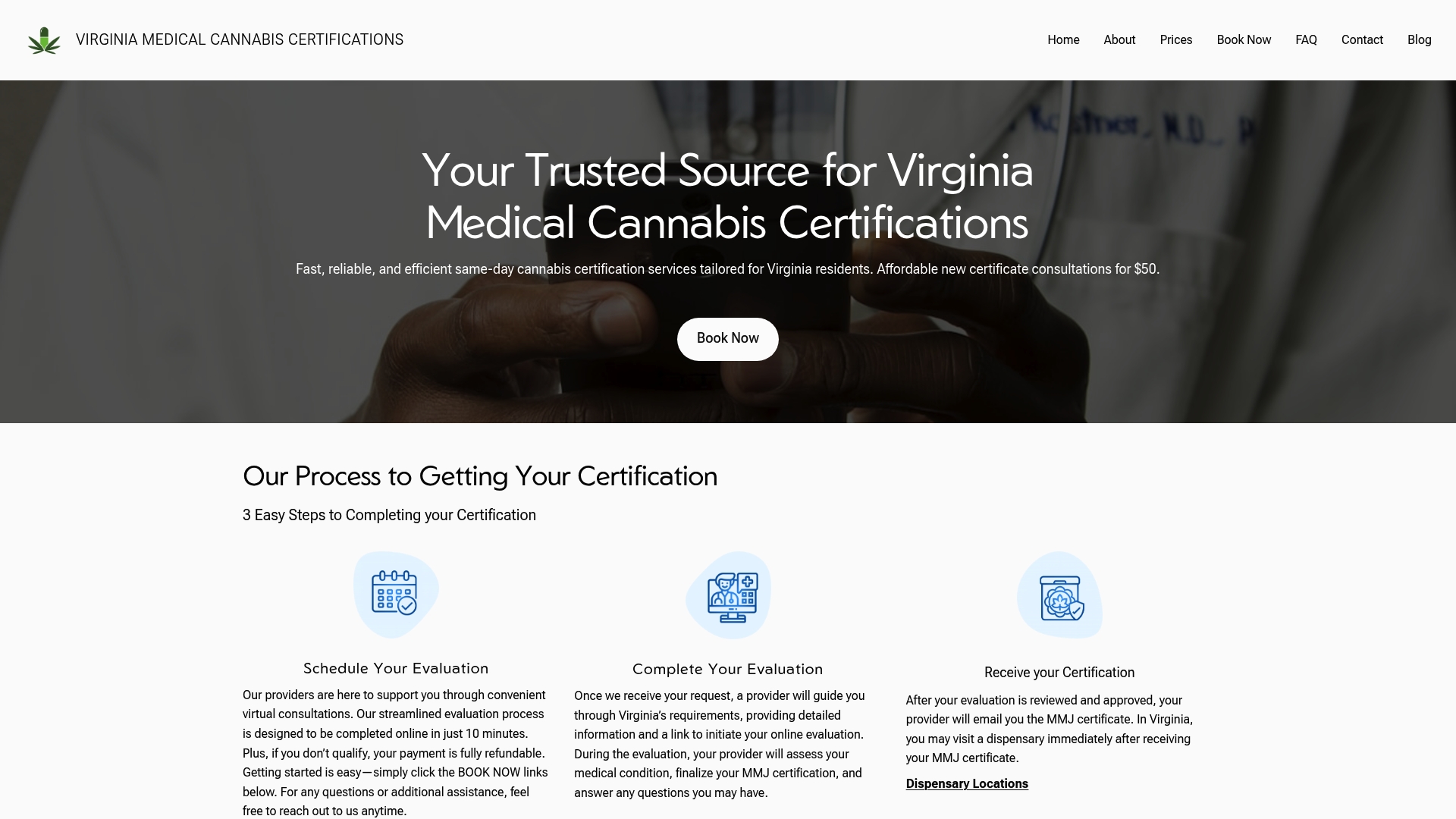
Virginia Medical Cannabis Certifications makes the certification process straightforward. Consultations happen online, take about 10 minutes, and cost $50. If you do not qualify, the fee is fully refunded. Same-day approval is available, so you are not waiting weeks to access relief. You can start your certification today or read the full breakdown of the Virginia certification process to understand exactly what to expect before your appointment.
FAQ
Does cannabis cure shingles?
Cannabis does not cure shingles or eliminate the varicella-zoster virus. It manages symptoms like nerve pain, burning, and inflammation while your body recovers.
Is CBD or THC better for shingles nerve pain?
Balanced THC:CBD formulations often outperform CBD alone for severe nerve pain, though CBD is a safer starting point for patients new to cannabis or concerned about psychoactive effects.
Can I use cannabis alongside gabapentin for PHN?
You can, but CBD interacts with cytochrome P450 enzymes that metabolize gabapentin, potentially raising its blood levels. Always inform your prescribing physician before combining these treatments.
What type of cannabis product works best for shingles rash pain?
Topical cannabis creams target surface-level burning and itch at the rash site effectively. For deep or radiating nerve pain, systemic forms like oils or edibles are more appropriate.
Is cannabis for shingles legal in Virginia?
Yes. Virginia’s medical cannabis program covers chronic pain conditions, which includes PHN. A medical cannabis certification from a licensed provider like Virginia Medical Cannabis Certifications gives you legal access to dispensary products.
Recommended
- Weed for TMJ: Relief, Research, and Real Results – Virginia Medical Cannabis Certifications
- THCA Headaches: Causes, Relief, and Safe Use – Virginia Medical Cannabis Certifications
- Sativa Headache Relief: What You Need to Know – Virginia Medical Cannabis Certifications
- Can THC Cause Low Blood Sugar? What You Need to Know – Virginia Medical Cannabis Certifications