
Your written medical cannabis certification and related health records are private under Virginia law. § 32.1-127.1:03 recognizes your right to privacy in health records and restricts disclosure by health care entities except as the law permits. Separately, § 4.1-1606 makes Medical Cannabis Program registry information confidential. You do not need a state-issued card to purchase; your written certification is the access document and is valid for up to one year unless your practitioner sets an earlier date.
Main exceptions to confidentiality:
- Law enforcement investigating or prosecuting a specific individual for a specific violation
- Licensed practitioners, pharmacists, and pharmaceutical processors for care or dispensing purposes
- Legislative oversight committees during authorized reviews
- The Board or CCA during formal investigations
- A patient’s designated registered agent
Unlawful disclosure is a Class 1 misdemeanor under the Medical Cannabis Program confidentiality provisions.
Key Takeaways
Virginia’s medical cannabis privacy protections are real and enforceable, but patients who understand the narrow exceptions and ask the right questions at certification time are in the strongest position.
| Point | Details |
|---|---|
| Written certification is private | § 32.1-127.1:03 and § 4.1-1606 protect your records; no state card required to purchase. |
| Dispensaries retain copies for two years | Processors keep an exact image of your certification; access is limited to authorized parties only. |
| Law-enforcement access is narrow | Officers must be investigating a specific individual — routine access is not permitted. |
| Name a registered agent upfront | List an agent on the certification itself to avoid a separate CCA registration requirement. |
| Virginia Medical Cannabis Certifications | Offers same-day, email-delivered certifications for $50 with a full refund if you do not qualify. |
Table of Contents
- Why medical marijuana privacy in Virginia is stronger than most patients realize
- A private, same-day certification option worth considering
- Where to read the full law and CCA guidance
- Sources
Why medical marijuana privacy in Virginia is stronger than most patients realize
Virginia’s two-layer protection is worth understanding. § 32.1-127.1:03 covers health records broadly, while § 4.1-1606 adds a program-specific confidentiality layer for registry and certification data. Together, they mean your certification is not a public record and is exempt from FOIA requests.
Dispensaries do keep a copy. Per 2023 session law governing recordkeeping, licensed processors must retain an exact image of your written certification for two years. That retention is pharmacy-level recordkeeping, not a public registry, and access is limited to the narrow exceptions listed above.
Telemedicine adds one more layer to think about. Virginia regulations require practitioners to transmit patient information in a manner that protects confidentiality. Before your online evaluation, ask your provider two direct questions: how will the written certification be delivered, and who else will the practice share it with? A provider that cannot answer both clearly is worth reconsidering.

Law-enforcement access is narrowly confined. Routine or generalized access to registry or certification data is not permitted. Officers must be investigating or prosecuting a specific individual for a specific violation before the CCA laws and regulations framework allows any disclosure.
Pro Tip: Ask your practitioner to list a registered agent on your written certification. If an agent is named on the document itself, that person can pick up products on your behalf without registering separately with the CCA.
A private, same-day certification option worth considering
Knowing your rights is step one. Getting certified through a provider that takes those rights seriously is step two.
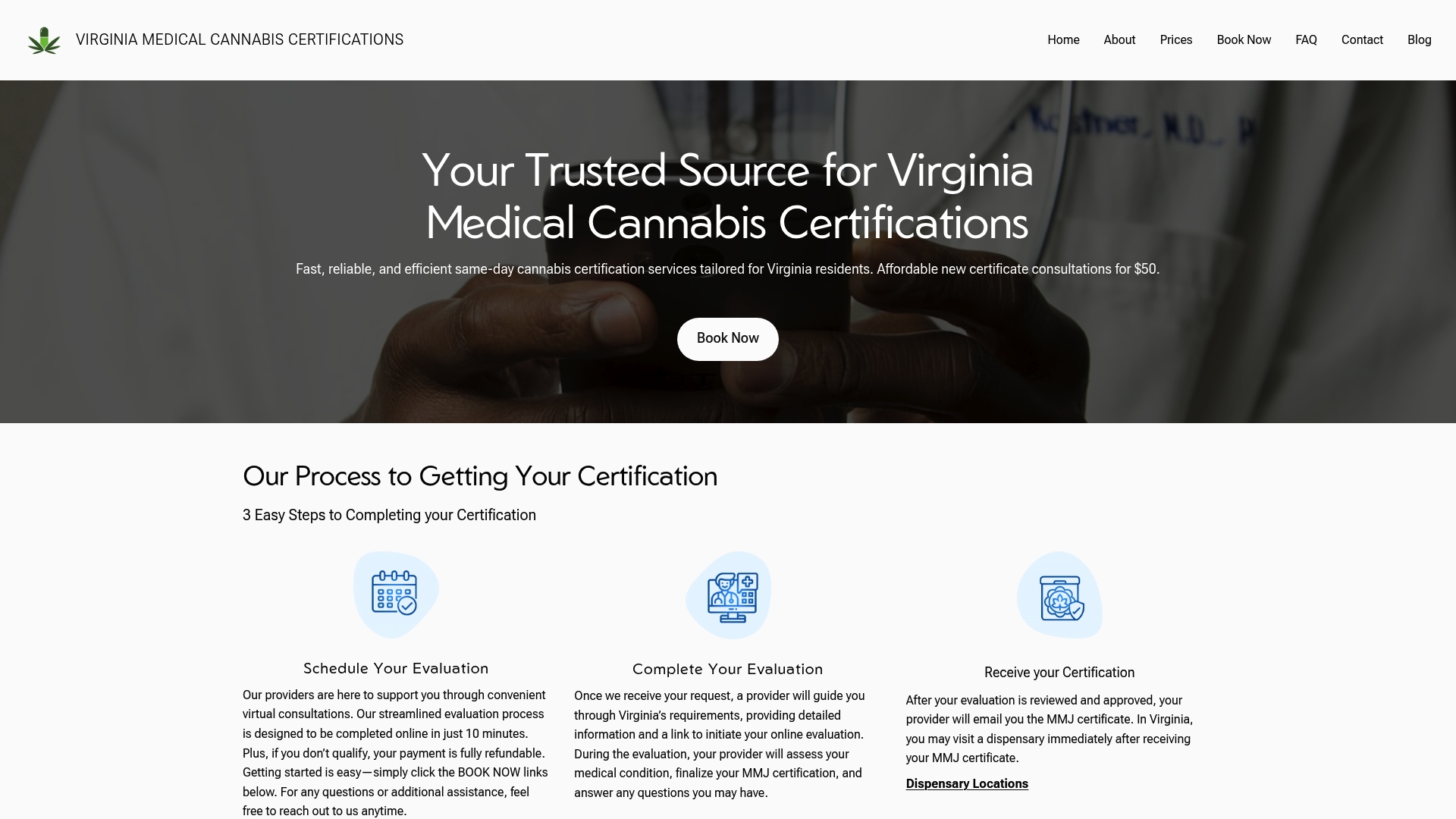
Virginia Medical Cannabis Certifications offers same-day online evaluations completed in about 10 minutes, with your written certification delivered by email so no in-person visit is required. The $50 flat fee for new patients ($40 for renewals) comes with a full refund if you do not qualify. When you review any telemedicine provider, look for three things: encrypted delivery of the written certification, a clear statement about who the practice shares your data with, and the option to name a registered agent on the certification itself. Virginia Medical Cannabis Certifications is built around those expectations. Ready to get started? Book your same-day evaluation and have your certification in hand today.
Where to read the full law and CCA guidance
| Source | What it covers |
|---|---|
| Title 4.1, Chapter 16 (§ 4.1-1606) | Medical Cannabis Program confidentiality, disclosure exceptions, and Class 1 misdemeanor penalty |
| CCA Laws & Regulations | Possession rules, program regulations, and links to effective CCA guidance |
| 2023 Acts, Chapter 740 | Dispensing, recordkeeping, and two-year retention rules for written certifications |
If your situation involves a law-enforcement subpoena, an employment background check, or immigration consequences, consult a licensed Virginia attorney before responding to any disclosure request. The statutes above give you a strong foundation, but complex cross-jurisdictional questions need professional legal advice.
This article is general information, not a substitute for advice from a qualified lawyer. Consult a qualified legal professional about your own circumstances before acting on anything here.
Sources
- Patients and Caregivers — Virginia Cannabis Control Authority
- § 32.1-127.1:03. Health records privacy.
- Code of Virginia Code – Chapter 16. Medical Cannabis Program
- Laws & Regulations — Virginia Cannabis Control Authority
- An Act to amend and reenact §§ 4.1-604, 4.1-605, 4.1-627, 18.2-251.1:1, 18.2-251.1:2, 22.1-277, 32.1-127, 32.1-162.6:1, 40.1-27.4, 46.2-341.20:7, 54.1-2522.1, as it is currently effective and as it shall become effective, 54.1-2903, 54.1-3408.3, 59.1-200, and 63.2-1803.01 of the Code of Virginia; to amend the Code of Virginia by adding in Title 4.1 a chapter numbered 16, consisting of sections numbered 4.1-1600 through 4.1-1605; and to repeal Article 4.2 (§§ 54.1-3442.5 through 54.1-3442.8) of Chapter 34 of Title 54.1 of the Code of Virginia and the twenty-first enactment of Chapter 550 and the twenty-first enactment of Chapter 551 of the Acts of Assembly of 2021, Special Session I, relating to medical cannabis program; transition from Board of Pharmacy to Virginia Cannabis Control Authority.