
Sativa is a cannabis strain category known for its uplifting, energizing effects, and it plays a real but complicated role in headache management. When people search for a “sativa headache” solution, they are usually asking one of two things: can sativa relieve their headache, or is sativa causing it? The answer to both questions is yes, depending on the person, the headache type, and the specific cannabinoid and terpene profile of the strain. Understanding those variables is the difference between finding relief and making things worse.
How do sativa strains affect different types of headaches?
Sativa’s effect on headaches depends almost entirely on the headache type. Tension headaches, migraines, and cluster headaches each have different triggers and mechanisms, and sativa does not treat all three the same way.
Tension headaches are the most common type. They typically result from stress, muscle tightness in the neck and shoulders, and fatigue. Sativa strains work best here because their mood-lifting and stress-reducing effects address the root cause directly. Low-to-moderate sativa doses ease stress-driven tension headaches by calming the nervous system without heavy sedation.

Migraines are a different story. They involve neurological inflammation, light sensitivity, and nausea. Sativa’s stimulating effects can actually worsen these symptoms in many patients. Indica strains are more often recommended for migraines and cluster headaches because their sedative and muscle-relaxing properties better match what those conditions require.
Cluster headaches are the most severe type. They come in rapid cycles and involve intense, one-sided pain. High-THC sativa strains can increase heart rate and cerebral stimulation, which may exacerbate cluster symptoms in sensitive patients. For cluster headaches, sativa is generally not the first choice.
Here is a quick breakdown of how sativa fits each headache type:
- Tension headaches: Sativa often helps by reducing stress and lifting mood.
- Migraines: Sativa may worsen light sensitivity and nausea; balanced or indica-leaning strains are safer.
- Cluster headaches: High-THC sativa can overstimulate and worsen pain cycles.
- Anxiety-related headaches: Sativa can help or hurt depending on THC content and personal tolerance.
Pro Tip: If you are not sure which headache type you have, track your symptoms for two weeks before choosing a strain. The pattern will tell you more than any label on a package.
Why do cannabinoid ratios matter more than the sativa label?
The sativa and indica labels are marketing categories, not reliable predictors of how a strain will affect you. Lab-tested terpene profiles determine efficacy more accurately than any strain classification. Two products both labeled “sativa” can have completely different effects if their THC, CBD, and terpene content differ.
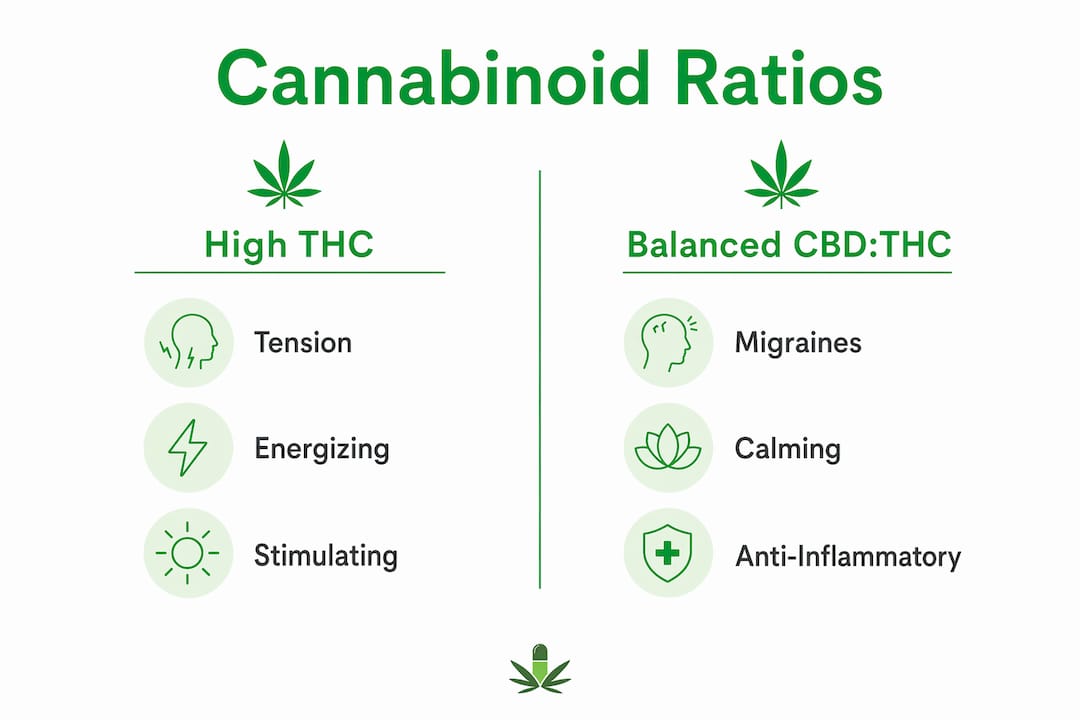
THC is the primary psychoactive compound. High THC levels produce the energizing, cerebral effects associated with sativa. CBD, by contrast, moderates THC’s intensity and adds anti-inflammatory properties. The ratio between the two matters enormously for headache patients.
Balanced CBD:THC ratios of 1:2 to 2:1 are the safest starting point for most migraine patients. Patients who are especially sensitive to THC do better with ratios of 5:1 CBD to THC or higher. These ratios reduce the risk of anxiety and overstimulation while still delivering pain relief.
Terpenes are the aromatic compounds in cannabis that contribute to its effects beyond THC and CBD. Two terpenes stand out for headache relief:
- Beta-caryophyllene: A spicy, peppery terpene with direct anti-inflammatory action. It binds to CB2 receptors and reduces neurological inflammation, which is central to migraine pain.
- Myrcene: An earthy terpene with muscle-relaxing and mild sedative properties. It is more common in indica-leaning strains but appears in some sativa-dominant products as well.
| Cannabinoid profile | Best suited for | Key benefit |
|---|---|---|
| High THC, low CBD | Tension headaches, mild stress | Mood lift, stress relief |
| Balanced 1:1 THC:CBD | General headache prevention | Moderate relief, lower anxiety risk |
| High CBD, low THC (5:1+) | Migraines, THC-sensitive patients | Anti-inflammatory, no overstimulation |
| CBD only | Daily prevention | Long-term frequency reduction |
Pro Tip: Ask your dispensary for the lab certificate of analysis (COA) for any product you buy. The COA lists exact THC, CBD, and terpene percentages so you can make an informed choice instead of guessing from a label.
How to use sativa strains safely for headache relief
Effective cannabis headache relief requires a plan, not just a product. The method, dose, and timing all affect whether you get relief or a worse headache.
Start with a low dose. Keeping THC doses in the 5–15mg range reduces the risk of rebound headaches from overuse. Start at the lower end and increase only if needed after waiting at least two hours.
Choose inhalation for acute relief. Inhaled cannabis reaches peak effect within minutes. For migraine attacks, that speed matters. Edibles take 60–120 minutes to work, which is too slow when pain is already severe.
Use a two-pronged approach for migraines. Daily CBD dosing of 25–50mg twice daily builds a preventive baseline over two to four weeks. Pair that with an inhaled sativa or balanced hybrid for acute attacks. This combination addresses both frequency and intensity.
Keep a symptom journal. Personalized response varies widely, so tracking which strains help or hurt is the only reliable way to find your personal optimum. Note the strain name, THC and CBD percentages, dose, method, and headache outcome each time.
Pivot if sativa causes anxiety. High THC in sativa increases the risk of overstimulation, which can trigger or worsen headaches. If you notice racing thoughts or increased tension after using a sativa product, switch to a balanced hybrid or CBD-dominant strain.
Hydrate consistently. Dehydration is a common and overlooked trigger for cannabis-related headaches. Drink water before, during, and after cannabis use. This simple step eliminates one of the most preventable causes of a bad experience.
Pro Tip: Set a calendar reminder to review your symptom journal every two weeks. Patterns become obvious over time, and you will adjust your approach faster than if you rely on memory alone.
Common myths about sativa and headaches
The biggest myth about sativa is that its energizing reputation automatically makes it good for pain. That is not accurate. Sativa’s energizing effects can help with concentration during headaches but may worsen anxiety and headache severity in sensitive patients. The uplifting marketing around sativa does not reflect its actual pharmacology for every person.
Several other misconceptions cause problems for patients seeking cannabis headache relief:
- “More THC means more relief.” Higher THC often means higher anxiety risk. For headaches, moderate THC paired with CBD consistently outperforms high-THC products for most patients.
- “Sativa works for all headache types.” It does not. Sativa is a reasonable option for tension headaches but a poor choice for most migraine and cluster headache patients.
- “Cannabis cannot cause headaches.” It can. Rebound headaches can occur with frequent cannabis use, mirroring the medication-overuse headache pattern seen with pain relievers. Moderation is not optional.
- “Dehydration is not a cannabis issue.” Dehydration after cannabis use can trigger headaches directly. Cannabis reduces saliva production and can suppress thirst signals, making dehydration more likely without conscious effort.
Understanding the role of cannabinoids beyond THC and CBD, including compounds like CBC and CBG, adds another layer of nuance to headache management. The science is still developing, but the early data supports a whole-plant approach over single-compound thinking.
Key Takeaways
Sativa strains can relieve tension headaches through stress reduction, but cannabinoid ratios and terpene profiles determine actual outcomes far more reliably than any strain label.
| Point | Details |
|---|---|
| Strain labels are unreliable | Lab-tested cannabinoid and terpene data predicts headache relief better than sativa or indica labels. |
| Headache type determines strain choice | Sativa suits tension headaches; indica-leaning or balanced strains work better for migraines and cluster headaches. |
| Moderate THC dosing prevents rebound | Keeping THC in the 5–15mg range reduces the risk of overuse headaches. |
| Two-pronged approach for migraines | Daily CBD prevention plus inhaled THC for acute attacks provides the most consistent migraine control. |
| Symptom journaling is non-negotiable | Tracking strain, dose, and outcome is the only reliable way to identify what works for your specific biology. |
What I have learned from watching patients navigate sativa for headaches
The most consistent mistake I see is patients choosing a strain based on its name or marketing description rather than its lab data. Sativa is sold as energizing and uplifting, and that framing leads people with migraines to try it when they would be far better served by a high-CBD, low-THC product with myrcene in the terpene profile.
The second mistake is expecting immediate clarity. Cannabis headache relief is not like taking ibuprofen. It requires two to four weeks of consistent CBD use to build a preventive effect, and it requires honest journaling to identify patterns. Patients who skip the journal phase almost always end up cycling through products without making real progress.
What I find genuinely encouraging is the growing patient feedback around sativa’s role in daytime headache management. For people whose headaches are stress-driven and who cannot afford to feel sedated during work hours, a low-THC sativa with beta-caryophyllene can be a real, practical option. The key is matching the chemical profile to the symptom, not the marketing to the mood.
The research is still catching up to patient experience. Clinical validation for specific cannabinoid and terpene combinations in headache treatment is limited but growing. Until the data is more complete, the most reliable tool you have is a detailed symptom journal and a willingness to adjust based on what it tells you. That approach works. I have seen it work repeatedly.
— Jonathan
Getting certified for cannabis headache relief in Virginia
Chronic headaches and migraines are recognized qualifying conditions for medical cannabis access in Virginia. Getting certified gives you legal access to lab-tested products with verified cannabinoid and terpene profiles, which is the foundation of any effective headache management plan.
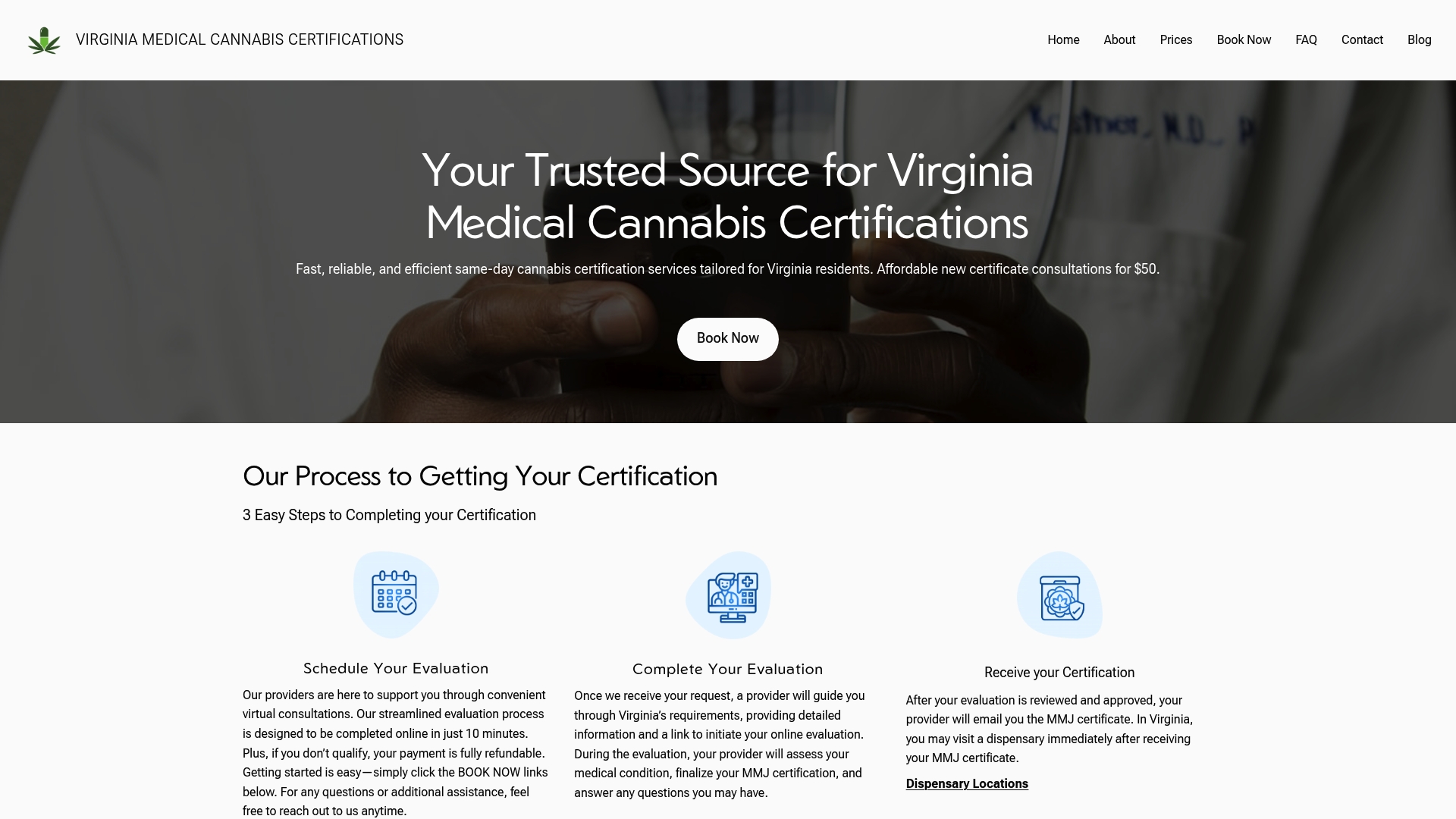
Virginia Medical Cannabis Certifications makes the certification process straightforward. Online evaluations take about 10 minutes, cost $50, and come with a full refund if you do not qualify. Same-day consultations mean you are not waiting weeks to get started. If you are ready to explore medical cannabis certification as a path to managing your headaches, Virginia Medical Cannabis Certifications is a practical, affordable place to begin. You can also visit virginiacard.com to learn more about qualifying conditions and the full process.
FAQ
Can sativa strains cause headaches?
Yes. High-THC sativa strains can trigger headaches through overstimulation, anxiety, and dehydration. Rebound headaches from frequent use are also a documented risk.
Is indica or sativa better for migraines?
Indica-leaning strains are generally better for migraines because their sedative and muscle-relaxing effects match the condition’s neurological profile. Sativa works better for stress-driven tension headaches.
What CBD:THC ratio is best for headache relief?
A balanced ratio of 1:1 to 2:1 CBD to THC is the safest starting point for most patients. Those sensitive to THC do better at 5:1 CBD to THC or higher.
How long does daily CBD take to prevent migraines?
Daily CBD dosing of 25–50mg typically produces measurable preventive effects after two to four weeks of consistent use.
What terpenes help with headache relief?
Beta-caryophyllene and myrcene are the two most relevant terpenes for headache relief. Beta-caryophyllene reduces neurological inflammation, while myrcene provides muscle relaxation.
Recommended
- Weed for TMJ: Relief, Research, and Real Results – Virginia Medical Cannabis Certifications
- Can Edibles Cause Gastritis? What You Need to Know – Virginia Medical Cannabis Certifications
- CBC vs CBG: Key Differences and Benefits Explained – Virginia Medical Cannabis Certifications
- Top 4 Best Edibles for Parkinson’s Providers 2026 – Virginia Medical Cannabis Certifications