
Cannabis may ease back pain a little for some people, but the evidence is modest and mostly short-term. In Virginia, there is no fixed list of qualifying conditions, so a licensed practitioner decides whether back pain qualifies and certifies you through the state’s online portal. If you want to explore it, the practical next step is a telehealth evaluation.
Table of Contents
- What does research say about cannabis for back pain?
- Does back pain qualify for medical cannabis in Virginia?
- How do you get certified in Virginia for back pain?
- Which Virginia telehealth providers can certify you?
- How much can you buy, and how do you stay safe?
- What dosages, strains and methods do practitioners suggest for back pain?
- What legal protections do medical cannabis patients have in Virginia?
- Does insurance cover medical cannabis in Virginia?
- Why we see cannabis as an adjunct, not a first step
- Book a same-day Virginia cannabis certification with us
- FAQ
- Sources
What does research say about cannabis for back pain?
The honest summary: some people get small, short-term relief, and the science is far from settled. A systematic review of cannabis for back pain found statistically significant pain reductions in three of four included studies, but the total sample was only 110 patients and long-term follow-up was lacking.
The picture varies by product. The 2024 living systematic review update found small pain improvements for some THC:CBD oral sprays and purified or synthetic THC products compared with placebo over short treatment periods. Evidence strength was mostly low to moderate. A 2026 review of randomized trials went further and concluded that the evidence does not support a class-wide effect of cannabinoid therapies for low back pain. Results depend on the indication, formulation, route and cannabinoid mix.
What this means for you:
- THC-containing and balanced THC:CBD products show the clearest, if small, short-term signals.
- CBD-only products have the weakest support for back pain in the research we reviewed.
- Long-term effects are uncertain because most trials are short.
- Side effects are real. The 2024 review linked cannabis products to a large increased risk of dizziness and sedation, and nausea is also commonly reported.
The CDC says there is limited evidence that cannabis works for most types of acute or chronic pain. Treat it as one possible piece of a broader plan, not a stand-alone fix.
Does back pain qualify for medical cannabis in Virginia?
Often, yes, at the practitioner’s discretion. Under § 4.1-1601 of the Code of Virginia, a licensed practitioner can issue a certification when they determine you will benefit. Virginia does not keep a static, exhaustive list of qualifying conditions, so the decision rests on your history and the practitioner’s judgment. You can read more on our page about Virginia qualifying conditions.
The state sets clear duties for the practitioner. Under 3VAC10-30-30, before issuing a certification they must:
- Assess and evaluate you and develop a treatment plan.
- Form the opinion that the benefits outweigh the risks.
- Explain proper administration and potential risks.
- Access the Prescription Monitoring Program.
Once the practitioner submits the certification electronically, you claim it in your account on the Virginia Cannabis Control Authority portal. Per the CCA portal guide, Virginia does not issue a physical medical card. The digital record is what dispensaries use.
In practice, that means your records matter. Bring notes on your diagnosis, prior treatments and what has or hasn’t worked, and be ready to discuss them openly.
How do you get certified in Virginia for back pain?
The process is simpler than most people expect, especially by telehealth. Here is the path from start to finish:
- Gather your documents. Have a photo ID, a medication list, medical records, and any imaging or notes showing how long your back pain has lasted and what you’ve already tried.
- Book a practitioner evaluation. Telehealth appointments are available. Our page on preparing records for chronic pain walks through what to have ready.
- Complete the evaluation. The practitioner reviews your history, confirms or accepts your existing diagnosis, builds a treatment plan, and weighs benefits against risks.
- Get certified. If you qualify, the practitioner signs and submits your certification to the CCA portal.
- Claim it in the portal. Register or log in to your CCA account and claim the certification.
- Visit a licensed processor. The state lists licensed sites on its pharmaceutical processors page. Our guide to Virginia dispensaries can help you plan your first visit.
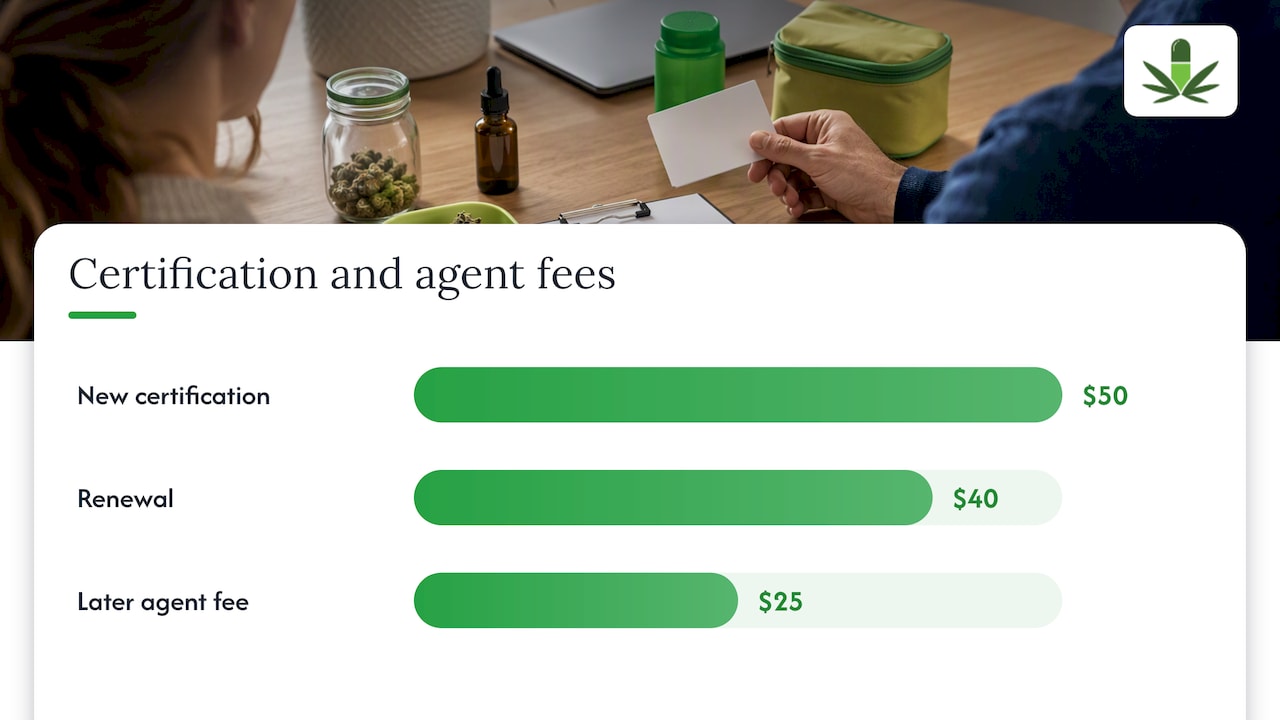
Pro Tip: If someone else will pick up your products, add them as a registered agent during your evaluation. Per the CCA patient page, adding one later may incur a $25 processing fee.
Which Virginia telehealth providers can certify you?
Here is a shortlist of providers with a Virginia telehealth presence. Ratings are Google ratings.
A few things worth knowing as you compare:
- Lowest stated price: we list $50 for new certifications and $40 for renewals, and we offer a full refund if you are not approved. It is the only entry here with published pricing.
- Fastest to start: our online clinical evaluation takes about 10 minutes, with same-day certification.
- Broadest public footprint: Virginia Marijuana Card positions itself across multiple Virginia locations.
- Local to a specific city: the CannabisMD TeleMed pages and Green Health Docs serve the Norfolk and Richmond areas.
Pricing, wait times and services change, so confirm details with any provider before you book.
How much can you buy, and how do you stay safe?
Virginia’s rules set a supply framework. Under the 3VAC10-30 regulations, certified patients can receive up to a 90-day supply, and botanical cannabis is limited to four ounces per 30 days. Pharmacists can partially dispense and must consider your safety before filling an order.
Keep these reminders in mind:
- Don’t drive while impaired. Sedation and dizziness are among the most common effects.
- Watch for nausea and dizziness, especially when starting out or changing products.
- Consider how you consume it. The WHO notes that smoking can inflame the lungs, which is one reason many patients prefer other forms.
A large increased risk of dizziness and sedation appeared in the 2024 evidence review, so start cautiously and talk with your pharmacist.
What dosages, strains and methods do practitioners suggest for back pain?
There is no single approved dose or strain for back pain, and the research reflects that. The trials we reviewed tested specific product types, mainly THC-containing and balanced THC:CBD preparations, rather than named strains. That is why the practitioner and the pharmacist matter more than any strain list you find online.
What practitioners generally work through with you:
- Start low, go slow. Begin with a small amount and adjust gradually, since dizziness and sedation are the main risks.
- Match the product to your goal. Relief at night, daytime function and sleep can call for different products.
- Choose a method deliberately. Oils, capsules and oral sprays give measured amounts. Inhaled forms act faster but carry the lung concerns noted above.
- Track what happens. Keep a short log of pain, sleep and side effects so you and your practitioner can fine-tune the plan.
Ask the pharmacist at your processor to explain the THC and CBD content of each product. If a product doesn’t help after a fair trial, tell your practitioner rather than simply raising the dose.
What legal protections do medical cannabis patients have in Virginia?
A valid certification is what connects you to the state’s medical program. Your practitioner issues it under the law described in § 4.1-1601, and you claim it through the CCA portal. That digital record is what you present at a licensed pharmaceutical processor, which is the authorized grower and dispenser for the medical program.
A few practical points follow from that:
- Buy from licensed processors. The state’s list of processors is the safe route for certified patients.
- Keep your certification current. For renewal details, see our renewal page.
- Know the limits. Supply and botanical limits apply to every patient.
Protections can depend on your situation, including your job, housing and where you travel, and they can change. For questions about employment, federal rules or something specific to you, check the Virginia Cannabis Control Authority or ask a qualified attorney.
Does insurance cover medical cannabis in Virginia?
Plan on paying out of pocket. We have not found a public Virginia source confirming that health insurance covers medical cannabis certifications or products, so check directly with your insurer before assuming otherwise. Because coverage details vary by plan, call your insurance provider and ask whether anything is reimbursable.
Costs you can control:
- The evaluation fee. Ours is $50 for new certifications and $40 for renewals, and veterans receive a discount with a coupon code.
- The refund policy. If you are not approved, the fee is fully refundable.
- A registered agent. Adding one during your evaluation avoids the later $25 processing fee.
We haven’t verified a statewide financial assistance program for medical cannabis patients. If one matters to you, ask your evaluating practitioner and your processor what options they know of.
Why we see cannabis as an adjunct, not a first step
The evidence says cannabis can help some people a little and others not at all, so treat it as one tool alongside others. Sit down with your practitioner and talk about function, sleep and whether you want to lean less on other medications, then judge the trial by those goals rather than by pain scores alone. Movement, physical therapy and other non-drug options still matter, and clinics like Nortex Spine and Joint write about non-surgical approaches worth knowing. Even your sleep setup counts, as this guide on mattress firmness for back pain shows. Fast telehealth certification makes trying cannabis easy, but easy should never mean careless.
— Jonathan
Book a same-day Virginia cannabis certification with us

If you’d like a quick, low-cost evaluation, we can help you get started today.
- New certification: $50.
- Renewal: $40.
- Evaluation: about 10 minutes online with a practicing Virginia clinician, with same-day certification and a digital record claimed through the CCA portal.
See our services page to choose your visit, or head to our home page to book.
This article is general information, not a substitute for advice from a qualified doctor. Consult a qualified healthcare professional about your own circumstances before acting on anything here.
FAQ
Why does smoking marijuana make my back hurt?
Smoking itself isn’t proven to cause back pain, but side effects like dizziness and sedation can change how you move and sit, which may make aches feel worse. The WHO notes that smoking can inflame the lungs and that such effects can be mistaken for worsening symptoms. If pain gets worse after use, talk with your practitioner.
What is the new Virginia law on marijuana?
For patients, the key rule is that § 4.1-1601 lets a licensed practitioner certify cannabis when they determine you will benefit. Virginia keeps no fixed list of qualifying conditions. Check the Virginia Cannabis Control Authority for the latest rules.
Why does marijuana help with back pain?
For some people it may modestly reduce pain in the short term. A systematic review found significant pain reductions in three of four included studies, though the sample was small. The CDC cautions that evidence for most pain types is limited.
Can I get prescribed marijuana for back pain?
In Virginia you get a practitioner’s certification rather than a prescription. If the practitioner decides you will benefit, they submit it to the CCA portal and you claim it there. We offer same-day online evaluations through our services page.
Sources
- The Efficacy of Cannabis in Reducing Back Pain: A Systematic Review – PMC
- Comparative Effectiveness Review No. 250_Living Systematic Review on Cannabis and Other Plant-Based Treatments for Chronic Pain: 2024 Update
- Cannabis and Chronic Pain | Cannabis and Public Health | CDC
- Medical Cannabis Pharmaceutical Processors — Virginia Cannabis Control Authority