
For most types of pain, CBD is the most research-backed starting point, with CBG as a useful daytime addition for inflammatory pain and low-dose CBN reserved for nighttime or sleep-disrupting pain. That verdict comes from a 2025 living systematic review covering 29 RCTs, preclinical mechanistic work on CBG and CBN’s distinct receptor targets, and the practical reality that all three cannabinoids remain unapproved by the FDA for chronic pain treatment.
Here is the short version of what to do with that information:
- Start with CBD daily for inflammatory or neuropathic pain, using a full-spectrum or broad-spectrum product with a verified third-party Certificate of Analysis (COA).
- Add CBG during the day if CBD alone is not enough, especially for inflammatory pain.
- Add low-dose CBN at night only if pain is disrupting your sleep, and watch for sedation.
- Check the COA before buying anything, confirm cannabinoid milligrams per serving, and talk to a clinician if you take other medications.
Virginia residents who need regulated dispensary access can get a same-day medical cannabis certification through Virginia Medical Cannabis Certifications for $50, with a full refund if you do not qualify.
Table of Contents
- Where can you buy CBD, CBG, and CBN in Virginia?
- How do CBD, CBG, and CBN act on pain pathways?
- What does the research actually show for each pain type?
- What are safe starting doses and what should you watch for?
- How do you pick a quality product when shopping?
- When does combining cannabinoids make sense?
- Key Takeaways
- Why starting with CBD is still the right call
- Get same-day Virginia medical cannabis access for $50
- Selected sources for further reading
Where can you buy CBD, CBG, and CBN in Virginia?
Eight verified Virginia businesses carry cannabinoid products for pain. Inventory varies, so confirm availability before you visit.
| Business | Forms available | Best for | COA available? | Price range | In-store vs online | Rating | Notes |
|---|---|---|---|---|---|---|---|
| My Pain Center: The CBD & THC Headquarters | Tinctures, topicals, gummies, isolates | Broad pain types, THC/CBD combos | Confirm in-store | Medium | In-store + online | Not publicly listed | Full-spectrum and isolate options |
| Metolius Wellness / Metolius CBD + CBG + CBN | Tinctures, topicals | Multi-cannabinoid blends, inflammatory pain | Confirm in-store | Medium–High | In-store + online | Not publicly listed | Specializes in CBD+CBG+CBN combos |
| Neurogan | Tinctures, gummies, topicals | General pain, sleep | Yes (online COAs) | Medium | Primarily online | Not publicly listed | Transparent lab testing |
| lost range.® | Tinctures, topicals, softgels | Musculoskeletal, active recovery | Confirm in-store | Medium | In-store + online | Not publicly listed | Sports-focused formulations |
| Cali Born Dreams | Tinctures, gummies | General wellness, mild pain | Confirm in-store | Low–Medium | In-store + online | Not publicly listed | Broad product range |
| Colorado Cannabinoids | Isolates, tinctures, topicals | Targeted relief, THC-free options | Confirm in-store | Low–Medium | In-store + online | Not publicly listed | Isolate-focused |
| CBD CBG FOR ME | Tinctures, topicals | Inflammatory and neuropathic pain | Confirm in-store | Medium | In-store + online | Not publicly listed | CBG-forward product line |
| CBD Nature Wellness | Tinctures, gummies, topicals | General pain, wellness | Confirm in-store | Low–Medium | In-store + online | Not publicly listed | Entry-level pricing |
Before you buy, do these three things:
- Ask staff to show you the COA for the specific batch on the shelf, not a generic lab report from months ago.
- Confirm the amount of CBD, CBG, or CBN per serving, not just per bottle.
- Check the expiration date and batch number, especially on CBG and CBN products, which have shorter shelf lives and lower production volumes.
Pro Tip: When a store carries minor cannabinoids like CBG or CBN, ask specifically how many milligrams per serving the product contains. A “CBG tincture” with 5 mg per serving is very different from one with 25 mg, and the label often buries that detail.
How do CBD, CBG, and CBN act on pain pathways?
Each cannabinoid reaches pain signals through a different biological route, which is exactly why combining them can cover more ground than any single compound alone.
- CBD works largely outside the classic cannabinoid receptors. It modulates TRPV1 (a heat and pain channel), inhibits sodium channels (Nav), and reduces inflammatory mediators. Harvard Health notes that CBD may reduce pain perception indirectly by lowering inflammation and anxiety that amplify pain signals.
- CBG binds directly to CB1 and CB2 receptors and influences G-protein and ion-channel signaling. Research on sensory neuron activation shows CBG activates the widest range of dorsal root ganglion (DRG) neuron sizes, including smaller capsaicin-sensitive neurons linked to inflammatory pain, suggesting a preventative antinociceptive role.
- CBN takes a more selective path. It acts as a partial CB1/CB2 agonist and, critically, inhibits Nav currents and reduces DRG neuron excitability. Unlike CBD, CBN’s activation of sensory neurons is independent of TRPV1, meaning it targets a different subset of pain-signaling cells.
The “entourage” concept matters here. Because CBD, CBG, and CBN hit overlapping but distinct receptor populations, combining them can address multiple pain pathways at once. A PMC study on minor cannabinoids concluded that the unique activation properties of each cannabinoid support the hypothesis that combinations can direct complementary antinociceptive activity.

What does the research actually show for each pain type?
The honest answer is that human clinical evidence is thin for CBG and CBN, and mixed even for CBD.
| Pain type | Cannabinoid | Study type | Main finding | Evidence strength |
|---|---|---|---|---|
| Neuropathic | CBD + THC (comparable ratio) | RCT (7 trials) | Small improvement in pain severity | Low–moderate |
| Neuropathic | CBN (topical THC:CBD:CBN) | Single small RCT | Positive signal for diabetic neuropathy | Insufficient to generalize |
| Neuropathic | CBN | Preclinical (rodent) | Nav inhibition reduced pain behaviors | Preclinical only |
| Inflammatory | CBD | Multiple RCTs | 15 of 16 RCTs negative for pain vs placebo | Low / insufficient |
| Inflammatory | CBG | Preclinical (animal) | Anti-inflammatory and analgesic signals | Preclinical only |
| Musculoskeletal | CBD topical | Single RCT | Insufficient evidence | High risk of bias |
| Visceral / general | CBN | Preclinical (rodent) | Antinociception at 50 mg/kg; CB1-mediated | Preclinical only |
The 2025 living systematic review is the clearest summary: CBD-alone products showed limited or negative results across many pain outcomes. Products with comparable THC:CBD ratios showed small short-term improvements, but with increased dizziness and sedation. CBN and CBG carry promising preclinical signals, but human RCT data is sparse.
Pro Tip: Product quality varies widely across OTC cannabinoid products. Even when a study shows benefit at a specific dose, the product you buy at retail may contain far less of the active cannabinoid than the label claims. A COA from an independent lab is the only way to verify what you are actually getting.
What are safe starting doses and what should you watch for?
These are practitioner-informed starting ranges, not official dosing guidelines.
- CBD: daily for general inflammatory or neuropathic pain; oral or sublingual for systemic effects, topical for localized musculoskeletal pain.
- CBG: during the day as an adjunct to CBD; oral or sublingual preferred.
- CBN: at night only, when pain is disrupting sleep. Expect sedation at analgesic-range doses.
Topical formulations work faster for localized joint or muscle pain but stay in the tissue rather than reaching systemic circulation. Oral and sublingual routes take longer to kick in (30–90 minutes) but last longer and reach systemic targets needed for neuropathic or widespread inflammatory pain.
On safety, three things matter most. First, CBD inhibits CYP450 liver enzymes, which means it can raise blood levels of many common medications including blood thinners and some antidepressants. Second, high-dose CBD has been associated with elevated liver enzymes in some trials. Third, CBN at doses that produce analgesia in animal models also tends to produce sedation, which compounds the risk if you are taking opioids or other sedatives.
Important: The FDA has not approved CBD, CBG, or CBN for chronic pain. Product potency and purity vary widely across the market. If you take prescription medications or have a liver condition, talk to a clinician before starting any cannabinoid regimen.
How do you pick a quality product when shopping?
Use this checklist whether you are buying online or walking into one of the Virginia stores listed above.
Before you buy:
- Find the COA. It should match the product’s batch number and show cannabinoid content within 10–20% of the label claim.
- Confirm milligrams per serving, not just per bottle.
- Choose full-spectrum if you can tolerate trace THC (it may enhance the entourage effect); broad-spectrum or isolate if you need zero THC.
- Match the delivery route to your pain type: topical for localized muscle or joint pain, oral/sublingual for neuropathic or widespread pain.
- Check the extraction method. CO2 extraction is the cleanest standard for minor cannabinoids.
Questions to ask in-store:
- “Can I see the COA for this specific batch?”
- “What pain type is this formulation aimed at?”
- “What is your return or exchange policy if the product does not work for me?”
Pro Tip: CBG and CBN products cost more and stock out faster than CBD. If a store has them, ask about concentration per serving before assuming a higher price means a higher dose. Some premium-priced products contain surprisingly low amounts of the minor cannabinoid.

When does combining cannabinoids make sense?
Single-cannabinoid trials are a reasonable first step, but combinations often make more sense for complex pain.
- Multimodal pain (both inflammatory and neuropathic components): CBD + CBG together hit CB-dependent and CB-independent pathways simultaneously, covering more of the pain signal.
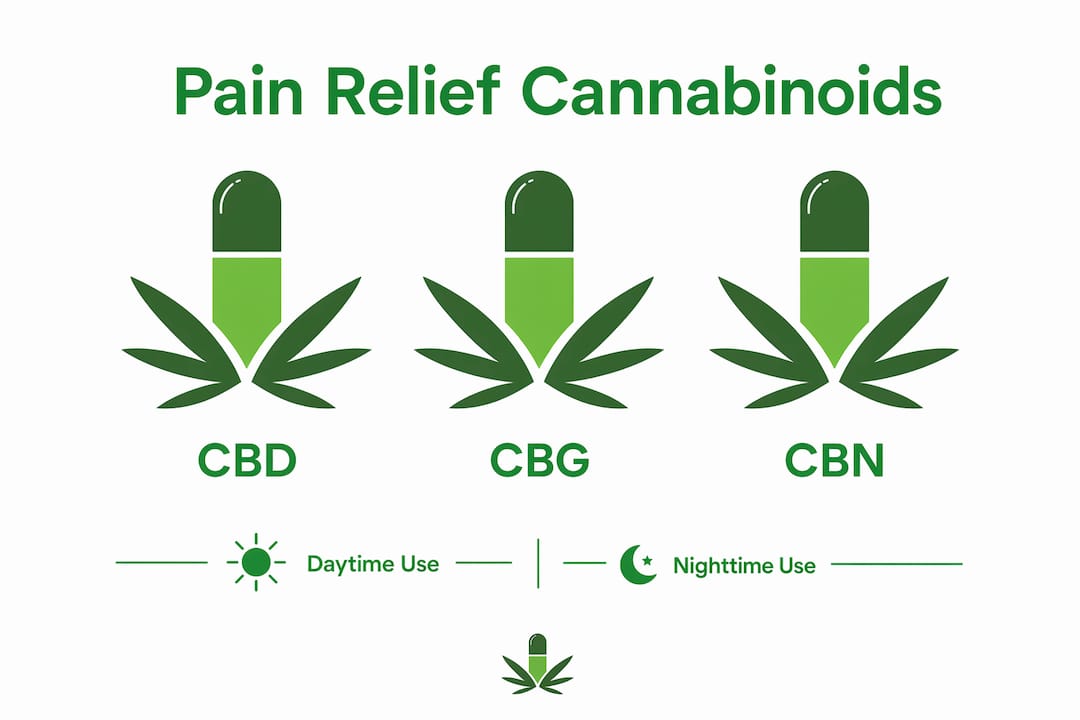
- Pain that disrupts sleep: Add low-dose CBN at night. CBD + CBG during the day, CBN added at bedtime, is the most commonly used practitioner-informed starting blend.
- When CBD alone was not enough: Before escalating the CBD dose, adding CBG (15–30 mg) is worth trying first. It targets a different receptor profile and may fill the gap. You can explore the differences between minor cannabinoids to understand why each one adds something distinct.
A practical starting blend is 25–50 mg CBD plus 15–30 mg CBG during the day; add 5–10 mg CBN at night if sleep is affected. These are starting points, not prescriptions.
One caution: combining cannabinoids with each other or with sedatives, opioids, or benzodiazepines can produce additive sedation and unpredictable drug interactions. Always check with a clinician before stacking.
Key Takeaways
CBD is the most research-backed starting cannabinoid for pain, with CBG as a daytime adjunct and low-dose CBN reserved for nighttime use when sleep is disrupted.
| Point | Details |
|---|---|
| Start with CBD | CBD has the most human trial data; begin at 25–50 mg daily and verify potency with a COA. |
| Add CBG for daytime | CBG targets CB1/CB2 receptors and inflammatory pathways CBD misses; use 15–30 mg alongside CBD. |
| Reserve CBN for night | CBN’s analgesic doses produce sedation; 5–10 mg at bedtime is the practical starting point. |
| FDA has not approved these | None of these cannabinoids are approved for chronic pain; product quality varies widely, so always check third-party lab results. |
| Virginia Medical Cannabis Certifications | For regulated dispensary access in Virginia, a same-day $50 certification with a full refund if not approved is available online. |
Why starting with CBD is still the right call
The evidence for CBD is genuinely mixed. Fifteen of 16 RCTs reviewed in one analysis showed no greater pain benefit than placebo. That is a real limitation, and it is worth saying plainly. But here is what that framing misses: most of those trials used CBD-alone products at doses that may have been too low, without standardized delivery, and without the minor cannabinoids that appear to extend CBD’s reach into additional pain pathways.
CBG and CBN are not replacements for CBD. They are additions that make a CBD-centered regimen more complete. CBN’s Nav channel inhibition is genuinely interesting for neuropathic pain, but the analgesic doses in animal models also produce sedation, which limits daytime use. CBG’s direct CB1/CB2 binding and anti-inflammatory profile make it the cleaner daytime partner. The combination approach is not marketing. It is what the receptor biology actually suggests.
For Virginians dealing with chronic pain who have not found relief from OTC cannabinoids, the next logical step is a clinical evaluation. Virginia Medical Cannabis Certifications offers same-day virtual evaluations, and the refund guarantee means you are not risking money to find out if you qualify.
Get same-day Virginia medical cannabis access for $50
OTC cannabinoid products are a reasonable first step, but they have real limits: unregulated potency, no clinical oversight, and no access to higher-THC medical formulations that the research shows may produce better pain outcomes.
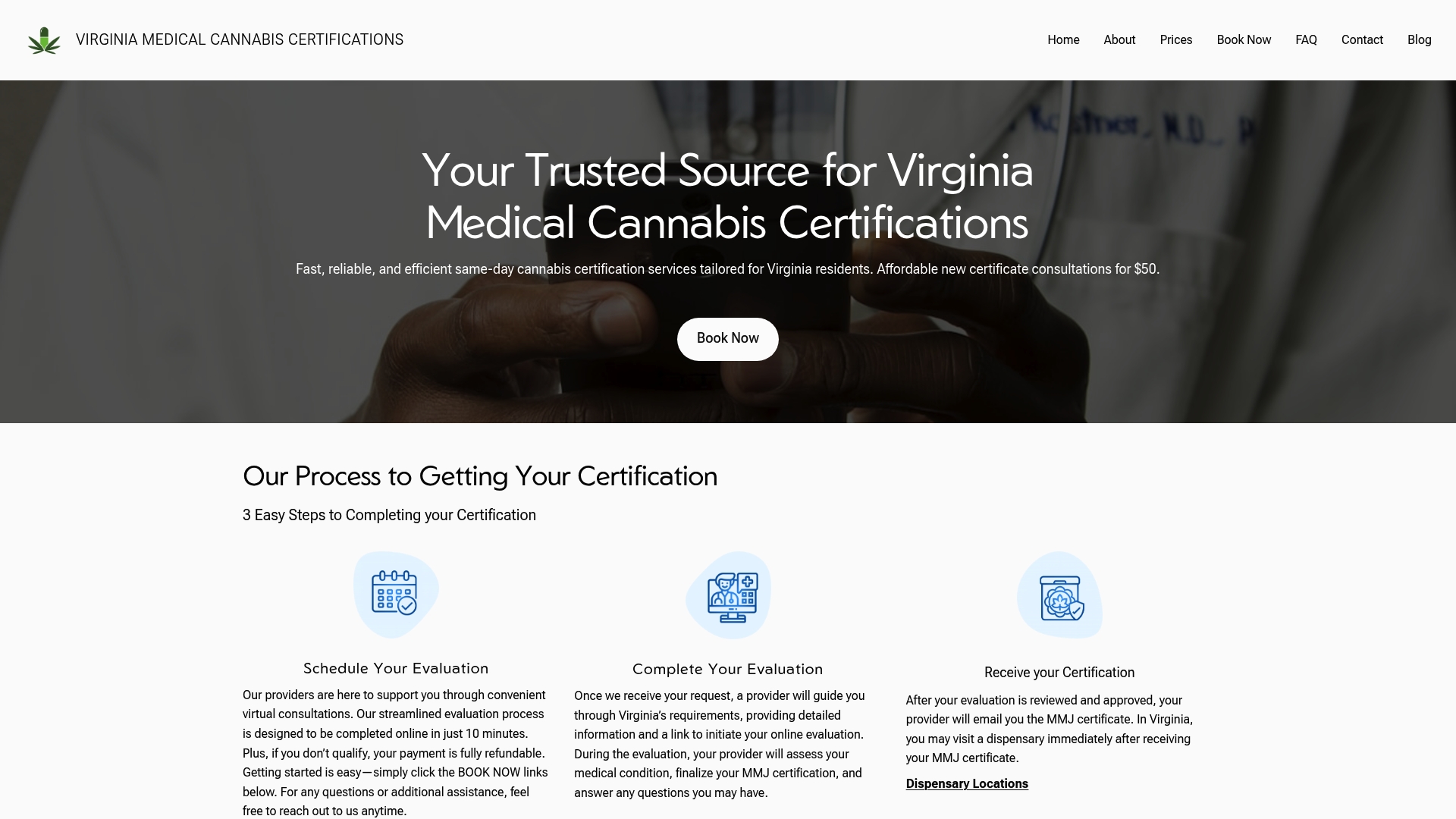
Virginia Medical Cannabis Certifications offers a different path. For $50 (new patients) or $40 (renewals), you get a same-day virtual clinical evaluation, typically completed in about 10 minutes. If you do not qualify, you get a full refund. Approval gives you immediate dispensary access to regulated medical cannabis products, including formulations that go well beyond what any OTC shelf can offer.
Chronic pain, anxiety, PTSD, and many other conditions qualify under Virginia’s medical cannabis program. Start your certification today or review the full steps and eligibility criteria before you book. This article is general information, not medical advice. Confirm your eligibility and current Virginia program rules with a qualified clinician or the Virginia Board of Pharmacy.
Selected sources for further reading
Human clinical evidence:
- Living Systematic Review on Cannabis and Chronic Pain: 2025 Update — 29 RCTs; the most current summary of CBD and cannabinoid pain evidence.
- Cannabis-Based Products for Chronic Pain: A Systematic Review (ACP Journals) — THC:CBD ratio analysis across 18 RCTs.
- CBD Products for Pain: Ineffective, Expensive, and With Potential Harms (Journal of Pain)00582-5/fulltext) — critical review of CBD-alone RCT data.
Preclinical and mechanistic research:
- Minor Cannabinoids Differentially Modulate Sensory Neuron Activation (PMC) — DRG neuron study comparing CBD, CBG, CBN, and CBC (animal/cell model).
- CBN Nav Channel Research (Nature Communications) — CBN as a selective Nav current inhibitor in neuropathic pain models.
- Minor Cannabinoids in Chronic Neuropathic Pain Mouse Model (PubMed) — CBN efficacy in chemotherapy-induced peripheral neuropathy (animal model).
- Anti-inflammatory and Analgesic Potential of Minor Cannabinoids In Vivo (Journal of Cannabis Research) — sedative overlap at analgesic CBN doses.
Safety and quality guidance:
- FDA: Cannabinoid regulatory status — official position on CBD/CBG/CBN approval status.
- Mayo Clinic: CBD product quality guidance — COA verification and labeling variability.
- Harvard Health: CBD and pain — consumer-facing overview of CBD’s indirect pain mechanisms.
Virginia certification:
- Virginia Medical Cannabis Certifications — same-day online certification, $50 new patients, $40 renewals, full refund if not approved.
Recommended
- CBC vs CBG: Key Differences and Benefits Explained – Virginia Medical Cannabis Certifications
- Weed for TMJ: Relief, Research, and Real Results – Virginia Medical Cannabis Certifications
- CBD and Gastritis: What Virginia Patients Need to Know – Virginia Medical Cannabis Certifications
- Best Strains for Pancreatitis: Virginia Guide 2026 – Virginia Medical Cannabis Certifications