If you want to start somewhere safe, ACDC, Charlotte’s Web, Harle-Tsu, and Remedy are the strains most consistently reported to ease anxiety without triggering the paranoia that high-THC products can cause. Each one carries a CBD:THC ratio of at least 10:1, which means you get the calming effects of cannabidiol with very little psychoactive exposure. For a gentle evening option, a low-THC indica-leaning strain like Northern Lights at a conservative dose rounds out a solid starter list.
Here is a quick look at why each one earns its place:
- ACDC: CBD:THC ratios are often very high, favoring cannabidiol over THC; myrcene and caryophyllene dominate the terpene profile, both associated with calming effects.
- Charlotte’s Web: Bred specifically for low THC; linalool content gives it a mild, relaxing quality without sedation.
- Harle-Tsu: A cross of Harlequin and Sour Tsunami; CBD levels are typically high, while THC remains very low.
- Remedy: One of the highest-CBD options available; myrcene-forward with almost no detectable THC in most lab-tested batches.
- Northern Lights (low-THC batch): Best for sleep-related anxiety; choose a batch with THC under 15% and confirm via certificate of analysis (COA).
Anxiety disorders affect a significant portion of American adults annually, so the demand for safe, evidence-based options is real. Cannabis can be one piece of that picture, but it is not a substitute for clinical care. If you take psychiatric medications, talk to your clinician before trying any cannabis product. Virginia residents who want legal access to dispensary products can look into a medical cannabis certification through Virginia Medical Cannabis Certifications.
This article is general information, not medical advice. Confirm current rules and your personal eligibility with a qualified clinician or your state’s medical cannabis program.
Key Takeaways
High-CBD strains with a ratio of at least 10:1 CBD:THC are the safest starting point for anxiety-prone cannabis users, and verifying the COA before every purchase is the single most practical step you can take.
| Point | Details |
|---|---|
| Prefer CBD-dominant strains | Aim for at least 10:1 CBD:THC; ACDC, Remedy, and Harle-Tsu are reliable starting points. |
| Always check the COA | Batch cannabinoid levels vary; a COA confirms the actual CBD:THC ratio and terpene profile. |
| Microdose to test safely | Start at the lowest available dose, wait the full onset window, and increase slowly over multiple sessions. |
| Avoid high-THC if panic-prone | Higher THC doses increase the risk of anxiety and paranoia, especially in sensitive individuals. |
| Virginia residents have a fast option | Virginia Medical Cannabis Certifications offers same-day online certifications for $50 with a full refund if you do not qualify. |
Table of Contents
- 1. Remedy
- 2. ACDC
- 3. Lifter
- 4. Charlotte’s Web
- 5. Cherry Wine
- 6. Ringo’s Gift
- 7. Harle-Tsu
- 8. Sour Tsunami
- 9. Elektra
- 10. Sour Space Candy
- 11. Suzy Q
- What the science actually says about CBD, THC, and terpenes
- How to choose the right strain for your anxiety profile
- Safety, side effects, and drug interactions you should know
- What to expect: onset, duration, and a microdosing protocol
- Access in the U.S. and when to see a clinician
- What the evidence gap actually means for you
- Virginia residents: a fast path to legal dispensary access
- Sources
1. Remedy
Remedy is one of the cleanest high-CBD options you will find. Typical CBD content runs 14–18%, with THC often below 1% in lab-tested batches. The dominant terpenes are myrcene and caryophyllene, both linked to calming and anti-inflammatory associations. It works well for daytime anxiety when you need to stay clear-headed, and it is a reliable first choice for anyone who has never used cannabis before. Because THC is so low, the risk of triggering paranoia is minimal, though you should still verify the COA for the specific batch you purchase.
2. ACDC
ACDC consistently produces some of the highest CBD:THC ratios in the cannabis world, often landing at 20:1 or higher. CBD typically ranges from 16–24%, while THC stays at 1% or below. Myrcene, caryophyllene, and pinene are the primary terpenes. People report using it for daytime anxiety and panic management without any impairment. It is a strong candidate if your main concern is racing thoughts during the day.
3. Lifter
Lifter is a hemp-derived CBD strain that has become widely available across the U.S. CBD content is generally moderate to high, and THC is very low in compliant products. The terpene profile leans toward myrcene and ocimene, giving it a slightly uplifting, energetic quality alongside the calm. It suits daytime use well, particularly for people dealing with anxious restlessness rather than sedation-type anxiety. Because it is hemp-derived, it is broadly accessible in states without medical cannabis programs, but always check the COA.
4. Charlotte’s Web
Charlotte’s Web is one of the most recognized high-CBD strains in the U.S., developed by the Stanley Brothers in Colorado. CBD typically is moderate to high, with THC very low in the hemp-compliant versions sold nationally. Linalool is a notable terpene here, the same compound found in lavender and associated with mild anxiolytic effects in some research. It is a good fit for general anxiety and stress relief throughout the day. The brand sells standardized, lab-tested products, which makes COA verification straightforward.
5. Cherry Wine
Cherry Wine is a hemp-derived cross of The Wife and Charlotte’s Cherries. CBD content is generally moderate to high, with very low THC. Myrcene and caryophyllene dominate the terpene profile. The flavor is mild and slightly fruity, which makes it approachable for new users. It works best for moderate daytime anxiety and is widely available through licensed hemp retailers.
6. Ringo’s Gift
Ringo’s Gift is a cross of ACDC and Harle-Tsu, named after cannabis activist Lawrence Ringo. CBD:THC ratios vary significantly across phenotypes, with some favoring cannabidiol strongly depending on the batch. For anxiety, you want a batch at the higher end of that ratio. Dominant terpenes include myrcene and caryophyllene. It is a solid option for daytime calm and mild panic control, but the ratio variability makes COA verification especially important here.
7. Harle-Tsu
Harle-Tsu combines Harlequin and Sour Tsunami genetics to produce one of the most reliably high-CBD strains available. CBD is often high while THC levels remain very low. Myrcene and terpinolene are the primary terpenes. People report using it for both anxiety and mild pain without any noticeable impairment. It is a strong choice for anyone who needs to remain functional during the day.
8. Sour Tsunami
Sour Tsunami was one of the first strains specifically bred for high CBD content, developed by Lawrence Ringo. CBD usually falls between 10–15%, with THC around 1–2%. Myrcene and caryophyllene lead the terpene profile. It works well for moderate anxiety and stress, and the slightly higher THC compared to ACDC or Remedy means you should start with a smaller dose if you are THC-sensitive.
9. Elektra
Elektra is a hemp-derived cross of ACDC and Early Resin Berry. CBD content is generally moderate to high, with very low THC. The terpene profile includes myrcene, caryophyllene, and ocimene, giving it a slightly fruity, earthy character. It is well-suited for daytime anxiety and stress relief. Elektra is widely available through hemp retailers and dispensaries in states with medical programs.
10. Sour Space Candy
Sour Space Candy is a hemp-derived cross of Sour Tsunami and Early Resin Berry. CBD content is usually moderate to high and THC very low. Myrcene and caryophyllene are the primary terpenes. It has a slightly sweet, tart flavor profile that many people find pleasant. Best used for daytime anxiety and mild stress, and like all hemp-derived products, batch testing can vary, so check the COA.
11. Suzy Q
Suzy Q is a high-CBD, near-zero-THC strain with CBD content moderate and THC very low. Myrcene is the dominant terpene. It is one of the gentlest options on this list, which makes it a good starting point for people who are very sensitive to THC or who have had anxiety triggered by cannabis in the past. The effects are mild and calming rather than sedating.
Here is a quick reference for the strains above:
| Strain | Typical CBD % | Typical THC % | Dominant Terpenes | Best Use-Case |
|---|---|---|---|---|
| Remedy | 14–18% | <1% | Myrcene, Caryophyllene | Daytime calm, new users |
| ACDC | 16–24% | <1% | Myrcene, Caryophyllene, Pinene | Daytime anxiety, panic |
| Lifter | 14–20% | ≤0.3% | Myrcene, Ocimene | Anxious restlessness, daytime |
| Charlotte’s Web | 14–18% | ≤0.3% | Linalool, Myrcene | General anxiety, stress |
| Cherry Wine | 15–20% | ≤0.3% | Myrcene, Caryophyllene | Moderate daytime anxiety |
| Ringo’s Gift | 10–24% | 1–2% | Myrcene, Caryophyllene | Daytime calm (verify ratio) |
| Harle-Tsu | 16–24% | <1% | Myrcene, Terpinolene | Daytime anxiety, mild pain |
| Sour Tsunami | 10–15% | 1–2% | Myrcene, Caryophyllene | Moderate anxiety, stress |
| Elektra | 14–20% | ≤0.3% | Myrcene, Caryophyllene, Ocimene | Daytime stress, anxiety |
| Sour Space Candy | 16–20% | ≤0.3% | Myrcene, Caryophyllene | Daytime anxiety, mild stress |
| Suzy Q | 11–15% | ≤0.3% | Myrcene | Sensitive users, gentle calm |
Cannabinoid percentages vary by batch. Always confirm with the product’s COA before purchasing.
What the science actually says about CBD, THC, and terpenes
The honest answer is that the evidence is promising but not conclusive. A review of cannabidiol studies found anxiolytic effects in preclinical models and some clinical settings, but the authors emphasize that larger, more rigorous trials are still needed. Clinical reports on CBD include some positive anxiety outcomes, yet many of those trials used small samples and short follow-up periods. So the signal is real, but it is not the same as a proven treatment.
THC is a different story. NIDA notes that cannabis effects vary by dose and individual, and that higher THC doses are more likely to produce adverse mental responses in susceptible people. Low doses of THC sometimes reduce anxiety; higher doses often do the opposite, especially in people who are already prone to panic. This biphasic relationship is why CBD-dominant strains are the safer starting point for anxiety-prone users.
A broader review found mixed psychiatric outcomes across cannabis studies, and a Frontiers in Psychiatry article underscores the heterogeneity of cannabis effects on mental health, meaning what works for one person may not work for another. That is not a reason to avoid cannabis, but it is a reason to approach it carefully.
On terpenes, the associations are worth knowing even if the human clinical data is limited:
- Myrcene: The most common cannabis terpene; associated with sedating, calming effects in many users.
- Linalool: Found in lavender; some preclinical research links it to reduced anxiety responses.
- Limonene: Citrus-forward; associated with mood elevation and stress reduction in some studies.
- Caryophyllene: Spicy, peppery; binds to CB2 receptors and is associated with anti-inflammatory and calming effects.
Pro Tip: When you pick up a product at a dispensary or order online, ask for the COA. Look for the CBD:THC ratio first, then scan the terpene panel. A product listing myrcene, linalool, or caryophyllene as dominant terpenes is a reasonable indicator of a calming profile, though individual responses still vary.
How to choose the right strain for your anxiety profile
The strain matters less than the ratio and the dose. That said, matching the product to your specific symptoms makes a real difference.
Start by asking yourself a few questions:
- Is your anxiety worse during the day (racing thoughts, difficulty focusing) or at night (trouble falling asleep, restlessness)?
- Have you used cannabis before, and did it ever trigger anxiety or paranoia?
- Are you currently taking any psychiatric medications, including SSRIs, SNRIs, or benzodiazepines?
- Do you need to stay fully functional and clear-headed, or is some sedation acceptable?
Decision rules that hold up in practice:
For panic-prone users, stay at a CBD:THC ratio of at least 10:1, and consider starting at 20:1 or higher. ACDC, Remedy, and Harle-Tsu are the most consistent options here. For sleep-related anxiety, an indica-leaning strain with myrcene dominance and moderate THC (under 15%) can help, but start with a very small dose and verify the batch THC via COA. For daytime anxiety where you need to stay sharp, Lifter, Charlotte’s Web, or Elektra are good fits because they are hemp-derived, widely available, and carry negligible THC.
On delivery method, the route you choose affects how quickly you feel effects and how easy it is to control your dose. For more on how strain type interacts with delivery format, matching strain to symptom follows similar logic across different conditions.
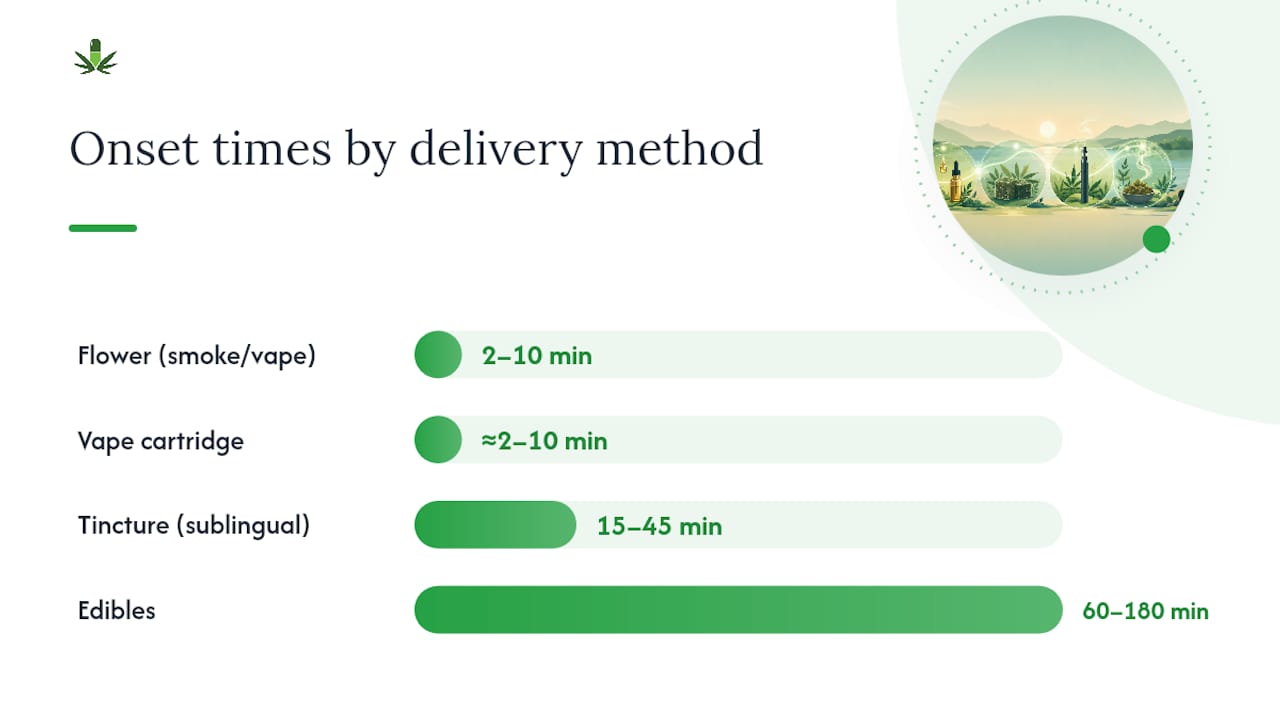
- Flower (smoked or vaporized): Onset in 2–10 minutes; effects last 1–3 hours. Good for incremental dosing, but onset varies by inhalation depth and lung capacity.
- Tincture (sublingual): Onset in 15–45 minutes; more predictable than flower for many people.
- Vape cartridge: Fast onset similar to flower; easier to take a single measured puff and wait.
- Edibles: Onset 60–180 minutes; duration can reach 6–12 hours. Start at a lower dose than you think you need.
Quick dos and don’ts:
- Do verify the COA for every product before you buy.
- Do start with the lowest available dose and wait the full onset window before redosing.
- Do keep a simple symptom log for the first few sessions.
- Don’t choose a strain based on the name or the label alone.
- Don’t assume “indica” means calming. The calming effect depends on the cannabinoid and terpene profile, not the plant category.
- Don’t combine cannabis with alcohol or other sedatives without talking to a clinician first.
For daytime use specifically, sativa-leaning effects and dosing considerations are worth understanding before you choose a product.
Safety, side effects, and drug interactions you should know
The core rule is simple: start low, go slow. A microdose protocol, meaning a dose well below what most people would consider a “full” dose, is the safest way to test any new strain.
Common side effects to watch for include increased heart rate, temporary paranoia or heightened anxiety, dizziness, dry mouth, and sedation. Most of these are dose-dependent and pass within a few hours, but they can be alarming if you are not expecting them.
Medication interactions are a real concern. Cannabis can affect how your body processes several drug classes:
- SSRIs and SNRIs: Cannabis may alter serotonin signaling; combined use can increase sedation or, in some cases, agitation.
- Benzodiazepines: Additive sedation is possible; combining the two without clinical guidance increases fall and impairment risk.
- Anticonvulsants: CBD in particular can affect the metabolism of some anticonvulsants, including clobazam; this is a clinically documented interaction.
- Blood thinners (e.g., warfarin): CBD may inhibit certain liver enzymes that process warfarin, potentially raising blood levels.
If you are on any of these medications, talk to your pharmacist or prescribing clinician before adding cannabis. This is not optional caution. It is a practical step that protects you.
Warning: If you have a personal or family history of psychosis, schizophrenia, or bipolar disorder, avoid THC-containing products unless you are working directly with a psychiatrist. If you are pregnant or breastfeeding, do not use cannabis. These are clinical red flags, not preferences.
For people with anxiety and co-occurring obsessive symptoms, cannabis and OCD interactions deserve a separate look before you start.
Always buy from a licensed dispensary or a hemp retailer that provides third-party COAs. Unverified products can contain far more THC than labeled, which is one of the most common triggers for cannabis-induced anxiety in new users.
What to expect: onset, duration, and a microdosing protocol
Onset and duration vary significantly by how you consume. Here is a straightforward breakdown:
| Route | Onset | Peak | Typical Duration |
|---|---|---|---|
| Smoking / vaporizing | 2–10 minutes | 20 minutes | 1–3 hours |
| Sublingual tincture | 15–45 minutes | 45 minutes | 2–4 hours |
| Vape cartridge | 2–10 minutes | 15 minutes | 1–3 hours |
| Edibles | 60–180 minutes | 2–4 hours | 6–12+ hours |
Edibles carry the highest risk of accidental overconsumption because the onset is slow and many people redose before the first dose has taken effect.
A simple microdosing protocol for testing a new strain:
- Choose a CBD-dominant product with a verified COA showing THC below 1% (or at your target ratio).
- Session 1: Take one small inhalation (or 1–2 mg CBD via tincture) and wait the full onset window. Note any effects in a symptom log.
- Session 2 (24 hours later): Repeat the same dose if Session 1 was comfortable. If you felt nothing, increase by one small step.
- Sessions 3–5: Continue increasing by the smallest available increment every 24 hours until you notice a calming effect or any unwanted side effect.
- Once you find your comfortable dose, hold it for at least one week before adjusting further.
Simple symptom log template (copy this for your first few sessions):
- Date and time:
- Strain and batch:
- Dose and route:
- Anxiety level before (0–10):
- Anxiety level 1 hour after (0–10):
- Any side effects:
- Notes:
Tracking this way takes two minutes per session and gives you real data to share with a clinician if you decide to seek formal guidance.
Access in the U.S. and when to see a clinician
Medical cannabis program rules vary widely by state. Some states allow anxiety as a qualifying condition; others require a more specific diagnosis. Hemp-derived CBD products with THC at or below 0.3% are federally legal and available in most states without a medical card, which is why strains like Charlotte’s Web, Lifter, and Elektra are accessible to most readers regardless of location.
If you are in a state with a medical cannabis program, a certification gives you access to a wider range of products, including higher-CBD flower and tinctures with more precise ratios than most hemp retailers carry.
Seek formal clinical care if any of the following apply:
- Your anxiety is worsening despite trying cannabis or other interventions.
- You are experiencing suicidal thoughts or self-harm urges.
- You notice new symptoms of psychosis (paranoia, hallucinations, disorganized thinking) after using cannabis.
- You are experiencing dangerous side effects or a severe drug interaction.
- You have a complex medication regimen and have not yet spoken to a clinician about cannabis.
For Virginia residents specifically, anxiety is a recognized qualifying condition for the state’s medical cannabis program. A certification does not replace a treatment plan, but it does give you legal access to dispensary products, including lab-tested, ratio-verified options that are harder to find through hemp retailers. For people managing anxiety alongside PTSD, medical cannabis for PTSD covers the clinical context in more detail.
What the evidence gap actually means for you
The research on cannabis and anxiety is genuinely encouraging in places, but it is not where the evidence base for, say, SSRIs or CBT currently stands. Most of the positive CBD findings come from small trials or preclinical models. That does not mean the strains listed here are useless. It means you should treat them as a complementary tool, not a replacement for proven care.
The “start low, go slow” rule is not just a legal disclaimer. It reflects the real variability in how people respond to cannabis. Two people can use the same strain from the same batch and have completely different experiences, which is exactly what the research on heterogeneity in cannabis outcomes keeps finding. If you are on psychiatric medications, that variability increases further.
The most cautious and effective approach is to try a high-CBD, near-zero-THC product first, track your response carefully, and loop in a clinician before making any changes to your existing treatment. That is not a complicated framework. It is just the one most likely to give you useful information without putting you at risk.
Virginia residents: a fast path to legal dispensary access
If you live in Virginia and want access to the full range of lab-tested, ratio-verified cannabis products that dispensaries carry, a medical cannabis certification is the practical next step. Virginia Medical Cannabis Certifications offers same-day online clinical evaluations for $50 for new patients and $40 for renewals. The evaluation takes about 10 minutes and is completed entirely online.
If you do not qualify, the fee is fully refunded. Your certificate is delivered by email, so you can take it to a Virginia dispensary the same day. Anxiety is a recognized qualifying condition in Virginia’s medical cannabis program. The certification is an administrative and clinical eligibility process, not a treatment plan, and it does not replace your relationship with your prescribing clinician. Your information is handled privately and securely. To check your eligibility and book your evaluation, visit Virginia Medical Cannabis Certifications online.
Sources
- PMC9207456
- PubMed 33049434
- PMC7396551
- NCSL – State medical marijuana laws
- Frontiers in Psychiatry – 10.3389/fpsyt.2021.664228
Recommended
- Best Strains for Migraines: Acute Relief and Prevention Picks – Virginia Medical Cannabis Certifications
- CBD vs CBN vs CBG for Pain Relief: What to Try First – Virginia Medical Cannabis Certifications
- Sativa Headache Relief: What You Need to Know – Virginia Medical Cannabis Certifications
- CBD and Gastritis: What Virginia Patients Need to Know – Virginia Medical Cannabis Certifications