
Yes, medical cannabis is a legal option for anxiety in Virginia when a licensed practitioner issues a written certification after evaluating you. The Virginia Cannabis Control Authority oversees the program, and telemedicine evaluations are allowed, so you don’t need to sit in a waiting room to get started. Your next move is simple: book an evaluation with a licensed practitioner to find out if you qualify.
Table of Contents
- How Virginia’s Medical Cannabis Program Works for Anxiety
- Step-by-Step: How to Get Certified in Virginia
- A Patient-Centered Take on Getting Certified
- A Fast, Transparent Path to Certification
- Sources
- FAQ
How Virginia’s Medical Cannabis Program Works for Anxiety
Virginia doesn’t run on a fixed list of approved diagnoses the way some states do. Instead, the state uses a practitioner-recommendation model, meaning a qualified clinician decides, case by case, whether cannabis makes sense for you based on your medical history and current symptoms. That’s good news if your anxiety doesn’t fit neatly into a checkbox, but it also means the strength of your certification depends heavily on the practitioner’s judgment and how well your treatment plan is documented.
Who can actually write that certification? Virginia keeps this list short and clinically credentialed:
- Medical doctors (MDs)
- Doctors of osteopathic medicine (DOs)
- Nurse practitioners (NPs)
- Physician assistants (PAs)
Any of these licensed practitioners can issue your certification, and importantly, they can do it through a real-time audiovisual telemedicine visit rather than an in-person appointment. Once you have that written certification, you can walk into a licensed dispensary and start the process. State registration through the CCA program is optional for most patients, but dispensaries still verify your certification before dispensing, and registration becomes mandatory if you’re using a caregiver or registered agent.
Step-by-Step: How to Get Certified in Virginia
Getting certified is far less complicated than most people expect. Here’s the process broken into the pieces that actually matter:
- Gather your documents. You’ll need a government ID and proof of Virginia residency, such as a lease or utility bill, plus a general sense of your current medications and treatment history.
- Decide on state registration. Most patients only need the written certification to shop at a dispensary; registration matters mainly if you’ll use a caregiver.
- Book your telemedicine evaluation. These visits typically run 10 to 20 minutes and cover your anxiety history, prior treatments, and whether cannabis fits safely into your current care.
- Receive your written certification. If approved, your practitioner documents a treatment plan and stays available for follow-up, a regulatory requirement under 3VAC10-30-30.
- Bring your certification to a dispensary. Staff verify your ID and paperwork before your first purchase, so keep both handy.
Fees and timelines vary by provider, but same-day options exist. Virginia Medical Cannabis Certifications, for example, offers evaluations in about 10 minutes for $50, with certifications typically sent by email the same day.
Pro Tip: Write down your anxiety symptoms and past treatments before your telemedicine visit. A clear, honest history helps your practitioner build a stronger treatment plan and speeds up the whole conversation.

A Patient-Centered Take on Getting Certified
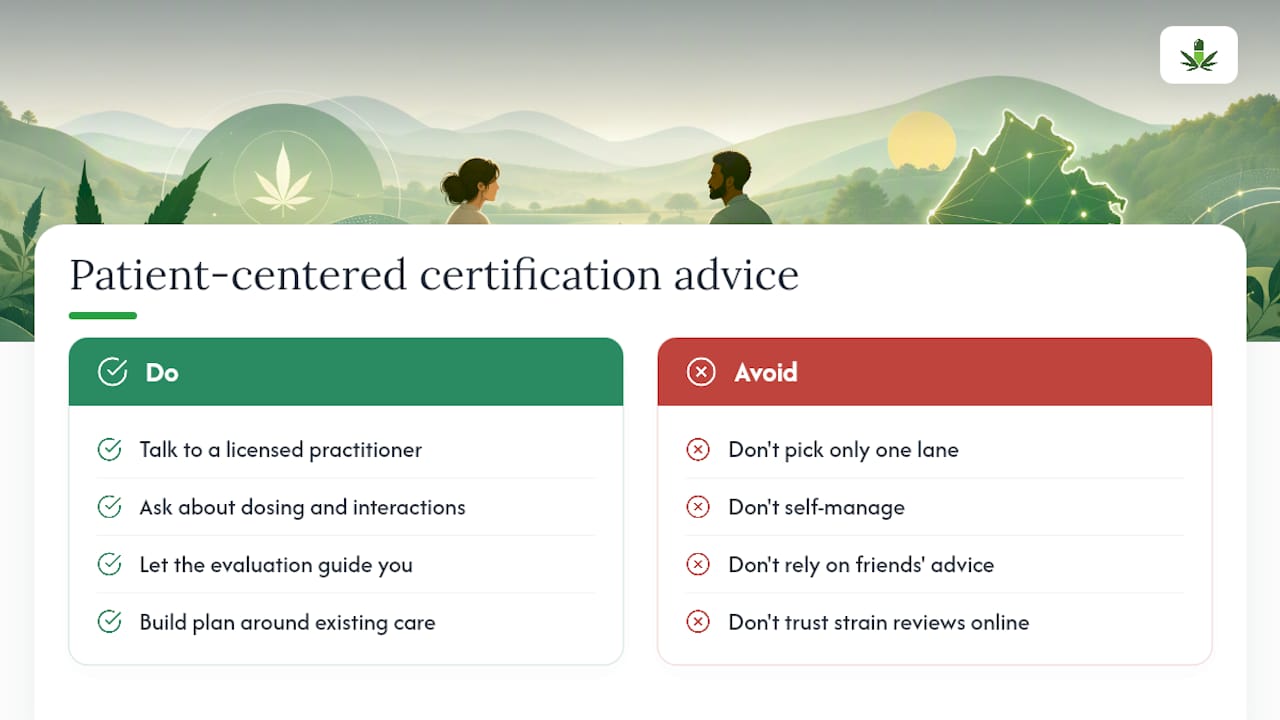
The biggest misconception I see is that patients think they have to pick a lane: therapy, medication, or cannabis. That’s not how this works in Virginia. A practitioner’s job under 3VAC10-30-30 is to weigh benefits against risks and build a plan around your existing care, not replace it.
Telemedicine makes that first conversation easy to have, but easy access doesn’t mean this is a self-service decision. Talk to a licensed practitioner, ask direct questions about dosing and interactions, and let the evaluation guide you rather than a friend’s recommendation or a strain review online.
— Jonathan
A Fast, Transparent Path to Certification
Some certification services offer faster, lower-risk options with online evaluations that take about 10 minutes and cost around $50 for new patients, sometimes including a refund if you don’t qualify. That means checking your eligibility carries no financial downside.

If you’re approved, your written certification is typically sent by email the same day, so you can head to a dispensary without waiting on paperwork. You can also review our refund policy details before booking, or read more about what conditions practitioners commonly consider. When you’re ready, start your same-day evaluation and find out where you stand.
Sources
The claims in this guide come straight from Virginia’s regulatory framework and the practitioner requirements built into state law:
- 3VAC10-30-30. Requirements for practitioner issuing a certification.
- Medical Cannabis — Virginia Cannabis Control Authority
This article is general information, not a substitute for advice from a qualified doctor. Consult a qualified healthcare professional about your own circumstances before acting on anything here.
FAQ
Is Marijuana Legal for Anxiety in Virginia?
Yes, if a licensed practitioner (MD, DO, NP, or PA) evaluates you and issues a written certification, medical cannabis is a legal treatment option for anxiety in Virginia.
Can I Get Certified Through Telemedicine?
Yes. Virginia allows real-time audiovisual telemedicine evaluations for medical cannabis certifications, so an in-person visit isn’t required.
Do I Need to Register With the State to Buy Cannabis?
Most patients only need the written certification to purchase at a licensed dispensary; formal state registration is mainly required for caregivers or registered agents.
How Much Does Certification Cost in Virginia?
Costs vary by provider. Some providers charge around $50 for new certifications and may offer refunds if you’re not approved.
What Does a Practitioner Evaluate During the Visit?
Under 3VAC10-30-30, practitioners assess your medical history, current medications, and symptoms, then document a treatment plan and remain available for follow-up care.