
If you have obstructive sleep apnea (OSA) and you’ve heard that cannabis might help, here’s the honest answer: no major medical authority currently recommends it. The American Academy of Sleep Medicine explicitly advises against using medical cannabis or synthetic marijuana extracts to treat OSA, citing insufficient evidence on efficacy, tolerability, and long-term safety. Some small studies show modest short-term benefits from synthetic cannabinoids, but those findings don’t yet translate into a treatment you can rely on.
Here’s a quick summary of where things stand:
- Cannabis is not an approved or recommended treatment for obstructive sleep apnea.
- Small clinical trials show modest reductions in apnea events with synthetic THC, but studies are short-term and limited in size.
- Recreational cannabis use has not been proven to reduce OSA severity.
- Known risks include disrupted REM sleep, daytime drowsiness, and potential drug interactions.
- Proven treatments like CPAP therapy remain the gold standard.
Table of Contents
- What does the science say about cannabis and sleep apnea?
- What medical authorities say about marijuana for sleep apnea
- What are the potential benefits and risks of cannabis for sleep apnea?
- What are the proven treatment options for obstructive sleep apnea?
- Key Takeaways
What does the science say about cannabis and sleep apnea?
The most cited human trial on this topic is the PACE Clinical Trial, which tested dronabinol, a synthetic analog of THC, in patients with moderate to severe OSA. At 10 mg per day, dronabinol reduced AHI by 12.9 events per hour compared to placebo and improved self-reported sleepiness scores over six weeks. That’s a meaningful short-term signal. But the trial was small, and six weeks is not long enough to draw conclusions about safety or lasting benefit.

A separate small study found that combining low-dose dronabinol with acetazolamide reduced OSA severity by 35%–40% after one week, with good tolerability. Again, the sample was small and the duration brief.
On the other side, a 2024 retrospective cohort study found no statistically significant association between cannabis use and reduced OSA severity after adjusting for confounders. What it did find was a shift in sleep architecture: cannabis users showed increased deep sleep (N3) but decreased REM sleep. That trade-off matters more than it might seem.
Key data point: A systematic review of cannabinoids for OSA found that most studies had median treatment durations of around three weeks with small patient cohorts, making it impossible to draw reliable conclusions about long-term safety or efficacy.
Key limitations across all current research:
- Small sample sizes across nearly every published trial
- Study durations typically under six weeks
- No standardized dosing or delivery method
- No FDA approval for any cannabinoid-based OSA treatment
- Lack of diverse patient populations
What medical authorities say about marijuana for sleep apnea
The American Academy of Sleep Medicine (AASM) has been direct on this. Their position statement calls for sleep apnea to be excluded from qualifying conditions in medical cannabis programs, and it recommends that patients rely on treatments from accredited sleep facilities instead.
“We are not aware of any scientific evidence that medical cannabis is an effective treatment for obstructive sleep apnea. Patients with sleep apnea should seek treatment from a licensed medical provider at an accredited sleep facility.” — Dr. Kannan Ramar and Dr. Ilene Rosen, American Academy of Sleep Medicine
Their reasoning goes beyond just the lack of evidence:
- Delivery methods for cannabis vary widely, making consistent therapeutic dosing unreliable.
- No cannabinoid treatment for OSA has received FDA approval.
- Cannabis use carries risks of daytime somnolence, which increases the danger of motor vehicle accidents, a concern already elevated in untreated OSA patients.
- Long-term safety data simply doesn’t exist yet.
- Neuropsychiatric and gastrointestinal side effects have been reported in trials involving THC-based products.
The AASM’s concern isn’t that cannabinoids are useless in every context. It’s that using them for OSA means substituting an unproven option for treatments that actually work, and that delay can carry real health consequences.
What are the potential benefits and risks of cannabis for sleep apnea?
It’s fair to acknowledge what cannabis might do, while being clear about what it can’t yet promise.
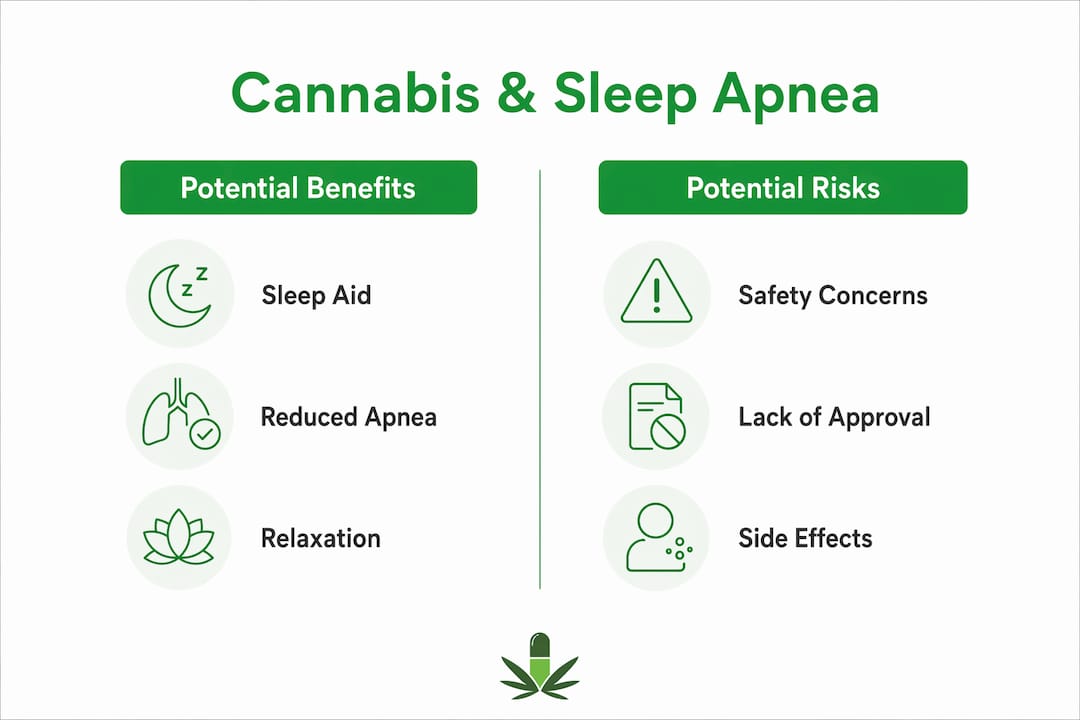
Possible short-term benefits:
- Sedative effects may help with sleep onset, particularly in patients who struggle to fall asleep.
- Cannabinoids may act on vagal nerve pathways to influence upper airway muscle tone, which could theoretically reduce apnea events.
- Dronabinol showed measurable AHI reductions in controlled trials, suggesting a pharmacologic mechanism worth studying further.
- Some patients report subjective improvements in sleep quality, even when objective measures don’t fully confirm it.
Known and potential risks:
- Cannabis reduces REM sleep, which is critical for memory consolidation, emotional regulation, and cognitive function. The Sleep Foundation notes that long-term use can leave patients feeling unrefreshed despite sedation.
- Daytime drowsiness is a documented adverse effect, compounding the fatigue OSA already causes.
- THC-based products have been associated with dry mouth, dizziness, vertigo, and acute tachycardia in clinical trials.
- Cannabis can interact with medications commonly used by OSA patients, including blood pressure drugs and sedatives.
- Patients with anxiety, a frequent OSA comorbidity, may experience worsened symptoms with high-THC products.
If you’re curious about how cannabis affects sleep quality more broadly, including effects on dreaming and sleep cycles, that’s worth reading before making any decisions.
Pro Tip: Before trying any cannabis product for sleep-related symptoms, speak with a board-certified sleep specialist. OSA is a medical condition with cardiovascular implications, and substituting an unproven remedy for proven care can delay treatment that genuinely protects your health.
For patients exploring natural sleep support alongside their primary OSA treatment, some turn to non-cannabis options like sleep-focused supplements as adjuncts, though these don’t treat the underlying airway obstruction.
What are the proven treatment options for obstructive sleep apnea?
OSA has well-established, evidence-backed treatments. Cannabis is not among them. Here’s what sleep medicine actually recommends:
- CPAP therapy remains the gold standard. Continuous positive airway pressure keeps the airway open during sleep and has the strongest evidence base of any OSA treatment. The main challenge is adherence, but modern devices are quieter and more comfortable than earlier models.
- Oral appliances are a viable alternative for mild to moderate OSA, particularly for patients who can’t tolerate CPAP. A dentist trained in sleep medicine fits these custom devices to reposition the jaw.
- Positional therapy helps patients who experience apnea primarily when sleeping on their back. Specialized pillows or wearable devices encourage side sleeping.
- Weight management directly reduces OSA severity in many patients. Even modest weight loss can lower the apnea-hypopnea index meaningfully.
- Upper airway surgery is an option for select patients, particularly those with structural abnormalities like enlarged tonsils or a deviated septum.
- Emerging pharmacotherapies, including combination approaches like dronabinol plus acetazolamide, are under active research but none are FDA-approved for OSA as of 2026.
Evaluation at an accredited sleep center is the right starting point. A sleep study (polysomnography) gives you an accurate AHI score and guides which treatment fits your specific anatomy and severity.
If you’re a Virginia resident and you’re considering whether medical cannabis might be appropriate for a qualifying condition you have alongside OSA, such as chronic pain or anxiety, Virginia Medical Cannabis Certifications offers same-day online certifications for $50, with a full refund if you don’t qualify. The process takes about 10 minutes and is completed entirely online.
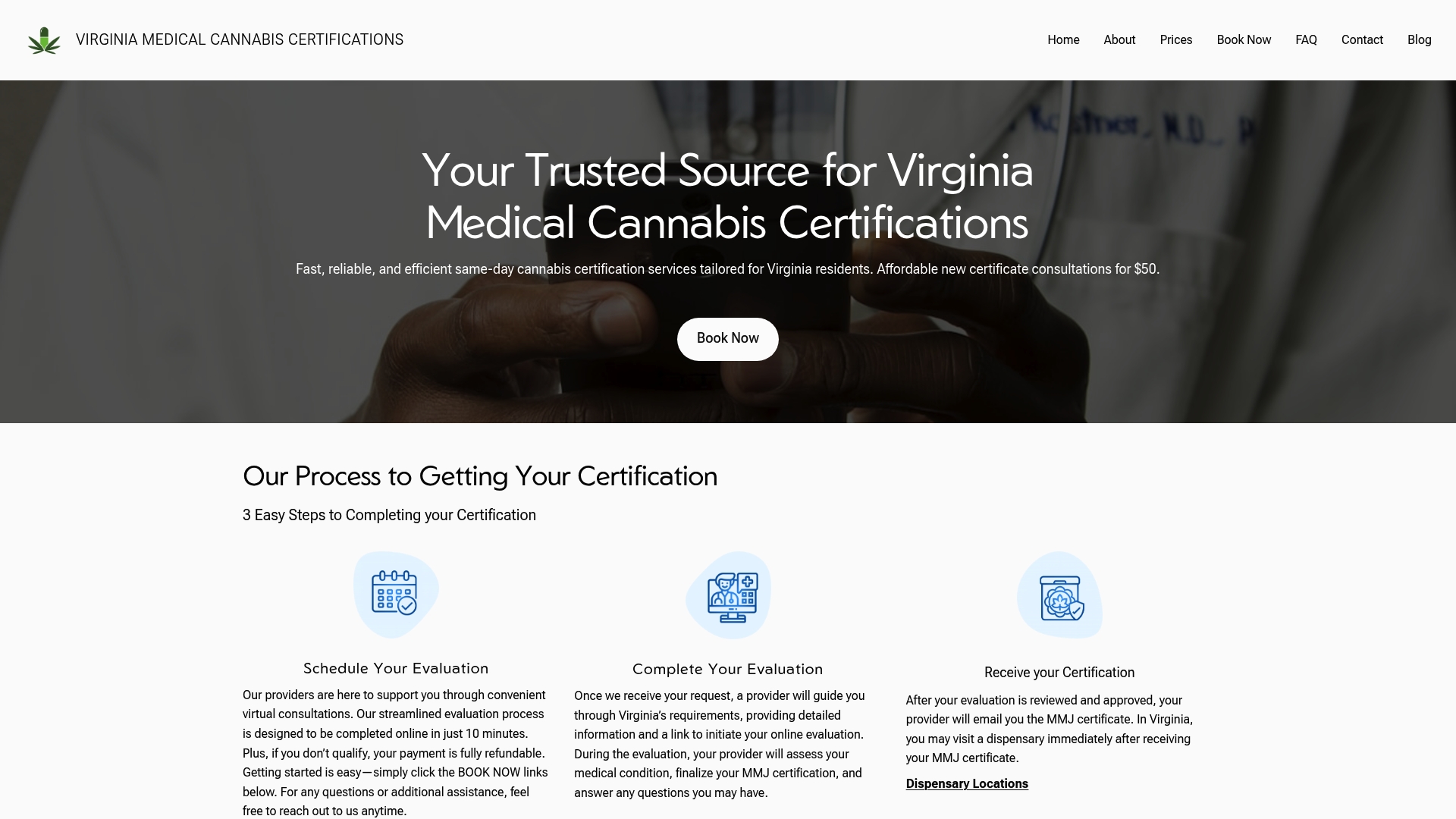
Virginia Medical Cannabis Certifications makes it straightforward to find out whether you qualify, without the wait or the worry. You can also review the certification process and approval criteria before you start.
Key Takeaways
Cannabis is not a medically approved or recommended treatment for obstructive sleep apnea, and patients should prioritize proven therapies like CPAP over unvalidated alternatives.
| Point | Details |
|---|---|
| No medical endorsement | The AASM explicitly advises against cannabis for OSA and recommends excluding it from qualifying conditions. |
| Limited trial evidence | Dronabinol reduced AHI by 12.9 events/hour in one trial, but studies are small and short-term. |
| REM sleep disruption | Cannabis reduces REM sleep, which is critical for cognitive and emotional health. |
| CPAP remains gold standard | CPAP has the strongest evidence base for OSA; adherence challenges exist but solutions are improving. |
| Virginia certification available | Patients with qualifying conditions can get a same-day online medical cannabis certification for $50. |
Recommended
- Can Weed Cause Nightmares? What You Need to Know – Virginia Medical Cannabis Certifications
- Weed for TMJ: Relief, Research, and Real Results – Virginia Medical Cannabis Certifications
- Sativa Headache Relief: What You Need to Know – Virginia Medical Cannabis Certifications
- THCA Headaches: Causes, Relief, and Safe Use – Virginia Medical Cannabis Certifications