
For most Virginia patients, CBD has the strongest clinical evidence across epilepsy, anxiety, sleep, and pain. CBG shows real early promise for anxiety based on a 2024 double-blind trial. CBC remains largely preclinical. Here is what that means for you right now:
- CBD: Strongest evidence. FDA-approved as Epidiolex for certain childhood epilepsies. Moderate support for anxiety, sleep, and chronic pain.
- CBG: One solid human trial showed anxiety reduction with 20 mg. Promising, but limited data beyond that study.
- CBC: Preclinical signals for pain and inflammation. No human trials yet.
Two immediate steps before you try any of these: check for drug interactions (especially if you take other medications), and verify any product has a third-party Certificate of Analysis (COA). If you want access to dispensary-tested products in Virginia, a same-day online certification through Virginia Medical Cannabis Certifications gets you there fast.
This article is general information, not medical advice. Confirm your situation with a qualified clinician.

Table of Contents
- What are CBC, CBG, and CBD, and how do they work in your body?
- What does the clinical research actually support for each cannabinoid?
- What side effects and drug interactions should Virginia patients know about?
- Which cannabinoid fits your condition?
- How do you choose products and start dosing safely?
- How do you get a medical cannabis certification in Virginia?
- Quick comparison: CBC vs CBG vs CBD at a glance
- Key Takeaways
- Why clinical caution and patient access belong together
- Get certified in Virginia today with Virginia Medical Cannabis Certifications
- Useful sources and further reading
What are CBC, CBG, and CBD, and how do they work in your body?
All three are non-intoxicating cannabinoids. None will get you high. But they work through different pathways, which is why the cbc vs cbg vs cbd comparison matters clinically.
- CBD (cannabidiol): The most studied of the three. CBD does not bind strongly to CB1 or CB2 receptors directly. Instead, it acts as a negative allosteric modulator of CB1 and also influences serotonin (5-HT1A) and vanilloid (TRPV1) receptor pathways, which helps explain its effects on anxiety and pain. CBD appears in mature plants at concentrations from 0.1% to 25% depending on the strain.
- CBG (cannabigerol): Called the “mother of all cannabinoids” because CBGA (its acidic precursor) converts into CBD, THC, and CBC as the plant matures. CBG acts as a partial agonist at both CB1 and CB2 receptors and also interacts with alpha-2 adrenergic and serotonin receptors. Because most CBG converts to other cannabinoids before harvest, mature plants contain less than 1% CBG, making isolates more expensive to produce.
- CBC (cannabichromene): Discovered in 1966. CBC does not bind strongly to CB1 or CB2 receptors. It primarily activates TRPV1 and TRPA1 receptors involved in pain perception and inflammation. CBC is also found at low concentrations (0.1%–1%) in mature plants and breaks down further as the plant ages.
Pro Tip: Because CBG and CBC are present at such low concentrations, manufacturers must either harvest early or use specialized extraction. Always check a COA to confirm the actual cannabinoid content matches the label.
What does the clinical research actually support for each cannabinoid?
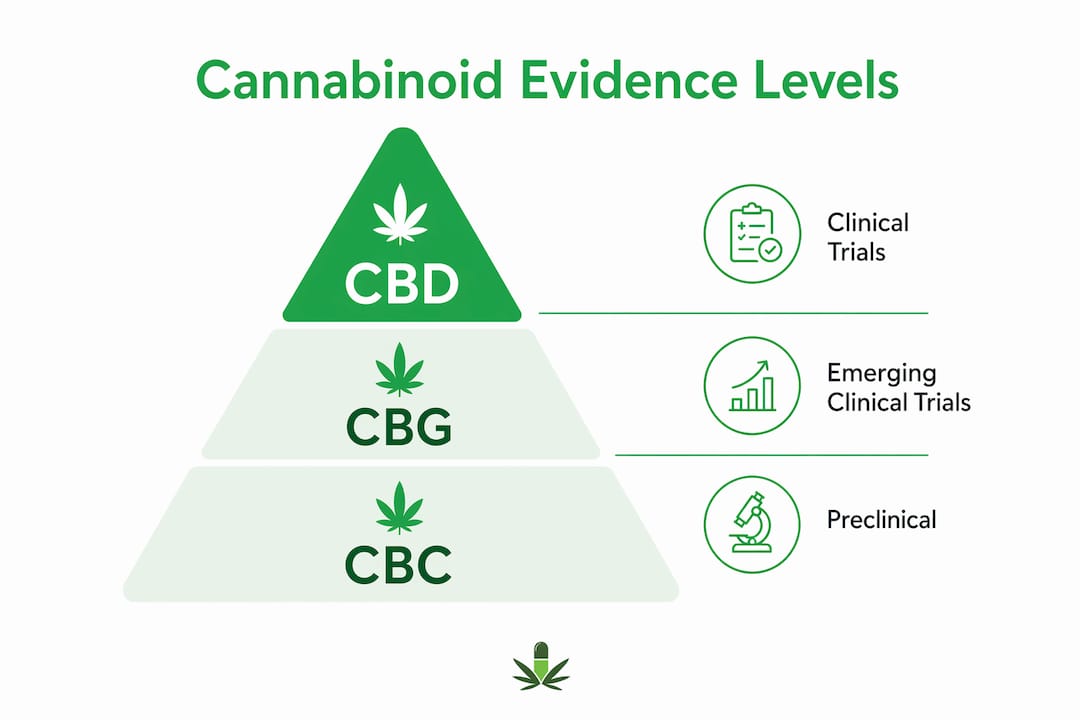
The evidence gap between these three is significant. Here is where each stands today.
| Cannabinoid | Evidence Level | Key Human Data | Regulatory Status |
|---|---|---|---|
| CBD | Strongest | Multiple RCTs; FDA-approved Epidiolex | FDA-approved for specific epilepsies |
| CBG | Emerging | 1 double-blind field trial (anxiety, 2024) | No FDA approval; unregulated supplements |
| CBC | Preclinical | No published human RCTs | No FDA approval; unregulated supplements |
CBD has the clearest clinical record. Epidiolex is a prescription CBD formulation FDA-approved for Dravet syndrome and Lennox-Gastaut syndrome. Beyond epilepsy, moderate evidence supports CBD for anxiety, sleep quality, fibromyalgia pain, and MS spasticity. Over-the-counter CBD products typically range from 10–100 mg per serving, but label accuracy varies widely.
CBG got its first rigorous human test in 2024. A double-blind, placebo-controlled crossover trial with 34 healthy adults found that 20 mg of hemp-derived CBG reduced subjective anxiety and stress by approximately 26.5% relative to baseline, with no motor or cognitive impairment detected. That is a meaningful result, but one trial in healthy adults is not the same as broad clinical evidence.
CBC remains almost entirely preclinical. Mechanistic studies show it activates TRPA1 receptors more potently than CBD, suggesting pain and anti-inflammatory potential. Human trials have not followed yet.
What side effects and drug interactions should Virginia patients know about?
Safety is where the cbc vs cbd effects conversation gets practical fast.
Common side effects across all three:
- Drowsiness or sedation (most common with CBD)
- Dry mouth
- GI upset or changes in appetite
- Mild changes in mood or energy
The bigger concern for many Virginia patients is drug interactions. CBD inhibits CYP450 liver enzymes, the same pathway affected by grapefruit juice. If you take blood thinners, anti-seizure medications, or certain antidepressants, CBD can alter how those drugs are metabolized, potentially raising or lowering their effective levels in your blood. Your clinician should screen for this the same way they would before recommending grapefruit avoidance.
For CBG specifically, preclinical animal studies have shown adverse inflammatory signals at high doses. That does not mean moderate doses are unsafe, but it does mean starting low and going slow matters more with CBG than with well-studied CBD.
Pro Tip: Bring a full list of your current medications to your certification appointment. A clinician can flag CYP interactions before you start, not after.
Which cannabinoid fits your condition?
This is the practical heart of the cbg benefits vs CBD comparison for Virginia patients.
- Anxiety: CBD has moderate human evidence. The 2024 CBG trial at 20 mg is the most rigorous human data for CBG and anxiety specifically. Both are worth discussing with a clinician. CBC has no anxiety-specific human data.
- Epilepsy: Prescription Epidiolex is the only FDA-approved cannabinoid medication for epilepsy. Over-the-counter CBD products are not equivalent. If epilepsy is your primary condition, a clinician referral for prescription CBD is the right path.
- Chronic pain and fibromyalgia: CBD has moderate evidence for pain modulation. CBG may complement CBD via CB2 and TRPV1 activation, and CBC’s TRPA1 activity is mechanistically relevant, but human pain trials for both remain limited.
- MS spasticity: CBD has the most human data here among the three. Some patients report benefit; response varies considerably.
- Sleep: CBD’s relationship to sleep is indirect, likely through anxiety and pain reduction rather than direct sedation. CBG and CBC have minimal sleep-specific human data.
- PTSD: Evidence is mixed across cannabinoids. CBD is the most studied. For Virginia patients, medical cannabis for PTSD is a qualifying condition for certification, and a clinician can help you weigh options.
Pro Tip: Dispensary-grade products come with COAs and labeled cannabinoid content. That consistency matters when you are trying to find a dose that works for a specific condition.
When to prioritize certification: if your condition is chronic, you take other medications, or you want reliable dosing, getting certified in Virginia gives you access to tested dispensary products rather than unregulated supplements.
How do you choose products and start dosing safely?
Label reading checklist:
- Milligrams of each cannabinoid per serving (not just per container)
- Total THC percentage (must stay within Virginia legal limits)
- Batch-specific COA from a third-party lab
- Extraction method (CO2 extraction is generally cleaner)
- No unsupported “pharmaceutical grade” claims without documentation
Full-spectrum vs. broad-spectrum vs. isolate: Full-spectrum contains all cannabinoids including trace THC, which may support the “entourage effect.” Broad-spectrum removes THC but keeps other cannabinoids. Isolate is a single purified cannabinoid. For CBG and CBC specifically, many over-the-counter products do not match label claims, so a COA is not optional.
Product forms and bioavailability: Tinctures and inhalation deliver cannabinoids faster (15–45 minutes). Capsules and edibles take longer (1–2 hours) but last longer. Topicals work locally and do not produce systemic effects. For titration, start at the lowest available dose, hold for 3–5 days, and increase only if needed.
Pro Tip: Dispensary products in Virginia are tested and labeled by state-regulated labs. That is a meaningful quality advantage over most online CBD retailers.
How do you get a medical cannabis certification in Virginia?
- Check eligibility. Virginia’s medical cannabis program covers a broad range of conditions including chronic pain, anxiety, PTSD, epilepsy, MS, and fibromyalgia, among others.
- Gather your documentation. Bring a list of current medications (for interaction screening), any relevant medical records or prior diagnoses, and a valid Virginia ID.
- Complete a clinical evaluation. This can be done online in Virginia. Virginia Medical Cannabis Certifications offers same-day online evaluations that take about 10 minutes. New patients pay $50; renewals are $40. If you are not approved, the fee is fully refunded.
- Receive your certificate. Expedited delivery means you can bring your certificate to a Virginia dispensary the same day.
- Access dispensary products. Dispensaries carry tested, labeled products with COAs, which is the most reliable way to know exactly what cannabinoid and dose you are getting.
Documentation to bring:
- Current medication list (critical for CYP interaction screening)
- Prior diagnosis records if available
- Virginia state ID
Pro Tip: Discussing your medications during the evaluation is not just a formality. It is the step that catches interactions before they become problems.
Quick comparison: CBC vs CBG vs CBD at a glance
- CBD: Strongest clinical evidence among the three; FDA-approved as Epidiolex for specific epilepsies; moderate support for anxiety, sleep, pain, and MS spasticity.
- CBG: One rigorous human trial showing 20 mg reduced anxiety relative to baseline; promising for focus and neuroprotection; preclinical cautions at high doses.
- CBC: Primarily preclinical; TRPA1 receptor activity suggests pain and anti-inflammatory potential; possible skin health benefits; no human RCTs yet.
| Feature | CBD | CBG | CBC |
|---|---|---|---|
| Evidence level | Strong (RCTs, FDA approval) | Emerging (1 human trial) | Preclinical only |
| FDA status | Approved (Epidiolex, Rx only) | Not approved | Not approved |
| Primary uses | Epilepsy, anxiety, pain, sleep | Anxiety, focus, neuroprotection | Pain, inflammation, skin |
| Plant abundance | 0.1%–25% | Under 1% | 0.1%–1% |
| Intoxicating | No | No | No |
For a deeper look at how CBC and CBG compare specifically, the CBC vs CBG overview from Virginia Medical Cannabis Certifications covers the mechanistic differences in more detail.
Key Takeaways
CBD has the strongest clinical evidence of the three cannabinoids, with FDA approval via Epidiolex and moderate support for anxiety, pain, and sleep; CBG shows early human promise; CBC remains preclinical.
| Point | Details |
|---|---|
| CBD leads on evidence | FDA-approved Epidiolex and moderate RCT support for anxiety, sleep, and pain make CBD the safest starting point. |
| CBG anxiety trial | A 2024 double-blind trial found 20 mg hemp-derived CBG reduced anxiety and stress by approximately 26.5% relative to baseline in healthy adults. |
| CBC is preclinical | No human RCTs exist for CBC; use it only as a complement, not a primary treatment. |
| CYP interactions matter | CBD inhibits CYP450 enzymes; always screen current medications with a clinician before starting. |
| Virginia Medical Cannabis Certifications | Same-day online certification for $50 (new patients) gives Virginia residents access to dispensary-tested, COA-labeled products. |
Why clinical caution and patient access belong together
The cannabinoid space has a habit of running ahead of its evidence. CBG gets called a miracle compound after one good trial. CBC gets marketed for conditions where the only data comes from cell cultures. That gap between consumer enthusiasm and clinical reality is real, and it matters most for patients who are managing serious conditions and taking other medications.
What the 2024 CBG trial actually showed is encouraging but narrow: 34 healthy adults, one dose level, subjective anxiety measures. That is a starting point, not a clinical guideline. CBD’s record is genuinely stronger, and even there, the prescription formulation (Epidiolex) and an unregulated supplement are not the same thing.
The practical answer for Virginia patients is not to wait for perfect evidence before acting. It is to get access to tested, labeled products through a regulated dispensary, screen for drug interactions with a clinician, and start at a low dose. That combination of access and caution is exactly what the certification process is designed to support.
Get certified in Virginia today with Virginia Medical Cannabis Certifications
You have done the research. You know which cannabinoid has the evidence behind it and what safety checks matter before you start. The next step is getting access to dispensary-grade products that actually match their labels.
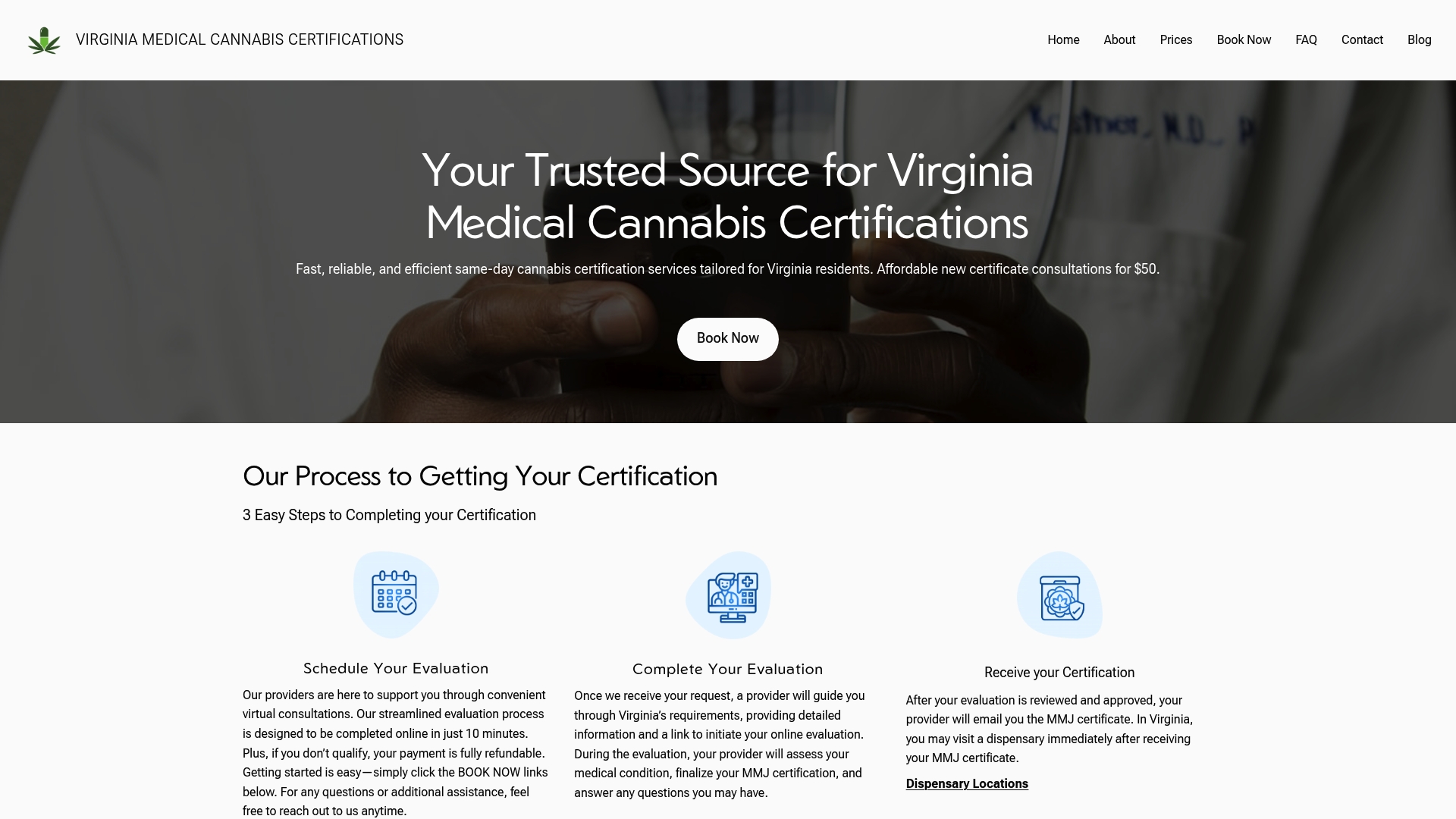
Virginia Medical Cannabis Certifications offers same-day online clinical evaluations for Virginia residents. New patients pay $50; renewals are $40. If your clinician determines you do not qualify, your fee is fully refunded. The evaluation takes about 10 minutes, and your certificate is delivered the same day so you can visit a dispensary without delay. Veterans receive a discount via coupon code.
Ready to get started? Visit virginiacard.com to book your evaluation, or review the full service terms and refund policy before you do.
Useful sources and further reading
- 2024 CBG double-blind field trial (Scientific Reports / PubMed) — Primary source for the 20 mg CBG anxiety result cited throughout this article.
- Harvard Health: CBD products — do they work? — Covers Epidiolex, OTC product quality issues, and COA guidance.
- Harvard Health Blog: CBD — what we know and what we don’t — Source for CYP450 / grapefruit-like interaction risk.
- Minor cannabinoids and sensory neuron activation (PMC) — Preclinical mechanistic data on how CBD, CBG, and CBC differ at the receptor level.
- CBG pharmacology and safety review (MDPI Molecules) — Covers preclinical high-dose CBG cautions.
- Virginia Medical Cannabis Certifications — certification overview — Step-by-step guide to the Virginia certification process and refund guarantee.
Recommended
- CBC vs CBG: Key Differences and Benefits Explained – Virginia Medical Cannabis Certifications
- CBD and Gastritis: What Virginia Patients Need to Know – Virginia Medical Cannabis Certifications
- The Benefits of Medical Marijuana in Virginia — and How to Get Certified in Minutes – Virginia Medical Cannabis Certifications
- The Benefits of Medical Marijuana in Virginia — and How to Get Certified in Minutes – Virginia Medical Cannabis Certifications