Cannabis is not a reliable, first-line treatment for cluster headaches. The evidence is mixed, and standard therapies, like oxygen and injectable triptans, work better for most patients. If you’re still considering cannabis, your first move is a conversation with your neurologist, not a dispensary run. If your clinician agrees it’s worth trying, Virginia’s medical cannabis certification process can get you legal access safely and quickly.
TL;DR:
- Inhalation offers the fastest relief but is often impractical during severe attacks, while oral cannabinoids are better for prevention due to slower onset.
- Virginia’s certification process is quick and fully refundable if denied, but ongoing product costs and lack of insurance coverage remain significant barriers.
- Cannabis is not supported as a primary abortive treatment, and patients should prioritize proven therapies like oxygen and triptans before considering it.
- Patient experiences are highly varied, emphasizing careful, deliberate trial under medical supervision rather than reactive or unsupervised use.
Table of Contents
- Cluster Headache Cannabis Virginia: What the Clinical Evidence Actually Says
- How Should You Use Cannabis for Cluster Headaches, If At All?
- How Do You Get Certified for Medical Cannabis in Virginia?
- What Educational Resources Support Safe Cannabis Use for Headache Patients?
- Which Conditions Qualify You for Cannabis Certification in Virginia?
- Where Can Virginia Patients Access Cannabis Products for Headache Relief?
- What Does Medical Cannabis Cost in Virginia, and Does Insurance Help?
- What Are the Legal and Workplace Rules for Virginia Cannabis Patients?
- What Do Virginia Patients Say About Using Cannabis for Cluster Headaches?
- A Clinician-Aligned Take on Cannabis and Cluster Headache Treatment
- Get Certified for Medical Cannabis in Virginia the Same Day
- Sources
Cluster Headache Cannabis Virginia: What the Clinical Evidence Actually Says
If you’ve searched for cluster headache cannabis Virginia guidance hoping to find a clear “yes, this works,” the honest answer is more complicated. The research on cannabis for cluster headaches is real, but it’s thin, and it points in more than one direction.
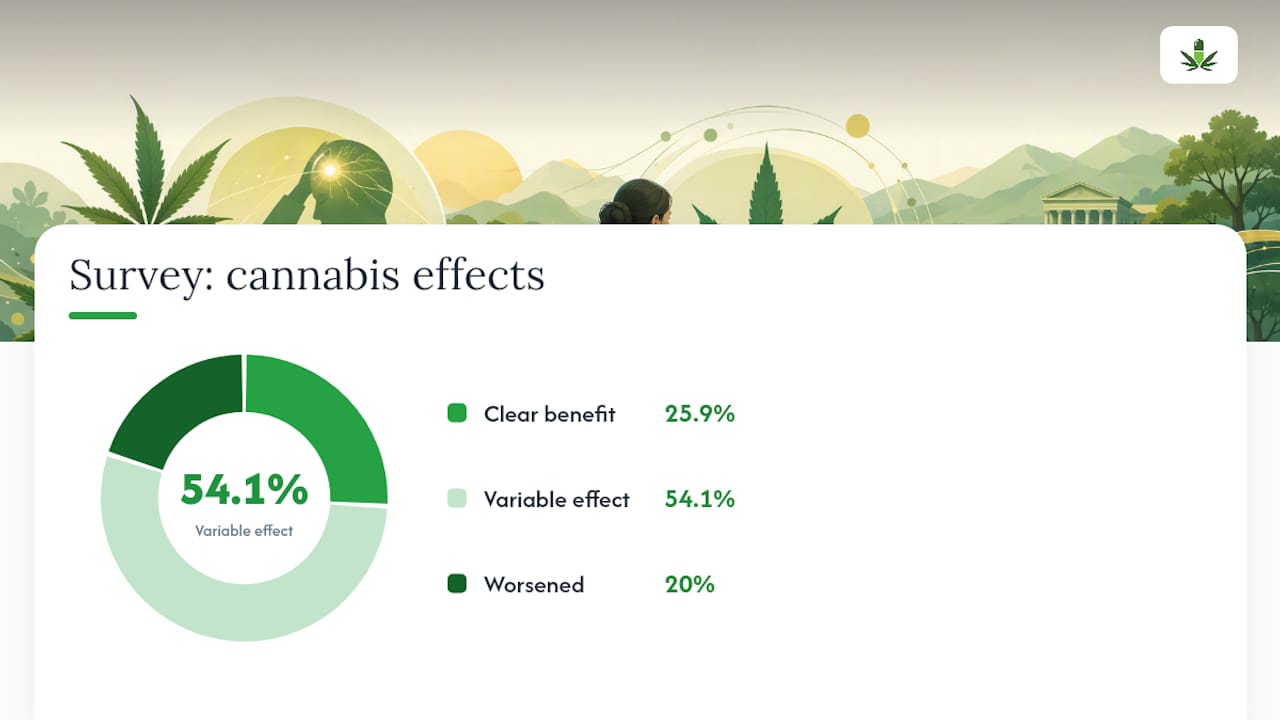
The most cited study on this exact question surveyed 139 cluster headache patients and found something surprising: cannabis use was common, but effectiveness was not. Among the group that had tried cannabis specifically for attacks, only about 25.9% reported clear benefit. The rest split between “it did something, but inconsistently” and “it made things worse.”
Pro Tip: If you’ve read online forums claiming cannabis “cures” cluster attacks, treat those claims skeptically. The same population that reports benefit also reports attacks getting worse, sometimes from the same product.
Here’s how that breakdown looked in the surveyed group:
- Cannabis use was reported as relatively common among respondents.
- A subset of patients had tried cannabis specifically to treat cluster attacks.
- 25.9% of those users reported some efficacy.
- Many users reported variable or unpredictable effects of cannabis.
- A notable minority reported that cannabis use worsened their attacks.
That last number matters as much as the first. Cannabis isn’t neutral for cluster headache patients. For roughly one in five people who try it during an attack, it appears to backfire.
Separately, case reports document individual patients who found rapid relief from inhaled cannabis or the pharmaceutical cannabinoid dronabinol. These cases are genuinely interesting. They suggest a plausible biological mechanism, possibly involving cannabinoid receptors in the hypothalamus, the brain region most associated with cluster headache activity. But a case report describes what happened to one or two people. It doesn’t tell you what will happen to you.
Clinical reviews in Practical Neurology land in a similar place: cannabinoids show promise for certain pain conditions, but headache-specific controlled trials remain scarce. Small cohorts, self-reported outcomes, and inconsistent products and doses make it hard to draw firm conclusions either way.
How Should You Use Cannabis for Cluster Headaches, If At All?
Assuming your clinician is on board with a trial, how cannabis is used matters as much as whether it’s used at all. Cluster attacks are brutal and fast, often peaking within minutes, which changes what’s actually practical.
Here’s how the main delivery routes compare for this specific condition:
- Inhalation (smoking or vaping). Fastest onset, often minutes. The problem is practicality: during a severe attack, most patients aren’t in a position to prepare and use an inhaled product with any precision.
- Oral cannabinoids (edibles, dronabinol). Slower onset, sometimes 45 minutes to two hours, which makes this route better suited to prevention than to stopping an attack in progress. Dronabinol case reports suggest a controlled pharmaceutical dose may offer more predictable results than a recreational edible.
- Sublingual tinctures. Faster than edibles, slower than inhalation, and easier to dose consistently than smoking.
- Topical products. Not well suited to cluster headache management at all, since they act locally and don’t reach systemic circulation in a meaningful way.
None of these routes have strong evidence behind them as abortive therapy. What separates cannabis for cluster headaches from cannabis for something like chronic pain is the narrow window: an attack can peak in 10 to 15 minutes, and most cannabis products simply don’t act fast enough to interrupt one reliably.
The risk side deserves equal attention. Cannabis can worsen attacks in some patients, and clinical reviews note the need to screen for psychiatric history and substance use patterns before recommending cannabinoids for headache. There are also real interaction concerns with medications many cluster headache patients already take, including triptans, certain antidepressants, and blood thinners.
If you and your clinician decide a trial makes sense, do it deliberately: start with a low dose, try it between attacks first rather than during one, avoid combining it with tobacco, and keep a simple log of frequency and severity so you and your doctor can see whether it’s actually helping. Have a plan for what you’ll do if an attack breaks through anyway, since cannabis should never replace your prescribed abortive medication.
How Do You Get Certified for Medical Cannabis in Virginia?
Virginia’s program doesn’t require a cluster headache diagnosis specifically to qualify. The Commonwealth allows certifying practitioners to recommend cannabis for any condition they believe it may reasonably help, which in practice covers chronic pain, migraine and headache disorders, and related neurological conditions. Confirm your specific eligibility with a certifying provider, since the final call rests with the clinician reviewing your case.
The path to legal access generally runs in three steps:
- Clinician evaluation. A registered Virginia practitioner reviews your medical history and current diagnoses and determines whether cannabis is a reasonable option for you.
- Certification issuance. If approved, you receive written certification, which is what allows you to register with the state and purchase from a licensed dispensary.
- Dispensary registration and purchase. You register once with Virginia’s dispensing system and can then buy products suited to your situation, whether that’s a fast-acting sublingual tincture or a controlled oral formulation.
Virginia Medical Cannabis Certifications runs this evaluation online in about 10 minutes, with same-day results and a $50 fee for new patients that’s fully refundable if you’re not approved. That refund guarantee matters for cluster headache patients specifically, since eligibility often depends on documentation that not everyone has organized yet.
Before your evaluation, gather what you can: prior diagnosis records, a list of current medications, and notes on abortive treatments you’ve already tried (oxygen therapy, triptans, verapamil). Ask your clinician directly how cannabis might interact with medications you take during an attack. That single question can save you from a bad combination later.
What Educational Resources Support Safe Cannabis Use for Headache Patients?
Getting certified is only step one. Knowing what to do with that certification is where a lot of patients get stuck, and it’s where a service’s educational content earns its keep.
Virginia Medical Cannabis Certifications backs its $50, 10-minute evaluation with a library of condition-specific guides, including a breakdown of THCA’s effects on headaches and safe use practices, and a guide to strains commonly discussed for migraine relief that overlaps meaningfully with cluster headache management. These aren’t generic blog filler. They’re written for the exact decision point you’re at after certification: what to actually buy.
That combination, a fast approval process paired with condition-specific education, is what separates a certification mill from a service built around patient outcomes. Same-day evaluations mean little if the patient walks into a dispensary with no idea which product category fits their condition.
Which Conditions Qualify You for Cannabis Certification in Virginia?
Virginia doesn’t publish a narrow list that names “cluster headache” explicitly, and that trips up a lot of patients who assume they need an exact diagnostic match. The Commonwealth’s approach is broader: a registered practitioner can certify any patient for whom they believe cannabis is medically appropriate, based on clinical judgment rather than a fixed checklist.
In practice, that means cluster headache patients most often qualify under adjacent, well-documented categories: chronic pain, intractable pain conditions, or other neurological diagnoses tied to your medical history. If you’ve been formally diagnosed with cluster headache by a neurologist, that diagnosis itself is strong supporting documentation, especially paired with a record of treatments you’ve already tried and found insufficient.
This is where preparation pays off. A patient who shows up with a clear diagnostic history, a documented pattern of attacks, and a list of prior treatments (oxygen, verapamil, triptans) gives the certifying practitioner something concrete to evaluate. A patient who shows up saying only “I get bad headaches” makes the clinician’s job harder and slows down approval.
It’s worth being direct about something else: Virginia’s program does not require proof that other treatments have failed before you can qualify. But most experienced certifying practitioners will want to understand your treatment history anyway, both to certify you appropriately and to counsel you on whether cannabis makes sense alongside what you’re already doing. Bring your records. It’s the single biggest factor in a smooth approval versus a delayed one.
Where Can Virginia Patients Access Cannabis Products for Headache Relief?
Once certified, Virginia’s medical cannabis market runs through pharmaceutical processors licensed by the Board of Pharmacy, along with associated dispensing locations across the state’s health service regions. These aren’t retail cannabis shops. They operate more like specialty pharmacies, with pharmacists and staff trained to guide dosing conversations for patients managing specific conditions.
For a cluster headache patient, the practical question isn’t just “which dispensary is closest,” but “which one carries product formats suited to fast onset or precise dosing.” Sublingual tinctures and vaporizer products tend to be more widely stocked for patients who need faster, more controllable effects than a standard edible provides. Ask the dispensing pharmacist directly about onset time and dosing consistency for whatever product line you’re considering. That’s a normal, expected question, and licensed dispensing staff in Virginia are trained to answer it.

Availability varies by region and by processor, and product lines shift over time as the market matures. Rather than naming specific providers here, the more useful approach is this: once you’re certified, your registration works statewide, so you’re not locked into one location. If a product isn’t working, or a specific formulation isn’t stocked nearby, you can register with a different dispensing location without restarting your certification. That flexibility matters for a condition like cluster headache, where finding the right delivery format may take some trial and error.
What Does Medical Cannabis Cost in Virginia, and Does Insurance Help?
Health insurance, including Medicaid and Medicare, does not cover medical cannabis anywhere in the United States, Virginia included. That’s a federal restriction tied to cannabis’s status as a Schedule I substance, and it applies regardless of your diagnosis or how well-documented your cluster headaches are. Every cost here comes out of pocket.
The costs break into two categories: certification and product. Certification through Virginia Medical Cannabis Certifications runs $50 for new patients and $40 for renewals, with the new-patient fee fully refunded if you’re not approved. That refund structure matters more for cluster headache patients than it might for other conditions, since eligibility sometimes hinges on documentation you may still be gathering.
Product costs are the bigger ongoing expense and vary widely by processor, product type, and how much you use. Tinctures and vaporizer cartridges generally cost more per unit than flower, and patients using cannabis as a frequent adjunct rather than an occasional trial will spend more over time. Some processors and advocacy groups offer patient assistance programs for those who qualify financially, though these vary by provider and aren’t guaranteed.
One overlooked expense: the annual state registration fee required to remain an active patient, separate from your certification fee. Budget for renewal costs each year, not just the initial signup, since letting your registration lapse means starting the access process over.
What Are the Legal and Workplace Rules for Virginia Cannabis Patients?
Certification protects you under Virginia law, but that protection has real limits worth understanding before you start treatment. Possessing and using cannabis as a certified patient is legal within the state’s medical program rules. It is not legal to drive under the influence, and Virginia treats cannabis-impaired driving the same as alcohol-impaired driving under its DUI statutes. If you’re using cannabis to manage attacks, plan around that: never drive during or shortly after use.
Workplace protection is where certified patients most often get surprised. Virginia law does not require employers to accommodate medical cannabis use, and most employers can still enforce zero-tolerance drug policies, including for certified patients. Federal contractors and safety-sensitive positions (commercial driving, certain healthcare roles) face additional restrictions tied to federal drug testing requirements, since cannabis remains federally illegal regardless of state certification.
Practically, that means a positive drug test can still lead to termination in Virginia even with a valid medical certification, unless your specific employer has chosen to make an exception. Before starting cannabis as a cluster headache treatment, check your employer’s drug policy directly rather than assuming certification covers you. It’s also worth discussing timing with your clinician: if your job involves regular testing, an oral or sublingual product with a more predictable clearance profile may fit your situation better than daily inhaled use.
What Do Virginia Patients Say About Using Cannabis for Cluster Headaches?
Patient experience with cannabis for cluster headaches in Virginia mirrors what the broader research shows: it’s genuinely mixed, and that inconsistency is the story itself. Some patients describe cannabis as part of a broader management plan that helped them get through attack cycles when standard abortive medications weren’t fully controlling symptoms. Others report no meaningful benefit, or attacks that felt just as severe regardless of use.

This isn’t unique to Virginia. It reflects the same pattern documented in the 139-patient survey discussed earlier: roughly a quarter of users found clear benefit, about half found inconsistent results, and a meaningful minority found their attacks got worse. There’s no single “Virginia patient experience” with cannabis and cluster headache, because the underlying biology doesn’t respond uniformly.
What’s consistent across patient accounts, in Virginia and elsewhere, is that the patients who report the most success tend to be the ones who approached cannabis deliberately: working with a clinician, tracking effects over time, and treating it as one tool among several rather than a replacement for oxygen therapy or prescribed abortive medication. Patients who tried cannabis reactively, during a severe attack with no prior trial, more often reported disappointment or worse symptoms.
That pattern is worth sitting with if you’re considering this route. Your own results will depend heavily on how you approach the trial, not just on whether cannabis “works” in the abstract.
A Clinician-Aligned Take on Cannabis and Cluster Headache Treatment
Standard abortive treatments, high-flow oxygen and injectable triptans, remain first-line for a reason: they have stronger evidence and faster, more predictable onset than anything cannabis currently offers for cluster attacks. If you’re not using those first, that’s the conversation to have with your neurologist before cannabis enters the discussion at all.
Where cannabis fits, if it fits, is as an adjunct trialed deliberately under supervision, never as a substitute for proven abortive therapy. The data simply doesn’t support it as a primary treatment. Watch for red flags that mean stop immediately: attacks that intensify after use, new cardiovascular symptoms, or any sign of psychiatric destabilization. Seek emergency care for any attack that doesn’t respond to your prescribed abortive medication, regardless of what else you’ve tried.
— Jonathan
Get Certified for Medical Cannabis in Virginia the Same Day
If your clinician agrees a supervised cannabis trial is reasonable for your cluster headaches, the biggest obstacle left is usually paperwork and wait times, not the decision itself. Virginia Medical Cannabis Certifications removes that friction with an online evaluation that takes about 10 minutes and delivers a same-day result, so you’re not losing weeks between the decision and actual access.
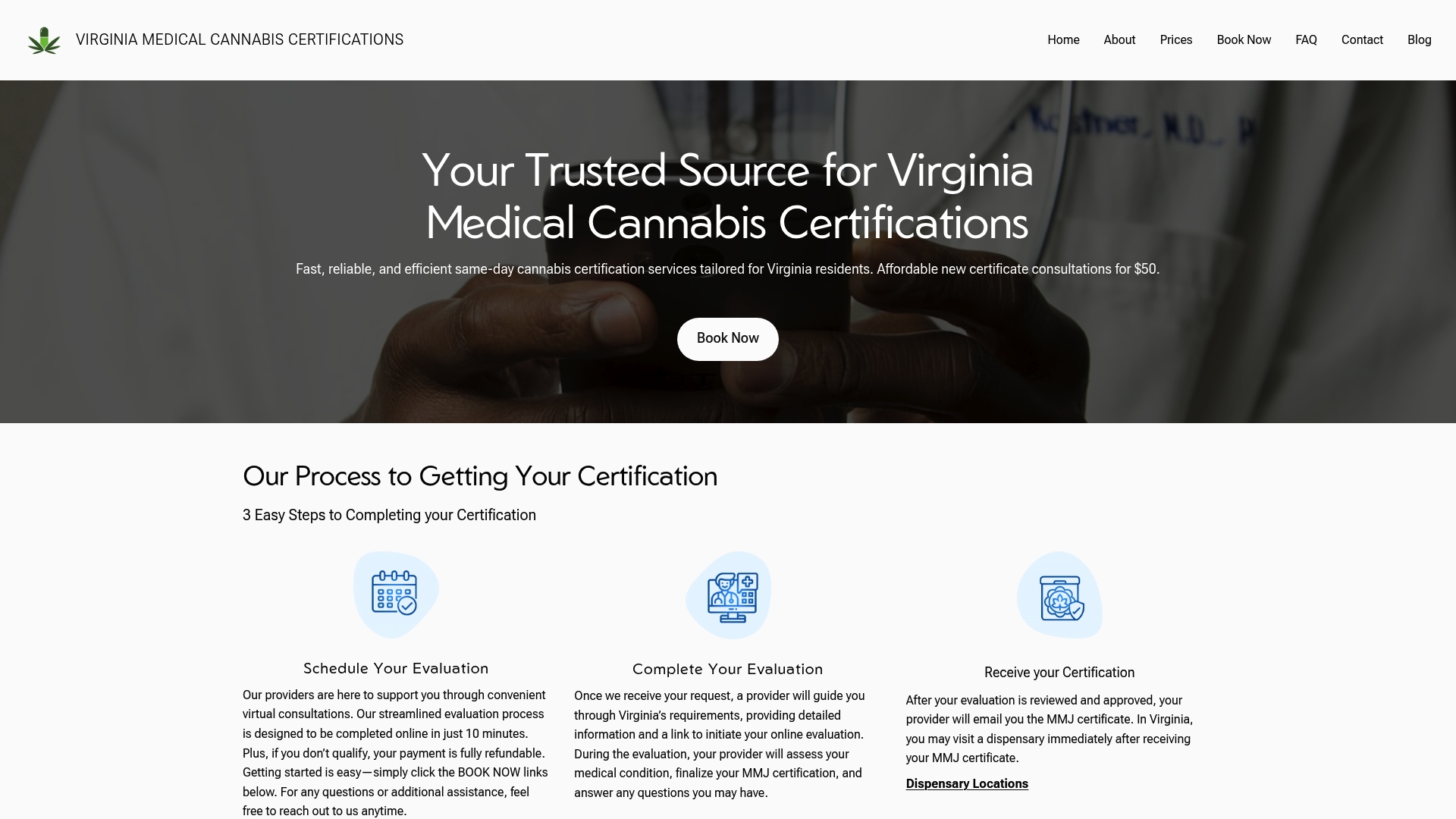
The fee is $50 for new patients and $40 for renewals, and it’s fully refunded if you’re not approved, so checking your eligibility carries no financial risk. Before booking, have your diagnosis history and current medication list ready; that’s what the evaluating clinician will actually want to review. You can see the step-by-step certification process and refund terms or head straight to the 10-minute online evaluation to check where you stand.
This article is general information, not a substitute for advice from a qualified doctor. Consult a qualified healthcare professional about your own circumstances before acting on anything here.
Sources
- Use of cannabis among 139 cluster headache sufferers
- Cluster attacks responsive to recreational cannabis and dronabinol
- Cannabis and Cannabinoid Therapies for Headache