Yes, adults with neuropathy can qualify for medical cannabis in Virginia. State law puts the decision in your practitioner’s hands rather than a fixed list, and Va. Code § 4.1-1601 lets a registered practitioner certify any condition they believe cannabis may help, including peripheral neuropathy.
You don’t have to sit in a waiting room to get there, either.
- Telehealth visits are legal for certification evaluations in Virginia.
- Once certified and registered, you can purchase from a licensed Virginia cannabis pharmacy.
The bottom line: a Virginia practitioner’s clinical judgment, not a government checklist, decides whether your nerve pain qualifies.
Key Takeaways
Virginia’s practitioner-discretion model means neuropathy patients qualify for medical cannabis based on clinical judgment, not a fixed condition list.
| Point | Details |
|---|---|
| Legal basis | Va. Code § 4.1-1601 lets practitioners certify neuropathy at their discretion, with no separate state approval step. |
| Telehealth is valid | Certification evaluations can happen entirely by video, helpful if mobility is limited. |
| Evidence is real but mixed | THC shows more consistent pain relief signals than CBD alone; individual response varies. |
| Pharmacy access is limited | Only registered patients can buy, and pharmacies like Capsule remain few and regionally spread. |
| Fast, low-risk certification | Virginia Medical Cannabis Certifications offers same-day online evaluations for $50, with a full refund if not approved. |
Table of Contents
- What Does Virginia’s Medical Cannabis Program Mean for Neuropathy Patients?
- Does Marijuana Help With Neuropathy? What the Research Shows
- How Do You Get Certified for Medical Marijuana in Virginia?
- Where Do You Buy Medical Cannabis in Virginia?
- Is Medical Marijuana Safe for Neuropathy? Dosing and Interaction Basics
- Why Virginia’s Approach to Neuropathy Certification Gets Overlooked
- Get Certified Same Day With Virginia Medical Cannabis Certifications
- Frequently Asked Questions
- Sources
What Does Virginia’s Medical Cannabis Program Mean for Neuropathy Patients?
Virginia dropped its old qualifying-conditions list years ago in favor of practitioner discretion. That shift, codified through legislation reflected in Va. Code § 4.1-1601, means a licensed practitioner can certify neuropathy, including diabetic or chemotherapy-induced nerve pain, based on your medical history and how the condition affects your life. There’s no separate approval step from a state board, no waiting on a bureaucratic yes or no.
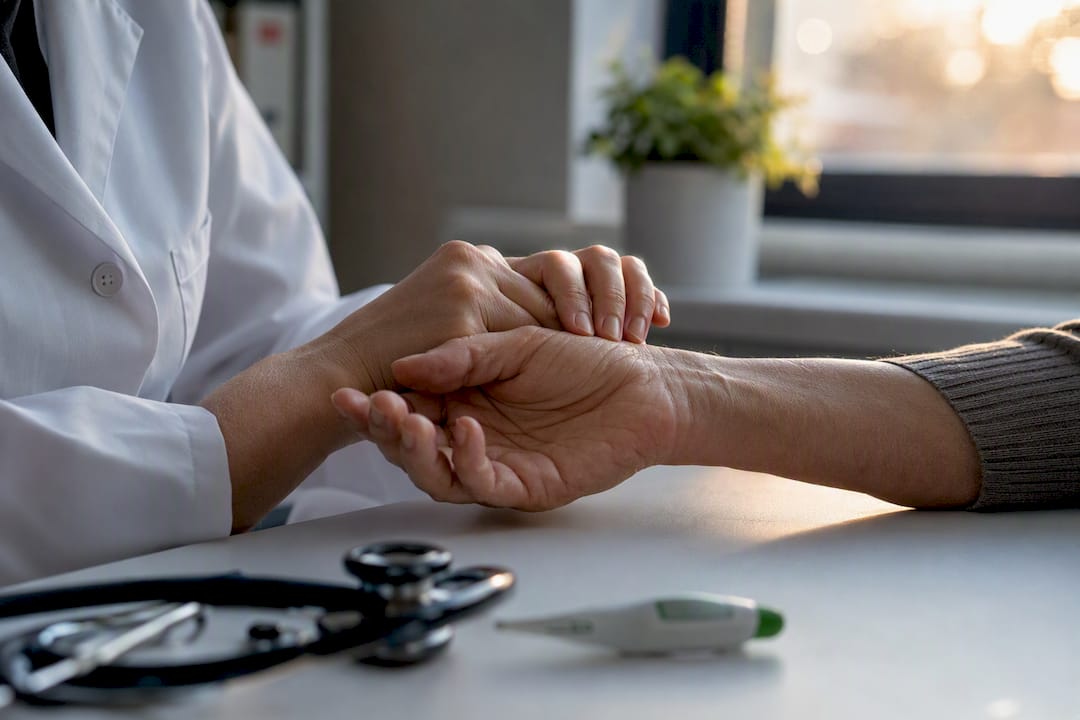
Certifications can come from an MD, DO, NP, or PA registered with Virginia’s cannabis program. The Virginia Board of Pharmacy oversees the broader Cannabis Pharmacy Program, including which pharmacies can dispense.
What you’ll need to register:
- Proof of Virginia residency (a driver’s license or state ID usually covers it).
- A valid photo ID matching your registration information.
- The written certification your practitioner issues after your evaluation.
A few practical numbers matter here. Certifications are typically valid for one year, and practitioners can authorize up to a 90-day supply at a time. The certification itself can happen the same day you complete an evaluation. Registry card processing, if your practitioner’s system requires one, sometimes takes a little longer, so ask upfront how your certification gets delivered and used.
Does Marijuana Help With Neuropathy? What the Research Shows
The honest answer is: it helps some people, some of the time, and researchers still don’t fully understand why it works better for one patient than another. Studies looking at THC-containing cannabinoids generally report reduced neuropathic pain in a meaningful share of patients, likely tied to how these compounds interact with pain signaling and inflammation. CBD’s track record is murkier. Some patients report relief, but the evidence for CBD alone treating neuropathic pain is thinner and more inconsistent than the evidence for THC.
A few caveats worth knowing before you get your hopes up:
- Study designs vary widely, which makes it hard to generalize results across all neuropathy types.
- Individual response differs a lot. What works for one patient’s diabetic neuropathy may do little for another’s.
- Dosing precision is still more art than science in most clinical settings.
None of that means cannabis is a guess. It means you approach it as a trial, not a miracle fix.
Pro Tip: Before your evaluation, write down specific, measurable goals: sleeping through the night, walking to the mailbox without pain, cutting nighttime flare-ups in half. Clinicians use these benchmarks to judge whether treatment is working, and so will you.
How Do You Get Certified for Medical Marijuana in Virginia?
Getting certified is more straightforward than most people expect. Here’s the process from start to finish:
- Gather your records. Pull together diagnosis documentation, a current medication list, and any specialist notes or imaging related to your neuropathy.
- Book a telehealth or in-person evaluation. Virginia law permits certifications through secure video visits, which matters if neuropathy makes travel or long sits uncomfortable.
- Complete the clinical interview. Expect questions about how neuropathy affects your sleep, mobility, and daily function, not just a symptom checklist.
- Receive your written certification. If the practitioner approves, you’ll get this document, often the same day, usually by email.
- Register with the state, if required. Some practitioners handle this step for you; others direct you to complete registration separately before you can buy from a pharmacy.
What to have on hand for the visit:
- Government-issued photo ID and proof of Virginia residency.
- A written or digital summary of your neuropathy diagnosis.
- A current medication list, including anything prescribed for pain or nerve function.
- Any relevant specialist reports (neurology, endocrinology, oncology).
The timeline difference is significant. A traditional in-office visit followed by mailed paperwork can drag on for a week or more. A same-day online certification, by contrast, can put a written certification in your inbox within about 10 minutes of your evaluation, letting you move on to registration and pharmacy access without the usual back-and-forth.
Where Do You Buy Medical Cannabis in Virginia?
Only registered patients can purchase from a licensed Virginia cannabis pharmacy, and as of mid-2026 the state still has a relatively small number of these pharmacies spread across its health-service regions, so access isn’t as convenient as a corner drugstore. Plan for a drive, especially outside the Richmond, Hampton Roads, and Northern Virginia corridors.
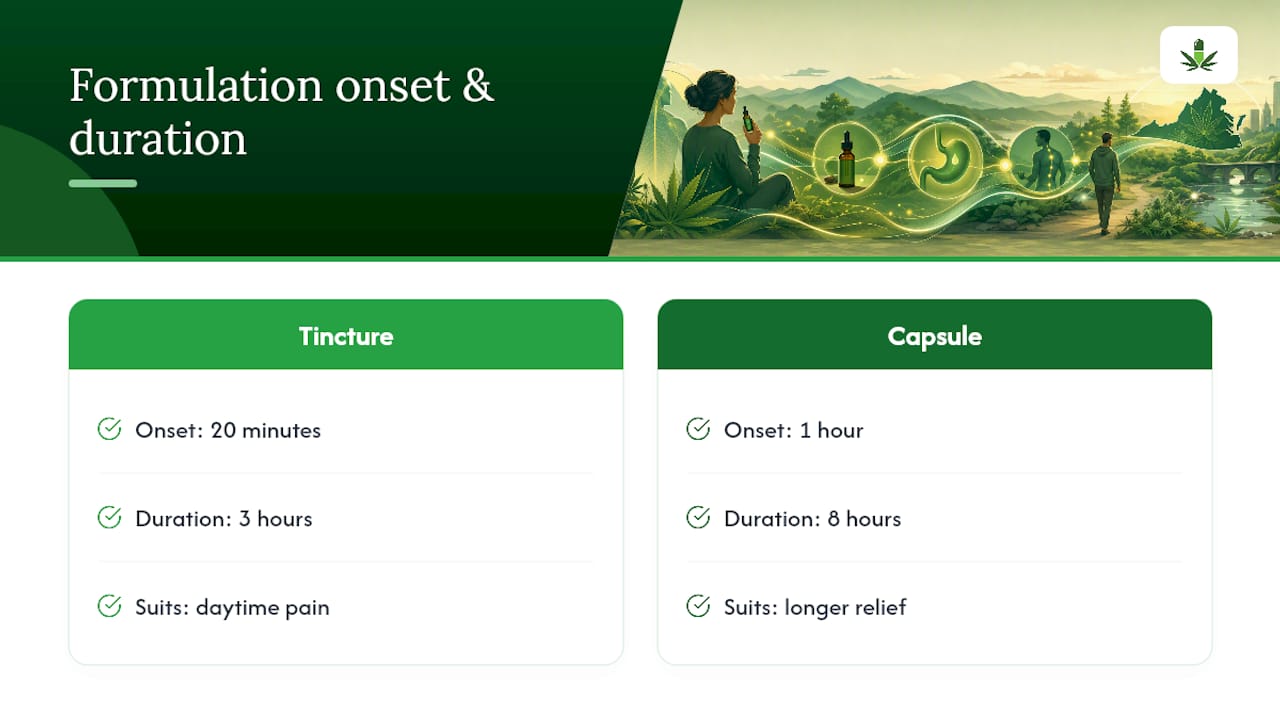
Once you’re there, the product menu covers oils, tinctures, capsules, transdermal patches, edibles, and vape cartridges. Smokable flower availability varies by pharmacy, so call ahead if that’s your preferred format.
Bring your registry card or written certification along with a photo ID. Pharmacists at these locations are trained to guide dosing and formulation choices, not just ring up a sale.
Capsule, a licensed Virginia cannabis pharmacy, operates as an example of the kind of pharmacist-guided dispensing model the state’s program relies on, where staff help match product formulation to a patient’s specific symptoms rather than just processing an order.
Pro Tip: Ask pharmacy staff how quickly each formulation takes effect and how long it lasts. A tincture that hits in 20 minutes and fades in three hours suits daytime pain differently than a capsule that takes an hour to kick in but lasts eight.
Is Medical Marijuana Safe for Neuropathy? Dosing and Interaction Basics
Start low and go slow. That’s not a cliché here, it’s the actual clinical approach most practitioners recommend, especially with rapid-onset formats like vapes compared to longer-acting capsules and edibles that take longer to feel but last much longer.
Cannabis can interact with medications common in neuropathy treatment. Talk to your certifying practitioner about:
- Sedatives or sleep aids, since combined effects can amplify drowsiness.
- Certain antidepressants used for nerve pain (like duloxetine or amitriptyline).
- Anticoagulants, where interactions are less understood and worth flagging explicitly.
Safety concerns that deserve blunt attention: THC affects reaction time and judgment, so driving under its influence is illegal and dangerous. Older adults face a higher fall risk with THC-heavy products, particularly early in a titration trial. If neuropathy already affects your balance, that risk compounds.
Titrate under supervision, track your response over two to four weeks, and bring those notes back to your practitioner. That documentation is what turns a guess into an informed treatment adjustment.
If you experience confusion, unusual heart rate changes, or worsening balance, stop and call your practitioner rather than waiting out your next scheduled visit.
Why Virginia’s Approach to Neuropathy Certification Gets Overlooked
Most articles on this topic treat “qualifying conditions” like a locked list, which is outdated thinking. Virginia moved to practitioner discretion years ago, and clinging to old static lists causes unnecessary anxiety for patients who assume they need a rare or severe diagnosis to qualify.
What actually determines your outcome is how well you communicate functional impact. A practitioner isn’t checking a box next to “neuropathy.” They’re weighing whether your nerve pain disrupts sleep, limits mobility, or keeps you from working, and whether cannabis is a reasonable option to try. Patients who show up with vague complaints get vaguer conversations. Patients who show up with specifics, and clear treatment history, get faster, more confident certifications.
The overrated advice? Waiting for a “worse” diagnosis before applying. The underrated move? Preparing your functional story like you would for a disability claim, concrete, measurable, and honest about what’s not working. That’s what actually moves the needle in a discretion-based system.
Get Certified Same Day With Virginia Medical Cannabis Certifications
You’ve read the legal basis, the evidence, and the steps. Here’s the fastest legal path through all of it: Virginia Medical Cannabis Certifications runs the entire evaluation online, and most patients finish in about 10 minutes.
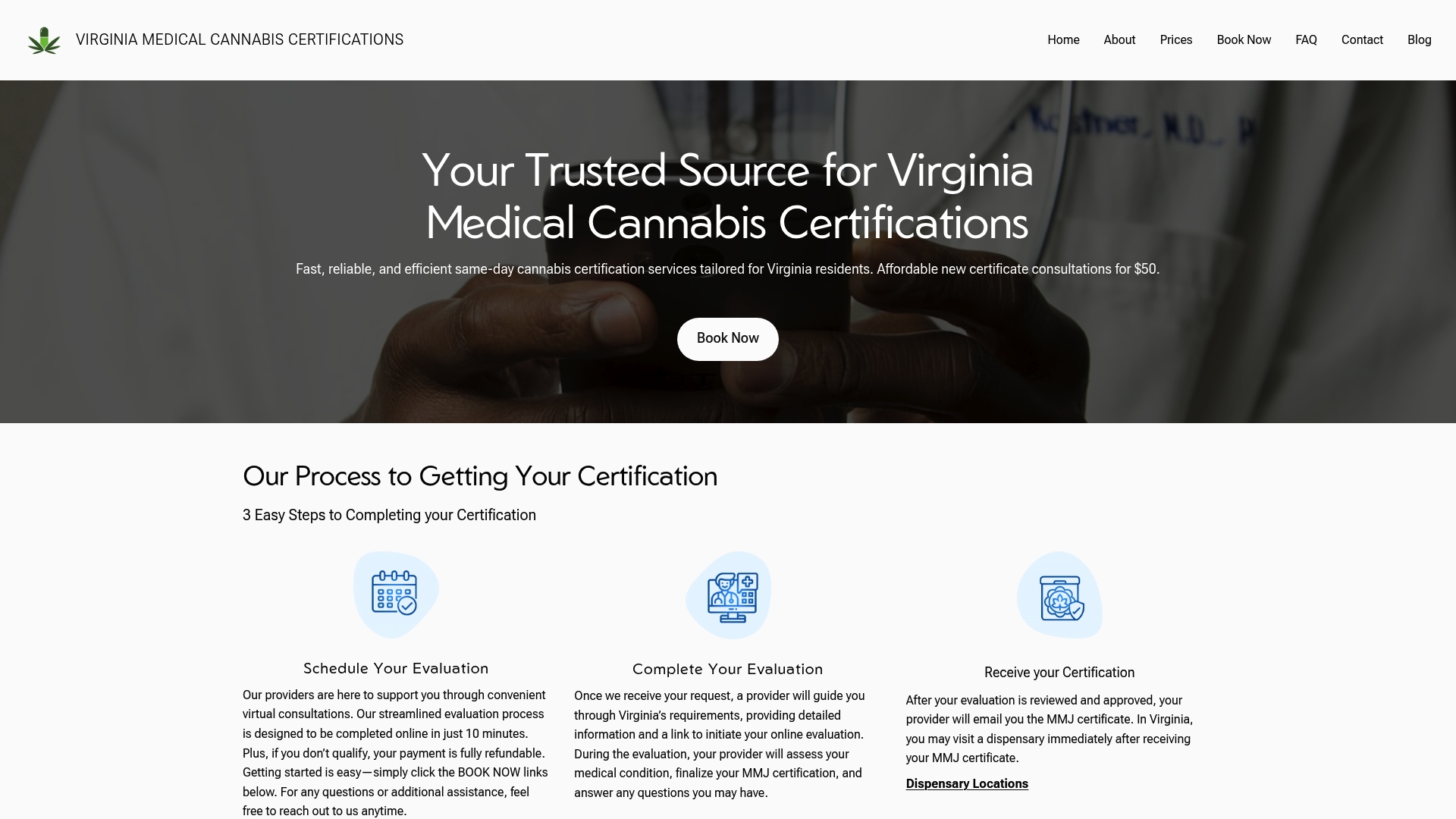
The new-patient fee is $50, and if your practitioner doesn’t approve you, you get a full refund, no fine print, no consolation credit. That certification, once issued, is exactly what state-registered pharmacies require to sell you medicine, so there’s no separate hoop between your evaluation and buying from a licensed Virginia cannabis pharmacy. Clinical decisions still rest entirely with the certifying practitioner’s discretion; nothing here is guaranteed approval, and the liability waiver and consent process spells out exactly what you’re agreeing to before your visit.
If neuropathy has already cost you enough time chasing appointments, start your same-day certification today and see whether you qualify before the day is out.
Frequently Asked Questions
Does marijuana help with neuropathy in the feet?
Many patients report reduced burning and tingling pain from THC-containing products, though response varies and no treatment works for everyone with peripheral neuropathy.
What strain of marijuana is good for neuropathy?
There’s no single best strain; your certifying practitioner or pharmacist can help match a product’s THC-to-CBD ratio and format to your specific symptoms and tolerance.
Can CBD help with neuropathy in the feet?
Evidence for CBD alone is weaker and more mixed than for THC-containing products, though some patients still find it useful, often alongside other treatments.
How long does a Virginia medical cannabis certification last?
Certifications are typically valid for one year, with practitioners authorizing supply refills up to every 90 days.
Do I need a specialist to certify neuropathy?
No. Any registered Virginia practitioner, including an MD, DO, NP, or PA, can issue the certification if they determine cannabis may help your condition.
This article is general information, not a substitute for advice from a qualified doctor. Consult a qualified healthcare professional about your own circumstances before acting on anything here.