Early clinical trials and patient reports show cannabinoids may ease restless legs syndrome symptoms for some people, but the evidence is still preliminary. If other treatments have failed you, a supervised, low-dose trial is realistic in Virginia through a practitioner recommendation. The right next step is a clinical conversation, not a dispensary trip on your own.
TL;DR:
- Current evidence for cannabis in treating restless legs syndrome is limited, with one small uncontrolled trial and anecdotal patient reports showing mixed results.
- A larger, well-designed randomized trial with a CBD-to-THC ratio of 5 to 1 is underway but has not yet reported findings.
- The most promising mechanism involves cannabinoids inhibiting glutamate release, which offers a different approach for treatment-resistant cases.
- Start with low doses in the evening and consult a healthcare professional to avoid medication interactions, especially with opioids, sedatives, or dopaminergic drugs.
- Virginia allows supervised, recommendation-based cannabis use for RLS, but no official treatment guidelines exist yet, and products should be carefully managed under medical advice.
Table of Contents
- What the Evidence Says About Restless Legs Cannabis in Virginia
- How Cannabis Might Ease Restless Legs Symptoms
- Risks, Side Effects, and Drug Interactions to Watch
- Getting a Medical Cannabis Recommendation in Virginia
- What Happens During a Cannabis Certification Evaluation
- A Cautious, Patient-First View on Trying Cannabis for RLS
- Ready to Talk to a Clinician About Restless Legs?
- Sources
What the Evidence Says About Restless Legs Cannabis in Virginia
The research on cannabinoids and restless leg syndrome is thin but genuinely interesting, and it’s worth knowing exactly how thin before you get your hopes up. An open-label trial published in the Journal of Neurology in 2026 tested a balanced low-dose formulation of THC and CBD in a small group of participants, most of whom had multiple sclerosis. Patients showed meaningful improvement on the International Restless Legs Syndrome Rating Scale and less time spent awake after initially falling asleep, according to a summary of the trial’s findings. That sounds promising until you notice the design: no placebo group, no blinding, and a sample size smaller than a typical college lecture.
Outside the lab, patient-reported experience tells a similar story of hope tempered by messy data. A retrospective chart review found that many identified RLS patients in the study population were already using medical marijuana, and among the smaller group using it specifically for restless legs, some reported real relief. But documentation across those records was inconsistent, making it hard to say how much benefit came from cannabis versus other factors like better sleep hygiene or reduced stress.
Better answers are coming. A randomized, placebo-controlled pilot trial, listed on ClinicalTrials.gov as NCT06863740, is currently recruiting and uses a defined 5:1 CBD-to-THC ratio. Results from that trial should tell clinicians far more about safety and real-world efficacy than the open-label data available today.
Here’s what that leaves you with right now:
- A small, uncontrolled trial showing symptom improvement on a low-dose THC-CBD combination
- Patient-reported relief that lacks consistent clinical documentation
- A properly randomized trial underway that has not yet reported results
- No FDA-approved cannabis product for RLS and no formal treatment guideline recommending it
None of that means cannabis won’t help you. It means the honest answer is “might help, worth discussing,” not “proven treatment.”
How Cannabis Might Ease Restless Legs Symptoms
The leading theory involves glutamate, a neurotransmitter that revs up activity in movement-related brain regions. Cannabinoids appear to inhibit glutamate release in the striatum, according to a mechanistic review of cannabinoid effects, offering a biological pathway completely different from how dopamine agonists or gabapentinoids work. That distinction matters clinically: if your restless legs haven’t responded to standard drug classes, a different mechanism is at least a reasonable thing to explore with your doctor.

The formulation used in the strongest available trial data was a balanced, low-dose blend, delivered orally or as a spray, not a high-THC product meant to get you high. That detail gets lost in casual conversation about “trying weed for RLS.”
At a Virginia dispensary, you’ll typically encounter several product types:
- Oil or tincture: Easy to titrate drop by drop, absorbed sublingually, good for precise dosing but slower onset.
- Oral spray: Similar dosing control to tincture, often preferred for consistency.
- Edibles: Longer onset, longer duration, useful for overnight symptom coverage but harder to adjust quickly.
- Vape products: Fast onset, useful if symptoms flare suddenly at bedtime, but not ideal for people avoiding inhalation.
For nocturnal RLS specifically, an oil or spray taken in the evening gives you more control than an edible you can’t take back once swallowed; some patients also consider herbal supplements like valerian root for additional nighttime symptom support. A resource on strains chosen for sleep support walks through timing and product selection in more detail.
Pro Tip: Start with the lowest dose your product allows, take it earlier in the evening than you’d expect, and give it at least a week before judging whether it’s working. Restless legs symptoms fluctuate night to night, so one bad night doesn’t mean the product failed.
There’s no consensus dosing protocol yet, which is exactly why this should happen under a clinician’s eye rather than through trial and error with whatever a budtender recommends.
Risks, Side Effects, and Drug Interactions to Watch
Trial data and clinical reports point to a fairly mild short-term side effect profile: dizziness, irritability, mild confusion, and complaints about taste were the most commonly documented issues in the Journal of Neurology exploratory trial. What’s missing is long-term data on cognitive or balance effects in people specifically living with RLS, especially older adults already managing fall risk.
Interactions deserve real attention before you start:
- CNS depressants, opioids, and benzodiazepines can produce additive sedation when combined with cannabis, raising fall risk and impairing alertness the next day.
- Gabapentin and pregabalin, the most common RLS medications, may compound drowsiness and dizziness when paired with cannabinoids.
- Dopaminergic drugs used for RLS haven’t been studied alongside cannabis for augmentation risk, the worsening of symptoms over time that’s a known problem with dopamine agonists. Cannabinoids’ role here is simply unproven, not confirmed safe.
- Certain antidepressants and antihistamines are already known to aggravate restless leg symptoms, so a full medication review matters regardless of whether cannabis enters the picture.
Avoid driving until you know how a product affects you, and skip cannabis entirely if you’re pregnant, breastfeeding, or have a personal history of psychosis. If your case involves multiple medications or complex health conditions, loop in a specialist rather than managing this alone.
Getting a Medical Cannabis Recommendation in Virginia
Virginia doesn’t operate off a fixed list of qualifying conditions the way many states do. Instead, the state uses a practitioner-recommendation standard: a licensed MD, DO, NP, or PA can recommend cannabis for any condition they believe it may help, restless legs syndrome included, according to a summary of Virginia’s cannabis program. That’s a meaningfully different, and more flexible, system than states requiring RLS to appear on an approved diagnosis list.
Before your evaluation, gather:
- A summary of your RLS history, including when symptoms started and how they affect your sleep
- A list of treatments you’ve already tried, prescription and over-the-counter
- Your current medication list, since interaction review matters here
- Contact information for your primary care provider, if you have one
Most Virginians complete this through an online evaluation rather than an in-person visit, and same-day approval is common when the clinical picture is clear. Once you’re registered, you can purchase medical cannabis products at licensed Virginia pharmacies. That’s a separate system from adult-use retail sales, which operate on their own timeline and rules, so don’t assume general retail availability applies to your situation.
What Happens During a Cannabis Certification Evaluation
A typical online evaluation runs about 10 minutes and covers your symptom history, prior treatments, and current medications, giving the clinician enough to judge whether cannabis is a reasonable option for your restless legs. Virginia Medical Cannabis Certifications provides same-day consultations, quick 10-minute online clinical evaluations, affordable $50 pricing, and a fully refundable fee if applicants do not qualify, which removes a lot of the guesswork from getting started.

After certification, the real work begins: a conversation with your clinician about formulation, starting dose, and a follow-up plan to track whether symptoms actually improve. Documentation from that process, approval criteria and refund details included, gives you a clearer record than trying products on your own.
A Cautious, Patient-First View on Trying Cannabis for RLS
The data here is early, not settled, and I think patients deserve that framed honestly rather than oversold. What convinces me a supervised trial is worth considering isn’t a breakthrough study. It’s the combination of a plausible mechanism, real patient reports, and a low-risk starting dose, provided someone is tracking the results with you and adjusting as needed.
— Jonathan
Ready to Talk to a Clinician About Restless Legs?
Getting to that clinical conversation shouldn’t take weeks or cost you a full paycheck. Virginia Medical Cannabis Certifications runs on a $50 flat fee for new patients, with a full refund if you don’t qualify, so there’s no financial risk in simply asking whether a supervised trial makes sense for your symptoms.
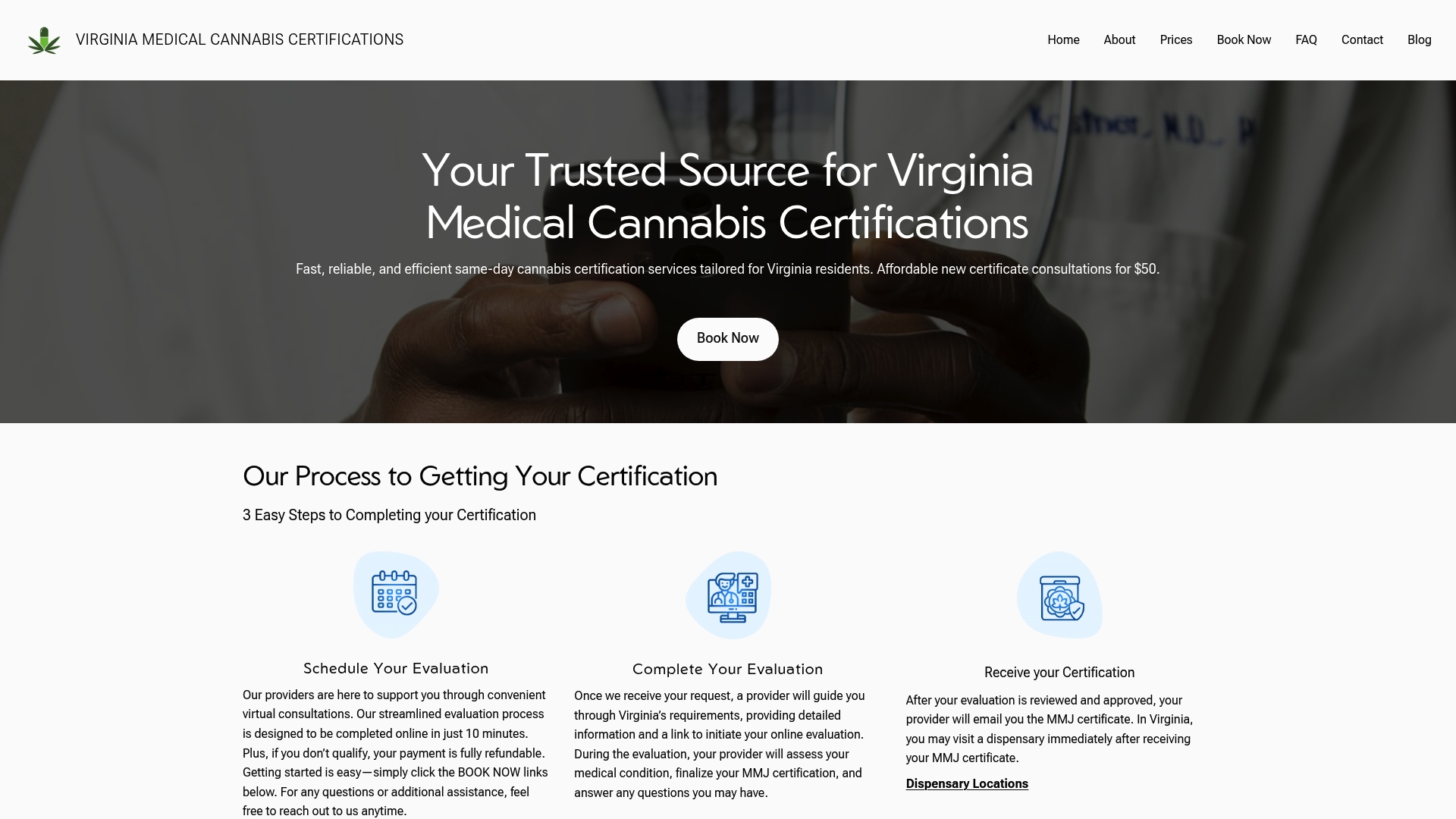
The evaluation happens online, takes about 10 minutes, and same-day approval is standard when your history is straightforward. That speed matters when you’re dealing with nightly symptoms that steal your sleep. Once approved, your certificate arrives quickly enough to get you into a licensed Virginia pharmacy without a long wait. If restless legs have worn down your patience with slower treatment options, start your evaluation today and bring your questions about dosing and formulation straight to the clinician reviewing your case.
This article is general information, not a substitute for advice from a qualified doctor. Consult a qualified healthcare professional about your own circumstances before acting on anything here.
Sources
For readers who want the primary material: the registered pilot trial protocol lives at ClinicalTrials.gov under NCT06863740, the mechanistic rationale is detailed in this PubMed review, and Virginia’s practitioner-recommendation framework is outlined in this state program summary.