
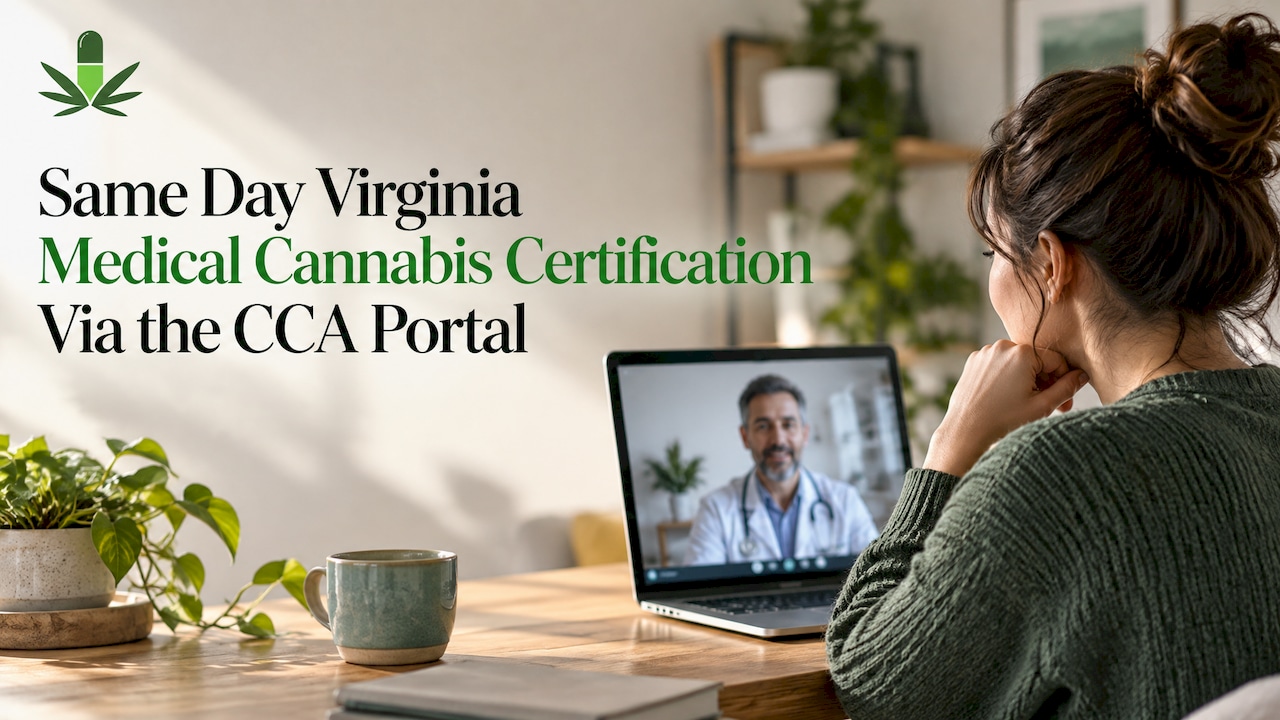
You can get a valid Virginia medical cannabis written certification the same day through a licensed telehealth evaluation. A typical visit runs about 10 minutes, and a fee is charged for new patient certifications and a lower fee for renewals. Book an eligible telehealth evaluation, complete the video visit, and claim your certification in the CCA Portal once your practitioner issues it.
Table of Contents
- Who qualifies and what Virginia law requires
- Step-by-step: what to expect in a same-day online evaluation
- Limits and rules that still apply after certification
- Why speed matters when you’re waiting for relief
- Ready to book your same-day certification?
- Sources
- FAQ
Who qualifies and what Virginia law requires
Virginia keeps its eligibility rules fairly simple, but the clinical and legal standards behind them matter. According to the Cannabis Control Authority, qualifying patients must be Virginia residents, either permanent or temporary, at least 18 years old, or have a parent or legal guardian involved if they are a minor. You will also need a valid government-issued ID, and a licensed practitioner has to determine that your condition may benefit from cannabis. There is no fixed list of approved conditions. Many patients pursue certification for chronic pain, anxiety, or PTSD, but the decision comes down to the practitioner’s clinical judgment during your visit.
Not every clinician can issue these certifications. Only certain licensed practitioners, including MDs, DOs, physician assistants, and nurse practitioners, are authorized to make this call. If you’re not sure what might qualify, our page on Virginia medical cannabis qualifying conditions walks through common examples.
For the visit to count as valid telemedicine, Virginia Code § 4.1-1601 requires real-time, interactive audiovisual technology, not a phone call or a form you fill out alone. The practitioner has to hold the same standard of care they would in person.
- You must be a Virginia resident, 18 or older, or have guardian consent.
- Your practitioner must use real-time video, not audio-only or asynchronous forms.
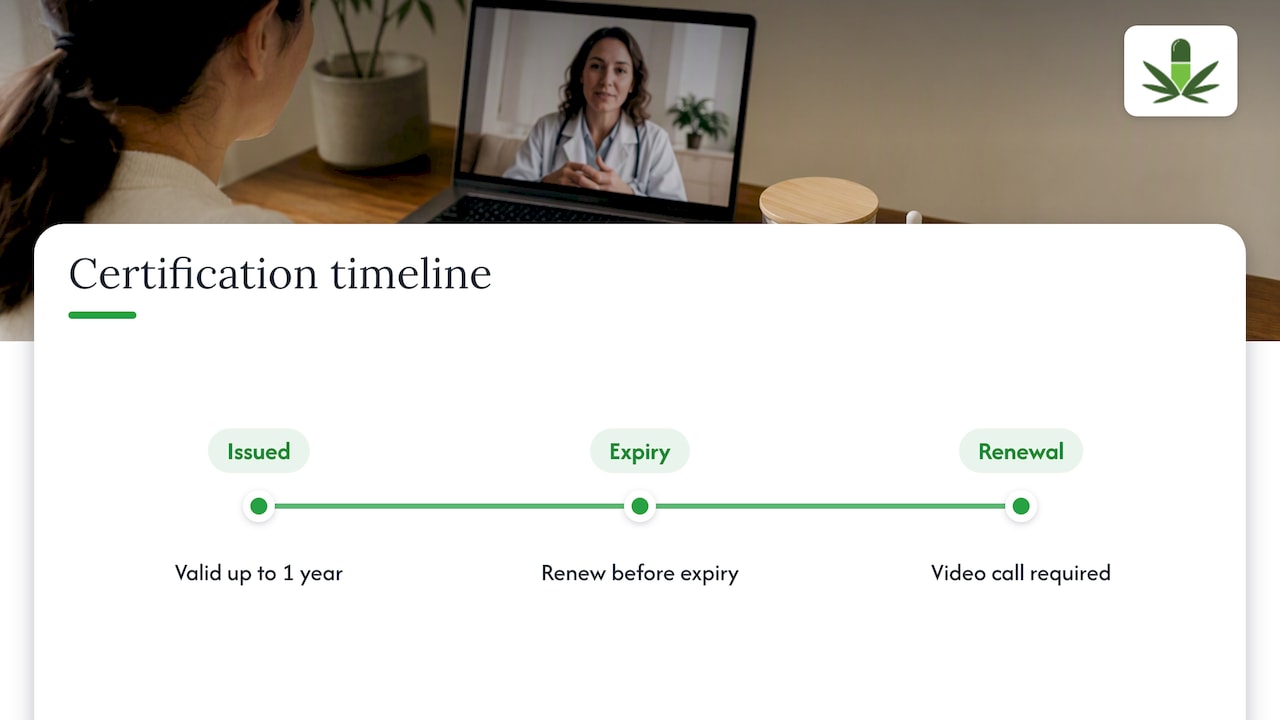
- A valid certification, once issued, is generally good for up to one year.
Step-by-step: what to expect in a same-day online evaluation
The process is more straightforward than most patients expect. Before your visit, gather a few basics.
- Have a government-issued ID ready, along with proof of Virginia residency if you’re a temporary resident.
- Jot down a brief medical history and a list of current medications.
- Make sure your device has a working camera, since real-time video is required by law.
- Log in a few minutes early to avoid rushing the connection.
During the call, the practitioner will review your history, ask about your symptoms, and use clinical judgment to determine whether cannabis may help. If you’re approved, the certification is issued right there. According to the CCA Portal Help Guide, you’ll receive two emails: one confirming your account, and one titled “Written Certification for Medical Cannabis Issued.” That second email contains an electronic certification number you use to claim your certification in the Portal and download your digital card.
As of December 1, 2025, this entire process runs through the CCA Portal instead of paper forms, which means fewer delays and no physical documents to lose. Existing certifications issued before that date stay valid until their original expiration.
Pro Tip: Before booking, check that your practitioner is listed in Virginia’s License Lookup so you know the visit will meet the state’s clinical standard.
Limits and rules that still apply after certification
Getting certified quickly doesn’t mean the rules disappear. A written certification confirms that cannabis may help your condition, but it doesn’t remove Virginia’s possession and usage limits at the dispensary level. Patients are still expected to follow whatever supply limits and purchasing rules their dispensary applies under state guidance, and certification alone does not authorize unlimited purchases.
Certifications also come with a shelf life. Since they’re generally valid for up to one year, you’ll need to renew before it expires or risk losing access at the dispensary counter. Renewals go through the same telemedicine standard as a new visit, meaning a real-time video call with a licensed practitioner is still required, not a shortcut.
It’s worth remembering that a certification is not the same as a prescription. It documents a practitioner’s determination that cannabis may be appropriate for your condition, but it doesn’t guarantee a specific product, dosage, or outcome. If your condition changes or you have questions about your renewal timeline, our liability waiver and terms page outlines what patients should know about duration and renewal expectations.
Why speed matters when you’re waiting for relief
Waiting weeks for a medical appointment is hard when you’re dealing with chronic pain, anxiety, or PTSD symptoms every day. A same-day telehealth evaluation means you’re not putting your life on hold for paperwork. Ten-minute visits, a straightforward refund policy if you don’t qualify, and consistently high patient ratings all point to a process built around getting people answers quickly rather than making them wait.
One patient description that sticks with us: someone dealing with persistent pain who assumed certification would take weeks was surprised to have their certification number in hand before lunch. That kind of turnaround changes how people experience the process, from dreaded errand to manageable step.
— Jonathan
Ready to book your same-day certification?
The service offers a 10-minute telehealth evaluation with same-day certification for new patients and renewals. Evaluations come with a refund if you are not approved, so there’s no financial risk in finding out where you stand.

To get started, visit our services page to book your evaluation, have your ID and medical history ready, and watch your email for the CCA Portal messages once your practitioner issues your certification. Veterans can apply a discount code at checkout, and certificates are typically delivered fast enough for same-day dispensary access. If your card is expiring soon, our renewal page gets you through the same process in minutes.
Sources
For anything beyond this guide, go straight to the state’s own resources rather than relying on secondhand summaries.
- Patients & Caregivers — Virginia Cannabis Control Authority
- § 4.1-1601. Certification for use of cannabis for treatment — Code of Virginia
This article is general information, not a substitute for advice from a qualified doctor. Consult a qualified healthcare professional about your own circumstances before acting on anything here.
FAQ
How fast can I get a Virginia medical cannabis certification?
Same-day certification is possible through a real-time telehealth visit, with clinical evaluations typically taking about 10 minutes. Once approved, your practitioner issues the certification through the CCA Portal, and you receive an email with your certification number right away.
Do I need to be a Virginia resident to qualify?
Yes, Virginia’s official guidance requires patients to be Virginia residents, either permanent or temporary, and at least 18 years old or have guardian consent if a minor. You’ll also need a valid government-issued ID during your telehealth visit.
How long does a Virginia medical cannabis certification last?
A written certification issued under Virginia law is generally valid for up to one year from the date it’s issued. You’ll need a new telehealth evaluation to renew before it expires.
What happens if I don’t qualify during my evaluation?
Virginia Medical Cannabis Certifications offers a full refund if a patient is not approved during their evaluation, so there’s no cost if you don’t qualify. This removes much of the financial hesitation around trying the process.
Is a phone call enough for a valid telehealth certification?
No, Virginia Code § 4.1-1601 requires real-time, interactive audiovisual technology for a certification to be valid, not an audio-only call. Practitioners must meet the same standard of care they would use in an in-person visit.