
Cannabis is not a safe substitute for prescribed antihypertensives, and combining the two without clinical supervision carries real cardiovascular risks. Whether you’re already on blood pressure medication or exploring cannabis for a qualifying condition, here’s what you need to know before your next step.
The short version:
- Clinical guidance warns that cannabis combined with antihypertensives can produce additive blood-pressure lowering, raising your risk of dizziness, fainting, and lightheadedness.
- 2025 meta-analysis data shows chronic oral CBD is associated with approximately a 7.01 mmHg systolic reduction in small trials, but evidence is graded low to moderate.
- Do not stop or reduce your blood pressure medication without your prescriber’s approval.
- Tell every clinician, including a certifying provider, about all medications you take.
- Monitor your blood pressure closely when starting or changing cannabis, and seek urgent care for fainting or syncope.
In Virginia, hypertension alone is rarely an accepted qualifying condition for medical cannabis certification. Certification depends on listed qualifying diagnoses such as chronic pain, PTSD, or anxiety.
Table of Contents
- How does cannabis affect blood pressure variability and daily patterns?
- Can cannabis replace antihypertensives, or is it only an adjunct?
- What other risks do hypertensive patients face beyond blood pressure changes?
- What Virginia cannabis law means for blood pressure patients
- How often should you monitor blood pressure when using cannabis?
- Non-cannabis options that complement blood pressure management
- Key Takeaways
- What patients and clinicians often miss about this combination
- Virginia Medical Cannabis Certifications can help you get certified safely
- Useful sources
How does cannabis affect blood pressure variability and daily patterns?
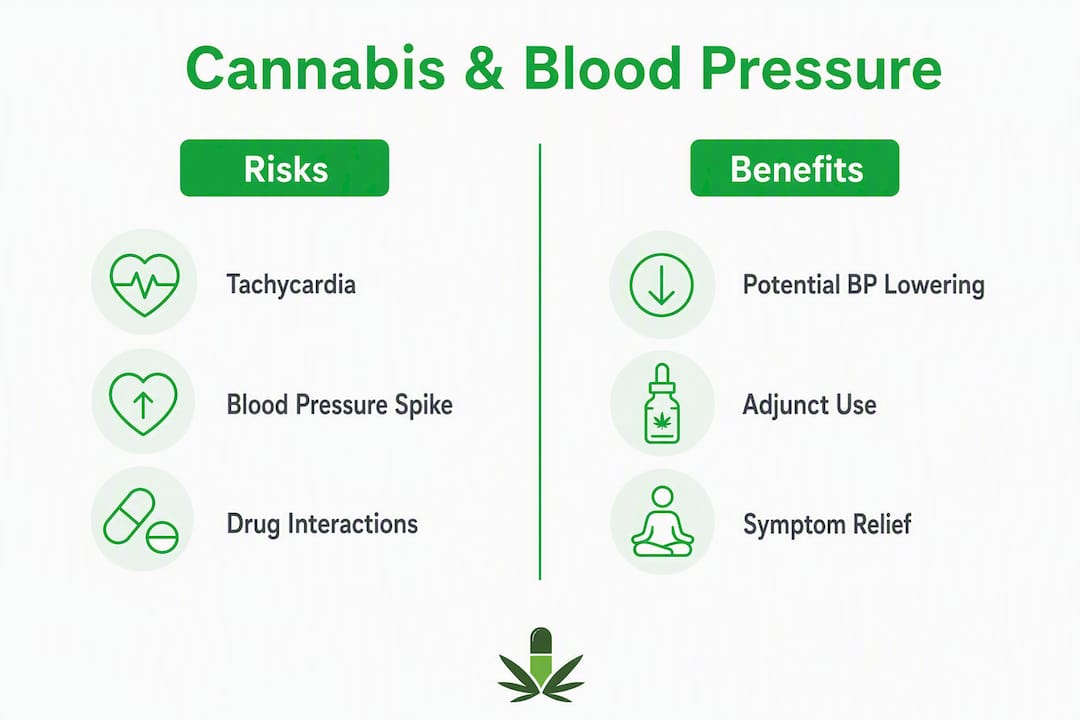
Blood pressure naturally rises and falls throughout the day in a predictable rhythm. Cannabis disrupts that pattern in ways that are hard to predict. THC produces a biphasic cardiovascular response: an initial spike in heart rate and a transient blood pressure rise, followed by vasodilation and a drop in pressure. That swing can be significant enough to cause dizziness when you stand up quickly, a condition called orthostatic hypotension.

CBD behaves differently. Rather than direct hemodynamic effects, it inhibits CYP3A4 and CYP2C9 enzymes, which your body uses to metabolize drugs like amlodipine and losartan. When those enzymes are inhibited, antihypertensive drug levels can rise or fall unpredictably, making your medication either more potent or less effective than intended.
Can cannabis replace antihypertensives, or is it only an adjunct?
The evidence does not support cannabis as a standalone treatment for hypertension. A Journal of Cannabis Research systematic review of four RCTs using 225–600 mg/day of oral CBD found systolic reductions in small trials, but cited major heterogeneity and short durations of just two hours to five weeks. That is not enough evidence to replace a proven medication regimen.
Supervised adjunct use is the only defensible approach right now. If you have a qualifying condition and want to add cannabis, your prescriber should know your full medication list before you start.
What other risks do hypertensive patients face beyond blood pressure changes?
Tachycardia is common with THC, especially at initiation. For patients already managing arrhythmia risk or taking beta-blockers like propranolol, that added heart rate variability matters. Older adults on alpha-blockers face a heightened fall risk from orthostatic hypotension. Cannabis can also increase sedation when combined with certain antihypertensives, compounding impairment.
The University of Washington ADAI specifically flags ACE inhibitors, ARBs, beta-blockers, alpha-blockers, and diuretics as drug classes where CBD can decrease effectiveness or increase adverse effects. That covers most common antihypertensive regimens.
What Virginia cannabis law means for blood pressure patients
Virginia permits medical cannabis for a broad range of qualifying conditions, but hypertension by itself is not typically listed. Conditions like chronic pain, PTSD, anxiety, and cancer are the primary qualifying diagnoses. If you have high blood pressure alongside a qualifying condition, that comorbidity is what opens the door to certification, not the hypertension alone.
Virginia also allows adults 21 and older to purchase cannabis recreationally, but recreational use carries no clinical oversight. If you’re on blood pressure medication, a certified medical evaluation is the safer path.
How often should you monitor blood pressure when using cannabis?
The highest-risk window is when you first start cannabis or change your dose alongside antihypertensives. Practical monitoring protocols used in clinical settings include:
- Baseline orthostatic vitals before starting cannabis (sitting, then standing)
- Twice-daily home readings for the first one to two weeks, including one reading taken after standing
- Clinician follow-up within 7–14 days of starting or adjusting cannabis dose
- Avoid driving until you know how the combination affects you
- Seek urgent care for fainting, chest pain, or sustained dizziness
A validated home monitor like the Omron series or Withings BPM Connect makes this practical. Log every reading with the time and whether you had used cannabis in the prior two hours.
Non-cannabis options that complement blood pressure management
If you’re not yet eligible for certification or want to reduce cardiovascular risk while using cannabis, several evidence-backed approaches work alongside antihypertensives. The DASH diet, regular aerobic exercise, sodium reduction, and stress management techniques like mindfulness-based stress reduction (MBSR) all have clinical support. Your prescriber may also consider medication adjustments before adding cannabis to the picture.
Pro Tip: Bring a two-week blood pressure log to any medical visit, including a cannabis certification evaluation. It gives the clinician a real picture of your baseline and makes the conversation about safety much more productive.
Key Takeaways
Cannabis can lower blood pressure in some contexts, but the evidence is limited and the interaction risks with antihypertensives are real, making clinical supervision non-negotiable before combining the two.
| Point | Details |
|---|---|
| CBD effect size | Chronic oral CBD linked to approximately a 7.01 mmHg systolic reduction in small trials; evidence graded low to moderate. |
| Drug interaction risk | ACE inhibitors, beta-blockers, calcium-channel blockers, alpha-blockers, and diuretics all carry documented additive or metabolic interaction risks with cannabis. |
| Virginia certification | Hypertension alone rarely qualifies; chronic pain, PTSD, and anxiety are accepted qualifying diagnoses in Virginia. |
| Monitoring priority | Baseline orthostatic vitals plus twice-daily home readings for 1–2 weeks at initiation are the standard clinical approach. |
| Virginia Medical Cannabis Certifications | Offers same-day online evaluations for $50 with a full refund if you don’t qualify, and clinicians review your medication list before certifying. |
What patients and clinicians often miss about this combination
The conversation around cannabis and blood pressure medication tends to focus on whether CBD lowers blood pressure. That’s the wrong question for most patients. The real clinical issue is unpredictability.
THC’s biphasic response means your blood pressure can spike before it drops, which is exactly the wrong pattern for someone whose antihypertensive is already working. Add CBD’s CYP enzyme inhibition and you have a situation where your medication’s effective dose is shifting without any prescription change. That’s not a theoretical risk. Drugs.com’s interaction data for amlodipine/benazepril flags it directly.
What most patients also underestimate is the product composition question. High-CBD extracts carry metabolic interaction risk. THC-dominant products carry acute hemodynamic risk. The two profiles are different enough that a clinician needs to know exactly what you’re using, not just “cannabis.”
For Virginia residents, the practical takeaway is this: if you have a qualifying condition and want to pursue certification, bring your full medication list, your recent blood pressure readings, and your symptom history. That preparation turns a 10-minute evaluation into a genuinely useful clinical conversation rather than a checkbox exercise.
Virginia Medical Cannabis Certifications can help you get certified safely
If you have a qualifying condition and want clinical guidance before adding cannabis to your routine, Virginia Medical Cannabis Certifications offers same-day online evaluations for $50, with a full refund if you don’t qualify. Renewals are $40.
The clinicians review your medication list during the evaluation, including any antihypertensives, and will not recommend stopping prescribed medications without direct oversight. You get your certificate by email, ready for dispensary access the same day. Veterans receive a discount with a coupon code.
Book your online evaluation today. Bring your medication list, recent blood pressure readings, and a summary of your qualifying condition. The whole process takes about 10 minutes.
This article is general health information, not medical advice. Confirm current Virginia cannabis regulations and your personal eligibility with a qualified clinician or the Virginia Cannabis Control Authority.
Useful sources
The sources below are listed in practical reading order: quick clinical guidance first, then systematic reviews for deeper evidence.
- Drug interactions: cannabis and amlodipine/benazepril | Drugs.com
- Drug interactions: cannabis and propranolol | Drugs.com
- Marijuana and Prescribed Medications | University of Washington ADAI
- Medical Cannabis adverse effects and drug interactions | DC Dept. of Health
- CBD and CYP enzyme interactions | PMC
- Biphasic cardiovascular response to THC | PubMed
- Oral CBD and blood pressure: systematic review | Journal of Cannabis Research
- CBD effects on blood pressure: meta-analysis | Revista Brasileira de Farmacognosia
| Source | Type | Best for |
|---|---|---|
| Drugs.com interaction pages | Clinical drug interaction database | Quick interaction checks by medication name |
| UW ADAI summary | Clinical review | Overview of affected drug classes |
| DC Dept. of Health PDF | Regulatory/clinical guidance | Patient-facing safety and monitoring language |
| Journal of Cannabis Research review | Systematic review (RCTs) | Evidence on oral CBD and BP reduction |
| Revista Brasileira meta-analysis | Meta-analysis | Numeric effect sizes (7.01 mmHg systolic) |
| PMC CYP review | Pharmacology review | Metabolic interaction mechanisms |
Recommended
- Can Smoking Weed Cause Pressure in Your Head? – Virginia Medical Cannabis Certifications
- Can THC Cause Low Blood Sugar? What You Need to Know – Virginia Medical Cannabis Certifications
- CBC vs CBG vs CBD: A Virginia Patient’s Guide – Virginia Medical Cannabis Certifications
- CBDA vs CBD: Which One Should You Try? – Virginia Medical Cannabis Certifications