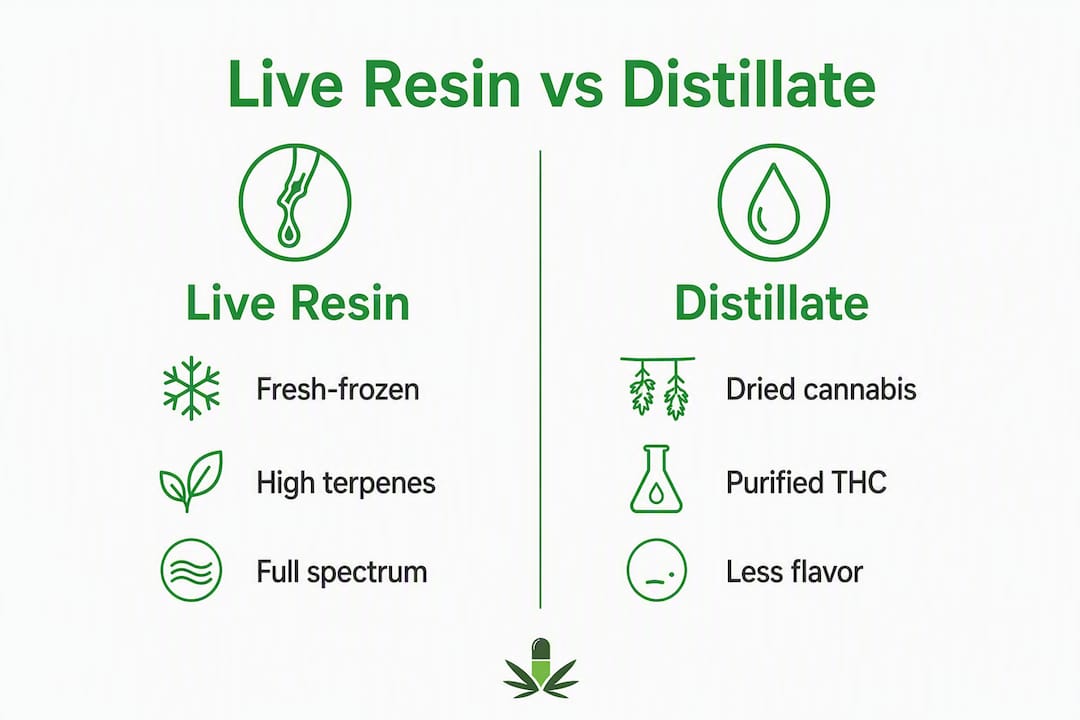
If you want the richest flavor and a fuller, more complex experience, live resin is your concentrate. If you want the highest THC percentage and consistent, predictable dosing, distillate is the practical choice. The decision really comes down to what you’re trying to get out of your session.
- Live resin: Made from flash-frozen cannabis, it retains a significant amount of terpenes and delivers a strain-true flavor. Best for patients managing complex symptoms or consumers who prioritize sensory experience.
- Distillate: A highly refined THC oil testing at 85–95% THC with near-zero original terpenes. Best for high-THC dosing, edible infusions, and anyone who needs consistent, measurable relief.
Virginia Medical Cannabis Certifications publishes this guide to help Virginia patients make informed choices at the dispensary. The information here is grounded in lab data and industry sourcing, not marketing copy.
Table of Contents
- How do live resin and distillate compare at a glance?
- What is live resin and how is it made?
- What is distillate and why does it lose its flavor?
- What do the actual numbers say about potency and terpenes?
- How do flavor and effects differ, and what does that mean for patients?
- What formats do these concentrates come in?
- What should you expect to pay, and how do you store these products?
- How do you verify quality and safety before buying?
- How do you decide which concentrate is right for you?
- Key Takeaways
- What patients often get wrong about these two concentrates
- Useful sources for deeper reading
How do live resin and distillate compare at a glance?
| Factor | Live Resin | Distillate |
|---|---|---|
| Starting material | Fresh-frozen cannabis | Dried and cured flower or trim |
| Extraction method | Solvent-based (butane/propane), cold | Solvent extraction + short-path or wiped-film distillation |
| Terpene content | naturally preserved to a notable degree | Near-zero original; terpenes often re-added |
| THC potency range | moderate to high | higher potency range |
| Flavor and aroma | Rich, complex, strain-specific | Neutral to mild; depends on added terpenes |
| Typical formats | Sauce, badder, diamonds, vape carts | Vape carts, syringes, capsules, edibles |
| Common uses | Connoisseurs, full-spectrum patients | High-THC dosing, edibles, budget-conscious users |
| Price (0.5g cart) | generally higher | generally lower |
| Shelf life | Moderate; benefits from cool, dark storage | Longer; more shelf-stable |
| Safety and testing | COA required; residual solvent panel critical | COA required; check for added terpene origin |
What is live resin and how is it made?
Live resin is a solvent-based cannabis extract made from plant material that was flash-frozen immediately after harvest rather than dried and cured. That single step, freezing the plant within hours of cutting, is what separates it from every other resin on the market.
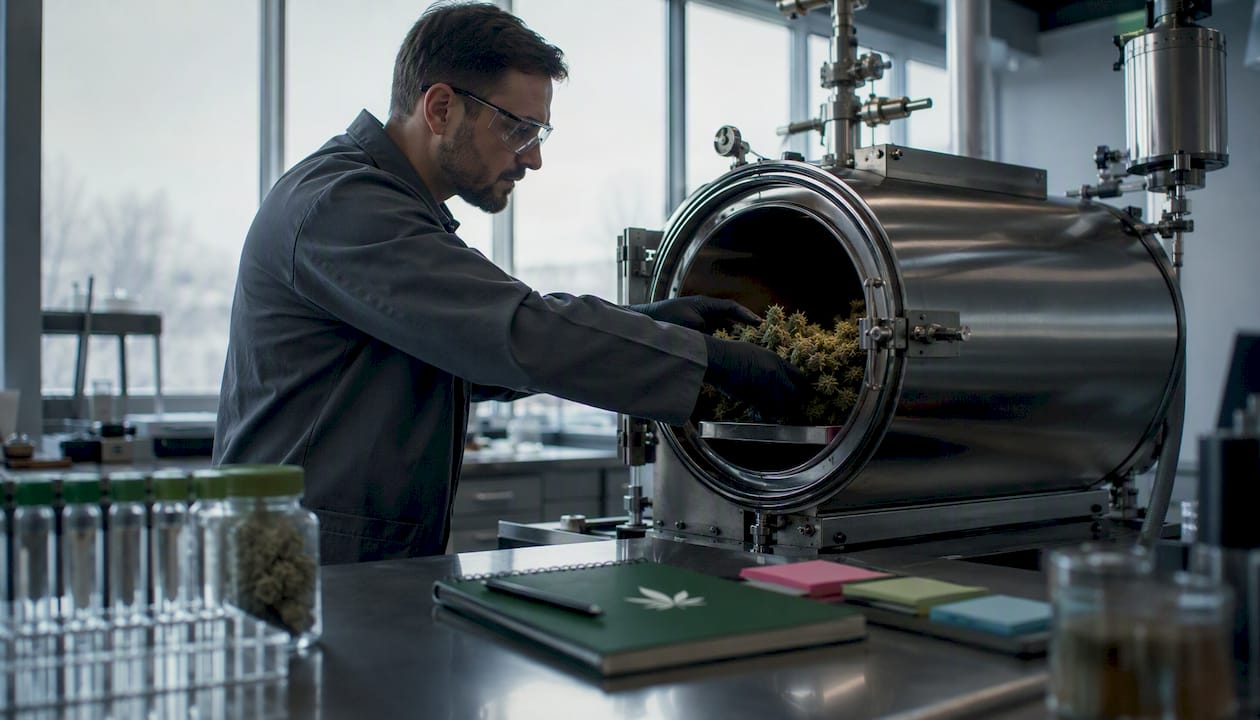
Flash-freezing preserves the light, aromatic monoterpenes that would otherwise evaporate during the drying process. Once frozen, the material goes through a cold hydrocarbon extraction using butane or propane, which pulls cannabinoids and those preserved terpenes together. The extract is then purged of residual solvents under low heat and vacuum pressure, leaving behind a concentrate that smells and tastes much closer to the living plant.
The result shows up in the texture. Live resin commonly comes in various textures, such as sauce (a wet, terpene-rich consistency with crystalline structures), badder or budder (a whipped, creamy texture with balanced terpene and cannabinoid profiles), and diamonds (near-pure THCA crystals often paired with terpene sauce).
How live resin differs from live rosin and standard resin:
- Standard resin uses dried and cured flower, losing many volatile terpenes before extraction even begins.
- Live rosin skips solvents entirely. It’s made by pressing ice-water hash (bubble hash) with heat and pressure. Solventless rosin production targets 70–120 micron trichome collections to maximize purity, which is why it commands a higher price and is considered the “gold standard” for solvent-free processing.
- Live resin sits between the two: solvent-based but starting from fresh-frozen material, giving it a terpene advantage over standard resin and a price advantage over live rosin.
What is distillate and why does it lose its flavor?
Distillate is the most refined cannabis oil on the market. The production process is designed to isolate one cannabinoid, usually THC or CBD, at the highest possible purity, and that refinement comes at the cost of nearly everything else the plant contains.
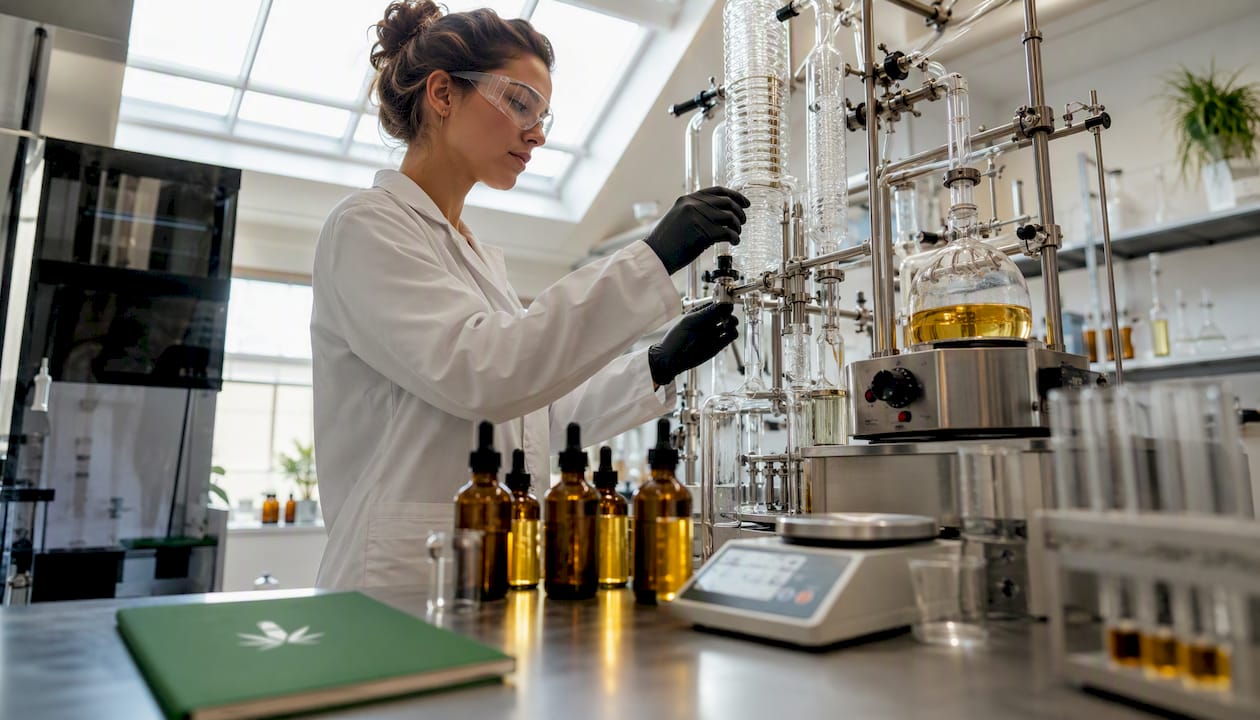
The production flow goes like this: a raw extract is first winterized to remove fats and waxes, then decarboxylated to activate cannabinoids, and finally run through short-path or wiped-film distillation. That last step uses heat and vacuum to vaporize and re-condense specific cannabinoid fractions, leaving behind a clear, amber oil that can reach 85–95% THC.
What gets left behind in that process is the terpene profile. Distillation removes most original terpenes, which is why distillate on its own is nearly flavorless and odorless. Producers commonly add terpenes back after distillation, either cannabis-derived terpenes (CDT) or botanical terpenes sourced from non-cannabis plants like lavender or pine.
Key things to know about distillate:
- Consistent potency: Because it’s so refined, the THC percentage is predictable batch to batch.
- Versatile format: Distillate works in vape carts, syringes, capsules, and as an infusion base for edibles.
- Label reading matters: If a cart lists “distillate” in the ingredients alongside “terpenes,” those terpenes were added after the fact. That’s not inherently bad, but it’s different from a true full-spectrum extract.
- Longer shelf life: Without the delicate terpene compounds that degrade faster, distillate stays stable longer than live resin.
What do the actual numbers say about potency and terpenes?
The measurable differences between these two concentrates are significant enough to affect your experience in real, practical ways.
| Metric | Live Resin | Distillate |
|---|---|---|
| Typical THC range | moderate to high | high potency |
| Total terpene % | 4–12% | Near-zero original; terpenes can be re-added after distillation |
| Minor cannabinoids (CBD, CBN, CBG) | Often present | Largely absent |
| Consistency | Varies by batch and strain | Highly consistent batch to batch |
Potency in context: Distillate tests at 85–95% THC, while live resin typically lands at 65–85% THC. Live resin’s lower THC number doesn’t mean a weaker experience. The terpenes and minor cannabinoids present in live resin interact with THC in ways that can shape the quality and character of effects, not just the ceiling.
Live rosin pushes terpene content even higher, reaching significantly elevated levels, which explains its premium price point relative to live resin.
In practice, a distillate cart at 90% THC delivers a fast, potent, and relatively one-dimensional effect. A live resin product at 75% THC with a 7% terpene load can feel more layered, with onset and character shaped by the specific terpene profile. For patients managing minor cannabinoid interactions, the presence of CBN, CBG, or trace CBD in live resin may matter more than the raw THC number.
How do flavor and effects differ, and what does that mean for patients?
Terpenes don’t just create flavor. They interact with cannabinoid receptors and influence how THC affects you, a phenomenon researchers call the entourage effect. Live resin’s preserved terpene profile means you’re getting a more complete chemical picture of the original strain.
For a patient managing chronic pain or insomnia, a full-spectrum live resin with myrcene and linalool may produce a more sedating, body-centered effect than a distillate cart at the same THC level. For someone dealing with anxiety, a live resin with high limonene content might feel more uplifting. Distillate, by contrast, delivers THC with minimal terpene modulation, which can make it easier to predict the effect but harder to tailor it.
When each concentrate tends to work better:
- Live resin — suits patients with complex symptom sets (chronic pain, insomnia, anxiety) where the entourage effect may provide more nuanced relief, and consumers who want a strain-true sensory experience.
Pro Tip: When therapeutic authenticity matters, check whether the terpenes in your product are cannabis-derived (CDT) or botanical. Botanical terpenes can mimic a strain’s flavor but don’t carry the same minor cannabinoid context as cannabis-derived ones. The COA or product label should specify the source.
Patients managing PTSD symptoms often report that full-spectrum products feel more effective for their needs, though individual responses vary and clinical guidance matters.
What formats do these concentrates come in?
Both live resin and distillate are available in multiple formats, but they don’t overlap perfectly. Knowing which format fits your lifestyle makes the purchase decision easier.
- Vape cartridges: The most common format for both. Distillate carts typically run $25–$40 for a 0.5g cart; live resin carts run $40–$55 for the same size. Distillate carts are widely available; live resin carts require a fresh-frozen supply chain, so availability varies by dispensary.
- Dabbing: Live resin sauce, badder, and diamonds are popular for dabbing. This method delivers the fullest terpene expression but requires a dab rig or e-nail and some temperature control. Lower temperatures (around 315–450°F) preserve terpene flavor; higher temps produce bigger vapor but burn off delicate aromatics.
- Syringes: Both concentrates come in dosing syringes, useful for patients who want precise amounts for edible infusions or sublingual use. Distillate syringes are especially common for cooking because the neutral flavor doesn’t compete with food.
- Capsules and edibles: Distillate is the standard base for commercially produced cannabis capsules and infused edibles because of its consistent potency and neutral taste.
Start with a small amount whenever you try a new concentrate. Concentrates are significantly more potent than flower, and even experienced consumers can be caught off guard by a new product’s strength.
What should you expect to pay, and how do you store these products?
Price and shelf life are practical factors that often tip the decision for everyday consumers.
Pricing by format:
- Distillate carts (0.5g): usually more affordable
- Live resin carts (0.5g): usually more expensive
- Live rosin (per gram): tends to cost more due to more labor-intensive solventless production
Live rosin commands the highest price because solventless methods produce lower yields than solvent-based extraction, and the process requires more skilled labor. If you’re comparing live resin vs rosin on a budget, live resin usually offers a middle ground between distillate’s affordability and rosin’s premium.
Storage guidance:
- Distillate is the most forgiving. Keep it away from direct light and heat, and it stays stable for months.
- Live resin benefits from cool, dark storage. A small airtight container in a drawer or cabinet works well for short-term use.
- Live rosin is the most temperature-sensitive. Refrigeration between 32–68°F is often recommended for long-term storage to maintain texture and terpene integrity.
Pro Tip: For live rosin stored in the fridge, let it come to room temperature before opening the container. This prevents condensation from forming inside, which can introduce moisture and degrade the product.
How do you verify quality and safety before buying?
A Certificate of Analysis (COA) is the single most important document you can review before purchasing any concentrate. Reputable dispensaries make COAs available by batch number, either on their website or by request.
What to check on a COA:
- THC and CBD percentages: Confirm they match the label claim.
- Terpene profile: Look for a named terpene breakdown, not just a total percentage.
- Residual solvent panel: For solvent-based products like live resin and distillate, regulated labs test residual solvents before sale. Results should be well below state legal limits (typically measured in parts per million).
- Pesticide and heavy metals panel: Both should show passing results.
- Lab accreditation and batch number: The testing lab should be ISO-accredited or state-licensed, and the batch number should match the product you’re holding.
Red flag to watch for: A product labeled “live resin” that lists “distillate” in the ingredient section is not a true full-spectrum live resin. That label pattern indicates a distillate base with terpenes added for flavor, which is a legitimate product but not what the marketing implies. Always read the ingredient list, not just the front label.
Additional red flags: no COA available, suspiciously low prices for a claimed live product, labels that say “terpenes” without specifying cannabis-derived or botanical, or “proprietary blend” with no further detail.
If you’re experiencing adverse reactions to concentrates, the COA can help you identify whether residual solvents or specific terpenes might be contributing.
How do you decide which concentrate is right for you?
A simple decision process helps you cut through the options quickly.
Step-by-step:
- Define your primary goal. Flavor and full-spectrum experience? Choose live resin. Maximum THC and consistent dosing? Choose distillate. Zero solvents and premium terpenes? Consider live rosin.
- Check the COA. Request the batch-specific lab report before you buy. Confirm potency, terpene content, and residual solvent results.
- Choose your format. Vape cart for convenience, dab for flavor intensity, syringe for edible infusions.
- Start with a small dose. Try one or two puffs, wait 10–15 minutes, and assess before taking more.
- Buy small first. A 0.5g cart or a small gram of concentrate lets you test a product before committing to a larger purchase.
Questions to ask your budtender:
- “Was this made from fresh-frozen material?”
- “Are the terpenes cannabis-derived or botanical?”
- “Can I see the COA and batch number for this product?”
- “Is this a true live resin extract or a distillate base with added terpenes?”
Repeat red flags to watch for: unclear labeling, no batch COA available, unusually low pricing for a product marketed as live, and vague terpene sourcing.
Key Takeaways
Live resin delivers a fuller, terpene-rich experience best suited for flavor-focused consumers and patients managing complex symptoms, while distillate offers the highest THC potency and consistent dosing for straightforward relief.
| Point | Details |
|---|---|
| THC potency gap | Distillate tests at 85–95% THC; live resin typically lands at 65–85% THC. |
| Terpene advantage | Live resin retains 4–12% terpenes naturally; distillate starts near-zero and may have terpenes re-added. |
| Price difference | Distillate carts run $25–$40 per 0.5g; live resin carts run $40–$55 for the same size. |
| COA is non-negotiable | Always verify residual solvents, terpene origin, and batch number before purchasing any concentrate. |
| Medical patients | Consult a clinician or a certification service like Virginia Medical Cannabis Certifications when choosing a concentrate for symptom management. |
What patients often get wrong about these two concentrates
Most people assume the highest THC number means the strongest or most effective product. That’s understandable, but it misses something important. A distillate at 92% THC delivers a potent, fast effect. A live resin at 74% THC with a rich terpene profile can feel more complete for certain patients, particularly those dealing with layered symptoms where the entourage effect matters.
The other thing people overlook is label honesty. The word “live” on a cart doesn’t guarantee a true full-spectrum extract. A product can legally carry that branding while using a distillate base with added terpenes. Reading the ingredient list takes 10 seconds and tells you exactly what you’re buying.
For patients who are new to concentrates or navigating a specific medical condition, the format question matters as much as the extract type. Dabbing live resin at the wrong temperature can burn off the terpenes you paid extra for. A distillate syringe dosed carefully into a capsule gives you the same THC amount every time. Matching the format to your lifestyle and tolerance level is just as important as choosing the right concentrate type.
If you’re a Virginia resident and you’re ready to access concentrates through a dispensary, Virginia Medical Cannabis Certifications offers a $50 same-day online certification completed in about 10 minutes, with a full refund if you don’t qualify. Getting certified is the first practical step toward making these choices with legal access and clinical backing.
Useful sources for deeper reading
The figures and guidance in this article draw from the following sources. For batch-specific lab data, always request the COA directly from your dispensary.
- Live Resin vs Distillate — Cream Online: THC percentage ranges for distillate and live resin
- Resin vs Rosin vs Live Rosin — RethinkTHC: Terpene content data, flash-freezing process, and live rosin terpene ranges
- Rosin vs Resin — Resin Manual: Solvent extraction yields and residual solvent testing requirements
For patients with specific medical conditions, consult your clinician or a certified cannabis practitioner before selecting a concentrate type. This article is general information, not medical advice.
Recommended
- Indica vs Sativa for Cancer: What Patients Need to Know – Virginia Medical Cannabis Certifications
- CBDA vs CBD: Which One Should You Try? – Virginia Medical Cannabis Certifications
- Why Do Dabs Give Me Headaches? Causes and Fixes – Virginia Medical Cannabis Certifications
- Sativa Headache Relief: What You Need to Know – Virginia Medical Cannabis Certifications