
Beta-caryophyllene, myrcene, linalool, limonene, alpha-pinene, alpha-humulene, and geraniol are the best terpenes for pain, with the strongest evidence pointing to beta-caryophyllene for neuropathic and inflammatory pain and myrcene for musculoskeletal discomfort. Most of the supporting research is preclinical, but the findings are consistent enough to guide smart product choices today.
Here’s what to do right now:
- For localized neuropathic pain (nerve pain, diabetic peripheral neuropathy): try a topical product with beta-caryophyllene. Peripheral CB2 activation through the skin reduces local inflammation with minimal systemic exposure.
- For systemic or widespread pain (fibromyalgia, chemotherapy-induced neuropathy): look for terpene-forward cannabis strains or full-spectrum products where the terpene profile is listed on a third-party lab report.
- Before combining with any prescription medication: talk to a clinician first. Terpenes can interact with sedatives, anticonvulsants, and blood thinners.
If you’re a Virginia resident and want clinician-supervised access to terpene-containing cannabis products, Virginia Medical Cannabis Certifications offers same-day online evaluations for $50.
Table of Contents
- What are terpenes, and why do they matter for pain?
- How do terpenes relieve pain? The main mechanisms explained
- Profiles of the 7 best terpenes for pain
- How to use terpenes for pain: delivery, dosing, and product selection
- What does the research actually show, and where are the gaps?
- Safety, drug interactions, and legal access in Virginia
- Key Takeaways
- A note on evidence-first terpene use
- Virginia Medical Cannabis Certifications makes legal access straightforward
- Useful sources to read next
What are terpenes, and why do they matter for pain?
Terpenes are aromatic, bioactive molecules found in the oils of plants. Cannabis produces more than 150 of them, but you’ll also find the same compounds in black pepper (beta-caryophyllene), lavender (linalool), citrus peel (limonene), pine needles (alpha-pinene), cloves (alpha-humulene), and rose petals (geraniol). They’re what give each plant its distinctive smell.
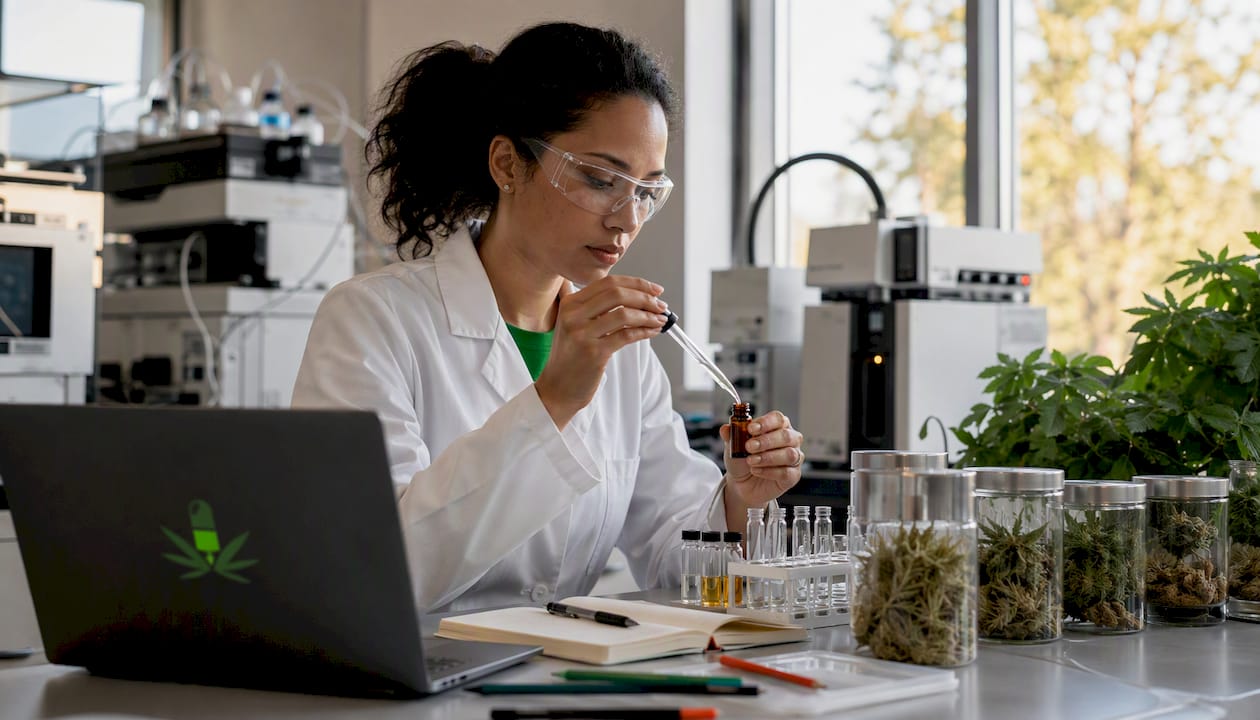
Unlike THC, terpenes don’t bind strongly to CB1 receptors, so they don’t produce the classic cannabis high on their own. They work through separate receptor systems, including CB2, adenosine receptors, and TRP ion channels, and they can modify how cannabinoids behave in the body. That’s the short version of why terpenes matter for pain: they offer real biological activity through pathways that don’t require intoxication.
Key distinctions worth knowing:
- Terpenes are not cannabinoids, but they interact with the endocannabinoid system indirectly.
- They’re present in many everyday foods and herbs, which matters when you’re reading product labels.
- Preclinical evidence identifies at least six cannabis-derived terpenes with measurable anti-inflammatory or antinociceptive activity.
How do terpenes relieve pain? The main mechanisms explained
The short answer: terpenes work through several distinct biological pathways, and understanding which pathway a terpene uses tells you which pain type it’s most likely to help.

CB2 receptor activation is the most studied mechanism. Beta-caryophyllene binds selectively to CB2 receptors, which are concentrated in immune cells and peripheral nerve tissue. Activating CB2 dials down pro-inflammatory cytokines like IL-1β, TNF-α, and IFN-γ without touching CB1, which means no psychoactive effects. That’s a meaningful clinical advantage for patients who need pain relief during the day.
Adenosine A2A receptor agonism is a newer and equally compelling mechanism. A University of Arizona study found that geraniol, linalool, alpha-humulene, beta-caryophyllene, and beta-pinene all act as A2A receptor agonists in the spinal cord, producing pain relief in chemotherapy-induced peripheral neuropathy models. Crucially, none of these terpenes produced conditioned place preference, which suggests lower misuse potential compared with opioids.
TRP channel modulation is how some terpenes quiet nociceptors directly. TRPV1 channels are the same receptors that respond to capsaicin, and certain terpenes can reduce their sensitivity, lowering the pain signal before it reaches the brain.
Muscle relaxation and sedation are where myrcene earns its place. Its mild sedative properties reduce musculoskeletal tension, which is part of why it’s so prevalent in cannabis products marketed for nighttime or physical recovery use.
The entourage effect ties all of this together. Research on terpene blends shows that terpene combinations from whole-plant extracts produce cannabimimetic and antinociceptive effects via A2A receptor activation, much like isolated terpenes do. Terpene-cannabinoid ratios shape the final therapeutic outcome, which is why a product’s full terpene profile matters more than a single dominant terpene on a label.
Key finding: In the University of Arizona PAIN study, five cannabis-derived terpenes each produced antinociception comparable to morphine in neuropathic pain models, and combining low-dose terpenes with low-dose morphine enhanced pain relief without increasing adverse effects.
Profiles of the 7 best terpenes for pain
Quick-reference comparison table
| Terpene | Best for | Main mechanism | Evidence level | Key sources | Delivery | Onset/Duration | Safety notes |
|---|---|---|---|---|---|---|---|
| Beta-caryophyllene | Neuropathic, inflammatory | CB2 agonism, A2A | Strong preclinical, limited human | Black pepper, cloves, cannabis | Topical, oral, inhalation | Topical: 30–60 min / hours; Oral: 1–2 hr / 4–6 hr | Well-tolerated; CB2-selective (no CB1 effects) |
| Myrcene | Musculoskeletal, joint | Anti-inflammatory, sedative, A2A | Moderate preclinical | Hops, mango, cannabis | Inhalation, edible | Inhalation: minutes / 1–3 hr; Edible: 1–2 hr / 4–8 hr | Additive sedation with CNS depressants |
| Linalool | Neuropathic, pain + anxiety | Adenosine, opioid modulation, ion channels | Moderate preclinical | Lavender, coriander, cannabis | Inhalation, topical, tincture | Inhalation: minutes / 1–3 hr; Topical: 20–60 min / — | May reduce morphine tolerance; sedating |
| Limonene | Inflammatory, anxiety-related pain | A2A agonism, anti-inflammatory | Limited preclinical | Citrus peel, cannabis | Inhalation, oral | Inhalation: minutes / 1–2 hr; Oral: 30–90 min / 3–5 hr | Generally well-tolerated; dose-dependent |
| Alpha-pinene | Inflammatory, cognitive clarity | Anti-inflammatory, acetylcholinesterase inhibition | Limited preclinical | Pine needles, rosemary, cannabis | Inhalation | Minutes / 1–2 hr | May counteract THC-related memory effects |
| Alpha-humulene | Inflammatory, appetite-related | A2A agonism, anti-inflammatory | Moderate preclinical | Hops, cloves, cannabis | Inhalation, topical | Inhalation: minutes / 1–2 hr | Low reported side effects |
| Geraniol | Inflammatory, nerve pain | A2A agonism, glutamate modulation | Moderate preclinical | Rose, geranium, cannabis | Oral, topical | Oral: 30–90 min / 3–5 hr | Non-opioid mechanism confirmed |
Individual profiles
Beta-caryophyllene (BCP) is the standout terpene for pain, and the research backs that up clearly. It’s the only terpene classified as a dietary cannabinoid because it binds directly to CB2 receptors. In a mouse model of antiretroviral-induced neuropathic pain, BCP suppressed mechanical allodynia and reduced inflammatory cytokine transcripts; effects were blocked by a CB2 antagonist but not a CB1 antagonist. Topical application is particularly promising: daily intraplantar BCP for 21 days produced dose-dependent reductions in mechanical allodynia and decreased TNF-α, IL-1β, and IL-6 in a diabetic peripheral neuropathy model. Oral BCP also reduced inflammatory and neuropathic pain in rodent models without producing tolerance over two weeks of treatment.
- Best for: neuropathic pain, diabetic peripheral neuropathy, inflammatory pain
- Top non-cannabis sources: black pepper, cloves, copaiba oil
- Preferred delivery: topical for localized nerve pain; oral or inhalation for systemic use
Myrcene is the most abundant terpene in cannabis and contributes meaningfully to the sedative, muscle-relaxing character of many indica-leaning strains. Its anti-inflammatory and analgesic properties make it a solid choice for chronic musculoskeletal and joint pain. In terpene blend studies, myrcene-dominant blends produced robust antinociception in neuropathic pain models via A2A receptor activation. It’s worth noting that blend antinociception was more pronounced in male than female mice, a sex difference researchers are still working to explain.
- Best for: muscle pain, joint pain, sleep-disrupting pain
- Top non-cannabis sources: hops, mango, lemongrass
- Preferred delivery: inhalation for fast onset; edibles for longer overnight relief
Linalool works through multiple receptor systems simultaneously, including adenosine, opioid, and GABAergic pathways, plus voltage-gated ion channels. Preclinical data show antiallodynic and anti-hyperalgesic effects across several pain models, and linalool has been shown to reduce morphine tolerance and dependence in animal studies. That last point is clinically relevant for patients already on opioid therapy. Its calming, lavender-like profile also makes it useful when pain and anxiety co-occur.
- Best for: neuropathic pain, pain with anxiety or sleep disruption
- Top non-cannabis sources: lavender, coriander, basil
- Preferred delivery: inhalation or topical for faster onset; tincture for sustained effect
Limonene is a citrus-forward monoterpene with strong anxiolytic and anti-inflammatory activity. Its antinociceptive evidence is more limited than BCP or linalool, but it has shown effectiveness against chemical irritant-induced pain and inflammatory pain models at oral doses. It also acts as an A2A receptor agonist, which connects it to the same spinal cord pain-relief pathway identified in the University of Arizona research. Interestingly, purified limonene alone did not relieve CIPN in one blend study, suggesting it may work better in combination than in isolation.
- Best for: inflammatory pain, anxiety-related pain amplification
- Top non-cannabis sources: lemon, orange, grapefruit peel
- Preferred delivery: oral or inhalation; consider in combination products
Alpha-pinene is the sharp, piney terpene in rosemary and pine needles. Its anti-inflammatory effects are well-documented, and it inhibits acetylcholinesterase, which may help counteract short-term memory effects sometimes associated with THC. For pain specifically, the preclinical evidence is less robust than for BCP or myrcene, but it contributes meaningfully to the anti-inflammatory profile of full-spectrum products.
- Best for: inflammatory pain; useful in combination with THC to preserve cognitive clarity
- Top non-cannabis sources: pine needles, rosemary, eucalyptus
- Preferred delivery: inhalation
Alpha-humulene shares structural similarities with beta-caryophyllene and appears in many of the same cannabis strains. The University of Arizona research included it in the group of terpenes that produced morphine-equivalent antinociception via A2A receptor activation. It also has appetite-suppressant properties, which distinguishes it from most other pain-relevant terpenes.
- Best for: inflammatory pain; patients who prefer appetite-neutral products
- Top non-cannabis sources: hops, cloves, sage
- Preferred delivery: inhalation, topical
Geraniol is a sweet-smelling monoterpenoid alcohol found in rose and geranium oils. Its analgesic activity in writhing, formalin, and glutamate pain models is dose-dependent, and the effect is not reversed by naloxone, confirming a non-opioid mechanism. Researchers suggest it modulates glutamatergic neurotransmission and peripheral nerve excitability, making it particularly relevant for inflammatory nerve pain. It was also one of the terpenes that produced statistically significant antinociception in the University of Arizona CIPN study.
- Best for: inflammatory nerve pain, glutamate-mediated pain
- Top non-cannabis sources: rose oil, geranium, citronella
- Preferred delivery: oral, topical
How to use terpenes for pain: delivery, dosing, and product selection
Choosing the right delivery method
The delivery method you choose shapes how fast terpenes work and how long the effect lasts.
- Inhalation (vaping or flower): fastest onset, typically within minutes. Duration is usually 1–3 hours. Best for breakthrough pain or when you need quick relief. The tradeoff is respiratory irritation with frequent use.
- Topicals (creams, balms, patches): localized effect, minimal systemic absorption. Onset is 20–60 minutes for most formulations. Ideal for peripheral neuropathy, joint pain, or muscle soreness in a specific area. Peripheral CB2 activation through topical BCP is particularly well-supported by the intraplantar BCP research.
- Tinctures and edibles: slower onset (30 minutes to 2 hours), but longer duration (4–8 hours). Better for chronic, sustained pain management. Bioavailability varies significantly by formulation.
Pro Tip: For localized neuropathic pain, a topical product with a high beta-caryophyllene concentration may reduce symptoms with less systemic exposure than inhalation or oral routes. Look for formulations that list BCP concentration in mg/g, not just as a named ingredient.
What to look for on a product label
Terpene labeling is not standardized across the U.S. cannabis market, so you need to read carefully.
- Look for a third-party certificate of analysis (COA) that lists individual terpene percentages or concentrations in mg/g, not just a dominant terpene name.
- Terpene percentages can vary batch-to-batch even within the same brand. Always check the COA for the specific batch number on your product.
- Avoid products that list only “terpene blend” with no breakdown. That tells you nothing about which terpenes are present or at what levels.
- Check for contaminant testing (pesticides, heavy metals, residual solvents) on the same COA.
Understanding THC:CBD ratios alongside terpene profiles helps you predict how a product will feel, since cannabinoid ratios shape the overall pharmacological effect.
Basic dosing principles
Start with the lowest effective dose and increase slowly. Terpene effects are dose-dependent, and more is not always better. Track your response in a simple log: note the product, terpene profile, dose, delivery method, time of onset, duration, and pain score before and after. Share that log with your clinician at follow-up. Do not combine terpene-rich products with sedating medications without checking with your prescriber first.
What does the research actually show, and where are the gaps?
The strongest evidence comes from the University of Arizona, where researchers tested five cannabis-derived terpenes individually in mice with chemotherapy-induced peripheral neuropathy. Each terpene produced antinociception roughly equal to morphine, and combining low-dose terpenes with low-dose morphine enhanced pain relief without increasing adverse effects. Notably, none of the terpenes produced conditioned place preference, suggesting lower misuse potential than traditional analgesics.
The mechanistic picture is also getting clearer. The same research group identified spinal cord adenosine A2A receptors as the primary mechanism for terpene antinociception in neuropathic pain, a finding confirmed with both a selective A2A antagonist and CRISPR-based receptor knockdown. That’s a rigorous mechanistic standard that most terpene research hasn’t reached yet.
Where the evidence falls short:
- Nearly all data come from animal models. Human clinical trials are small, few, and not yet sufficient to establish dosing guidelines.
- Terpene formulations are not standardized. The same terpene at different concentrations, in different carriers, via different routes, can produce very different results.
- Pharmacokinetic data (how terpenes are absorbed, distributed, metabolized, and eliminated in humans) remain incomplete for most of these compounds.
- Sex differences in response have been observed. Terpene blends produced more robust antinociception in male than female mice in at least one study, and BCP showed variable magnitude by sex in inflammatory pain models. What this means for human patients is not yet clear.
A recent MDPI review concluded that insufficient standardization and incomplete pharmacokinetic data currently limit clinical translation, and recommends that patients work with clinicians to tailor terpene-containing therapies. That’s the honest state of the science: promising, mechanistically grounded, but not yet ready for self-directed dosing without professional guidance.
Safety, drug interactions, and legal access in Virginia
Common side effects
- Topicals: local skin irritation, redness, or contact dermatitis in sensitive individuals
- Inhalation: respiratory irritation, cough, especially with frequent use
- Systemic doses (oral/tincture): sedation, dizziness, and mild gastrointestinal upset at higher doses
Drug interactions to know
Terpenes can interact with CYP450 liver enzymes, which process many common medications. The most clinically relevant interactions involve:
- Sedatives and sleep aids: additive sedation with myrcene and linalool
- Anticonvulsants: potential for altered drug metabolism; always check with your neurologist
- Blood thinners (e.g., warfarin): some terpenes may affect CYP2C9 activity
- Opioids: terpene-opioid combinations can enhance analgesia, but also increase sedation risk
Who should not use terpene-rich cannabis products without medical supervision
- Pregnant or breastfeeding individuals
- People with uncontrolled psychiatric illness
- Children and adolescents
- Anyone on a narrow-therapeutic-index medication
Legal access in Virginia
Terpenes themselves are not controlled substances. You can find them in essential oils, supplements, and food products without any legal restriction. However, accessing terpene-containing cannabis products, including flower, tinctures, and topicals from a licensed dispensary, requires a valid medical cannabis certification in Virginia. For patients managing neuropathic pain conditions like shingles or chronic musculoskeletal pain, that certification is the legal pathway to dispensary-grade products with verified terpene profiles.
Key Takeaways
Beta-caryophyllene is the most evidence-backed terpene for pain, acting through CB2 and A2A receptors to reduce neuropathic and inflammatory pain without psychoactive effects.
| Point | Details |
|---|---|
| Prioritize beta-caryophyllene | Strongest preclinical evidence for neuropathic and inflammatory pain via CB2 and A2A receptor activation. |
| Use myrcene for muscle pain | Anti-inflammatory and sedative properties make it well-suited for musculoskeletal and joint discomfort. |
| Linalool for pain plus anxiety | Works through multiple receptor systems; preclinical data show it can reduce morphine tolerance. |
| Read the COA, not just the label | Terpene percentages vary batch-to-batch; only a third-party lab report confirms what’s actually in the product. |
| Virginia Medical Cannabis Certifications | Virginia residents can access dispensary-grade terpene products through a same-day online certification for $50. |
A note on evidence-first terpene use
The case for terpenes in pain management is genuinely compelling, and I think the University of Arizona research deserves more attention than it gets in mainstream pain discussions. Morphine-equivalent antinociception with no reward liability is a meaningful finding, not a minor footnote. At the same time, the gap between a mouse model and a human patient is real, and the lack of standardized formulations means that two products with the same terpene name on the label can behave very differently in practice.
What I’d encourage you to do is treat terpenes as a serious addition to a clinician-guided pain plan, not a self-directed experiment. Track your outcomes carefully. Share your terpene log with your doctor. And if you’re in Virginia and want legal access to dispensary products with verified terpene profiles, the certification process is faster and more affordable than most patients expect.
Virginia Medical Cannabis Certifications makes legal access straightforward
Knowing which terpenes to look for is only half the equation. Getting access to dispensary products with verified terpene profiles and third-party lab results requires a valid medical cannabis certification in Virginia.

Virginia Medical Cannabis Certifications offers same-day virtual evaluations for $50 for new patients, $40 for renewals, and a full refund if you don’t qualify. The online evaluation takes about 10 minutes, and your certificate is delivered promptly so you can visit a dispensary the same day. Veterans receive an additional discount with a coupon code. Whether you’re managing chronic neuropathic pain, musculoskeletal pain, or a condition like TMJ that responds to anti-inflammatory terpene profiles, certification is the step that turns research into real access.
Before your evaluation, prepare a list of your current medications (especially sedatives, anticonvulsants, or blood thinners) and a brief pain history. Your clinician can help you think through terpene-cannabinoid combinations and flag any interaction risks. Book your evaluation today and get the clinician guidance your pain management plan deserves.
Useful sources to read next
The research on terpenes for pain is moving quickly. These are the primary sources worth bookmarking:
- Analgesic Potential of Terpenes Derived from Cannabis sativa (PMC): The most comprehensive review of cannabis terpenes in pain management; covers pharmacokinetics, mechanisms, and individual terpene profiles for BCP, myrcene, linalool, limonene, alpha-pinene, humulene, and geraniol.
- University of Arizona PAIN Study (Health Sciences): The key study showing five terpenes matched morphine in neuropathic pain models and enhanced opioid analgesia without increasing side effects.
- Terpenes Induce Antinociception via A2A Receptors (PMC): Identifies spinal cord adenosine A2A receptors as the mechanism for terpene pain relief in CIPN; includes conditioned place preference data showing no reward liability.
- Terpene Blends from Cannabis sativa (PMC): Shows that whole-plant terpene blends produce similar antinociceptive effects to isolated terpenes via A2A receptors, with important sex-difference findings.
- BCP Suppresses Allodynia in Neuropathic Pain (PMC): Mechanistic study confirming CB2-selective action of BCP in antiretroviral-induced neuropathic pain.
- Topical BCP in Diabetic Peripheral Neuropathy (MDPI): Supports topical BCP as a localized neuropathy treatment; dose-response data and cytokine findings.
- Pharmacological Challenges for Terpene Therapies (MDPI): Honest assessment of the limits: standardization gaps, pharmacokinetic unknowns, and the case for clinician oversight.
This article summarizes research available as of 2026. It is general information, not medical advice. Confirm current Virginia regulations and discuss any terpene-containing products with your clinician before use.
Recommended
- Weed for TMJ: Relief, Research, and Real Results – Virginia Medical Cannabis Certifications
- Best Strains for Pancreatitis: Virginia Guide 2026 – Virginia Medical Cannabis Certifications
- Cannabis for Shingles: Relief, Research, and Real Risks – Virginia Medical Cannabis Certifications
- Sativa Headache Relief: What You Need to Know – Virginia Medical Cannabis Certifications