
Neither “indica” nor “sativa” reliably predicts how a cannabis product will affect your cancer symptoms. The label on the dispensary shelf tells you more about marketing history than about what the product will actually do. What matters is the chemical profile: the specific amounts of THC, CBD, and terpenes measured in a lab Certificate of Analysis (COA). Before you try any cannabis product, pull that COA and share it with your oncology team. That one step protects you more than any strain name ever could.
Table of Contents
- What do indica, sativa, and hybrid labels actually mean?
- Why the indica/sativa binary fails for medical decisions
- The chemistry that actually drives effects
- Which cannabis profile helps which cancer symptom?
- How route of administration affects your choice
- Safety, side effects, and drug interactions
- How to choose and buy a cannabis product safely
- How to get medical cannabis in Virginia
- Key Takeaways
- What the indica/sativa debate gets wrong about cancer care
- Get certified in Virginia today with Virginia Medical Cannabis Certifications
- Useful sources and further reading
What do indica, sativa, and hybrid labels actually mean?
The terms come from 18th-century botany. Cannabis sativa described tall, narrow-leafed plants from equatorial regions; Cannabis indica described shorter, broader-leafed plants from South Asia. Breeders and dispensaries carried those labels forward, and today they carry rough consumer expectations with them.
Common dispensary shorthand:
- Indica: relaxing, sedating, body-focused
- Sativa: energizing, uplifting, head-focused
- Hybrid: somewhere in between
The problem is that nearly every commercially available plant is a hybrid at this point. Two products both labeled “indica” can have completely different THC and CBD concentrations and entirely different terpene profiles. One might be high-THC and myrcene-dominant; the other might be CBD-forward with significant linalool. They will not feel the same, and they will not help the same symptoms.
Why the indica/sativa binary fails for medical decisions
Chemovar research shows clearly that plant morphology, meaning leaf shape and growth pattern, does not reliably predict cannabinoid or terpene composition. The correct framework for medical selection is the chemovar (chemical variety): a classification based on measured cannabinoid and terpene content rather than appearance or origin story.
The American Cancer Society makes this explicit: product labels like sativa or indica are not reliable indicators of therapeutic effects, and the focus should be on the chemical makeup of the product. When you ask a dispensary staff member whether a product is “more indica,” you are asking the wrong question. Ask instead: “Can I see the COA, and what are the exact mg/g of THC, CBD, and the top terpenes?”
The chemistry that actually drives effects
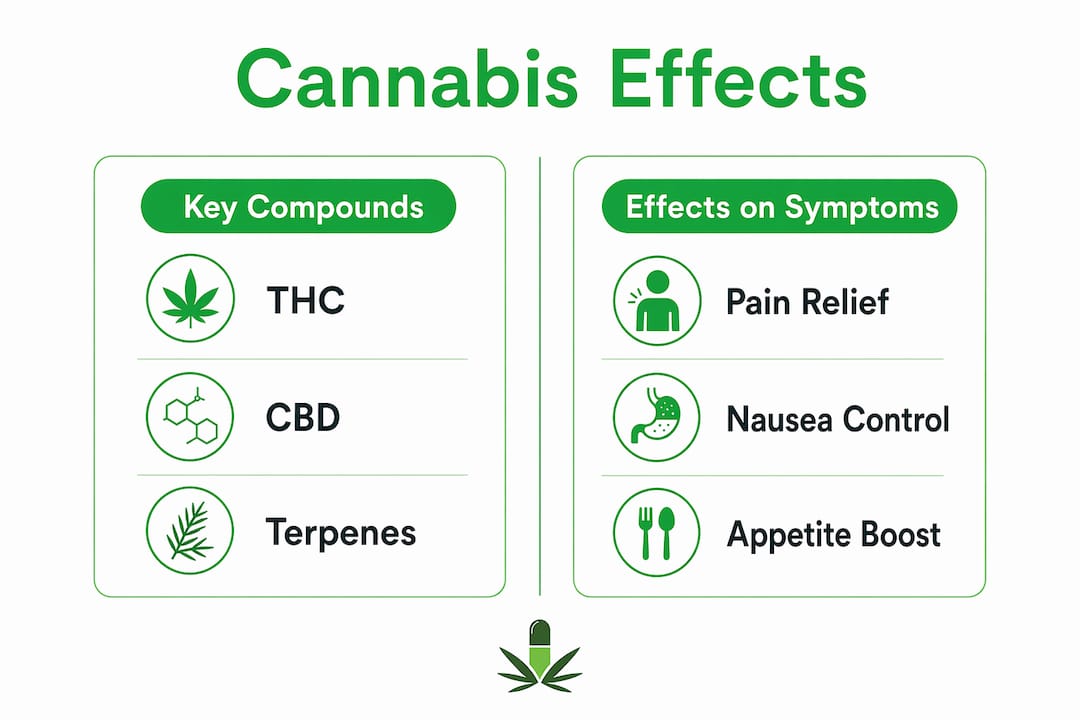
THC, CBD, and terpenes are the three levers that shape what a cannabis product does for you.

| Compound | Primary effects relevant to cancer symptoms | Notes |
|---|---|---|
| THC (tetrahydrocannabinol) | Pain relief, appetite stimulation, antiemetic, psychoactive | Dose-dependent; higher doses increase anxiety risk |
| CBD (cannabidiol) | Anxiolytic, anti-inflammatory potential, non-psychoactive | May moderate THC’s psychoactive effects |
| Myrcene | Sedation, muscle relaxation, analgesia | Drives much of what people call “indica” sedation |
| Limonene | Mood uplift, reduced anxiety | Associated with “sativa”-style energizing effects |
| Linalool | Anxiolytic, mild sedation | Found in lavender; calming without heavy sedation |
| Pinene | Alertness, bronchodilation | May counteract some THC-related memory effects |
The entourage effect describes the idea that these compounds work better together than in isolation. Evidence for it is still developing, but it is the reason whole-plant or full-spectrum products are often preferred over single-molecule options.
Pro Tip: When reading a COA, check for: (1) actual mg/g of THC and CBD, not just percentage; (2) a terpene panel listing at least the top three terpenes by weight; (3) a pesticide and heavy-metal screen showing results below action limits. If any of those three are missing, ask for a more complete test.
Which cannabis profile helps which cancer symptom?
Nausea and chemotherapy-induced vomiting (CINV)
For refractory CINV, this is where the evidence is strongest. A randomized phase II/III trial published in the Journal of Clinical Oncology found that an oral 1:1 THC:CBD extract improved complete response rates in patients whose nausea had not responded to standard antiemetics. The trial used capsules dosed at 2.5 mg THC + 2.5 mg CBD per capsule, up to 10 mg:10 mg daily. ASCO guidelines also support FDA-approved cannabinoids (dronabinol, nabilone) for chemotherapy-related nausea that resists standard therapy. Oral or sublingual routes work well here because they provide longer-lasting coverage through a treatment cycle.
Cancer pain
THC:CBD combinations have shown adjuvant analgesic effects in patients with advanced cancer pain not fully controlled by opioids. A balanced 1:1 ratio tends to be better tolerated than high-dose THC alone, according to Roswell Park clinicians. For neuropathic pain from chemotherapy, myrcene-rich profiles with moderate THC may help, though evidence remains limited. Topical products can address localized pain without systemic effects.
Appetite and weight loss
THC is the primary driver of appetite stimulation. Moderate-THC products, taken orally about 30–60 minutes before meals, are the most common approach. Limonene-forward profiles may add a mood lift that makes eating feel more appealing.
Sleep and insomnia
Myrcene-dominant, higher-THC products taken orally at night are what most patients reach for. Oral routes give 4–8 hours of coverage, which suits overnight symptom control better than inhalation. Linalool adds anxiolytic calming without heavy next-day sedation.
Anxiety and depression
CBD-forward or balanced THC:CBD products with limonene or linalool are generally preferred. High-THC products can worsen anxiety, especially at doses above what a patient has previously tolerated. Start very low with THC if anxiety is the primary concern.
Chemotherapy-induced neuropathy
Evidence here is limited. Some patients report relief with topical THC:CBD preparations applied to affected areas, avoiding systemic psychoactive effects entirely. Oral low-dose THC:CBD is also used, but no strong clinical trial data yet supports a specific protocol.
A note on cancer treatment itself: There is no clinical evidence that cannabis cures or controls cancer. The American Cancer Society and ASCO guidelines both recommend against using cannabis as a cancer-directed therapy outside of clinical trials. Its role is supportive care for symptoms, not tumor treatment.
How route of administration affects your choice
| Route | Onset | Duration | Best for |
|---|---|---|---|
| Inhaled (vaporized) | 5 minutes | 2–3 hours | Acute breakthrough nausea or pain |
| Smoked | 5–10 minutes | 1–3 hours | Fast relief; lung irritation risk |
| Oral (capsules/edibles) | 30 minutes | 4–8 hours | Overnight symptom control, appetite |
| Sublingual tincture | — | 3–6 hours | Flexible dosing, easier titration |
| Topical | — | 2–4 hours | Localized pain, neuropathy |
For acute nausea during a treatment session, vaporized products offer the fastest relief. For overnight appetite support or sleep, an oral capsule taken before bed makes more sense. Sublingual tinctures sit in the middle and are often the easiest to titrate precisely.
Pro Tip: Start with the lowest available dose, typically a low microdose of 1–2.5 mg THC, and wait the full onset time before considering a second dose. Oral products are the most common source of accidental overconsumption because patients redose before the first dose has peaked. Keep a simple log: date, product, dose, symptom before, symptom after. That record is invaluable when you talk with your clinician.
Safety, side effects, and drug interactions
Many cancer patients tolerate cannabis well at low to moderate doses, but some are at higher risk and certain drug combinations require careful review.
Common side effects include dizziness, sedation, dry mouth, and short-term memory changes. The ASCO Post coverage of the phase II/III CINV trial specifically noted dizziness and sedation as the most frequent adverse events.
Drug interaction concerns:
- THC and CBD are metabolized through the CYP450 enzyme system, the same pathway used by many chemotherapy agents. This can alter drug levels in either direction.
- Additive sedation is a real risk when combining cannabis with opioids, benzodiazepines, or antiemetics like ondansetron.
- CBD may inhibit CYP2C19 and CYP3A4, potentially affecting levels of drugs like warfarin, clobazam, or certain targeted therapies.
Red flags that require clinician review before starting:
- Severe psychiatric history (psychosis, schizophrenia, bipolar I)
- Uncontrolled cardiovascular disease
- Recent major surgery or active bleeding risk
- Complex polypharmacy, especially in older adults
Talk with your oncology pharmacist specifically. They can cross-reference your full medication list against known cannabinoid interactions in a way a dispensary staff member cannot.
How to choose and buy a cannabis product safely
- Identify your target symptom and the timing of it (acute vs. ongoing).
- Choose a THC:CBD ratio and route based on the symptom guidance above.
- Request the COA before purchasing. Confirm potency in mg/g, review the terpene panel, and check that pesticide and heavy-metal results are below action limits.
- Start low and titrate slowly. Begin at 1–2.5 mg THC and hold that dose for at least three days before adjusting.
- Log your response. Note the product, dose, timing, and symptom score before and after each use.
- Coordinate with your clinician. Bring your log and the COA to your next appointment.
Questions worth asking at the dispensary: “What is the exact mg of THC and CBD per dose?” and “Do you have the full COA, including the terpene panel?” A good dispensary will answer both without hesitation.
How to get medical cannabis in Virginia
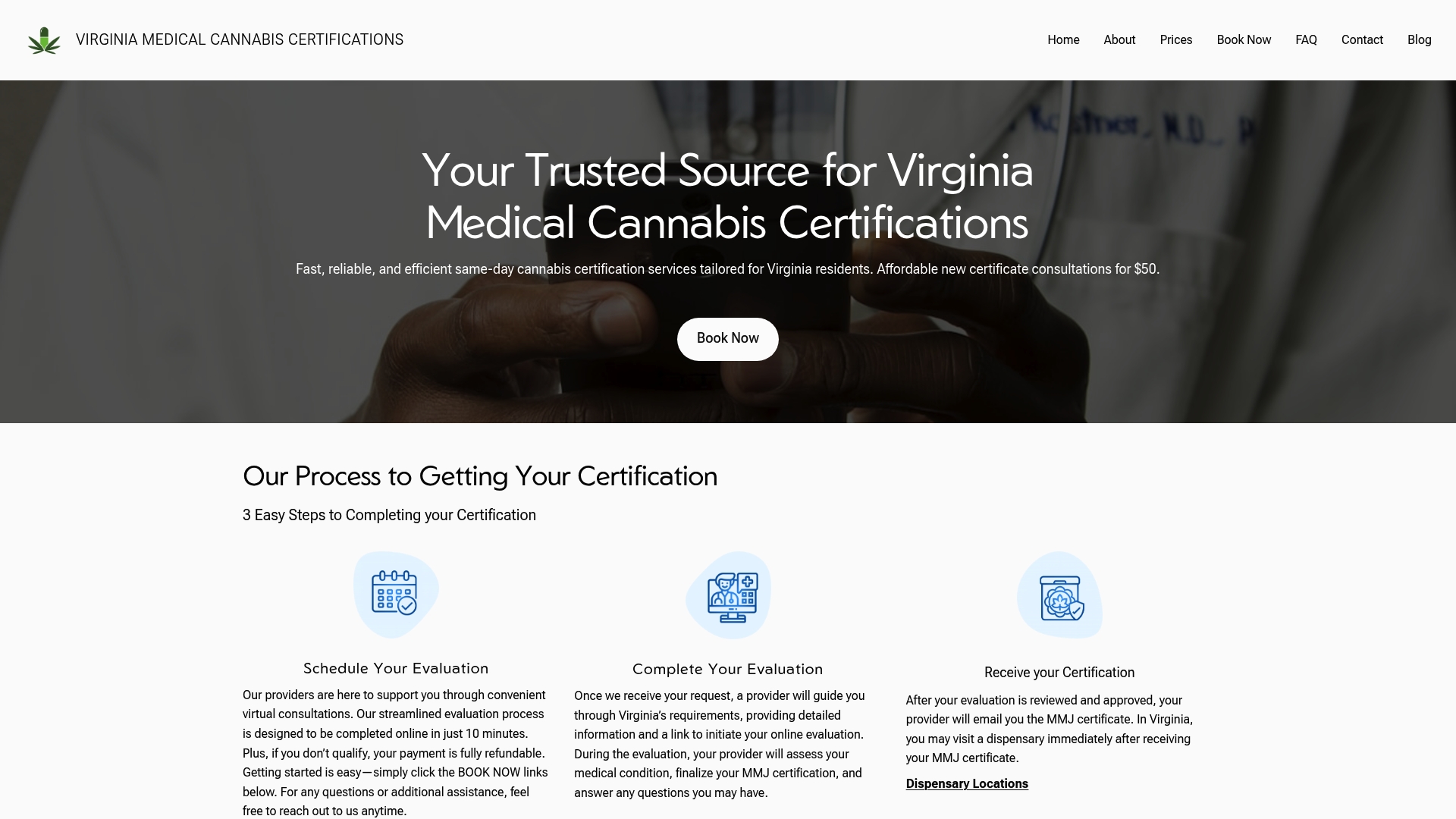
Virginia residents need a written certification from a registered practitioner before purchasing from a licensed dispensary. The process is straightforward:
- Confirm you have a qualifying condition (cancer and its treatment-related symptoms qualify).
- Complete a virtual clinical evaluation with a registered Virginia practitioner.
- Receive your written certification, typically the same day.
- Visit any licensed Virginia dispensary with your certification.
Virginia has licensed dispensaries across the state, including locations in Northern Virginia, Richmond, Virginia Beach, and the Roanoke area. These are regulated access points where staff can help you find lab-tested products once you have your certification in hand.
For Virginia residents who want a fast path to certification, Virginia Medical Cannabis Certifications offers same-day online evaluations. New patients pay $50; renewals are $40. If you do not qualify, the fee is fully refunded. The evaluation takes about 10 minutes online, and your certificate is delivered promptly so you can visit a dispensary without delay. You can learn more about Virginia certification steps on their site.
This article is general information, not medical advice. Confirm current Virginia regulations and discuss any cannabis use with your oncology team before starting.
Key Takeaways
Balanced THC:CBD products with a known terpene profile, selected by COA rather than by strain label, give cancer patients the most predictable symptom relief currently supported by clinical evidence.
| Point | Details |
|---|---|
| Labels are unreliable | Indica and sativa labels do not predict chemical content; use the COA instead. |
| Chemistry drives effects | THC, CBD, and terpenes like myrcene and limonene determine what a product actually does. |
| Strongest evidence: CINV | Oral 1:1 THC:CBD extracts have the best clinical trial support for refractory chemotherapy nausea. |
| No cure evidence | Cannabis has no proven ability to treat or cure cancer; its role is symptom support only. |
| Virginia certification | Virginia Medical Cannabis Certifications offers same-day online evaluations for $50, with a full refund if you do not qualify. |
What the indica/sativa debate gets wrong about cancer care
The conventional framing of “which strain is better for cancer” puts the decision in the wrong place. Patients end up chasing a label when they should be reading a lab report. The real question is not sativa or indica. It is: what is the measured THC:CBD ratio, what terpenes are present, and does that profile match the symptom you are trying to address right now?
What gets overlooked is how much the route of administration changes the equation. A patient who vaporizes a moderate-THC product for acute nausea is having a completely different pharmacological experience than one who takes an oral capsule of the same product for overnight appetite support. Same chemical profile, different outcome, because onset and duration change everything.
The most practical thing you and your caregiver can do is bring a COA to your oncology appointment and ask your team to review it with you. That conversation is more useful than any strain comparison chart.
Get certified in Virginia today with Virginia Medical Cannabis Certifications
Cancer patients in Virginia dealing with nausea, pain, appetite loss, or sleep disruption have a legal path to cannabis-based symptom support. Virginia Medical Cannabis Certifications makes that path as short as possible: a 10-minute online evaluation, same-day certification, and a $50 flat fee for new patients ($40 for renewals). If you do not qualify, you pay nothing.
There are no long waits, no in-person clinic visits, and no guesswork about whether you qualify. Cancer and treatment-related symptoms are recognized qualifying conditions in Virginia. Your certificate is delivered promptly after your evaluation so you can walk into a licensed dispensary the same day. Visit virginiacard.com to start your evaluation now, or review the full certification process and refund guarantee before you book.
Useful sources and further reading
- Oral Cannabis Extract for Refractory CINV: Phase II/III Trial (JCO) — The key randomized trial showing oral 1:1 THC:CBD improved nausea control in patients who failed standard antiemetics.
- ASCO Guideline: Cannabis and Cannabinoids in Adults With Cancer — Clinical guideline covering evidence strength, supported uses, and recommendations against cannabis as cancer-directed therapy.
- Cannabis and Cancer: American Cancer Society — Patient-facing guidance on what cannabis can and cannot do, with clear statements on label unreliability and the importance of chemical makeup.
- Cannabis and Cancer: Roswell Park Comprehensive Cancer Center — Clinician commentary on balanced THC:CBD products, symptom management, and the need for larger trials.
- Indica/Sativa Labels and Chemovar Research (PMC) — Peer-reviewed review explaining why morphology-based labels fail and why chemovar testing is the correct medical approach.
- Cannabis and Cannabinoids (PDQ): NCI — Comprehensive NCI summary of cannabinoid pharmacology, approved products, and clinical trial evidence for oncology use.
- Oral THC:CBD as Adjuvant for CINV (PMC) — Clinical study supporting oral cannabinoid extracts as adjuvant therapy in refractory nausea patients.
Recommended
- Sativa Headache Relief: What You Need to Know – Virginia Medical Cannabis Certifications
- Can THC Cause Low Blood Sugar? What You Need to Know – Virginia Medical Cannabis Certifications
- Best Strains for Pancreatitis: Virginia Guide 2026 – Virginia Medical Cannabis Certifications
- Does Weed Make OCD Worse? What You Need to Know – Virginia Medical Cannabis Certifications